Nila Kartika Wati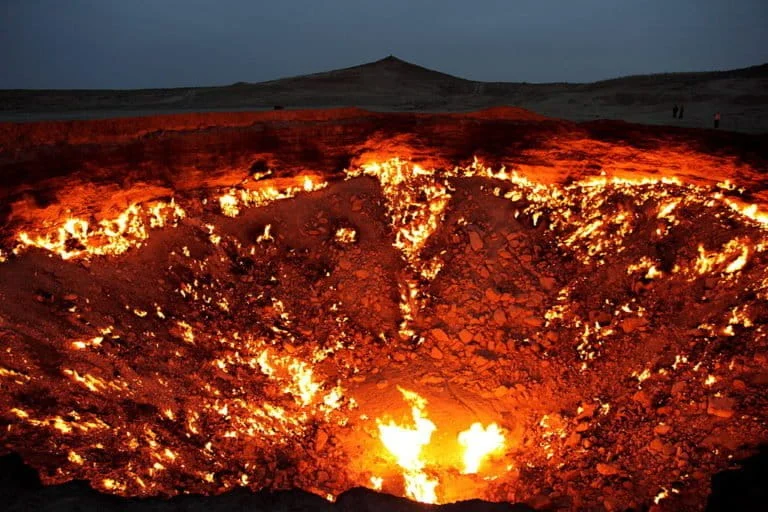
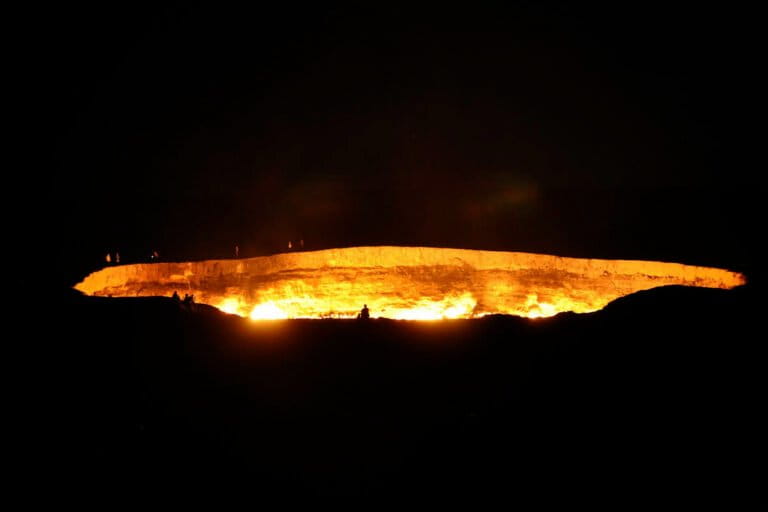
The Darvaza gas crater, a fiery abyss in the heart of Turkmenistan’s Karakum Desert that has burned for more than half a century, is showing unprecedented signs of decline, sparking a complex debate among environmental scientists and government officials. Known colloquially as the "Door to Hell," this 70-meter-wide inferno has become a symbol of both geological wonder and industrial miscalculation. While the visual dimming of the crater’s flames might initially appear to be a positive development, experts warn that the weakening of the fire signals a transition from controlled combustion to raw methane venting—a shift that could have catastrophic implications for the global climate.
The phenomenon of the Darvaza crater began in 1971 during a Soviet-era drilling expedition. Seeking to tap into the vast natural gas reserves of the Karakum Desert, engineers inadvertently drilled into a massive underground cavern, causing the drilling rig and the surrounding ground to collapse into a wide, shallow crater. To prevent the escape of toxic gases, specifically hydrogen sulfide, which posed an immediate threat to nearby livestock and nomadic communities, the decision was made to set the escaping gas alight. At the time, Soviet scientists predicted the fire would consume the remaining fuel within a few weeks. Instead, the "Door to Hell" has remained a continuous blaze for fifty-four years, fueled by an seemingly inexhaustible supply of methane from the underlying Amu Darya basin.
The recent shift in the crater’s behavior was officially confirmed during an energy conference in early 2025. Irina Luryeva, the director of the state-owned energy giant Turkmengaz, reported that the intensity of the fire had decreased nearly threefold compared to previous years. This assessment was based on rigorous field monitoring and data collected from gas extraction facilities operating in the vicinity. Supporting this claim, independent satellite data from Capterio, a British consultancy specializing in gas flaring and methane emission tracking, corroborated the trend of weakening thermal signatures. However, the data also revealed a more troubling reality: the decline in flame intensity began even before the Turkmen government initiated new extraction efforts in 2024, suggesting that the reservoir’s internal dynamics may be shifting in ways that are difficult to control.
The central concern for climatologists lies in the chemical transition of the emissions. For decades, the fire served as a crude but effective mitigation tool. By burning the escaping methane (CH4), the crater converted the gas into carbon dioxide (CO2) and water vapor. While carbon dioxide is the primary driver of long-term climate change, methane is significantly more potent in the short term. According to the Intergovernmental Panel on Climate Change (IPCC), methane has a global warming potential (GWP) 28 to 36 times higher than CO2 over a 100-year period. More alarmingly, over a 20-year horizon, methane is roughly 80 times more effective at trapping heat in the atmosphere than carbon dioxide.
When the flames at Darvaza weaken or extinguish, the methane is no longer converted into the less potent CO2; instead, it is released directly into the atmosphere as "raw" methane. Data from Carbon Mapper, an organization that uses satellite technology to pinpoint "super-emitters," indicates that between 2022 and 2025, the Darvaza crater released an average of 1,300 kilograms of methane per hour. In October 2025, during a period of particularly low flame intensity, these emissions surged to nearly 1,960 kilograms per hour. To put these figures into perspective, the hourly methane output of the crater at its peak is equivalent to the methane emissions produced by a herd of 700 cattle or a significant leak in a major urban gas pipeline.
The geopolitical and economic context of Turkmenistan adds another layer of complexity to the Darvaza issue. Turkmenistan holds the world’s fourth-largest reserves of natural gas, and its economy is heavily dependent on exports to China, Russia, and potentially Europe via the proposed Trans-Caspian Pipeline. For years, the Darvaza crater was viewed primarily as a tourist attraction, drawing thousands of extreme travelers to the remote desert. However, as international pressure to reduce methane emissions has intensified—highlighted by the Global Methane Pledge launched at COP26—the Turkmen government has shifted its stance.
In 2022, the then-President Gurbanguly Berdimuhamedov, and later his son, President Serdar Berdimuhamedov, issued decrees to find a solution to extinguish the fire. The motivation was twofold: to stop the waste of a valuable economic resource and to mitigate the environmental damage that had become a point of international scrutiny. In 2024, the government authorized the drilling of two new extraction wells near the crater site. The objective was to intercept the gas flow before it reached the crater, effectively "starving" the fire of its fuel source. While the 2025 data suggests this strategy is having an effect on the flames, it has yet to prove that it can successfully capture 100% of the gas, leaving the risk of diffuse leakage high.
The technical challenges of sealing the "Door to Hell" are immense. The crater is not a single pipe that can be capped; it is a porous collapse zone where gas seeps through hundreds of fissures in the earth. Simply smothering the fire with sand or concrete could lead to high-pressure gas finding new, unpredictable paths to the surface, potentially creating several smaller "doors" across the desert floor. Furthermore, the heat within the crater remains extreme, making it difficult for heavy machinery to operate directly within the pit.
Comparisons have been drawn to other "eternal fires" around the world, such as Yanar Dag in Azerbaijan or the "blue fires" of Indonesia’s Ijen Crater. However, Darvaza remains unique due to its anthropogenic origin and the sheer volume of its gas reservoir. Unlike natural seeps that have reached an equilibrium with their environment over millennia, Darvaza is a wound in the earth caused by human error, and the responsibility for its closure falls squarely on the modern energy industry.
The broader implications of the Darvaza situation extend to the global fight against climate change. Methane is responsible for approximately 30% of the rise in global temperatures since the Industrial Revolution. Because methane has a relatively short atmospheric lifespan of about 12 years—compared to the centuries that CO2 remains in the air—reducing methane emissions is considered the "fastest" way to slow global warming in the immediate future. If the Turkmen government fails to manage the transition of the Darvaza crater from a burning pit to a sealed reservoir, it could inadvertently release a "methane bomb" that offsets other regional gains in emission reductions.
Environmental organizations and international partners are closely watching the developments in the Karakum Desert. The success or failure of the current extraction strategy will likely serve as a case study for how to handle large-scale, accidental gas leaks in other parts of the world. There is also a growing call for Turkmenistan to utilize international expertise from organizations like the United Nations Environment Programme (UNEP) and the International Methane Emissions Observatory (IMEO) to ensure that the process of extinguishing the fire does not result in a silent, invisible environmental disaster.
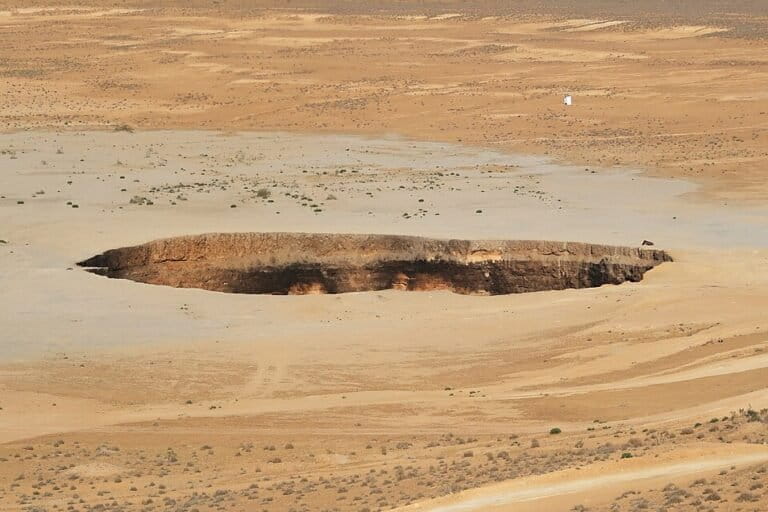
As the fires of Darvaza continue to dim, the "Door to Hell" is transitioning from a spectacle of fire to a test of scientific and political will. The visual disappearance of the flames may satisfy the aesthetic goals of the government, but for the scientists monitoring the atmosphere, the real work is only beginning. The goal is no longer just to put out the fire, but to ensure that the "hell" beneath the desert stays firmly underground, preventing its potent gases from further heating an already warming planet. The next few years will be critical in determining whether the closing of the "Door to Hell" marks a victory for the climate or merely the beginning of a more dangerous, invisible phase of the Darvaza legacy.