Nila Kartika Wati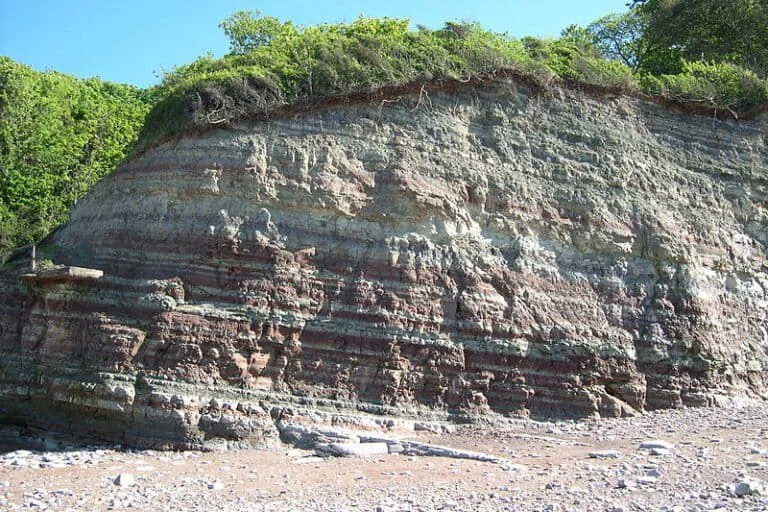
Approximately 232 million years ago, the Earth underwent one of the most radical and transformative climatic shifts in its geological history, a period now recognized by scientists as the Carnian Pluvial Episode (CPE). For more than one million years, an era of relentless, torrential rainfall terminated the prevailing aridity of the Triassic Period, fundamentally restructuring the planet’s ecosystems. This transition from a world dominated by vast, scorching deserts to one characterized by lush, humid forests and sprawling river systems did more than just alter the landscape; it served as the critical evolutionary gateway for the rise of the dinosaurs. Before this event, dinosaurs were a marginal group of small reptiles; after the rains ceased, they were on an irreversible path to global dominance.
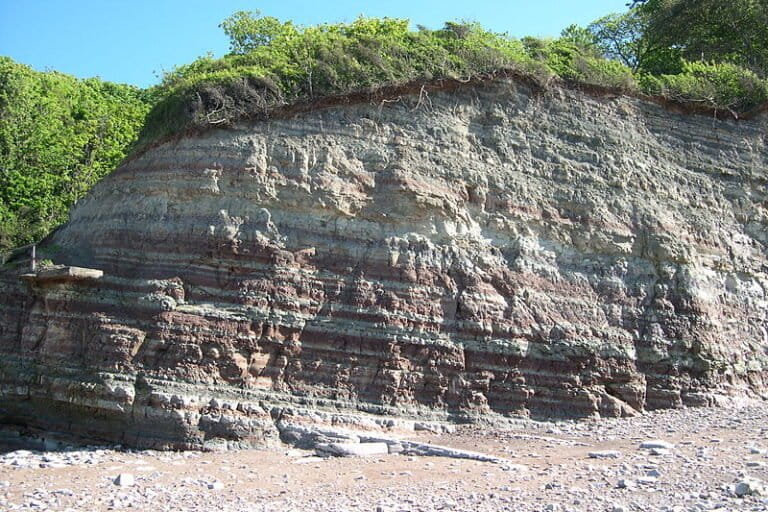
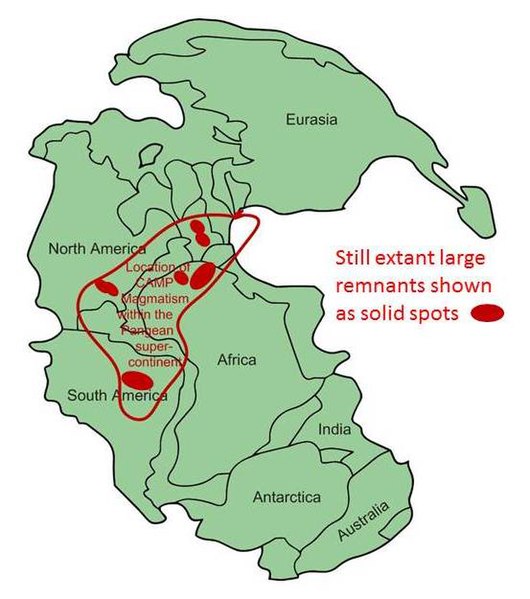
Prior to the onset of the Carnian Pluvial Episode, the Earth’s landmasses were fused into the singular supercontinent of Pangea. This geographical configuration created a "continentality" effect of extreme proportions. Because the interior of Pangea was so far removed from the cooling and moistening influences of the oceans, it was a world of environmental extremes. Massive deserts covered the heart of the continent, and the climate was defined by intense heat and meager, seasonal precipitation. Geological records from the early to mid-Triassic are dominated by "red beds"—sedimentary rocks colored by iron oxide that form in highly oxygenated, arid conditions—and thick deposits of evaporites, which are minerals left behind when saline water evaporates in closed basins.
The flora and fauna of this pre-pluvial world were specifically adapted to water scarcity. Vegetation was sparse, consisting largely of hardy, drought-resistant shrubs and seed ferns. Animal life was dominated by various lineages of archosaurs—the "ruling reptiles"—but not the dinosaurs we recognize today. Instead, the landscape was populated by heavy-set, crocodile-like phytosaurs and various herbivorous rhynchosaurs. Dinosaurs existed, such as the early theropods found in modern-day South America, but they represented less than 5% of the terrestrial vertebrate population. They were the outliers in a world that belonged to other reptilian giants.
The Wrangellia Eruptions and the Mechanics of Climate Collapse
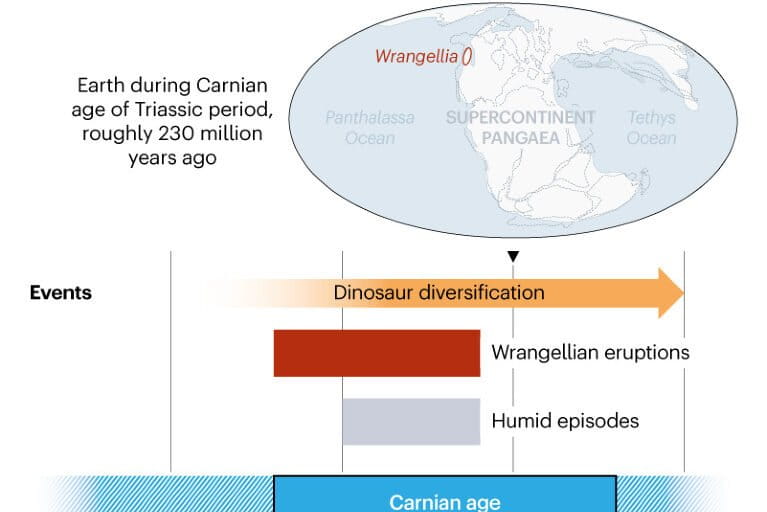
The catalyst for the sudden end of this arid epoch lay in a series of cataclysmic volcanic eruptions in a region known as the Wrangellia Large Igneous Province. This ancient volcanic complex, remnants of which are now found in Alaska, Yukon, and British Columbia, began a period of sustained activity roughly 234 million years ago. Unlike the localized eruptions of modern volcanoes, Wrangellia was a "flood basalt" event, where fissures in the Earth’s crust leaked millions of cubic kilometers of basaltic lava over the course of several million years.
The environmental consequence of the Wrangellia eruptions was a massive injection of greenhouse gases into the atmosphere. Estimates from carbon isotope analysis of marine and terrestrial sediments suggest that carbon dioxide (CO2) levels spiked dramatically, potentially tripling or quadrupling within a geologically brief window. This sudden surge in CO2 triggered a runaway greenhouse effect. Global temperatures rose by an estimated 3 to 10 degrees Celsius, causing the surface waters of the Tethys Ocean to warm significantly.
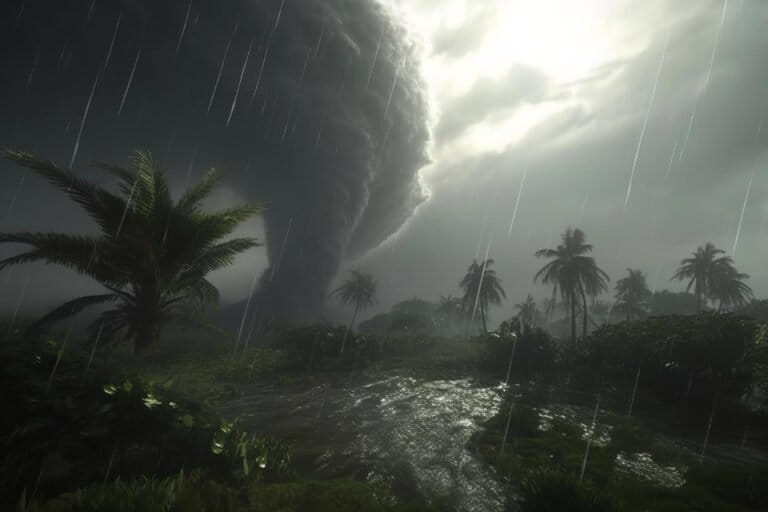
Warm oceans evaporate more readily than cold ones. This increased evaporation, combined with the extreme heat over the Pangean landmass, supercharged the Earth’s hydrological cycle. The "Mega-monsoon" system of Pangea, which had previously been restricted to coastal fringes, gained enough energy to penetrate deep into the continental interior. The result was a million-year-long deluge. In the geological record, the transition is stark: the dry, red sediments of the Triassic are abruptly interrupted by dark silts, coals, and kaolinite-rich clays—clear indicators of heavy rainfall, deep weathering, and the formation of permanent wetlands.
Chronology of a Global Transformation
The Carnian Pluvial Episode did not occur as a single storm, but rather as a series of pulses of high precipitation. Geologists have identified at least four distinct phases of increased rainfall within the CPE timeframe.
- The Onset (c. 234–232 Ma): Initial volcanic activity in Wrangellia begins. Carbon isotopes show a "negative excursion," indicating a massive influx of light carbon into the atmosphere/ocean system.
- The Peak Deluge (c. 232–230 Ma): This represents the core of the CPE. Sedimentary records in the Italian Dolomites and the Somerset coast of England show the replacement of carbonate platforms with muddy, river-borne sediments. This period saw the maximum expansion of humid forests.
- The Biotic Turnover (c. 230–228 Ma): As the rains continued, the extinction of older lineages accelerated. The fossil record shows a "dinosaur diversification event," where dinosaur footprints and fossils suddenly become ubiquitous across Pangea.
- The Return to Aridity (c. 227 Ma): As Wrangellia volcanism subsided and the excess CO2 was slowly sequestered by the weathering of new mountains and the burial of organic matter, the Earth returned to a drier state, though the biological landscape had been irrevocably changed.
Supporting Data: Isotopes and Palynology
The evidence for this "Great Rain" is multidisciplinary. Geochemists point to the carbon isotope record as the "smoking gun" for the volcanic trigger. By measuring the ratio of Carbon-13 to Carbon-12 in fossilized wood and marine shells, researchers have found a sharp drop that coincides exactly with the start of the rainfall. This signifies that a massive amount of carbon from the Earth’s mantle (via volcanoes) entered the biosphere.
Furthermore, the field of palynology—the study of fossil spores and pollen—provides a vivid picture of the changing flora. During the CPE, the pollen of desert-adapted plants vanishes from the record, replaced by an abundance of spores from ferns and pollen from hygrophytic (moisture-loving) conifers. In parts of Europe, coal seams dated to the Carnian age indicate that the environment had become so wet that vast peat bogs formed, a phenomenon previously impossible in the arid Triassic interior.
The Evolutionary Pivot: Why Dinosaurs Won
The biological impact of the CPE was a classic example of "extinction-led radiation." The sudden shift to high humidity and the resulting change in vegetation led to a mass extinction event, particularly among the dominant herbivores of the time. The rhynchosaurs and dicynodonts, which were specialized for eating tough, dry Triassic plants, could not adapt to the new, lush flora. Their decline left a massive ecological vacuum.
Dinosaurs were uniquely positioned to fill this void. Evolutionary biologists suggest several "key innovations" allowed early dinosaurs to thrive where others failed. First was their posture; dinosaurs possessed an erect, "pillar-like" limb arrangement, which was far more energy-efficient for traversing long distances in search of food than the sprawling or semi-sprawling gaits of their competitors. Second, emerging research into dinosaur respiratory systems suggests they may have already possessed a bird-like, one-way airflow lung system, which would have been an immense advantage in the fluctuating oxygen levels of the Triassic.
As the humid forests expanded, early dinosaurs underwent a rapid "explosive" radiation. In the Ischigualasto Formation of Argentina, fossils from the period immediately following the CPE show that dinosaurs jumped from being a minor component of the fauna to representing 50% to 90% of terrestrial vertebrates. They diversified into three main lineages: the meat-eating theropods, the long-necked herbivorous sauropodomorphs, and the bird-hipped ornithischians.
Impact on Marine Ecosystems and Inferred Scientific Consensus
While the impact on land was transformative, the oceans faced a more dire crisis. The massive CO2 absorption led to ocean acidification, which proved lethal to many marine organisms. The CPE coincides with a major "reef gap," a period where coral reefs virtually disappeared from the fossil record because the acidic water prevented them from building calcium carbonate skeletons.
However, much like on land, the marine crisis created opportunities. It was during and shortly after the CPE that modern-style stony corals (Scleractinia) began to dominate, and marine reptiles like the ichthyosaurs grew to gargantuan sizes, filling the apex predator niches.
The scientific community’s understanding of the CPE has evolved rapidly. Dr. Jacopo Dal Corso, a leading researcher on the event, has noted in various academic contexts that the CPE is likely the "missing link" in explaining how the Triassic world became the Jurassic world. While earlier paleontologists focused on the end-Triassic mass extinction as the primary driver of dinosaur success, the modern consensus has shifted to view the Carnian Pluvial Episode as the actual "birth" of the dinosaurian empire.
Broader Implications and Modern Parallels
The study of the Carnian Pluvial Episode offers more than just a window into the deep past; it provides a sobering case study in rapid climate change. The CPE demonstrates how a massive injection of greenhouse gases can destabilize the global hydrological cycle, leading to "mega-floods" and the total reorganization of life on Earth.
For modern climatologists, the CPE serves as a natural experiment in what happens when the planet warms rapidly. The transition from the "Red World" of the early Triassic to the "Green World" of the late Triassic shows that while life is resilient and evolutionary breakthroughs often follow catastrophes, the cost is the permanent loss of existing biodiversity. The dinosaurs did not "conquer" the world through combat; they inherited a world that had been broken by climate change, proving that in the history of Earth, the weather is often the ultimate architect of destiny.
As researchers continue to probe the sedimentary layers of the Carnian, the CPE stands as a testament to the power of rain—a million-year deluge that washed away an old world and watered the seeds of a 165-million-year dynasty.