Bambang Pamungkas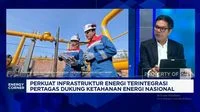
PT Pertamina Gas (Pertagas), a prominent subsidiary of Indonesia’s state-owned energy giant Pertamina, is making significant advancements in its commitment to fortify the nation’s energy infrastructure with the construction of a critical 96-kilometer (km) fuel pipeline. This vital artery, designed to seamlessly connect the Cikampek fuel terminal to the bustling Plumpang fuel terminal, is projected for completion by early 2027. The project, as articulated by Pertagas President Director Indra Pehulisa Sembiring, is poised to become a transformative backbone for the nation’s energy distribution system, promising unparalleled efficiency and timely delivery of fuel from upstream to downstream sectors, with a particular focus on safeguarding the energy needs of the capital city, Jakarta.
Strategic Imperative: Securing Jakarta’s Fuel Supply
The Cikampek-Plumpang fuel pipeline project transcends a mere infrastructure development; it represents a strategic imperative for Indonesia’s long-term energy resilience and urban stability. Jakarta, as the nation’s economic engine, political center, and most populous metropolitan area, possesses an ever-growing and insatiable demand for fuel. The reliability and efficiency of its supply chain are thus paramount to maintaining economic activity and social order. The Plumpang fuel terminal, a historical and critical distribution point, serves a vast urban and industrial area, supplying approximately 25% of the national fuel demand and a significant portion of Jakarta’s daily consumption. Its strategic location, however, has also highlighted inherent vulnerabilities, notably underscored by past incidents, including the devastating fire in March 2023 and prior events, which tragically underscored the urgent need for a more robust, secure, and resilient supply mechanism. This pipeline is meticulously designed to mitigate such risks by providing a dedicated, uninterrupted, and secure channel for fuel transportation, bypassing many of the challenges associated with surface transport.
Currently, a substantial portion of fuel distribution to Jakarta relies on conventional methods, primarily road tankers. This mode of transport is inherently susceptible to a myriad of inefficiencies and challenges, including chronic traffic congestion on key arterial roads, higher operational costs due to fuel consumption and vehicle maintenance, increased carbon emissions, and elevated risks of accidents involving hazardous materials. The construction of the 96 km pipeline is expected to dramatically reduce reliance on these conventional methods, thereby alleviating traffic burden on critical highways connecting West Java to Jakarta, minimizing the environmental impact of fuel transport, and significantly enhancing the safety and security of fuel distribution across the Jakarta metropolitan area and its surroundings. The direct connection between Cikampek, a strategic storage and distribution hub in West Java, and Plumpang will streamline the logistical flow, ensuring that fuel reaches consumers with greater predictability, reduced lead times, and enhanced safety protocols.
Enhancing National Energy Security and Operational Efficiency
President Director Indra Pehulisa Sembiring underscored the project’s pivotal role in bolstering national energy security. "We are currently building from the fuel terminal in Cikampek to the fuel terminal in Plumpang, and our target is to complete this in early 2027. Hopefully, we can finish it on time," Sembiring stated during the Energy Corner program on CNBC Indonesia, quoted on Friday, June 8, 2026. This pipeline is not just about physically moving fuel; it’s about embedding a resilient infrastructure that can withstand various operational challenges, external disruptions, and ensure a continuous, reliable supply—a cornerstone of any nation’s economic stability and preparedness.
The operational efficiency gains from a modern pipeline system are multifaceted and profound. Pipelines offer a significantly lower cost per unit of transport compared to trucking, especially over long distances, due to economies of scale, minimal labor requirements for operation, and reduced maintenance compared to a large fleet of vehicles. This substantial reduction in logistical expenditure can potentially translate into more stable and competitive fuel prices for consumers and businesses, contributing to overall economic predictability and mitigating inflationary pressures. Furthermore, the automated and continuous flow characteristic of pipelines minimizes human intervention, reducing the potential for human error, enhancing the overall integrity of the supply chain, and enabling a "just-in-time" delivery model that optimizes inventory management at the Plumpang terminal. For a rapidly developing economy like Indonesia, where energy demand continues to surge in tandem with population growth, urbanization, and industrial expansion, investing in such foundational infrastructure is critical for sustaining economic momentum and ensuring equitable access to energy resources across various sectors.
Pertagas’s Core Business and Dominant Market Position
While actively expanding into new ventures, Pertagas remains firmly anchored in its core business of oil and gas transportation, which consistently accounts for more than 50% of the company’s total revenue. The company plays an unequivocally pivotal role in Indonesia’s gas distribution network, managing a volume that constitutes approximately 78% of the total national gas distribution. This dominant position highlights Pertagas’s critical function in powering the nation’s economy and its indispensable contribution to the energy sector.
The gas transported by Pertagas primarily serves essential and strategic sectors, including electricity generation, which lights up homes and businesses across the archipelago; fertilizer production, which supports agricultural productivity and national food security; and a wide array of large industrial and commercial enterprises that drive economic output. Pertagas’s extensive network of gas pipelines, spanning thousands of kilometers across Sumatra, Java, and Kalimantan, includes crucial arteries like the Arun-Belawan pipeline in Aceh, the Grissik-Singapore pipeline, and segments of the Kalimantan-Java pipeline system. This established expertise in managing complex, high-pressure pipeline networks and its profound understanding of the national energy landscape provide a robust foundation for its new undertakings, including the Cikampek-Plumpang fuel pipeline and its strategic foray into renewable energy. Its existing operational scale, technical capabilities, and safety track record make it a natural fit for spearheading large-scale energy infrastructure projects that hold national strategic importance.
Venturing into New and Renewable Energy (NRE) for a Sustainable Future
In a strategic and forward-looking pivot towards a sustainable energy future, Pertagas is actively exploring and expanding its portfolio into the dynamic new and renewable energy (NRE) sector. The company is particularly focused on promising avenues such as hydrogen and biomethane, aligning seamlessly with the Indonesian government’s ambitious low-carbon targets and its steadfast commitment to achieving Net Zero Emissions by 2060. This strategic diversification is not merely an environmental endeavor but a proactive business strategy designed to meet evolving market demands, capitalize on emerging energy trends, and position Pertagas at the forefront of Indonesia’s energy transition.
Indonesia possesses significant untapped potential for NRE development, including abundant geothermal, hydro, solar, and bioenergy resources. Pertagas’s keen interest in biomethane, which can be derived from organic waste streams such as palm oil mill effluent (POME), municipal solid waste, and agricultural residues, aligns perfectly with the nation’s vast agricultural base and ongoing waste management initiatives. This offers a dual benefit of waste valorization and renewable energy production, contributing to both environmental sustainability and energy independence. Hydrogen, touted globally as a clean energy carrier with immense potential, represents a more futuristic but equally promising avenue. Pertagas’s involvement in the hydrogen value chain could span from developing green hydrogen production facilities (utilizing renewable electricity for electrolysis) to establishing the necessary infrastructure for its efficient transportation and distribution, potentially leveraging existing gas pipeline networks for blending or dedicated hydrogen pipelines. This move signals a profound and adaptive approach, recognizing that while conventional fossil fuels will remain critical for the foreseeable future, a gradual, strategic, and well-managed transition to cleaner energy sources is indispensable for both environmental stewardship and long-term energy security. Pertagas aims to bridge the gap between these nascent energy sources and burgeoning market demand, facilitating their seamless integration into the national energy mix and significantly contributing to the government’s ambitious renewable energy targets, which include achieving 23% renewable energy in the national mix by 2025.
Economic and Environmental Benefits of the Pipeline
The Cikampek-Plumpang pipeline project is poised to deliver substantial and far-reaching economic and environmental dividends. Economically, the fundamental shift from highly carbon-intensive and costly road transport to pipelines will lead to significant reductions in overall logistics costs for fuel distribution. Estimates suggest that pipeline transport can be several times more cost-effective per unit volume compared to trucking, translating into substantial annual savings for Pertamina and, by extension, the national economy. These savings can contribute to a more competitive energy market, potentially leading to more stable or even lower costs for end-consumers, thereby indirectly stimulating economic activity across various sectors. Furthermore, the construction phase itself generates significant direct and indirect employment opportunities, stimulating local economies through the procurement of materials, services, and local labor.
Environmentally, the impact is even more profound and immediate. A single pipeline, operating continuously, can transport volumes equivalent to hundreds of tanker trucks daily. This substantial reduction in road traffic directly translates to a significant decrease in greenhouse gas emissions (primarily CO2, but also NOx, SOx, and particulate matter), thereby improving air quality in heavily populated areas like Jakarta, which frequently grapple with air pollution challenges. It also mitigates noise pollution and reduces the wear and tear on public roads, extending their lifespan and reducing maintenance costs for public infrastructure. Beyond emissions, pipelines offer an inherently safer mode of transport for hazardous materials, drastically reducing the risk of catastrophic fuel spills and accidents commonly associated with road tankers, thus safeguarding public health, environmental integrity, and vital ecosystems from potential contamination. This project, therefore, is a tangible and impactful step towards decarbonizing the transportation sector of fuels, contributing significantly to Indonesia’s broader climate change mitigation efforts and its commitments under the Paris Agreement.
Challenges, Outlook, and Broader Context
While the benefits are undeniably clear and compelling, the execution of an infrastructure project of this monumental scale is not without its inherent challenges. Land acquisition, a common and often complex hurdle for major infrastructure projects in densely populated areas of Indonesia, requires meticulous planning, sensitive community engagement, and fair compensation mechanisms. Securing all necessary environmental permits, adhering to stringent safety standards during construction and operation, and managing complex engineering logistics across diverse terrains are also critical factors that Pertagas must expertly navigate. The "on time" completion target of early 2027 suggests a demanding schedule that will necessitate efficient project management, robust risk mitigation strategies, and seamless coordination with various stakeholders, including multiple government agencies, local communities, and a consortium of contractors.
Despite these potential challenges, Pertagas’s extensive and proven experience in managing large-scale energy infrastructure projects, coupled with the unequivocal strategic importance of this pipeline for national energy security, provides a strong basis for successful execution. The unwavering backing of its parent company, Pertamina, and the Indonesian government’s overarching prioritization of critical infrastructure development further bolster the project’s prospects. The successful completion of this pipeline will not only cement Pertagas’s position as a pivotal player in Indonesia’s evolving energy landscape but also serve as a benchmark and model for future infrastructure projects aimed at modernizing and securing the nation’s energy supply chain, ultimately enhancing its economic competitiveness and resilience.
Indonesia, as an archipelagic nation with a rapidly expanding economy and diverse geographical challenges, faces unique complexities in ensuring equitable and reliable energy distribution across its vast territory. The government has consistently prioritized infrastructure development, including energy infrastructure, as a fundamental enabler for sustained economic growth, social welfare, and regional equity. Projects like the Cikampek-Plumpang pipeline are integral to this comprehensive national strategy, aiming to bridge energy supply-demand gaps, reduce logistical bottlenecks, and mitigate regional disparities in energy access, particularly for critical urban centers. Moreover, Indonesia is actively working towards diversifying its energy mix and gradually reducing its reliance on fossil fuels. The government’s ambitious targets include increasing the share of renewable energy in the national energy mix to 23% by 2025 and achieving Net Zero Emissions by 2060. Pertagas’s dual strategy of optimizing traditional energy infrastructure while simultaneously investing in nascent NRE technologies aligns perfectly with these national objectives. By enhancing the efficiency of conventional fuel distribution and pioneering avenues for hydrogen and biomethane, Pertagas is strategically positioning itself at the forefront of Indonesia’s dynamic energy transition, playing a crucial role in both securing the present and building a sustainable and prosperous future. This holistic and adaptive approach reflects a deep understanding of the complex interplay between economic development, energy security, and environmental stewardship in the 21st century.
Conclusion: Pertagas’s Commitment to Future Energy Resilience
"Pertagas is ready to take on the role and part to grow in this growth in the context of energy security," Sembiring affirmed, encapsulating the company’s proactive and dedicated stance. The Cikampek-Plumpang pipeline project stands as a powerful testament to this commitment, representing a significant and forward-looking investment in modernizing Indonesia’s critical energy infrastructure. It is a vital component of a broader, multi-faceted strategy to ensure a stable, efficient, and environmentally responsible supply of fuel to Jakarta and other key regions. Coupled with its ongoing dominance in gas transportation and its pioneering efforts in new and renewable energies like hydrogen and biomethane, Pertagas is strategically positioning itself as a comprehensive energy solutions provider for Indonesia. The company is not merely responding to current energy demands but is actively shaping the future of Indonesia’s energy landscape, paving the way for a more secure, sustainable, and prosperous nation. This integrated and adaptive approach underscores Pertagas’s unwavering dedication to supporting national development goals and fostering a robust and resilient energy ecosystem for generations to come, ensuring that Indonesia’s growth is fueled responsibly and sustainably.