Nasution Nanang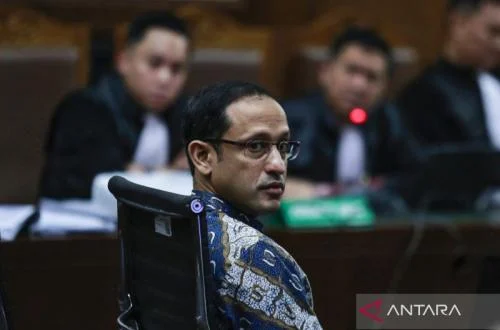
JAKARTA – Former Minister of Education, Culture, Research, and Technology, Nadiem Anwar Makarim, is set to face the reading of the prosecutor’s demands in a high-profile corruption case involving the procurement of Chromebooks and Chrome Device Management (CDM). The pivotal hearing is scheduled for Wednesday, May 13, at the Corruption Court within the Central Jakarta District Court. This development marks a significant juncture in a trial that has captured national attention, alleging substantial state losses and implicating a prominent figure known for his role in technological innovation and public service. The case underscores Indonesia’s ongoing battle against corruption, particularly within large-scale government digitalization initiatives.
Background: The Digitalization of Education Initiative and Chromebook Procurement
The alleged corruption stems from a program designed to accelerate the digitalization of education across Indonesia, spearheaded by the Ministry of Education, Culture, Research, and Technology (Kemendikbudristek) between 2019 and 2022. At its core, the initiative aimed to bridge the digital divide in Indonesian schools, enhance learning accessibility, and prepare students for an increasingly digital world. The procurement of Chromebook laptops and associated Chrome Device Management (CDM) licenses was a central component of this ambitious vision. These devices were intended to equip students and teachers with modern tools for blended learning, particularly in the wake of the COVID-19 pandemic, which exposed significant disparities in digital readiness across the archipelago. The program sought to distribute millions of devices, promising to transform educational delivery, especially in remote and underserved areas.
Nadiem Anwar Makarim, a technocrat widely recognized for co-founding the ride-hailing giant Gojek, was appointed Minister in 2019. His appointment was seen as a move to inject innovation and digital expertise into the education sector. Under his leadership, the digitalization agenda gained significant momentum, with the Chromebook procurement program being one of the flagship projects. The government’s stated goal was to leverage technology to improve educational outcomes, foster digital literacy, and ensure equitable access to quality learning resources. However, the integrity of the procurement process soon came under scrutiny, leading to the current legal proceedings that now cast a shadow over these noble objectives.
The Allegations: Scope of Corruption and State Losses
The prosecution alleges that the procurement of Chromebooks and CDM licenses was marred by corruption, resulting in staggering state losses amounting to Rp2.18 trillion. The indictment details that the procurement process did not adhere to proper planning and violated fundamental principles of good procurement practices. Specifically, the state losses are categorized into two main components: Rp1.56 trillion attributed directly to irregularities in the education digitalization program, which includes the Chromebook procurement itself, and an additional US$44.05 million, equivalent to Rp621.39 billion, from the acquisition of Chrome Device Management (CDM) licenses that were deemed unnecessary or overpriced.
The nature of the alleged corruption involves a complex web of transactions and decisions that reportedly prioritized personal gain over public interest. Prosecutors contend that the procurement procedures were manipulated, leading to inflated prices, substandard equipment, or the acquisition of services that did not meet the actual needs of the education system. This mismanagement is believed to have diverted substantial public funds meant for educational advancement into private hands.
Nadiem Makarim is not the sole defendant in this intricate case. He stands accused alongside three other individuals: Ibrahim Arief, also known as Ibam; Mulyatsyah; and Sri Wahyuningsih. Furthermore, Jurist Tan, who is also implicated in the scheme, remains at large, adding another layer of complexity to the ongoing investigation and trial. The involvement of multiple parties suggests a coordinated effort to exploit the procurement process for illicit enrichment, highlighting systemic vulnerabilities within large-scale government projects.
Chronology of the Legal Proceedings
The journey to Wednesday’s demand reading has been a protracted legal process, beginning with an extensive investigation into the procurement irregularities. The case gained public prominence as details of the alleged corruption and the involvement of high-ranking officials began to emerge. Following the initial investigative phase, Nadiem Anwar Makarim and his co-defendants were formally indicted, laying out the specific charges and the evidence collected by the prosecution.
The trial itself has progressed through several critical stages, including the presentation of evidence by the prosecution and the examination of witnesses and the defendants. Most recently, on Monday evening, May 11, the presiding judge, Purwanto Abdullah, announced the conclusion of the evidence presentation phase, signaling the court’s readiness to move to the next stage. During this session, Judge Abdullah granted the prosecutor’s request for an opportunity to present their demands, setting the date for Wednesday, May 13. This phase is crucial as it outlines the specific penalties and restitution sought by the prosecution based on the evidence presented throughout the trial.
A significant development preceding the demand reading occurred on Tuesday, May 12, when the panel of judges approved the defense’s request to alter Nadiem Makarim’s detention status. Previously held under Rutan (detention center) status, he has now been transitioned to house arrest. This change, effective immediately, comes with stringent conditions, and any violation of these terms would result in the immediate revocation of the house arrest status and his return to a detention facility. While the specific reasons for granting house arrest are often related to humanitarian considerations, health, or the defendant’s cooperation, the court’s decision underscores the careful balancing act between ensuring justice and respecting the rights of the accused. Such a move often suggests the court believes the defendant is not a flight risk or poses no threat to evidence tampering under the new conditions.
The Defendant: Nadiem Anwar Makarim and Financial Aspects
Nadiem Anwar Makarim’s public persona as a visionary technocrat and reformer adds a unique dimension to this corruption case. Before his ministerial appointment, he was celebrated as a pioneer in Indonesia’s digital economy, having founded Gojek, a company that transformed daily life for millions. His transition from the private sector to public service was initially met with optimism, seen as a move to bring efficiency and innovation to government.
However, the allegations against him include receiving substantial illicit funds. Prosecutors claim Nadiem received Rp809.59 billion from PT Aplikasi Karya Anak Bangsa, the parent company of Gojek, channeled through PT Gojek Indonesia. A significant portion of these funds, specifically US$786.99 million, is alleged to have originated from an investment by Google. This aspect of the indictment raises serious questions about potential conflicts of interest, the commingling of personal and public roles, and the mechanisms through which public funds may have been diverted or personal wealth improperly enhanced. The alleged financial transactions, if proven, would represent a severe breach of public trust and a betrayal of the anti-corruption principles Nadiem was expected to uphold.
Further scrutiny has been directed at Nadiem Makarim’s financial declarations. According to his 2022 Laporan Harta Kekayaan Penyelenggara Negara (LHKPN), or Report on the Wealth of State Officials, his assets included securities valued at Rp5.59 trillion. This substantial personal wealth, declared prior to the full extent of the allegations, will inevitably be compared with the alleged illicit gains. The discrepancy, or the potential connection between the alleged ill-gotten wealth and his declared assets, could become a focal point for further investigation, particularly concerning asset tracing and recovery efforts should he be convicted. The LHKPN data often serves as a crucial reference point for anti-corruption agencies to identify suspicious wealth accumulation among public officials.
Legal Framework and Potential Penalties
The charges against Nadiem Anwar Makarim are severe, falling under Indonesia’s robust anti-corruption laws. He faces potential penalties in accordance with Article 2 paragraph (1) or Article 3 juncto Article 18 of Law No. 31 of 1999 concerning the Eradication of Criminal Acts of Corruption, as amended by Law No. 20 of 2001, in conjunction with Article 55 paragraph (1) item 1 of the Criminal Code (KUHP).
- Article 2 paragraph (1) of Law No. 31/1999 (as amended): This article targets individuals who unlawfully enrich themselves or another person or a corporation, which can cause state financial losses or economic losses. The penalties are typically severe, often including imprisonment for a minimum of 4 years and a maximum of 20 years, along with substantial fines.
- Article 3 of Law No. 31/1999 (as amended): This article addresses individuals who, with the intent to enrich themselves or another person or a corporation, misuse their authority, opportunity, or means available to them due to their position or status, which can cause state financial losses or economic losses. The penalties are similar to Article 2, often involving significant prison terms and fines.
- Article 18 of Law No. 31/1999 (as amended): This article provides for additional penalties, such as the obligation to return the illicit gains to the state, and the possibility of revocation of certain rights, like the right to hold public office.
- Article 55 paragraph (1) item 1 of the KUHP: This article deals with individuals who commit or participate in criminal acts, indicating that Nadiem is being prosecuted not just for his direct actions but also for his alleged role in a collective criminal enterprise.
Given the magnitude of the alleged state losses (Rp2.18 trillion), if found guilty, Nadiem Makarim could face a lengthy prison sentence, substantial fines, and an order to return the illicit funds to the state. Such penalties are designed to deter corruption and ensure accountability for those who abuse their positions for personal gain.
Reactions and Broader Implications
The ongoing trial and the upcoming demand reading have elicited significant reactions from various stakeholders. Judge Purwanto Abdullah’s methodical handling of the proceedings, including the granting of the prosecutor’s request and the decision on house arrest, reflects the judiciary’s commitment to due process while managing a high-profile case. The prosecution, having completed its evidence presentation, is expected to seek maximum penalties, emphasizing the severity of the alleged crimes and the need to recover state losses.
From the defense’s perspective, the request for house arrest, which was granted, likely signifies efforts to argue for leniency, possibly citing Nadiem’s cooperation, health considerations, or the argument that he is not a flight risk. The defense will undoubtedly prepare to counter the prosecution’s demands and present mitigating factors during their own plea.
Anti-corruption watchdogs and civil society organizations have closely monitored the trial, viewing it as a critical test of Indonesia’s anti-corruption framework. Many emphasize the importance of transparency and accountability, especially when former high-ranking officials are involved. Public opinion, though varied, generally calls for justice and the recovery of lost state assets. The case serves as a stark reminder that no one is above the law, regardless of their past achievements or public standing.
The broader implications of this case extend beyond the fate of Nadiem Makarim.
Impact on Education Policy and Digitalization: The scandal could lead to increased scrutiny of future government procurement processes, particularly in the technology sector. It might foster greater caution in adopting large-scale digitalization initiatives, potentially slowing down critical reforms if public trust is eroded. Policymakers may need to implement more robust oversight mechanisms and transparency protocols to restore confidence in public-private partnerships.
Public Trust and Governance: High-profile corruption cases involving former ministers inevitably damage public trust in government institutions. For a nation striving for good governance and clean administration, such cases are setbacks, but also opportunities to demonstrate a commitment to combating corruption at all levels. The outcome of this trial will be closely watched as a benchmark for judicial independence and the rule of law.
Anti-Corruption Efforts: This case reinforces Indonesia’s ongoing commitment to fighting corruption, demonstrating that even individuals with significant political and economic influence can be held accountable. It could invigorate anti-corruption agencies to pursue similar cases with renewed vigor, sending a strong message across the public sector.
Future of Nadiem Makarim: Irrespective of the verdict, this trial will have profound and lasting implications for Nadiem Makarim’s public and professional life. His legacy as a transformative figure could be overshadowed by the corruption allegations, impacting his future career prospects in both public service and the private sector.
Precedent Setting: The complexity of the alleged financial schemes, involving both public funds and private investments, could set a precedent for prosecuting white-collar crimes that blend different sectors. It highlights the need for sophisticated investigative techniques to trace illicit money flows across various entities.
As the legal proceedings continue, all eyes will be on the Central Jakarta District Court for the prosecutor’s demands, which will provide a clearer indication of the severity of the proposed penalties and the path towards justice in this significant corruption case. The verdict, whenever it comes, will undoubtedly shape perceptions of governance and accountability in Indonesia for years to come.