Azin Asro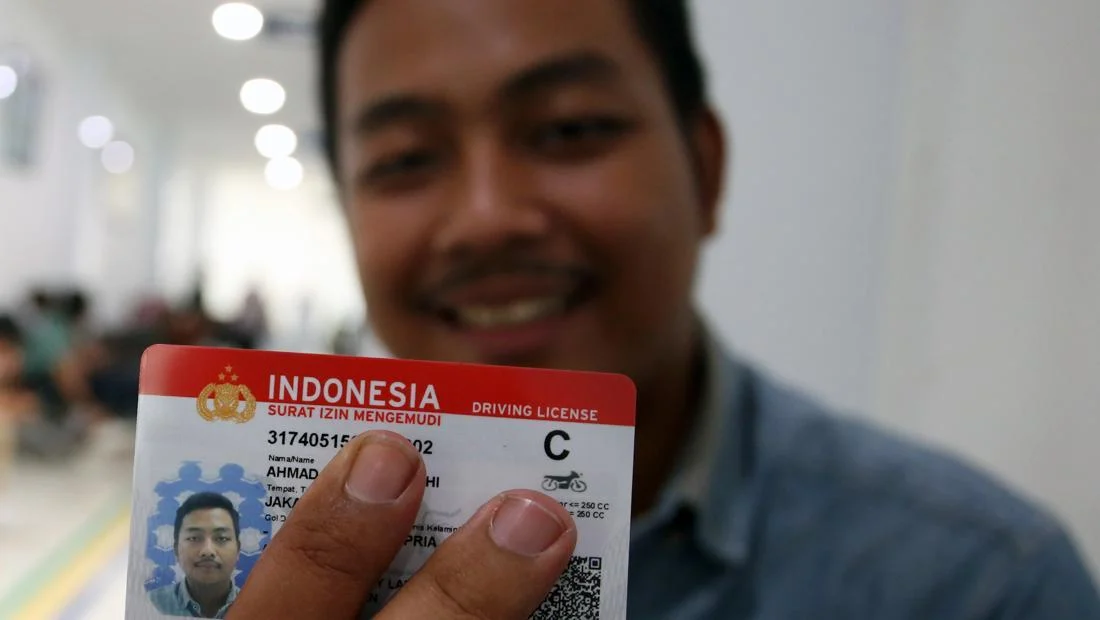
The Indonesian National Police Traffic Corps (Korlantas Polri) has formalized the administrative procedures and holiday dispensations regarding the validity of driving licenses, known locally as Surat Izin Mengemudi (SIM), specifically addressing the upcoming public holiday on May 14, 2026. Under the current regulatory framework, every motorized vehicle operator in Indonesia is required to renew their driving credentials every five years to ensure continued compliance with national road safety standards. While the standard operating procedure dictates that an expired license cannot be renewed and necessitates a completely new application process, specific exceptions are granted during national holidays and periods of administrative closure. This policy is designed to ensure that citizens are not unfairly penalized by the closure of government service centers during recognized religious and national observances.
According to the official announcement from the Jakarta Metropolitan Police (Polda Metro Jaya), all licensing services, including those at the Daan Mogot Satpas (Driving License Issuance Center), regional units across Jakarta, and the mobile SIM Keliling units, will suspend operations on Thursday, May 14, 2026. This closure coincides with the national holiday observing the Ascension Day of Jesus Christ. To accommodate motorists whose licenses happen to expire on this specific date, the authorities have established a grace period, allowing for renewal without the need for a full re-testing process, provided the renewal is completed within the designated window immediately following the holiday.
The Legal Mandate of Perpol Number 5 of 2021
The governance of driving licenses in Indonesia is strictly anchored in the Indonesian National Police Regulation (Perpol) Number 5 of 2021, which pertains to the Issuance and Marking of Driving Licenses. This regulation serves as the definitive legal guide for both the police force and the public regarding the lifecycle of a driving permit. Article 4, Paragraph 1 of this regulation explicitly states that individual and general driving licenses are valid for a period of five years from the date of issuance and must be renewed before the expiration date.
The significance of this five-year cycle is rooted in the need for periodic verification of a driver’s physical and mental fitness. Over a half-decade, an individual’s vision, reaction time, or general health may change, potentially impacting their ability to operate a vehicle safely. By requiring a renewal every five years, the state maintains a mechanism to ensure that all active drivers meet the minimum safety requirements. However, the regulation is also designed with inherent rigidity; if a driver fails to renew their license by even a single day past the expiration date, the document is considered legally void. In such instances, the individual is treated as a new applicant, meaning they must undergo the comprehensive "new issuance" procedure, which includes a written theory exam and a practical driving test.
Exceptions Under Force Majeure and Administrative Closures
While the rules regarding expiration are generally unforgiving, Article 4, Paragraph 4 of Perpol No. 5 Year 2021 provides a necessary legal "safety valve." This clause addresses situations involving "force majeure" or "keadaan kahar"—unforeseeable circumstances that prevent the fulfillment of a duty. National holidays and the subsequent closure of government offices fall under this category.
The regulation specifies that licenses that expire during such periods can be exempted from the requirement to apply for a new license. Instead, they can be processed through the standard renewal mechanism based on a decision by the Head of the National Police Traffic Corps (Kakorlantas Polri) following reports from regional traffic directorates. This ensures a standardized approach across the archipelago, preventing confusion among motorists and maintaining administrative order during peak holiday seasons.
Operational Timeline and Dispensation Period for May 2026
For the month of May 2026, the specific chronology of the service suspension and the subsequent "amnesty" period is as follows:
- Thursday, May 14, 2026: All SIM service centers, including the Satpas Daan Mogot, regional outlets, and mobile units, will be closed in observance of the Ascension Day of Jesus Christ. No administrative processing will occur on this day.
- Friday, May 15, 2026: Services are scheduled to resume. This marks the beginning of the dispensation window for those whose licenses expired on the previous day.
- May 15 to May 18, 2026: This four-day window serves as the critical period for affected motorists. Any individual whose SIM expired on May 14, 2026, is permitted to renew their license using the standard renewal procedure rather than the more arduous new application process.
Authorities have emphasized that this dispensation is strictly limited to those whose expiration date falls exactly on the holiday. If a license expired on May 13, 2026, or earlier, the driver would have already been in violation of the renewal timeline before the holiday closure, and thus would not be eligible for the extension. In those cases, the driver would be required to follow the protocol for a new license issuance, including the mandatory testing phases.
The Administrative Difference: Renewal vs. New Issuance
Understanding the difference between a renewal and a new issuance is vital for motorists, as the latter involves significantly more time, effort, and scrutiny. A standard renewal typically involves a health screening (physical and psychological), a simple administrative fee payment, and the printing of the new card. In contrast, a new issuance requires the applicant to prove their driving proficiency once again.
The theory test covers traffic laws, road signage, and defensive driving principles, while the practical test requires the applicant to navigate a series of maneuvers on a closed course—such as zig-zags, U-turns, and emergency braking—and sometimes a road test. By utilizing the holiday dispensation, motorists avoid the risk of failing these tests and the subsequent waiting periods associated with re-testing. Furthermore, the administrative fees for renewal are generally lower than those for a first-time or "new" issuance, providing a financial incentive for timely compliance.
Logistical Preparations and Public Outreach
The Jakarta Metropolitan Police, through their social media channels such as @satpasmetrojaya, have been proactive in disseminating this information to the public. The goal is to prevent a massive surge of confused motorists at Satpas locations on the day after the holiday and to ensure that citizens are aware of the narrow window available to them.
Traffic experts suggest that the concentration of renewals into a few days (May 15-18) will likely lead to high volumes at service centers. Consequently, the public is encouraged to utilize various available platforms. Beyond the main Satpas Daan Mogot facility, Jakarta residents can access SIM Outlets (Gerai SIM) located in various shopping malls or use the mobile SIM Keliling units that rotate through different districts. Additionally, the "Digital Korlantas" mobile application has become an increasingly popular tool for remote renewals, allowing motorists to handle much of the paperwork and health screening verification through their smartphones, though physical card collection or delivery is still part of the final process.
Analysis of the Impact on Road Safety and Public Trust
The implementation of such dispensations is a critical component of public service management in Indonesia. From a road safety perspective, these policies ensure that the majority of drivers remain "documented" and "verified." If the system were too rigid, many drivers might simply choose to drive with expired licenses rather than go through the hassle of a full re-test, thereby undermining the legal framework and safety standards of the road.
Moreover, these policies reflect a growing trend toward "citizen-centric" governance within the Indonesian National Police. By acknowledging that the state’s closure of offices creates an obstacle for the citizen, and by providing a clear, regulated solution, the police build public trust. This transparency helps reduce the potential for "middlemen" or illegal facilitators (locally known as calo) who often exploit public confusion during holiday periods to charge exorbitant fees for "expedited" services.
Broader Implications and Future Outlook
The 2026 holiday schedule serves as a reminder of the ongoing need for motorists to remain vigilant regarding their documentation. As Indonesia continues to modernize its traffic management systems, including the integration of Electronic Traffic Law Enforcement (ETLE), having a valid, up-to-date driving license is more important than ever. ETLE cameras are increasingly capable of cross-referencing vehicle registration with driver databases; operating a vehicle with an expired license is a primary offense that can be captured and processed automatically.
Looking forward, the National Police are expected to continue refining the "Sinar" (SIM Nasional Presisi) system, aiming for a future where renewals might be entirely automated or decoupled from physical office hours. Until then, the periodic announcements regarding holiday dispensations remain a vital bridge between rigid regulatory requirements and the practical realities of the calendar.
Motorists are advised to check the expiration date on the bottom right corner of their SIM cards immediately. While the May 14, 2026, dispensation provides a reprieve for some, the responsibility for maintaining a valid permit rests solely with the driver. Failing to take advantage of the May 15–18 window will result in the permanent forfeiture of renewal privileges for that cycle, forcing the driver back to the starting line of the licensing process. As the date approaches, Polda Metro Jaya is expected to release further details regarding specific operational hours for the mobile units to ensure maximum coverage for the city’s millions of motorists.