Nila Kartika Wati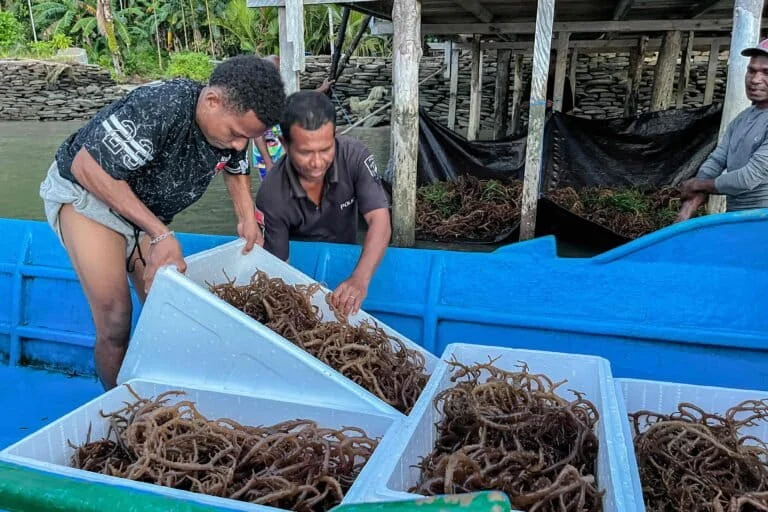
La Ode Baharuddin has just returned from the shoreline, his legs caked in thick mud from the soles of his feet to his calves. He spent the morning scouring the mangrove roots of Akuni Village in the Tinanggea District of South Konawe, Southeast Sulawesi, searching for burungo, or mangrove snails (Telescopium telescopium). This grueling labor has become his primary means of survival since the seaweed cultivation that once brought prosperity to his community began to collapse five years ago. The culprit, according to Baharuddin and hundreds of other local farmers, is the encroaching waste from the region’s burgeoning nickel mining industry.
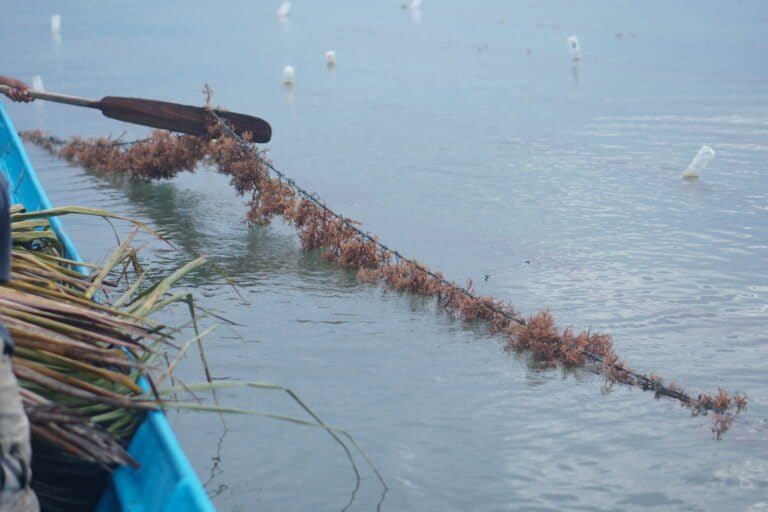
For three consecutive years, Baharuddin’s seaweed plots have yielded nothing but disappointment. Whenever the rains arrive, the seawater turns a murky yellow, choked with sediment. Under these conditions, the seaweed fails to develop, leaving farmers with mounting debts and empty nets. The decline in Tinanggea’s seaweed production began to accelerate around 2017, coinciding with the expansion of nickel mining activities and the establishment of ore stockpiles along the coast. Despite years of complaints regarding the environmental impact of ship traffic and ore loading, a viable solution remains elusive.
From Seaweed Prosperity to Scavenging for Survival
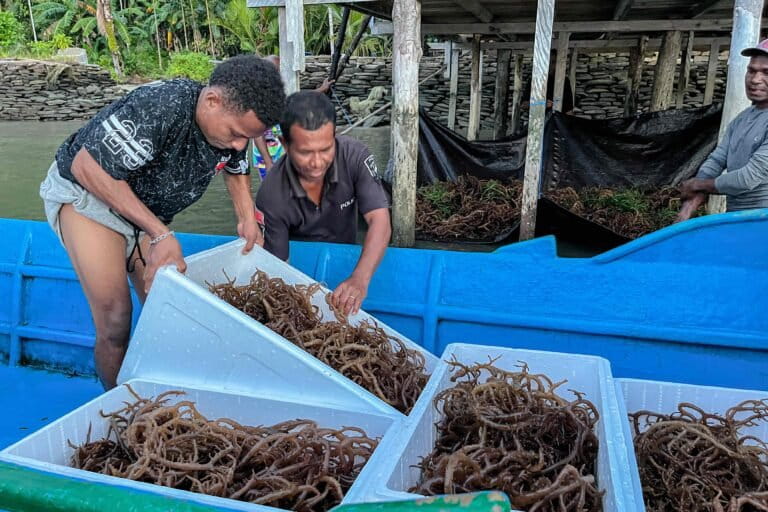
The economic shift for the residents of Tinanggea has been catastrophic. During the "golden era" of seaweed farming between 2010 and 2015, the region was so prosperous that locals dubbed certain areas "Dollar Villages." Baharuddin, originally an aromatic fish trader from Muna Barat, moved to Tinanggea after witnessing the immense potential of agar-agar (the local term for seaweed). He invested heavily, spending roughly Rp 10 million to set up 200 spans of rope, plastic buoys, and seedlings.
At the peak of the market in 2014, dried seaweed prices reached Rp 45,000 per kilogram. A single 100-kilogram sack could net a farmer Rp 4.5 million, a significant sum for a coastal household. This income allowed families to build permanent homes, purchase vehicles, and ensure their children received a high-quality education. Today, that reality has vanished. Baharuddin now sells fresh mangrove snails for a meager Rp 3,000 to Rp 5,000 per kilogram. Even those who process the snails into cooked meat only receive about Rp 20,000 per kilogram—barely enough to cover daily meals.
The financial strain is most visible during the start of the school year. Baharuddin, who has three children in elementary, middle, and high school, has been forced to sell off his livestock and even parcels of land to afford uniforms, books, and stationery. The "seaweed gold" that once funded his family’s future has been replaced by a desperate liquidation of assets.
The Environmental Mechanics of Decline
The seaweed variety favored in Tinanggea is Kappaphycus alvarezii (commonly known as Eucheuma cottonii). While it takes longer to harvest than other species, its high carrageenan content makes it a valuable commodity for the global food and cosmetic industries. However, this species is highly sensitive to water quality.
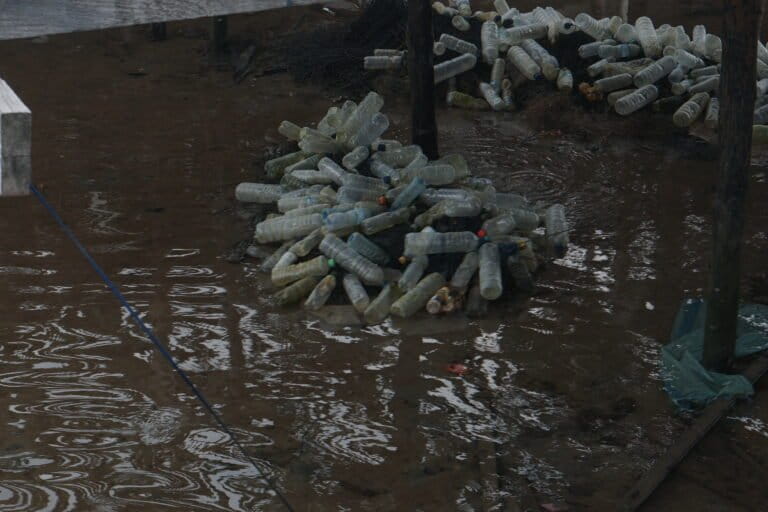
According to environmental monitoring by the Indonesian Forum for the Environment (Walhi) in Southeast Sulawesi, the proliferation of nickel mining jetties and terminal activities has led to massive sedimentation. As nickel ore is loaded onto barges, dust and runoff frequently enter the marine ecosystem. This sediment increases the turbidity of the water, preventing sunlight from reaching the seaweed—a critical requirement for photosynthesis.
Andi Rahman, Executive Director of Walhi Southeast Sulawesi, points out that the operational neglect of mining companies regarding environmental impact assessments (AMDAL) has turned the coastal waters of Tinanggea into a high-risk zone. The sedimentation not only kills the seaweed but also disrupts the broader ecosystem, including the spawning grounds for fish and the habitats of the very mangrove snails farmers now rely on for survival.
A Chronology of Environmental Degradation
The timeline of the crisis in South Konawe reflects the broader industrialization of Southeast Sulawesi’s coastline:
- 2010–2014: The boom period. Seaweed cultivation expands rapidly across Tinanggea, Lainea, and Kolono Timur. Local economies flourish.
- 2015–2016: Global prices for seaweed remain high, but the first signs of industrial expansion appear as nickel mining permits are issued for nearby hills.
- 2017: Farmers report the first major instances of "yellow water" following heavy rains. Seaweed harvests begin to show signs of "ice-ice" disease, a condition often triggered by environmental stress and changes in water salinity and chemistry.
- 2021–2024: The collapse of cultivation in Bungin Permai and Akuni villages. Most farmers abandon their ropes. The coastal landscape is now dominated by the silhouettes of nickel barges rather than seaweed buoys.
- 2025–2026: Farmers attempt "trial plantings" with new seedlings, but most report a 100% failure rate as the water quality remains compromised.
The Statistical Disconnect: Official Data vs. Field Reality
One of the most frustrating aspects for the farmers is the discrepancy between their lived experience and official government data. Records from the Central Bureau of Statistics (BPS) for South Konawe suggest that seaweed production in Tinanggea has actually increased over the last five years. BPS data claims production rose from 18,644 tons in 2021 to 33,946 tons in 2025.
Mardiana, a 42-year-old former seaweed farmer in Bungin Permai, flatly denies these figures. "In Bungin Permai, there is nothing. Since 2021, it has been a famine. Some people try to plant, but it’s a total failure," she says. The government’s data appears to aggregate figures from the entire district, potentially masking the total collapse of specific traditional hubs like Bungin Permai and Akuni by including newer or different industrial-scale operations elsewhere.
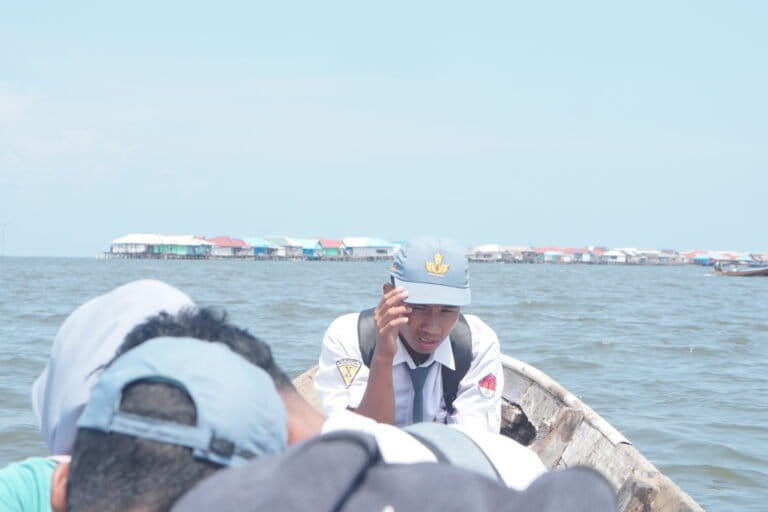
Wayan Darma, Head of the South Konawe Fisheries and Marine Affairs Office, acknowledged that seaweed farming has disappeared from areas like Torobulu due to mining pollution and from Moramo Bay due to ship traffic. However, he maintains that the decline in Tinanggea is primarily due to fluctuating market prices rather than mining waste—a claim that contradicts the physical evidence of sedimentation and the findings of environmental researchers.
Socio-Economic Impact and the Role of Women
The collapse of the seaweed industry has also dismantled a vital social structure. Seaweed farming was a communal activity that empowered women. In Bungin Permai, a village primarily inhabited by the Bajo ethnic group, women were responsible for the critical tasks of seedling preparation, tying the plants to the ropes, and drying the harvest.
A 2024 study by Halu Oleo University highlighted that seaweed cultivation was the primary driver of household stability and female economic participation in the region. Mardiana recalls a time when her 300 spans of seaweed allowed her to earn a net profit of Rp 40 million per harvest, enough to buy a motorcycle and a boat. Now, she spends her days in forced idleness, borrowing money from relatives just to buy fuel for her children’s school transport.

The loss of this income has created a ripple effect through the local economy. Small kiosks are closing, and the "Bajo" floating houses, which were once symbols of a unique and thriving culture, are falling into disrepair. The "Dollar Village" has become a village of debt.
Scientific Analysis: Why Nickel and Seaweed Cannot Coexist
Laode M. Aslan, a Professor at the Faculty of Fisheries and Marine Sciences at Halu Oleo University, warns that nickel mining is fundamentally incompatible with seaweed aquaculture. "Nickel mining is the greatest enemy of seaweed," he stated during a parliamentary hearing in Jakarta. He noted that this phenomenon is not isolated to South Konawe; similar destruction is occurring in Central Sulawesi, South Sulawesi, and North Maluku.
Beyond the physical smothering caused by sediment, heavy metals associated with nickel mining can alter the chemical balance of the water. Seaweed acts as a biological filter; it absorbs what is in the water. When the water is contaminated with mining runoff, the seaweed’s growth is stunted, and it becomes prone to disease.
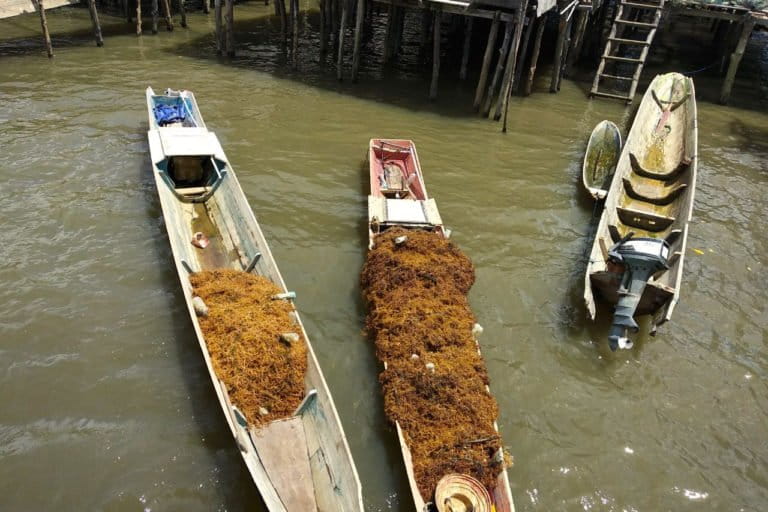
Furthermore, the loss of seaweed is a blow to global climate goals. Analysis by The Nature Conservancy indicates that seaweed is a powerful tool for carbon sequestration, capable of absorbing approximately 0.5 tons of CO2 equivalent per hectare. By destroying these coastal farms, the mining industry is not only erasing local livelihoods but also removing a natural defense against climate change and nutrient pollution.
A Bleak Outlook for the Coastal Frontier
The tragedy of Tinanggea serves as a cautionary tale about the costs of the global "green energy" transition. As the world demands more nickel for electric vehicle batteries, the traditional, sustainable economies of Southeast Sulawesi are being sacrificed.
Baharuddin recently made one last attempt to revive his trade. In September 2025, he invested Rp 2 million in new seedlings and laid out 26 spans of rope. He watched them daily, hoping for a sign of growth. Within weeks, the plants turned white and disintegrated. The water, once clear enough to see the seabed, remained a stubborn, industrial yellow.
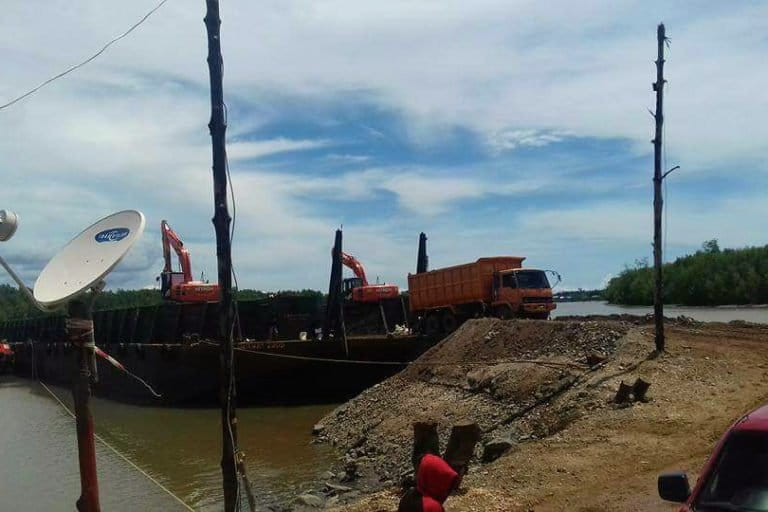
"I don’t know what the future holds," Mardiana says, looking out at the horizon where the mining jetties stand. "The mines are far in the hills, but their waste is right here in our water. When the nickel is gone, the rich people will leave Sulawesi. They will leave us with nothing but trash and poison."