Azin Asro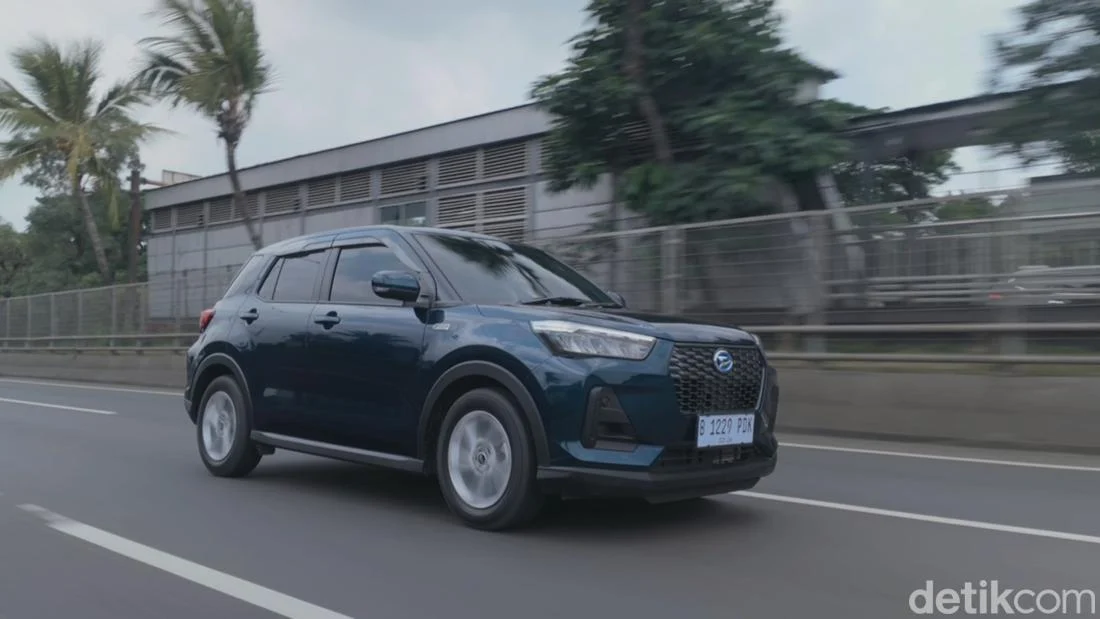
PT Astra Daihatsu Motor (ADM) has officially marked its entry into the Indonesian electrified vehicle segment with the introduction of the Daihatsu Rocky e-Smart Hybrid, a move that signals a strategic shift for the brand traditionally known for its internal combustion engine (ICE) dominance. As the first electrified model marketed by Daihatsu in the archipelago, the Rocky Hybrid represents a calculated step toward supporting Indonesia’s national roadmap for carbon neutrality. Currently imported as a Completely Built-Up (CBU) unit from Japan, the compact SUV is positioned as a premium yet accessible option within the burgeoning hybrid market, carrying an on-the-road (OTR) price tag of Rp 299,850,000 for the Jakarta area. This pricing strategy places the Rocky Hybrid in a unique competitive bracket, offering advanced Japanese hybrid technology at a sub-Rp 300 million price point, which is often considered the "sweet spot" for middle-class automotive consumers in Indonesia.
The market response to the Rocky Hybrid has been characterized by steady interest rather than an immediate explosion in volume, reflecting a consumer base that is still acclimating to hybrid technology under the Daihatsu badge. Since its initial introduction in mid-2025, the vehicle has garnered a total of 750 Vehicle Purchase Orders (Surat Pemesanan Kendaraan or SPK) as of April 2026. This figure encompasses the sales performance from July 2025 through the first four months of 2026. Sri Agung Handayani, the Marketing Director and Corporate Communication Director of PT Astra Daihatsu Motor, confirmed these figures during a recent press conference held in BSD, Tangerang. According to Handayani, the distribution of these units is being managed carefully to match the supply chain capabilities of the Japanese production facilities, with a significant uptick in supply expected to reach Indonesian dealerships in the coming months.
A Chronological Overview of the Rocky Hybrid Launch and Distribution
The journey of the Daihatsu Rocky Hybrid in Indonesia began in earnest during the second half of 2025. Following its official unveiling, the primary focus for PT Astra Daihatsu Motor was to establish a logistics pipeline from Japan to Indonesia. The first physical deliveries to customers were synchronized with the Gaikindo Jakarta Auto Week (GJAW) held in November 2025. This event served as a critical touchpoint for the brand, allowing potential buyers to experience the serial hybrid system firsthand. Tri Mulyono, the Marketing and Customer Relations Division Head of PT Astra International Tbk. Daihatsu Sales Operation, noted that approximately 400 units have been delivered to customers since that initial launch window.
Data from the Association of Indonesia Automotive Industries (Gaikindo) provides a more granular look at the wholesale distribution—the movement of vehicles from the manufacturer to the dealer network. Between January and April 2026, a total of 280 units were distributed to dealers across Indonesia. While the total SPK stands at 750, the gap between orders and wholesale distribution highlights the logistical challenges inherent in CBU imports, as well as the cautious "test-the-water" approach Daihatsu is taking with its first hybrid offering. However, the outlook for the second quarter of 2026 remains optimistic. Handayani indicated that the supply chain is stabilizing, with more than 100 units scheduled for distribution in May 2026 alone, suggesting that the delivery lead times for customers who placed orders late in 2025 are beginning to shorten.
Technical Innovation: The Serial Hybrid Advantage
What distinguishes the Daihatsu Rocky e-Smart Hybrid from many of its competitors, including those within the Toyota-Daihatsu alliance, is its specific mechanical architecture. Unlike the parallel hybrid or series-parallel hybrid systems commonly found in the Toyota Hybrid System (THS)—where both the internal combustion engine and the electric motor can simultaneously provide mechanical drive to the wheels—the Rocky Hybrid employs a "serial hybrid" system. In this configuration, the internal combustion engine is not physically connected to the drivetrain. Instead, the wheels are driven exclusively by an electric motor.
The internal combustion engine, a 1.2-liter three-cylinder unit designated as the WA-VEX, functions solely as a high-efficiency generator. Its primary role is to produce electricity to either charge the onboard battery or power the electric motor directly. This setup mimics the driving characteristics of a Battery Electric Vehicle (BEV), providing instantaneous torque and smooth, linear acceleration without the traditional shifting of gears. The electric motor in the Rocky Hybrid is capable of producing a maximum power output of 106 PS and a maximum torque of 170 Nm. This torque figure is particularly noteworthy, as it makes the Rocky Hybrid the most powerful in its class in terms of pulling power, ensuring responsive performance in stop-and-go urban traffic.
Supporting the motor is a 0.74 kWh lithium-ion battery. While the capacity might seem modest compared to full BEVs, it is significantly larger—up to six times larger—than the batteries found in some mild-hybrid competitors. In fact, Daihatsu engineers have pointed out that the battery performance is comparable to that of medium-sized hybrid SUVs currently on the global market. This battery serves as a crucial buffer, allowing the vehicle to operate in "EV Mode" for short distances or during low-speed maneuvers, further enhancing the quietness and refinement of the driving experience.
Unprecedented Fuel Efficiency and Environmental Impact
The primary allure of the serial hybrid system lies in its exceptional fuel economy, particularly in urban environments where traditional gasoline engines are at their least efficient. By allowing the engine to run at its most efficient RPM range to generate power rather than forcing it to deal with the fluctuating loads of direct wheel drive, Daihatsu has achieved impressive efficiency metrics. Under the Worldwide Harmonized Light Vehicles Test Cycle (WLTC), the Rocky Hybrid is rated at 28 kilometers per liter (KM/L). When measured using the Japan Cycle 08 (JC08) method, which is often used in Japanese domestic market testing, the efficiency climbs to a staggering 34.8 KM/L.
These figures are not merely for show; they translate to a significant reduction in the total cost of ownership for the consumer. In a market like Indonesia, where fuel prices and subsidies are frequent topics of public discourse, a vehicle that can nearly triple the fuel efficiency of a standard city car is a compelling proposition. Furthermore, the environmental benefits are substantial. The Rocky Hybrid emits only 83 grams of CO2 per kilometer, positioning it as one of the cleanest non-full-electric vehicles available in the country. This low emission profile aligns with the Indonesian government’s Low Carbon Emission Vehicle (LCEV) goals, which provide a framework for tax incentives and regulatory support for greener transportation.
Strategic Implications for the Indonesian Automotive Landscape
The introduction of the Rocky Hybrid is a strategic "litmus test" for PT Astra Daihatsu Motor. For decades, Daihatsu has been the backbone of the Indonesian automotive market, focusing on affordable, locally manufactured vehicles like the Xenia, Sigra, and the standard ICE Rocky. By bringing in the e-Smart Hybrid as a CBU unit, ADM is gathering critical data on consumer behavior, maintenance requirements, and the durability of hybrid components in Indonesia’s tropical climate and varied road conditions.
Industry analysts suggest that the current sales performance of 750 units is a respectable start for a niche product. The sub-Rp 300 million price point is vital here; it prevents the "sticker shock" that often accompanies new technology. If the Rocky Hybrid continues to maintain its momentum, it could pave the way for local production (CKD) at Daihatsu’s massive manufacturing facilities in Karawang or Sunter. Localizing production would not only potentially lower the price further by reducing import duties but would also integrate Indonesian component manufacturers into the global electrified vehicle supply chain.
Moreover, the Rocky Hybrid serves as an educational tool. Many Indonesian consumers remain wary of the charging infrastructure required for BEVs. The serial hybrid system offers a "best of both worlds" solution: the driving sensation and efficiency of an electric car without the need for external charging. The vehicle is refueled at standard gas stations, making it a "plug-less" electric experience that fits seamlessly into the existing habits of Indonesian drivers.
Market Reception and Future Outlook
The reception of the Daihatsu Rocky Hybrid also reflects a broader shift in the Indonesian SUV segment. The "compact SUV" category has become one of the most contested spaces in the market, with consumers demanding a blend of style, ground clearance, and modern features. By adding "electrification" to the Rocky’s list of attributes, Daihatsu has successfully differentiated the model from its primary rivals.
As we move further into 2026, the success of the Rocky Hybrid will likely influence the product pipelines of other manufacturers. We are already seeing a trend where "hybridization" is viewed as the most practical bridge to full electrification in Southeast Asia. The 750 SPK units recorded so far represent 750 early adopters who are providing the feedback necessary for Daihatsu to refine its future electrified offerings.
In conclusion, the Daihatsu Rocky e-Smart Hybrid is more than just a new model in a showroom; it is a foundational piece of Daihatsu’s future in Indonesia. With its unique serial hybrid drivetrain, class-leading torque, and exceptional fuel efficiency, it offers a pragmatic solution to the dual challenges of rising fuel costs and environmental degradation. While its sales volume is currently limited by its CBU status and the gradual ramp-up of supply, the underlying enthusiasm—as evidenced by the steady stream of orders—suggests that the Indonesian public is ready for the next chapter of automotive evolution. As PT Astra Daihatsu Motor continues to fulfill the existing 750 orders and prepares for increased allocations, the Rocky Hybrid is set to remain a key player in the nation’s transition toward a cleaner, more efficient transport sector.