Azin Asro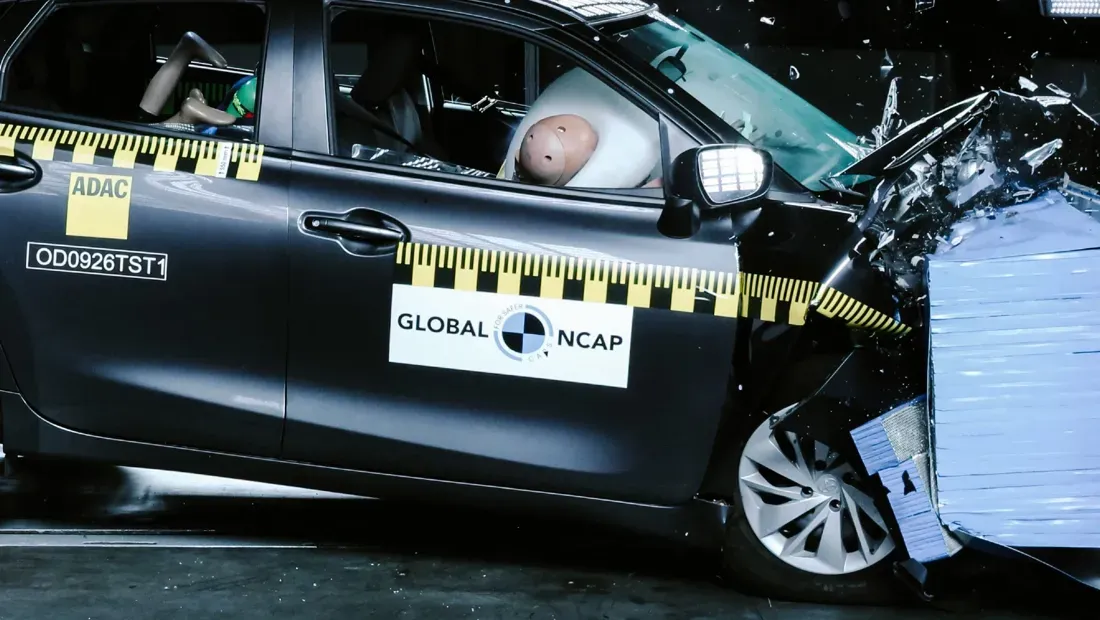
The Toyota Starlet, a popular hatchback in the South African automotive market and a product of the strategic global alliance between Toyota and Suzuki, has recorded a disappointing zero-star safety rating in the latest round of crash testing conducted by Global NCAP. This result comes as part of the #SaferCarsforAfrica initiative, which aims to highlight the safety discrepancies in vehicles sold across the African continent compared to those in more strictly regulated markets like Europe or North America. While the Starlet nameplate carries significant historical weight as a reliable and beloved classic from the 1980s and 1990s, the modern iteration—essentially a rebadged Suzuki Baleno manufactured in India—has failed to meet the rigorous safety benchmarks set for adult occupant protection in its current standard configuration.
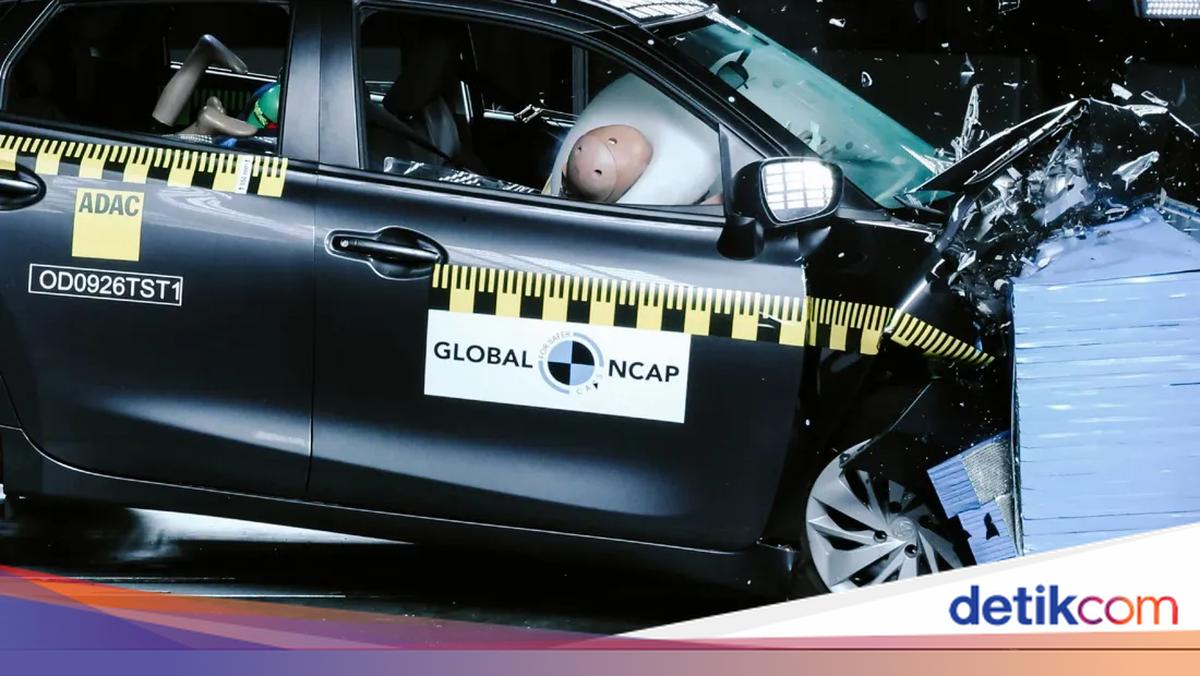
According to the official report released by Global NCAP, the Toyota Starlet achieved a zero-star rating for adult occupant protection, while managing a more respectable, though still middling, three-star rating for child occupant protection. The model tested was the base version equipped with two frontal airbags and Electronic Stability Control (ESC) as standard. However, the absence of side-curtain and side-body airbags in the standard trim at the time of testing, combined with structural weaknesses identified during the impact, led to the catastrophic scoring.
Technical Breakdown of the Crash Test Results
The Global NCAP assessment involves a series of controlled collisions designed to simulate real-world accident scenarios. For the Toyota Starlet, the frontal offset impact test revealed significant vulnerabilities. Evaluation of the vehicle’s physical structure after the 64 km/h impact led engineers to label the footwell area and the overall body shell as "unstable." An unstable rating indicates that the vehicle’s frame is unable to withstand further loadings, suggesting that in higher-speed or more complex accidents, the cabin integrity could collapse, leading to life-threatening injuries.
In the frontal impact assessment, the protection offered to the driver’s and passenger’s head and neck was generally noted, but the chest protection for the driver was rated as weak. Furthermore, the test using a three-year-old child dummy showed that the child’s head made contact with the interior of the vehicle during the forward excursion, which contributed to the lower safety score for younger passengers.
The side impact test further exacerbated the Starlet’s poor performance. Without side airbags as standard equipment in the tested model, the protection for the occupant’s head and chest was rated as poor. While the protection for the abdominal area was deemed adequate, the high risk of fatal head injuries in a side-impact scenario—such as a T-bone collision at an intersection—prevented the vehicle from earning a higher star rating. Because side-curtain airbags were not standard, Global NCAP did not perform the side pole impact test, which is a requirement for higher safety tier certifications.
The Evolution of the Starlet Nameplate and the Toyota-Suzuki Alliance
To understand the current position of the Toyota Starlet, one must look at the broader context of the "Toyota-Suzuki Global Strategic Alliance." Formed in 2017 and deepened in 2019, this partnership allows the two Japanese giants to share technology, platforms, and manufacturing facilities. In emerging markets like India and various African nations, Toyota utilizes Suzuki’s expertise in developing cost-effective, small-car platforms.
The current Toyota Starlet is a direct result of this collaboration. It is a rebadged version of the Suzuki Baleno, produced by Maruti Suzuki in India. In India, the vehicle is also sold as the Toyota Glanza. This strategy allows Toyota to fill the entry-level hatchback segment quickly and efficiently without the massive R&D costs of developing a bespoke platform. However, the zero-star rating raises questions about whether the cost-saving measures inherent in badge engineering have come at the expense of structural safety and occupant protection.
In South Africa, the Starlet replaced the Toyota Etios, another budget-friendly model. It quickly became a top seller due to Toyota’s extensive dealer network, reputation for reliability, and the vehicle’s competitive pricing. The Starlet’s popularity makes the zero-star rating particularly concerning for safety advocates, as it represents a significant portion of the new cars entering the South African car park.
Official Reactions and Toyota’s Commitment to Safety Upgrades
The leadership at Global NCAP expressed significant concern over the results, particularly given Toyota’s global reputation for safety and engineering excellence. Richard Woods, the Chief Executive Officer of Global NCAP, described the result as "shocking." He emphasized that for a vehicle as popular as the Starlet, an unstable body structure and poor protection for vital organs like the head and chest are unacceptable in the modern era.
"This is a disappointing result from a brand like Toyota," Woods stated in a press release. "The Starlet is a staple of the South African market. Seeing such a high-volume vehicle fail to provide basic structural integrity during a crash is a call to action for both the manufacturer and the regulators."
In response to the preliminary findings and the evolving safety landscape, Toyota South Africa has already begun implementing changes. The manufacturer clarified that the model tested by Global NCAP represents an older specification and that the Starlet is currently being updated in the South African market. The updated versions are expected to feature six airbags—adding side and curtain airbags to the existing dual front airbags—as standard across more of the range.
Toyota’s proactive move to standardize higher safety features has been welcomed by Global NCAP. Richard Woods noted that the organization has already anonymously purchased the revised versions of the Starlet to conduct a follow-up test. The automotive industry is now waiting to see if the addition of airbags and potential minor structural reinforcements will be enough to move the Starlet from zero stars to a safer territory.
Market Context: The South African Automotive Landscape
The #SaferCarsforAfrica campaign was launched in 2017 by Global NCAP in partnership with the Automobile Association (AA) of South Africa. The program was necessitated by the "double standard" in vehicle safety, where global manufacturers often sell vehicles in Africa with fewer safety features and weaker structures than the versions of the same or similar models sold in Europe or the United Kingdom.
In many African nations, legislative requirements for vehicle safety are lagging behind international standards. This allows manufacturers to strip away "non-essential" features like multiple airbags, traction control, or advanced driver assistance systems (ADAS) to keep the retail price low. The Starlet’s zero-star rating highlights the danger of this practice, as the lack of side airbags directly contributed to the "poor" protection rating that capped the overall score at zero.
Despite the safety rating, the Toyota Starlet remains a formidable player in the South African market. Powered by a 1.5-liter four-cylinder petrol engine, it produces 77kW of power and 138Nm of torque. This engine is an upgrade from the previous 1.4-liter unit, offering better performance and fuel efficiency. It is available with either a five-speed manual or a four-speed automatic transmission. Consumers are often drawn to its 0-100km/h sprint time of 11.2 seconds and its practical interior, often overlooking safety ratings in favor of brand prestige and resale value.
Implications for the Automotive Industry and Consumer Awareness
The Starlet’s zero-star rating serves as a critical case study for the automotive industry in developing markets. It underscores the fact that "safety as an option" is becoming an increasingly untenable business model. As consumer awareness grows through programs like Global NCAP, manufacturers are being forced to prioritize occupant protection even in their entry-level offerings.
For Toyota, the reputational risk is significant. The brand has built its empire on the pillars of "Quality, Durability, and Reliability" (QDR). A zero-star safety rating contradicts this image. However, Toyota’s rapid response in upgrading the Starlet’s safety specifications suggests that the company is sensitive to these findings and is willing to adapt to maintain its market leadership.
The broader implication for the Suzuki-Toyota partnership is also noteworthy. Since the Starlet is a twin of the Suzuki Baleno, these results reflect equally on Suzuki’s engineering. It suggests that the lightweight "HEARTECT" platform, which Suzuki uses to achieve excellent fuel economy and nimbleness, may require further reinforcement to achieve high scores in Global NCAP’s increasingly stringent testing protocols.
Chronology of the Starlet’s Safety Journey
To provide a clear timeline of the events leading to this assessment:
- 2019-2020: Toyota and Suzuki launch the first phase of their rebadging program in India and Africa. The Starlet (based on the previous Baleno) enters the South African market.
- 2022: A major update to the Baleno/Starlet is launched, featuring the 1.5L engine and revised styling.
- 2023-2024: Global NCAP procures a standard South African spec Starlet for testing as part of the #SaferCarsforAfrica initiative.
- Late 2024: Results are published, revealing the zero-star adult occupant rating.
- Present: Toyota South Africa announces standard safety upgrades (6 airbags) across the range, and Global NCAP prepares for a re-test of the improved model.
Conclusion and Future Outlook
The journey of the Toyota Starlet from a zero-star rating to a safer vehicle is currently in progress. While the initial test results are a cause for serious concern for current owners and prospective buyers, the subsequent commitment by Toyota to standardize side and curtain airbags is a positive step forward for road safety in Africa.
The automotive industry is at a crossroads where the demand for affordable mobility must be balanced with the ethical obligation to provide safe transportation. As the #SaferCarsforAfrica program continues to shine a light on these discrepancies, it is expected that more manufacturers will follow Toyota’s lead in upgrading safety features before they are tested, rather than as a reaction to a poor score. For now, the automotive world watches closely to see if the revised Toyota Starlet can redeem the "Starlet" name and provide the level of protection that South African consumers deserve.