Nasution Nanang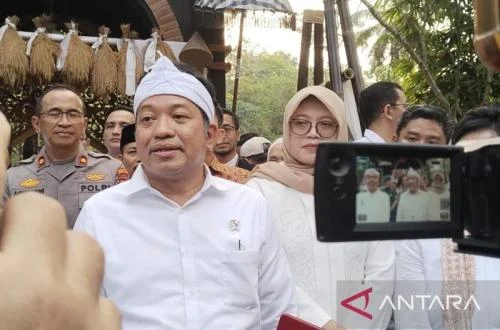
Indonesia’s Central Statistics Agency (BPS) has set an ambitious target for the 2026 Economic Census in West Java, aiming to enumerate at least 5.54 million business actors and approximately 17.7 million households. This monumental undertaking, crucial for national economic planning and policy formulation, was officially launched by BPS Deputy Head Sonny Harry Budiutomo Harmadi at Lembur Pakuan, Subang, on Sunday, June 21st. The vast scale of the census reflects West Java’s status as Indonesia’s most populous province and a significant economic engine, necessitating a comprehensive approach to capture the full spectrum of its dynamic business landscape.
Unprecedented Scale and Strategic Importance
The 2026 Economic Census (SE2026) is part of a decennial nationwide statistical undertaking by BPS, designed to collect comprehensive data on the entire non-agricultural economic sector. This data provides a fundamental baseline for understanding the structure, characteristics, and performance of businesses across Indonesia, from micro-enterprises to large corporations. For West Java, with its diverse economy spanning agriculture, manufacturing, services, and a burgeoning digital sector, the census is particularly vital. The province, home to over 50 million people, consistently contributes a substantial portion to Indonesia’s Gross Domestic Product (GDP), often exceeding 14-15% of the national total. Accurately mapping its economic actors is therefore paramount for both provincial and national development strategies.
"The number is indeed very large, business actors reach millions, because West Java has a very large population," stated Sonny Harry Budiutomo Harmadi following the census launch event, which was also attended by West Java Governor Dedi Mulyadi. He emphasized that the sheer volume of businesses, many operating informally or from residential areas, necessitates a robust and meticulously planned enumeration strategy. To achieve this unprecedented coverage, BPS plans to deploy a massive force of 40,573 field officers. These officers will conduct data collection through a traditional door-to-door approach, ensuring that no stone is left unturned in identifying and recording every economic activity. Furthermore, organic BPS personnel from across Indonesia, including those stationed in West Java’s numerous regencies and cities, will be mobilized to provide full support for this extensive operation, underscoring the national significance of the census.
A Decade of Data for Future Policy
The Economic Census is conducted every ten years, with the last one taking place in 2016. Its findings are indispensable for a wide array of stakeholders. For the government, the data informs evidence-based policymaking, enabling targeted interventions to stimulate growth, create jobs, and alleviate poverty. It helps identify emerging sectors, assess the impact of various economic policies, and allocate resources more efficiently. For businesses, particularly small and medium-sized enterprises (SMEs), the census provides valuable market insights, helping them understand their competitive landscape, identify customer segments, and explore new opportunities. Researchers and academics also rely heavily on this data for economic modeling, trend analysis, and socio-economic studies. The 2026 census is particularly critical as Indonesia navigates global economic shifts, technological advancements, and the ongoing recovery from recent economic disruptions.
West Java’s Innovative Edge: ‘Jabar Eco Tech’
A standout feature of the 2026 Economic Census in West Java is the proactive and innovative support from the provincial government, led by Governor Dedi Mulyadi. This support includes the development and deployment of a unique application called ‘Jabar Eco Tech,’ which BPS officials claim is the only one of its kind in Indonesia. This bespoke technological solution is designed to significantly enhance the efficiency and accuracy of the data collection process, particularly in identifying and locating businesses that might otherwise be overlooked.
"This might be the only one in Indonesia. So, in West Java, there’s something called ‘Jabar Eco Tech.’ The governor has tasked RTs, RWs, and so on to conduct eco-tagging, recording coordinates of business locations," explained Sonny. The application empowers local community leaders (Rukun Tetangga/RT and Rukun Warga/RW, the smallest administrative units in Indonesia) to map the precise geographical coordinates of every business within their jurisdiction. This includes traditional warungs (small shops), larger stores, and crucially, even home-based enterprises or digital businesses that lack physical signage. By leveraging the intimate local knowledge of RT/RW heads, ‘Jabar Eco Tech’ creates a detailed, geo-referenced database of economic activities, dramatically simplifying BPS’s task of identifying and locating enumeration targets.
This innovative approach addresses a significant challenge in modern economic censuses: the proliferation of informal and digital businesses. Many enterprises, especially in the booming e-commerce and gig economies, operate entirely from residential addresses or without a visible storefront. These "hidden" businesses often go unrecorded in traditional enumeration methods, leading to an underestimation of economic activity. ‘Jabar Eco Tech’ directly tackles this by providing BPS with a pre-mapped landscape of business locations, allowing field officers to conduct more targeted and efficient door-to-door visits. The integration of local community participation through this digital platform exemplifies a forward-thinking strategy to enhance data quality and coverage.
A United Front for Data Accuracy
The launch event in Subang also served as a critical platform for fostering collaboration among various stakeholders. Governor Dedi Mulyadi invited a broad spectrum of leaders, including regents (Bupati) and mayors (Wali Kota) from across West Java, as well as representatives from key economic institutions such as Bank Indonesia (BI), the Indonesian Employers’ Association (Apindo), and the Financial Services Authority (OJK). This high-level gathering culminated in the signing of a joint commitment, symbolizing a unified resolve to ensure the smooth and successful execution of the 2026 Economic Census.
The presence and commitment of these diverse entities underscore the widespread recognition of the census’s importance. Local government leaders are crucial for facilitating the work of field officers, providing local context, and mobilizing community support. Financial institutions like Bank Indonesia and OJK rely on accurate economic data for monetary policy formulation, financial stability analysis, and regulating the financial sector. Business associations like Apindo utilize such data to advocate for their members, identify industry trends, and inform investment decisions. "So, it’s just the mechanism that needs to be discussed later, because it also concerns financial administration, the implementation of human resources, and so on," Sonny added, highlighting the operational complexities that require continued coordination among all parties.
Capturing the Unseen Economy: Digital and Home-Based Businesses
A core focus of the 2026 Economic Census, as emphasized by Sonny, is the imperative for officers to meticulously enter homes and residential areas. This direct approach is essential because a significant number of businesses, particularly in West Java, operate without any external signage. The rise of the digital economy has further amplified this challenge, with countless individuals running online stores, service-based ventures, or content creation businesses from their private residences. These enterprises, while often small in scale individually, collectively represent a substantial and growing segment of the economy. Failing to enumerate them would lead to an incomplete and skewed picture of economic reality.
The ‘Jabar Eco Tech’ application is a direct response to this challenge, providing a crucial preliminary layer of identification. By marking the coordinates of such businesses, it equips BPS enumerators with actionable intelligence, reducing the time and effort required to identify these often-elusive economic units. This comprehensive approach ensures that the data collected truly reflects the contemporary economic landscape, including the dynamic shifts towards e-commerce, the gig economy, and home-based entrepreneurship. Understanding the scale and characteristics of these businesses is vital for developing policies that support their growth, integrate them into the formal economy where appropriate, and ensure they benefit from government programs.
Governor Mulyadi’s Vision for Continuous Economic Monitoring
West Java Governor Dedi Mulyadi articulated his strong support for the economic census, emphasizing its fundamental role in enabling the government to formulate targeted and effective policies. He highlighted that without granular, up-to-date economic data, policy decisions risk being misdirected or inefficient. The census provides the empirical foundation upon which sound governance and sustainable development are built.
In a forward-thinking suggestion, Governor Mulyadi even proposed that West Java consider conducting an economic census annually, while a population census could be conducted once or even twice a year. While the national BPS framework mandates a decennial economic census, the governor’s suggestion reflects a recognition of the rapidly changing economic environment and the need for more frequent data updates at the regional level. Such frequent data collection, though resource-intensive, could offer unprecedented agility in policymaking, allowing the provincial government to respond more swiftly to economic fluctuations, identify emerging trends, and tailor interventions with greater precision. This ambitious vision underscores West Java’s commitment to leveraging data for continuous improvement and sustained economic prosperity.
Broader Impact and Implications for West Java and Indonesia
The successful execution of the 2026 Economic Census in West Java carries profound implications for the province and the nation as a whole.
For Policy Formulation and Regional Development: The detailed data on business types, sizes, employment, and geographical distribution will empower the West Java provincial government and local administrations to design highly targeted development programs. This includes identifying sectors with high growth potential for investment promotion, understanding the specific needs of micro, small, and medium enterprises (MSMEs) for tailored support programs, and improving infrastructure planning based on economic activity hotspots. For example, data on the prevalence of digital businesses in certain areas could inform policies for expanding internet access or providing digital literacy training.
Economic Insights and Investment: The census results will provide invaluable insights for investors, both domestic and foreign, looking to understand West Java’s economic landscape. Detailed sectoral data can guide investment decisions, highlighting opportunities in manufacturing, tourism, creative industries, or the digital economy. It can also help identify areas for supply chain development and regional economic integration.
Employment and Social Welfare: By accurately mapping the workforce engaged in various economic activities, the census will aid in understanding employment patterns, identifying skill gaps, and designing vocational training programs. Data on the informal sector can also inform policies aimed at extending social protection and welfare benefits to a larger segment of the population, thereby contributing to more inclusive economic growth.
Contribution to National Data and Planning: West Java’s successful census implementation, especially with its innovative ‘Jabar Eco Tech,’ can serve as a model for other provinces and contribute significantly to the overall quality of national economic statistics. This comprehensive national dataset is crucial for Indonesia’s long-term development goals, including its aspiration to become a high-income country by 2045. It provides the empirical basis for national economic forecasts, international reporting, and strategic planning across various ministries and agencies.
The 2026 Economic Census in West Java is more than just a data collection exercise; it is a strategic investment in the future of the province and a testament to the power of collaboration between national agencies, provincial governments, and local communities. With its ambitious targets, innovative technological support, and strong multi-stakeholder commitment, West Java is poised to set a new benchmark for comprehensive economic enumeration, providing a robust foundation for informed decision-making and sustainable prosperity.