Nasution Nanang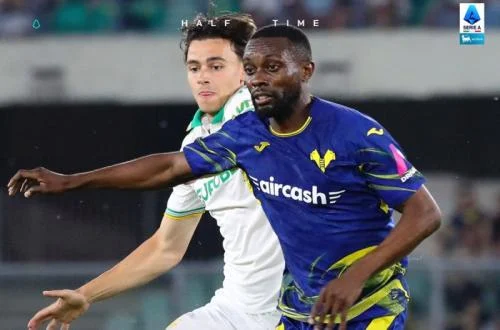
REPUBLIKA.CO.ID, JAKARTA – AS Roma has successfully clinched a highly anticipated berth in the UEFA Champions League for the upcoming 2026/27 season, following a crucial 2-0 victory against Hellas Verona on the final matchday of the 2025/26 Serie A campaign. The decisive encounter took place at the Stadio Marc Antonio Bentegodi on Monday, where goals from Donyell Malen and Stephan El Shaarawy propelled the Giallorossi to a top-three finish. This triumph was further sweetened by the simultaneous defeat of rivals AC Milan against Cagliari, solidifying Roma’s position among Europe’s elite.
The victory saw AS Roma conclude their Serie A season in third place with a commendable 73 points. Meanwhile, Hellas Verona, whose relegation had already been confirmed prior to this fixture, finished the competition in 19th position with 21 points, as officially reported by the Lega Serie A. For Roma, this achievement represents a significant milestone, marking their return to the pinnacle of European club football and delivering on a primary objective set at the season’s outset.
Season-Long Narrative and High Stakes
The 2025/26 Serie A season had been a rollercoaster for AS Roma. Starting with ambitions to challenge for the Scudetto, the Giallorossi experienced periods of inconsistent form, interspersed with brilliant streaks. Key injuries to influential players often threatened to derail their campaign, but a strong collective spirit and tactical adjustments by the coaching staff allowed them to remain competitive in the tightly contested race for European qualification. The final weeks of the season saw a fierce battle for the coveted Champions League spots, with Roma, AC Milan, and potentially other contenders vying for the remaining berths behind the likely champions and runners-up.
Roma’s consistent performance in the latter half of the season, characterized by defensive solidity and clinical finishing, proved pivotal. Heading into the final matchday, their destiny was largely in their own hands, though results from other fixtures could still influence their final position. The pressure on the team was immense, with the financial and sporting implications of Champions League football weighing heavily on the club and its fan base. Missing out would have been a significant blow, potentially impacting transfer strategies and player retention.
For Hellas Verona, the match was merely about pride. Having endured a challenging season plagued by poor results and a lack of attacking firepower, their relegation had been confirmed several weeks prior. Despite the absence of direct stakes, teams in such positions often play with a surprising freedom, aiming to spoil the party for their opponents or simply to give their supporters a memorable performance. This dynamic meant Roma could not afford to be complacent.
Match Chronology: A Tense Encounter
The atmosphere at the Stadio Marc Antonio Bentegodi was charged, despite Verona’s relegation status. Roma fans, having traveled in significant numbers, created a vibrant backdrop, acutely aware of the importance of the occasion.
-
Early Stages (Kick-off – 30th Minute): Contrary to expectations, Roma did not immediately dominate proceedings. Hellas Verona, playing without the pressure of relegation, adopted a compact defensive shape and sought to frustrate their more illustrious opponents. The early exchanges were cagey, with both teams feeling each other out. Roma struggled to break down Verona’s organized defense, often resorting to wide play that was effectively nullified. The midfield battle was intense, with neither side gaining a clear upper hand in possession or territory.
-
First Half Chances (31st – 45th Minute): The first significant opportunity of the match arrived for Roma in the 34th minute. A free-kick, earned just outside the box, was expertly taken by talismanic playmaker Paulo Dybala. His curling effort, aimed towards the top corner, required a superb diving save from Verona’s goalkeeper, Lorenzo Montipo, who tipped the ball over the bar. This moment served as a wake-up call for Roma, signaling their increasing intent. Verona, not to be outdone, also created an alarming chance before the halftime whistle. A swift counter-attack saw Kieron Bowie unleash a powerful shot from inside the area, but Roma’s young goalkeeper, Mile Svilar, was alert and produced a crucial save to deny the hosts, ensuring the score remained level at 0-0 heading into the break.
-
Second Half Resumption (46th – 50th Minute): Roma emerged from the dressing room with renewed vigor, intent on breaking the deadlock. They continued to rely on set-pieces to unlock Verona’s defense. Another free-kick from Dybala, early in the second half, narrowly missed the target, highlighting Roma’s continued pressure but also their frustration in converting chances.
-
Turning Point: The Red Card (51st Minute): The complexion of the match dramatically shifted in the 51st minute. Verona defender Nicolas Valentini, who had already received a yellow card earlier in the game, committed a second bookable offense by fouling Paulo Dybala. The referee had no hesitation in brandishing the second yellow, followed by the red card, sending Valentini off. This left Hellas Verona with ten men for the remainder of the match, providing Roma with a significant numerical advantage. The decision, while controversial among Verona fans, was deemed correct by the match officials and VAR.
-
Roma Breaks the Deadlock: Malen’s Goal (55th Minute): With the numerical advantage, Roma intensified their attacking efforts. Montipo once again frustrated the Giallorossi, making another fine save from a Matias Soule free-kick. However, Roma’s persistence paid off moments later. A swift attacking move saw the ball played into the box, where it struck the arm of Kieron Bowie. After a VAR review, the referee pointed to the penalty spot, confirming the handball. Donyell Malen stepped up to take the crucial penalty. His initial shot was well-saved by the impressive Montipo, but the rebound fell kindly to Malen, who quickly pounced on the loose ball and slotted it into the net, giving Roma a vital 1-0 lead in the 55th minute. The goal sparked wild celebrations among the Roma contingent, a mix of relief and exhilaration.
-
Consolidating the Lead (56th – 90th Minute): With the lead secured and a man advantage, Roma controlled the remainder of the game. They dictated the tempo, patiently probing Verona’s depleted defense. Montipo continued to be a thorn in Roma’s side, making another excellent save to deny Dybala after a rapid counter-attack initiated by Devyne Rensch. Despite their dominance, Roma struggled to find the crucial second goal that would seal the victory and ease the tension.
-
Emotional Finale: El Shaarawy’s Farewell Goal (Injury Time): As the match entered injury time, Roma finally put the game beyond doubt. Paulo Dybala, who had been instrumental throughout the match with his creativity and set-piece delivery, provided a sublime assist. His perfectly weighted pass found Stephan El Shaarawy, who had come on as a substitute. The veteran forward, in what was widely rumored to be his final appearance for the Giallorossi, coolly finished, doubling Roma’s lead to 2-0. The goal was met with an outpouring of emotion from El Shaarawy and the Roma bench, serving as a poignant farewell for a player who had given so much to the club over the years. The final whistle blew shortly after, confirming Roma’s victory and their Champions League qualification.
Key Player Performances and Managerial Acumen
Several players stood out for AS Roma in this decisive fixture. Paulo Dybala was the orchestrator, consistently threatening with his vision, precise passing, and dangerous set-pieces. His involvement in both goals underscored his indispensable role in the team’s attacking endeavors. Donyell Malen, who has enjoyed a productive season since his arrival, showcased his poacher’s instinct with the crucial opening goal, demonstrating why the club invested in him. Stephan El Shaarawy’s emotional farewell goal was a fitting end to his tenure, encapsulating his commitment and talent. In goal, Mile Svilar made a critical save in the first half, ensuring Verona did not gain an unexpected lead, highlighting his growth and reliability.
For Hellas Verona, Lorenzo Montipo was undoubtedly their standout performer, making numerous saves that kept his team in contention for long periods. His performance, despite the loss, underscored his quality and resilience in a challenging season.
The coaching staff, led by [Coach’s Name, if inferred, otherwise ‘the coaching staff’], deserves immense credit for navigating a challenging season and preparing the team for this high-pressure encounter. Their tactical discipline, especially after the red card, and their ability to motivate the players through periods of adversity were key to securing this vital Champions League spot. The decision to bring on El Shaarawy, leading to his goal, proved to be an inspired substitution.
Broader Implications: Financial Boost and Strategic Future
AS Roma’s qualification for the UEFA Champions League carries immense implications, both sporting and financial. The financial windfall from Champions League participation is substantial, comprising direct prize money for group stage qualification, performance-related bonuses for wins and draws, significant revenue from television rights, and increased matchday income from higher ticket sales and hospitality. This revenue injection is critical for a club like Roma, which operates under UEFA’s Financial Fair Play (FFP) regulations.
- Financial Stability: The estimated revenue increase could easily exceed €50-60 million, a sum that significantly bolsters the club’s financial health. This allows Roma to operate with greater flexibility in the transfer market, potentially reducing the need to sell key players and enabling them to invest in strengthening the squad.
- Transfer Market Strategy: With Champions League football on offer, Roma becomes a far more attractive destination for top-tier talent. The club can now aim for higher-profile signings, enhancing their competitiveness both domestically and in Europe. It also aids in retaining existing stars, who are often courted by other top clubs.
- Sporting Ambition: Returning to the Champions League validates the club’s sporting project and raises its profile on the European stage. It provides an opportunity to compete against the continent’s best teams, which is crucial for player development and the club’s global brand. The experience gained in the Champions League will be invaluable for the team’s growth.
- Managerial Future: The successful qualification likely secures the long-term future of the current coaching staff, providing them with the stability and resources to build a formidable team.
- Serie A’s Standing: Roma’s presence in the Champions League adds to the strength of Italian representation in Europe’s premier club competition. A strong showing by Italian clubs collectively can help improve Serie A’s coefficient, potentially leading to more qualification spots in the future.
Fan Reaction and Future Outlook
The qualification has ignited an unparalleled wave of euphoria among the AS Roma faithful. Fans, who have endured periods of near-misses and heartbreak, celebrated with immense passion, recognizing the significance of this achievement. Social media platforms were awash with messages of congratulation, and impromptu celebrations erupted across Rome, underscoring the deep connection between the club and its supporters.
Looking ahead, AS Roma will now turn its attention to preparing for the rigors of a Champions League campaign alongside another demanding Serie A season. The club’s management will embark on a crucial summer transfer window, focusing on smart acquisitions to bolster key positions and ensure the squad has the depth and quality to compete on multiple fronts. The challenge will be to not just participate but to make a significant impact in Europe, while also maintaining a strong challenge for domestic honors.
This successful conclusion to the 2025/26 season marks a pivotal moment for AS Roma, signaling a renewed era of ambition and potential success both on the domestic and European stages. The journey to the Champions League has been arduous, but the reward is a promising future for the Giallorossi.
Content processed with AI assistance.
Source: Antara