Nasution Nanang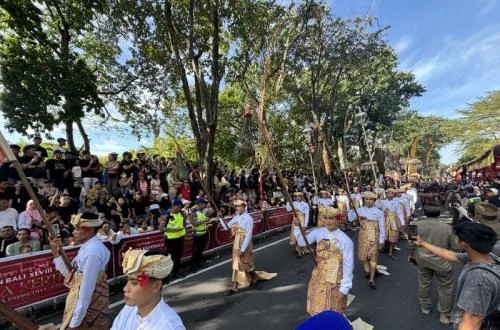
DENPASAR – The Satuan Polisi Pamong Praja (Satpol PP) of Bali Province has issued a strong appeal to visitors of the Pesta Kesenian Bali (PKB) XLVII 2026 to immediately report any security disturbances or issues to designated security posts. This urgent call comes in the wake of viral complaints on social media alleging instances of harassment experienced by several female visitors within the Taman Budaya Art Center area, the primary venue for the prestigious annual cultural festival. The incidents, widely discussed across platforms, have cast a shadow over the initial days of the event, prompting authorities to reinforce their commitment to public safety and prompt response.
Dewa Nyoman Rai Darmadi, the Head of Satpol PP Bali, emphasized that his agency had not yet received any official reports concerning the cases that have gained significant traction on social media. He underscored the critical importance of swift reporting by victims, asserting that immediate notification is paramount for patrol officers to rapidly deploy to the scene of any alleged incident. "There have been no reports to the PKB security team regarding the individuals in question. It is essential to report such incidents directly to the security posts. At these posts, officers are stationed, and a report would enable those on patrol to immediately proceed to the location," Darmadi stated in Denpasar on Thursday. This lack of direct reporting, he noted, significantly complicates the investigatory process and hinders effective intervention.
The Pesta Kesenian Bali: A Cultural Beacon
The Pesta Kesenian Bali, or Bali Arts Festival, is not merely an event; it is a profound celebration of Balinese artistic heritage and cultural identity, holding immense significance for the island and the broader Indonesian archipelago. Established in 1979 by Governor Ida Bagus Mantra, the festival was conceived as a platform to preserve, develop, and promote Balinese arts and culture, encompassing traditional and contemporary expressions. Over its nearly five-decade history, PKB has grown exponentially, evolving into the largest and longest-running annual arts festival in Indonesia, attracting hundreds of thousands of local and international visitors each year.
Typically spanning over a month, from mid-June to mid-July, the festival transforms the Taman Budaya Art Center (also known as Art Center Denpasar) into a vibrant hub of creativity. It features an extensive program including traditional dances, music performances, theatrical plays, literary arts, visual arts exhibitions, handicraft bazaars, culinary stalls offering authentic Balinese cuisine, and various cultural workshops. The event serves as a crucial economic driver, supporting local artists, artisans, and small businesses, while simultaneously offering a unique immersive experience into Balinese traditions. The XLVII edition in 2026, like its predecessors, was anticipated to draw substantial crowds, particularly during evening performances at popular venues such as the Panggung Ardha Candra, known for its grand spectacles and large audience capacity. The sheer scale and popularity of the festival, while a testament to its success, also present significant logistical and security challenges, especially concerning crowd management and ensuring the safety of all attendees.
Chronology of Viral Allegations and Public Outcry
The current controversy erupted following an upload on the TikTok account @greeytales, which detailed an unsettling experience encountered while attending a performance at the Panggung Ardha Candra. The video recounted how a male individual allegedly deliberately pressed his body against the victim with suspicious gestures amidst a densely packed audience. This initial post rapidly gained traction, resonating with a multitude of other social media users.
The comment section beneath the viral video quickly became a forum for numerous other netizens who claimed to have undergone similar unpleasant experiences while attending PKB 2026, particularly during evening hours. The collective outpouring of similar accounts amplified the gravity of the situation. Disturbingly, one of the alleged victims managed to photograph the man suspected of being the perpetrator. This photograph subsequently served as a corroborating piece of evidence, as several other women who felt they had been victimized confirmed the identity of the individual in the image. The rapid spread of these accounts across social media platforms, including TikTok, Instagram, and local community groups, created significant public concern and placed immense pressure on festival organizers and security authorities to address the allegations. The digital nature of these complaints, while effective in raising awareness, also presented a unique challenge for traditional law enforcement methods, which typically rely on direct, formal reports.
Security Apparatus and Challenges in Identification
In response to the mounting public concern, Satpol PP Bali affirmed its commitment to identify the male individual implicated in the viral reports. This identification effort will involve a collaborative approach, drawing upon a joint security team comprising personnel from Satpol PP Denpasar, the Indonesian National Armed Forces (TNI), the National Police (Polri), traditional Balinese village security guards known as ‘Pecalang,’ and other relevant security elements. The involvement of these diverse groups underscores the multi-layered security strategy typically employed for large-scale public events in Bali, aiming to ensure comprehensive coverage and rapid response capabilities.
Despite these efforts, Dewa Darmadi expressed reservations regarding the effectiveness of relying solely on CCTV footage for identifying the perpetrator. He cited several practical challenges, primarily the nighttime setting of the alleged incidents, which significantly impairs visual clarity and complicates accurate identification. Furthermore, he highlighted the inherent difficulty in discerning an individual’s intentions or suspicious gestures within a massive crowd without an immediate, direct report. "It is difficult to ascertain a person’s thoughts or gestures amidst a crowd; therefore, direct reporting is crucial. Nevertheless, we will endeavor to locate the individual," he reiterated. This statement underscores the limitations of even advanced surveillance systems in dynamic, crowded environments, especially when specific incidents are not flagged in real-time.
Historically, the annual Bali Arts Festival has maintained a relatively low incidence of major criminal activity. Reports typically received at security posts primarily pertain to minor issues such as lost family members, which are usually resolved swiftly through coordinated efforts. The current allegations, if substantiated, represent a more serious category of offense, demanding a robust and visible response from authorities to maintain public trust and ensure the festival’s integrity.
Broader Implications for Visitor Safety and Festival Reputation
The allegations of harassment carry significant implications, not only for the immediate safety of festival-goers but also for the long-term reputation of the Pesta Kesenian Bali and, by extension, Bali’s image as a premier cultural and tourist destination. Ensuring a safe and welcoming environment is paramount for any major public event, and incidents of harassment can deter potential visitors, particularly women, from attending in the future. In an era where social media can rapidly disseminate information—and misinformation—the perception of safety is as critical as the reality.
The festival organizers, while not directly quoted on these specific incidents, are implicitly tasked with upholding the values of Balinese hospitality and respect that the PKB aims to showcase. Any compromise on visitor safety could erode public confidence and detract from the festival’s cultural mission. For an event that draws hundreds of thousands, a robust and clearly communicated safety protocol is essential. This includes visible security presence, easily accessible reporting mechanisms, and clear guidelines for both visitors and security personnel on how to handle complaints of harassment. The ongoing nature of PKB until July 11, 2026, with the potential for even higher visitor numbers as it progresses, amplifies the urgency of these concerns. Authorities must not only investigate past claims but also proactively implement enhanced measures to prevent future occurrences and reassure the public.
Legal and Social Considerations: The Role of Social Media
Dewa Darmadi also issued a cautionary note regarding the public’s use of social media, particularly concerning the uploading of photographs of individuals suspected of criminal activity. He warned that such actions carry the risk of legal repercussions if the accused individual is not subsequently proven guilty. This highlights the delicate balance between public vigilance and the legal rights of individuals, emphasizing the principle of presumption of innocence. While social media can be a powerful tool for raising awareness and sharing experiences, it is not a substitute for formal legal processes. Unsubstantiated accusations, even if well-intentioned, can lead to defamation claims or other legal challenges, complicating the pursuit of justice.
The broader social context of sexual harassment in public spaces in Indonesia is also relevant. While progress has been made in recent years regarding awareness and legal frameworks, underreporting remains a significant challenge. Victims often face societal stigma, fear of retaliation, or a lack of confidence in the reporting process. This cultural backdrop underscores the importance of creating accessible, confidential, and victim-centric reporting mechanisms at events like PKB, ensuring that individuals feel safe and empowered to come forward. Public awareness campaigns focused on consent, respectful conduct, and the importance of immediate reporting could also play a vital role in fostering a safer environment.
Enhanced Security Measures and Future Outlook
Beyond addressing the immediate allegations, Satpol PP Bali has detailed its comprehensive security strategy for the festival. "The important thing is to report. For lost items, we urge greater caution, and do not litter. Each shift involves 100 security personnel on duty, with patrols covering the main roads, Taman Budaya entrance gates, performance stages, and culinary areas. We also have intelligence patrols discreetly moving through the crowds, so it becomes difficult if there is no direct report," Darmadi explained. This extensive deployment of personnel, including uniformed officers and plainclothes intelligence units, is designed to provide a pervasive security presence throughout the sprawling festival grounds.
In addition to security, environmental concerns are also being addressed, with officers ensuring that the Taman Budaya Art Center remains free of single-use plastic waste, reflecting Bali’s commitment to sustainability. Looking ahead, the authorities and festival organizers face the dual challenge of maintaining the cultural grandeur of PKB while rigorously enhancing safety protocols. This may involve a review of existing CCTV coverage, the implementation of clearly marked and easily identifiable "safe zones" or reporting points, and potentially leveraging technology for more efficient communication between visitors and security personnel.
The Pesta Kesenian Bali remains a cornerstone of Balinese culture and a highlight on Indonesia’s arts calendar. The current allegations serve as a critical reminder that even the most celebrated events must continually adapt and reinforce their commitment to creating a truly safe and inclusive environment for all attendees. The effectiveness of the response to these viral complaints will not only shape the remainder of PKB XLVII 2026 but also influence public perception and future participation in this cherished cultural spectacle. The collective effort of authorities, organizers, and the community is essential to ensure that the spirit of Balinese art and culture can flourish without the shadow of fear or insecurity.