Nasution Nanang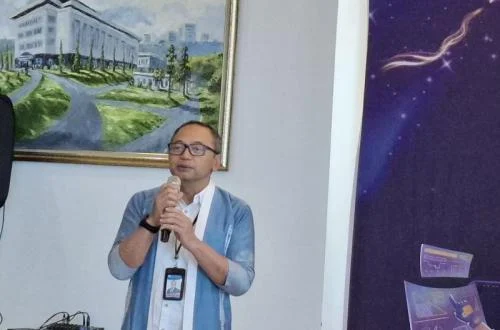
The representative office of Bank Indonesia (BI) for Lampung Province has announced a resolute commitment to bolster its strategies aimed at attracting investments across diverse sectors, with the ultimate goal of stimulating regional economic growth. This proactive approach is being meticulously executed through close collaboration with the Lampung Provincial Government and other key stakeholders, signaling a concerted effort to unlock the region’s full economic potential.
Bimo Epyanto, the Head of Bank Indonesia’s Lampung Representative Office, articulated this strategic direction during a press briefing in Bandarlampung on Saturday, June 20. He underscored the existing partnership with local governments, designed to channel funding towards strategically vital projects. The primary focus of this cooperative framework, Epyanto explained, is on infrastructure initiatives conceptualized and driven by provincial, district, and city administrations. "We maintain a robust collaboration with the Lampung Provincial Government to draw in investors. This is specifically geared towards financing strategic projects or programs, particularly in infrastructure, that are either owned or initiated by local governments, encompassing both provincial and municipal levels," Epyanto stated, highlighting the integrated approach to regional development.
Lampung’s Economic Landscape and the Imperative for Investment
Lampung, strategically located at the southern tip of Sumatra, serves as a vital gateway to Java and a significant agricultural and industrial hub. Its economy is largely anchored in agriculture, with substantial contributions from plantations (palm oil, rubber, coffee), food crops, and horticulture. Over recent years, the province has also seen a gradual diversification into manufacturing, trade, and services, alongside a burgeoning tourism sector, particularly around its coastal areas and national parks. Despite this inherent strength, Lampung, like many other provinces in Indonesia, faces the persistent challenge of accelerating economic growth, creating sufficient employment opportunities for its growing workforce, and improving the overall welfare of its population.
Investment, both domestic and foreign, is widely recognized as a critical engine for addressing these challenges. It brings in capital, technology, management expertise, and access to new markets, all of which are essential for driving productivity, fostering innovation, and enhancing competitiveness. For Lampung, attracting sustained investment is not merely about increasing GDP figures; it is about building resilient infrastructure, diversifying its economic base, and ensuring sustainable development that can withstand future economic shocks. Bank Indonesia’s intensified focus on investment, therefore, aligns perfectly with the broader national agenda of promoting equitable and robust economic growth across all regions.
Strategic Frameworks for Investment Mobilization
To fortify its investment attraction strategy, BI Lampung has pioneered several pivotal programs and initiatives. Among these are the establishment of the Forum Investasi Lampung (FOILA), the organization of the Lampung Economic Investment Forum (LEIF), and the development of innovative creative financing schemes tailored for the region.
FOILA is envisioned as a dedicated platform designed to foster continuous dialogue and collaboration among prospective investors, government bodies, and project owners. Its primary function is to facilitate the exchange of information, showcase high-potential projects, and streamline the process of investor matching. By bringing together various stakeholders, FOILA aims to create a more transparent and efficient investment ecosystem, addressing potential bottlenecks and providing a clear pathway for capital deployment.
Complementing FOILA, the Lampung Economic Investment Forum (LEIF) serves as a higher-profile, larger-scale annual or biennial event. LEIF is designed to draw attention from national and international investors, presenting curated investment opportunities across various sectors, from infrastructure to renewable energy, agriculture, and tourism. These forums typically include seminars, panel discussions with industry leaders and policymakers, and one-on-one business matching sessions. The overarching goal of LEIF is to elevate Lampung’s profile as an attractive investment destination, showcasing its economic strengths, strategic advantages, and commitment to supporting investor interests.
Furthermore, BI Lampung is actively exploring and developing creative financing schemes. This involves moving beyond traditional debt financing to incorporate more innovative approaches such as Public-Private Partnerships (PPP), blended finance models, green bonds, and leveraging local financial institutions to structure bespoke financing solutions. These schemes are crucial for de-risking projects, particularly those with long gestation periods or those considered novel, thereby making them more appealing to a broader spectrum of investors, including institutional investors and impact funds. The aim is to bridge the financing gap for critical projects and ensure a steady pipeline of investable opportunities.
Catalyzing Infrastructure Development for Regional Connectivity
As articulated by Bimo Epyanto, the immediate impetus for BI Lampung’s investment push is the financing of strategic infrastructure projects. These projects, initiated at provincial, district, and city levels, are fundamental to enhancing connectivity, improving logistics, and boosting productivity. For a province like Lampung, whose economic backbone relies heavily on the movement of goods and people, robust infrastructure is non-negotiable.
Typical infrastructure needs in Lampung span various domains:
- Transportation Networks: Development and upgrading of roads, bridges, and potentially new railway lines to facilitate the movement of agricultural produce to markets and industrial goods to ports. The Bakauheni-Terbanggi Besar Toll Road, a segment of the Trans-Sumatra Toll Road, already exemplifies the transformative impact of major infrastructure on regional connectivity and economic activity.
- Port and Logistics Facilities: Enhancing the capacity and efficiency of major ports like Panjang Port in Bandarlampung is crucial for export-import activities and inter-island trade. Improved logistics infrastructure reduces costs and increases the competitiveness of Lampung’s products.
- Water Management: Investment in irrigation systems, flood control infrastructure, and clean water supply networks is vital, especially given Lampung’s agricultural base and vulnerability to climate change impacts.
- Digital Infrastructure: Expanding broadband access and digital connectivity is increasingly important for supporting modern businesses, education, and public services.
The multiplier effect of infrastructure investment is profound. It directly creates jobs in construction, stimulates demand for construction materials, and indirectly boosts productivity across all sectors by reducing transportation costs, improving market access, and enhancing the overall business environment. By collaborating with local governments, BI Lampung ensures that investment efforts are aligned with the region’s most pressing developmental priorities.
Unlocking Lampung’s Renewable Energy Potential: A Strategic Imperative
Beyond conventional infrastructure, Bimo Epyanto emphasized that the drive for investment extends to other projects with significant potential to enhance the regional economy. A prominent example he cited is the development of new and renewable energy power plants. This focus aligns with both national energy transition goals and Lampung’s inherent geographical advantages.
Indonesia has set ambitious targets for its energy transition, aiming to achieve Net Zero Emissions by 2060 and increase the share of renewable energy in its national energy mix to 23% by 2025. This commitment is driven by global climate imperatives, the need to reduce reliance on fossil fuels, and the vast untapped renewable energy potential within the archipelago. Lampung stands poised to play a crucial role in this national endeavor.
Epyanto highlighted Lampung’s substantial potential for managing renewable energy sources. The province is endowed with numerous dams and weirs that can be optimally utilized for developing both solar power (specifically floating solar PV on reservoirs) and hydropower. This dual approach leverages existing water infrastructure for dual benefits: water management and clean energy generation.
Specifically, Bimo Epyanto identified five key dams and weirs in Lampung that hold significant potential for renewable energy development:
- Bendungan Batutegi: Located in Tanggamus Regency, this is one of the largest dams in Sumatra, primarily serving irrigation and flood control. Its vast reservoir offers substantial capacity for floating solar PV installations and potential for expanded hydropower generation.
- Bendungan Margatiga: Situated in East Lampung Regency, this dam also plays a critical role in irrigation and water supply. Its reservoir surface area and water flow present opportunities for both solar and hydro projects.
- Bendungan Way Sekampung: Located across Pringsewu and East Lampung Regencies, this dam supports extensive irrigation networks and provides raw water. Its large body of water is ideal for floating solar, while its outflows could be harnessed for additional hydropower.
- Bendung Way Jepara: A weir in East Lampung, primarily for irrigation. Weirs, while smaller than dams, can still be utilized for mini-hydro projects or, depending on their design and surrounding land, for ground-mounted solar or floating solar on smaller impoundments.
- Bendung Way Rarem: Another weir in Central Lampung, serving irrigation purposes. Similar to Way Jepara, it offers localized potential for small-scale hydro or solar integration.
The development of renewable energy projects at these sites offers multiple benefits. It contributes to national energy security, reduces carbon emissions, creates green jobs, and can provide more stable and affordable electricity to local communities and industries, fostering further economic growth.
The Role of PLN and Regulatory Certainty through RUPTL
A crucial factor significantly de-risking these renewable energy projects for potential investors is their inclusion in the Rencana Umum Pembangunan Tenaga Listrik (RUPTL), or the General Plan for Electricity Supply, developed by Perusahaan Listrik Negara (PLN), the state-owned electricity company. Epyanto confirmed that all five aforementioned dams and weirs in Lampung, with their renewable energy potential, have been incorporated into PLN’s RUPTL, with defined timelines for development.
The RUPTL serves as PLN’s comprehensive long-term electricity development roadmap, outlining the planned generation capacity additions, transmission and distribution network expansions, and fuel mix strategy for the entire country. The inclusion of a project in the RUPTL provides a high degree of regulatory certainty and a clear pathway for implementation. More importantly, it signifies PLN’s commitment to purchasing the electricity generated from these projects through Power Purchase Agreements (PPAs). This guaranteed off-take by a state-owned utility is a powerful incentive for private investors, as it ensures a stable revenue stream and significantly mitigates market risk.
PLN itself is undergoing a transformation to align with Indonesia’s energy transition goals. Its latest RUPTL (2021-2030) reflects a stronger emphasis on renewable energy, with plans to add substantial new renewable capacity to the grid. This strategic shift by PLN, coupled with the commitment to integrate Lampung’s dam-based renewable projects, creates an attractive investment climate for developers interested in green energy. The certainty of power purchase agreements will undoubtedly make it easier for the Lampung Provincial Government to collaborate effectively with investors in managing these abundant energy resources.
Challenges and Opportunities in Lampung’s Investment Landscape
While the commitment from Bank Indonesia and the potential of Lampung are clear, the path to attracting substantial investment is not without its challenges. Investors often face hurdles such as:
- Regulatory Complexities: Navigating various permits, licenses, and land acquisition processes can be time-consuming and opaque. Streamlining these procedures is paramount.
- Financing Gaps: While BI is promoting creative financing, large-scale infrastructure and renewable energy projects often require significant upfront capital, which can be challenging to secure, especially for smaller or less experienced developers.
- Technical Expertise: Developing and managing complex renewable energy projects requires specialized technical and managerial expertise, which may need to be strengthened locally.
- Infrastructure Gaps: While infrastructure is a focus, certain areas may still lack adequate access roads, electricity grids, or logistics facilities, which can deter investors in specific locations.
However, these challenges are met by equally compelling opportunities:
- Strong Government Support: The Indonesian government, at both national and provincial levels, has demonstrated a strong commitment to attracting investment and promoting renewable energy.
- Abundant Natural Resources: Lampung’s natural endowment, from fertile agricultural land to vast water resources and potential for solar irradiance, provides a solid base for various investments.
- Growing Energy Demand: As Lampung’s economy grows and its population expands, the demand for electricity will continue to rise, creating a robust market for new power generation.
- Strategic Location: Its proximity to Java makes Lampung a critical logistical and economic bridge, offering advantages for industries targeting both Sumatra and Java markets.
- Technological Advancements: The decreasing cost of renewable energy technologies, particularly solar PV and hydropower components, makes these projects increasingly economically viable.
Collaborative Synergy for Sustainable Growth
In conclusion, Bank Indonesia Lampung’s proactive stance, spearheaded by Bimo Epyanto, signifies a strategic shift towards a more integrated and aggressive approach to regional economic development. By fostering platforms like FOILA and LEIF, exploring creative financing, and specifically targeting high-impact sectors like infrastructure and renewable energy, BI Lampung is laying the groundwork for sustainable growth.
The synergy between Bank Indonesia, the Lampung Provincial Government, district and city administrations, PLN, and the private sector is crucial for the success of these initiatives. BI’s role as a facilitator and catalyst, providing economic insights, coordinating stakeholders, and promoting innovative financial mechanisms, is indispensable.
By effectively mobilizing investment into strategic infrastructure and capitalizing on its vast renewable energy potential, Lampung has the opportunity to not only accelerate its economic expansion but also to emerge as a leading model for sustainable and resilient regional development in Indonesia. The long-term vision is clear: a diversified, robust, and environmentally conscious economy that provides prosperity and stability for all its citizens, contributing significantly to Indonesia’s broader economic and climate objectives. The sustained promotion of renewable energy potential to investors, as Epyanto concluded, will remain a cornerstone of this ambitious strategy.