Bambang Pamungkas
This burgeoning trend, particularly noticeable among Generation Z and younger Millennials, reflects a changing societal landscape where grand wedding ceremonies are no longer the ultimate priority. Instead, focus has decisively moved towards establishing a stable life post-nuptials, encompassing everything from setting up a household and acquiring property to planning honeymoons or even investing in new businesses. This cultural pivot has become increasingly pronounced in recent years, especially in the wake of the global Covid-19 pandemic, which accelerated a re-evaluation of financial priorities and the nature of social gatherings.
The Shifting Sands of Matrimony: A Post-Pandemic Phenomenon
The Office of Religious Affairs (KUA) in Setiabudi, Jakarta, has observed a significant uptick in couples choosing its facilities for their marriage solemnization. Abdul Hamid, a registrar at KUA Setiabudi, confirms that this trend has become particularly evident since the pandemic. "It’s almost certainly true that many Gen Z individuals are now opting to marry solely at the KUA. However, Millennials are also part of this, and it’s also common for those remarrying after divorce to choose the KUA, as they rarely hold large parties," Hamid told CNBC Indonesia. He noted that this change in preference has been building over the past few years, with a noticeable surge "after Covid-19, when the phenomenon of marrying only at the KUA began to get busy."
The data from KUA Tebet further underscores this shift. Nasrulloh, the head of KUA Tebet, revealed a dramatic increase in KUA weddings. "Specifically for KUA Tebet, usually, 20% of marriages occur at the KUA, and 80% outside the KUA. But in 2026, this has risen to 40% marrying at the KUA, and 60% outside. The majority of those marrying are from Gen Z, although there are some outside that demographic," Nasrulloh explained. This 100% increase in the proportion of KUA weddings within a single year at one KUA office highlights the rapid adoption of this simpler approach.
Economic Prudence Over Extravagance: The Financial Imperative
One of the primary drivers behind this trend is the prevailing economic climate and the rising cost of living. Traditional Indonesian weddings, even modest ones, can be a significant financial burden. A mid-range wedding in a major city like Jakarta can easily cost hundreds of millions of rupiah, sometimes even exceeding a billion rupiah for more lavish affairs, covering venue rentals, catering, decorations, attire, photography, and entertainment. This sum often requires substantial savings, loans, or financial contributions from parents, placing immense pressure on young couples and their families.
In contrast, marrying at the KUA offers a virtually cost-free alternative. As Hamid from KUA Setiabudi elaborates, "There is no fee charged if it’s on a working day and during working hours. There’s no venue rental either. So, it’s completely free." This stark difference in cost allows couples to reallocate funds that would otherwise be spent on a single-day event towards more impactful long-term goals.
"The second reason is probably economic," Hamid stated. "The economy seems to be a bit difficult now. So, they choose the KUA to save money. For their future after marriage, they truly prefer to use the money for post-wedding needs, such as their honeymoon, starting a new business, or buying property." This sentiment resonates deeply with a generation that has grown up amidst economic uncertainties and is keenly aware of the importance of financial stability. Instead of a fleeting display of wealth, couples are prioritizing tangible assets and experiences that contribute to their shared future.
The Gen Z Imperative: Simplicity, Practicality, and Substance
Beyond mere economics, a fundamental shift in values and lifestyle among Gen Z plays a crucial role. This generation, often described as digital natives, values efficiency, convenience, and authenticity. Hamid notes that Gen Z individuals tend to favor simplicity in all aspects of their lives. "One, perhaps Gen Z prefers simplicity, simple things. Because their life now is simple. Unlike before, everything was difficult. For example, if you wanted to make a call, you had to go to a public phone booth. If you wanted to chat, you’d send SMS, which required patience and was quite difficult. Now, Gen Z is trained by a life that is all simple; chatting, calling, and so on are easy. Ordering food is easy. So, these things trigger the thought, ‘Ah, marriage is better simple,’ because the essence is just the ‘ijab kabul’ (marriage vows)."
This preference for simplicity extends to rejecting the societal pressure, or "gengsi," often associated with traditional Indonesian weddings. Many young couples are consciously choosing to forego elaborate celebrations to avoid unnecessary stress and debt, even if they could afford it. Seruni Cantika, a Gen Z individual who chose to marry at the KUA, epitomizes this mindset. "The main reason is simple, and maybe many already think like me: it’s better to use the money for life after marriage. Because marriage is not an end, but the beginning of a journey," Seruni shared.
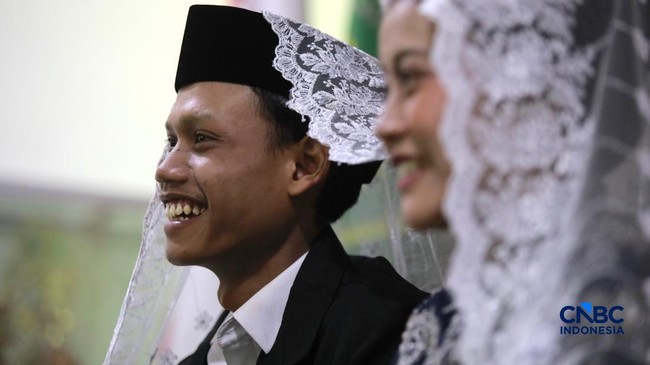
Her decision was also influenced by observing the struggles of close relatives. "Initially, I thought of marrying only at the KUA because I saw my cousin who insisted on having a lavish party, but her parents ended up burdened with debt. God forbid, when I learned about that, I immediately committed, ‘No, I won’t have a party if it only causes headaches and debt. In this economy, no way.’" This powerful anecdote highlights the shift from external validation to internal well-being and financial prudence.
Furthermore, Seruni pointed out the logistical complexities of planning a large wedding. "Besides, even if savings are secure, meaning we have enough funds and calculations for a party, I heard from my friends that they were also stressed managing the nitty-gritty of party preparations. For me, who doesn’t want to be complicated, KUA is better." The desire to avoid the intricate details of vendor management, guest lists, and endless coordination further solidifies the appeal of a straightforward KUA ceremony.
Redefining Celebration: Personal Touches and Intimate Moments
Opting for a KUA wedding does not necessarily mean sacrificing all elements of celebration. Many couples find creative ways to personalize their special day without the extravagant costs. Seruni, for instance, still curated a memorable experience. She hired a photographer to document the solemnization, engaged a makeup artist, and hosted an intimate family meal at a restaurant. "Fortunately, my partner agreed. So, I chose to hire a photographer willing to come to the KUA, and I was already wearing neat makeup. So, after the ceremony at the marriage hall, I immediately took photos with the hired photographer. Anyway, we still need documentation," she explained.
This approach significantly slashes costs. Seruni estimated her total expenses for the simplified celebration to be around Rp6 million to Rp7 million (approximately $400-$470 USD). "It was around Rp6 million or Rp7 million because it was just a Sundanese restaurant, which cost less than Rp200,000 per person. And the KUA was free; I only paid for the makeup artist, dress rental, and photographer. It was very economical."
Another Gen Z couple, Ade and Intan, who married at KUA Tanjung Priok, echoed similar sentiments. They chose the KUA for its simplicity and to avoid unnecessary spending. They agreed to save their marriage dowry for future needs. "We agreed to marry at the KUA and hold a small thanksgiving gathering with family at home," Ade said. Intan added, "We ate simply. The extra money is saved for future needs. We are still thinking about children’s needs, rent money, and so on." This demonstrates a conscious decision to prioritize long-term financial security over immediate gratification and societal expectations. Ade and Intan also emphasized their indifference to social judgment, stating, "Neighbors usually ask why there’s no wedding invitation, ‘what’s going on?’ We just ignore it." This rejection of "gengsi" is a hallmark of this evolving marital trend.
KUA Services and Procedures: Accessible and Free
The accessibility and cost-effectiveness of KUA services are fundamental to this trend. Hamid from KUA Setiabudi reiterated that marriage solemnizations conducted at the KUA during working hours on weekdays are entirely free of charge. The facilities provided include a dedicated marriage hall, tables, and chairs for the couple and their immediate family or witnesses, ensuring a dignified yet straightforward ceremony.
Prospective couples are required to register at least 10 working days before their desired wedding date. "If registration is done within 10 working days, meaning H-10 before the solemnization, the prospective couple must submit their documents," Hamid clarified. "If it’s past that, they need to prepare additional letters, a dispensation from the sub-district or a statement explaining why the marriage is being held in less than 10 days." This structured yet simple administrative process further contributes to the appeal for couples seeking a hassle-free experience.
Broader Societal and Industry Implications
The rise of KUA weddings signifies more than just a logistical preference; it reflects deeper societal shifts within Indonesia. It indicates a growing independence among younger generations, a willingness to challenge established norms, and a pragmatic approach to life’s significant milestones. This trend may have several long-term implications:
- Impact on the Wedding Industry: While the KUA trend doesn’t eliminate all wedding-related spending (couples still invest in attire, photography, and intimate celebrations), it undoubtedly shifts market demand. The traditional wedding venue, catering, and large-scale event planning sectors might see a recalibration of their services, potentially focusing on smaller, more personalized packages or adapting to cater to pre- and post-KUA ceremony events. Conversely, services like high-quality photography, modest bridal wear, and intimate dining experiences might see increased demand.
- Family Dynamics and Expectations: As this trend grows, it may gradually reshape familial expectations surrounding weddings. While some older generations might initially express disappointment over the lack of a grand celebration, the financial relief and focus on the couple’s future often lead to eventual acceptance. It could foster more open discussions about financial planning for marriage within families.
- Cultural Evolution: The explicit rejection of "gengsi" by Gen Z couples marks a significant cultural evolution. It suggests a growing emphasis on substance over superficiality, and a greater comfort in defining personal values rather than conforming to external pressures. This could spill over into other aspects of consumer behavior and social rituals in Indonesia.
- Role of Religious Institutions: The KUA, as a government and religious institution, is becoming an even more central figure in the marriage process for a growing segment of the population. This increased demand might necessitate further resource allocation and administrative streamlining to accommodate the influx of couples.
The phenomenon of young Indonesians choosing KUA weddings is a compelling narrative of adaptation and evolving values. Driven by economic realities, a desire for simplicity, and a laser-focus on post-marital stability, Gen Z and Millennials are redefining what it means to get married in modern Indonesia. This shift is not merely about saving money; it is about building a foundation for a shared future, free from the burdens of debt and the pressures of societal expectations, paving the way for a more authentic and pragmatic approach to matrimonial life.