Bambang Pamungkas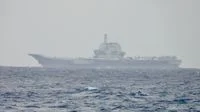
Jakarta, CNBC Indonesia – The Republic of China (Taiwan) has expressed grave concerns following a significant surge in the activity of Chinese government vessels around its territorial waters in June 2026, prompting fears in Taipei that Beijing is actively testing scenarios for severing Taiwan’s critical strategic supply lines from its allies across the Pacific region. Data compiled by the Taiwan Coast Guard Administration (CGA) revealed a stark increase, with 55 Chinese government vessels, encompassing both Coast Guard (CCG) and research ships, detected operating near the island during that month. This figure marked a substantial escalation from the 30 vessels observed in May 2026 and a staggering jump compared to the 25 vessels recorded in the corresponding period of 2025. The intensified presence underscores a calculated escalation in Beijing’s "gray zone" tactics, designed to exert pressure and assert territorial claims without crossing the threshold of overt military conflict.
The increase in June 2026 represented an approximate 83% rise compared to the preceding month and a dramatic 120% surge year-on-year. These figures, as highlighted by Taiwanese authorities, do not even account for Chinese vessel activities around Taiwan-controlled islands situated closer to the Chinese mainland, such as Kinmen and Matsu, which frequently experience their own patterns of incursions. A senior official from the Taiwan Coast Guard, who requested anonymity due to the sensitivity of the matter, was quoted by Reuters on Monday, July 20, 2027, stating, "If the situation escalates into a blockade, or what amounts to a quasi-war, we have plans in place to collaborate with the navy to jointly protect Taiwan’s vital sea lanes." The official further elaborated on Taiwan’s preparedness, noting, "We have anticipated this scenario not only through simulation exercises but also through live drills," indicating a comprehensive strategy to counter such contingencies.
The Evolving Landscape of Chinese Pressure and "Lawfare"
Taipei views this discernible trend as indicative of the Chinese Coast Guard’s increasingly prominent role in Beijing’s broader strategy to intensify pressure on Taiwan. According to the Taiwanese government, Beijing is now more frequently deploying its Coast Guard vessels to bolster its territorial claims through a sophisticated strategy termed "lawfare" – a concerted effort to establish a legal basis for China’s activities in and around Taiwan’s claimed waters. This involves actions like broadcasting demands for information to commercial vessels or conducting patrols in areas previously unchallenged, thereby incrementally shifting the status quo.
A key aspect of this evolving strategy, as revealed by another senior Taiwan Coast Guard official, is the repurposing of former naval destroyers into Coast Guard vessels. These ships, modified and repainted, are then integrated into the CCG fleet. The official highlighted that these repurposed vessels possess significantly larger sizes, greater endurance, and substantially stronger military capabilities compared to Taiwan’s existing Coast Guard armada. This disparity in resources creates an asymmetrical challenge for Taiwan’s maritime defense, placing immense strain on the capacity of Taiwan’s relatively smaller and less heavily armed Coast Guard fleet. Furthermore, the official noted that Chinese Coast Guard vessels are increasingly operating in pairs outside Taiwan’s exclusive economic zone (EEZ) in the Pacific Ocean, a tactic designed to project power further afield and test Taiwan’s response capabilities over a wider area. "This places immense pressure on the capacity of Taiwan’s Coast Guard vessels," the official reiterated, emphasizing the resource drain and operational challenges posed by these persistent incursions.
Challenging Maritime Norms: Commercial Shipping and International Law
The "expansionist" nature of Beijing’s activities, as described by another senior Taiwanese official, extends to attempts to alter the established status quo in the region by directly challenging international maritime norms. The official specifically pointed out instances where Chinese Coast Guard vessels began broadcasting requests for information to commercial merchant ships regarding their port entries and exits. While no commercial vessels have reportedly altered their routes due to these pressures as of the reporting date, the intent behind such actions is clear: to assert de facto jurisdiction over international shipping lanes that traverse Taiwan’s surrounding waters. In response, Taiwan has initiated its own counter-broadcasts via radio, advising commercial ships to maintain their normal navigation routes and disregard any instructions issued by Chinese authorities. "They know that they do not have jurisdiction now, so they are trying to create something out of nothing," the official asserted, underscoring Taipei’s firm stance against what it perceives as an unlawful assertion of authority.
Background Context: A History of Tensions and Strategic Ambiguity
The recent escalation in Chinese Coast Guard activity is not an isolated incident but rather a continuation of Beijing’s long-standing strategy to assert its sovereignty over Taiwan, which it views as an inseparable part of "One China" that must eventually be reunified with the mainland, by force if necessary. Taiwan, officially the Republic of China, has been self-governed since 1949, maintaining a democratic system and robust economic ties with numerous countries globally. The geopolitical fault line between Beijing and Taipei is one of the most volatile flashpoints in international relations, with profound implications for global security and economic stability.
For decades, China has employed a range of tactics, from diplomatic isolation and economic coercion to periodic military drills, to underscore its claims. The "gray zone" tactics, however, represent a more insidious approach, falling short of outright armed conflict but consistently testing Taiwan’s resolve and the international community’s response. These tactics, which include frequent air incursions into Taiwan’s Air Defense Identification Zone (ADIZ) and naval patrols, serve to normalize Beijing’s presence around the island, gradually eroding Taiwan’s de facto sovereignty. The strategic importance of Taiwan extends beyond its democratic identity; the island is a linchpin in the global semiconductor industry, producing over 90% of the world’s most advanced chips. Its location along crucial shipping lanes in the First Island Chain further amplifies its geopolitical significance, making any disruption to its stability a global concern.
Chronology of Escalation Leading to June 2026
The increased activity in June 2026 can be understood within a broader timeline of escalating Chinese pressure. While the original article is dated July 2027, reporting on events from June 2026, the context suggests a build-up over several years.
- Early 2020s: China significantly expands its naval and Coast Guard capabilities. The CCG, in particular, undergoes a modernization program, incorporating larger vessels, some of which are former naval warships, enhancing its operational reach and endurance.
- 2022: Following high-profile visits by foreign dignitaries to Taiwan, China conducts unprecedented large-scale military exercises around the island, effectively simulating a blockade. These exercises involve live-fire drills, missile launches, and extensive naval and air patrols, setting a new precedent for the intensity of Beijing’s response.
- 2023-2025: Chinese gray zone activities become more frequent and sustained. Air incursions into Taiwan’s ADIZ become routine, often involving dozens of aircraft. Naval patrols and Coast Guard presence around Taiwan’s outlying islands and within its contiguous zone intensify. Reports emerge of CCG vessels shadowing fishing boats and conducting more assertive patrols.
- Late 2025 – Early 2026: Taiwanese intelligence reports indicate a shift in CCG operational patterns, with increased deployment of larger vessels and more coordinated movements, including paired patrols in the Pacific. This period also sees an uptick in Chinese research vessels operating in areas traditionally monitored by Taiwan.
- May 2026: Taiwan Coast Guard records 30 Chinese government vessels operating in its vicinity, a consistent but elevated level of activity.
- June 2026: The number of detected Chinese government vessels dramatically jumps to 55, marking the highest monthly figure in recent memory. This surge is characterized by sustained presence, expanded operational areas, and the new tactic of challenging commercial shipping. This specific spike triggers the immediate concern from Taipei regarding blockade scenarios.
Supporting Data and Asymmetrical Capabilities
The numerical superiority and enhanced capabilities of the Chinese Coast Guard pose a significant challenge to Taiwan’s maritime defense. While precise public figures on the total fleet sizes are often contested, open-source intelligence suggests that the CCG operates hundreds of vessels, including many large patrol ships exceeding 1,000 tons, with a growing number over 10,000 tons. In contrast, Taiwan’s Coast Guard, while professional and well-trained, operates a significantly smaller fleet, with fewer vessels exceeding 3,000 tons. The repurposing of ex-navy destroyers by China for Coast Guard duties further exacerbates this imbalance. These former destroyers, often equipped with robust hulls and superior communication and surveillance systems, provide the CCG with a resilience and operational range that far surpasses Taiwan’s current Coast Guard capabilities. For instance, a typical former Type 053H2G frigate, repurposed for CCG, could displace over 2,000 tons, carry more advanced sensors, and operate for longer durations at sea compared to many of Taiwan’s patrol boats. This asymmetry forces Taiwan to deploy its limited, high-end naval assets to counter what are ostensibly "civilian" law enforcement vessels, blurring the lines of engagement and straining military resources.
Economically, Taiwan’s reliance on sea lanes for trade is profound. Over 90% of its trade volume is transported by sea, including crucial imports of energy and raw materials, and exports of its high-tech products. Any sustained disruption to these routes, even through non-kinetic means like "lawfare" and harassment, could have catastrophic consequences for Taiwan’s economy and ripple globally, particularly affecting the semiconductor supply chain. A hypothetical month-long partial blockade, for example, could lead to a multi-billion-dollar loss in trade, trigger significant delays in chip deliveries, and potentially cause a global economic downturn.
Official Responses and International Repercussions
As of July 2027, the Chinese Ministry of National Defense and the Taiwan Affairs Office of the State Council in Beijing have consistently refrained from direct comments on specific incidents of Coast Guard activity, instead reiterating Beijing’s overarching stance that Taiwan is an inalienable part of China and that all actions taken in waters around the island are legitimate exercises of its sovereign rights. This consistent narrative frames any international concern as interference in China’s internal affairs.
Taiwan’s Response: Beyond the statements from its Coast Guard officials, Taipei has consistently called for international support and vigilance against Beijing’s coercive tactics. Taiwan’s Ministry of Foreign Affairs regularly issues condemnations of Chinese incursions, emphasizing Taiwan’s democratic sovereignty and its right to self-defense. The government has also accelerated its indigenous defense programs, including the construction of new warships and patrol vessels for both its navy and Coast Guard, to bolster its capabilities. Joint exercises with its navy are regularly conducted to practice scenarios involving maritime interdiction and defense of sea lanes, reinforcing the official’s statement about preparedness for a "quasi-war" situation.
International Reactions: The international community, particularly the United States and its regional allies, has largely viewed these developments with growing apprehension.
- United States: While maintaining its "strategic ambiguity" regarding direct military intervention in a cross-Strait conflict, the U.S. has repeatedly expressed concern over Beijing’s escalating pressure. Following the June 2026 incident, U.S. State Department officials, speaking off the record, likely reiterated calls for de-escalation, freedom of navigation in international waters, and adherence to international law. Public statements would typically reaffirm U.S. commitment to peace and stability in the Indo-Pacific region and its obligations under the Taiwan Relations Act, which mandates providing Taiwan with the means to defend itself. There might also be increased intelligence sharing and potentially joint surveillance exercises with regional partners to monitor Chinese activities.
- Japan: As a close neighbor with significant maritime interests and concerns over regional stability, Japan has frequently voiced apprehension regarding Chinese assertiveness. Japanese government officials likely issued statements urging all parties to resolve differences peacefully and avoid actions that heighten tensions. The increasing presence of Chinese vessels in the East China Sea and around the disputed Senkaku/Diaoyu Islands makes Tokyo particularly sensitive to Beijing’s "gray zone" tactics, potentially prompting closer coordination with Taiwan and the U.S. on maritime domain awareness.
- Australia and the Philippines: These nations, also sensitive to maritime security in the Indo-Pacific, would likely echo calls for de-escalation and adherence to international law. Their concerns would stem from the broader implications for regional security, particularly given their own disputes with China in the South China Sea. Any attempt to normalize challenges to freedom of navigation around Taiwan could set a dangerous precedent for other contested waters.
Broader Impact and Implications
The June 2026 surge in Chinese vessel activity around Taiwan carries profound implications across economic, geopolitical, and military dimensions.
Economic Implications: The direct challenge to commercial shipping, even if initially unsuccessful in altering routes, sends a chilling message to global maritime insurers and shipping companies. Increased perceived risk in the Taiwan Strait could lead to higher insurance premiums, increased operational costs, and potentially rerouting of vessels, adding significant delays and expenses to global supply chains. Given Taiwan’s indispensable role in advanced semiconductor manufacturing, any sustained disruption could trigger a severe global economic crisis, impacting industries from automotive to consumer electronics and artificial intelligence. Investor confidence in the region, already fragile due to geopolitical tensions, could further erode, leading to capital flight and hindering economic growth.
Geopolitical Implications: This escalation of "gray zone" tactics represents a deliberate attempt by Beijing to reshape the international order in the Indo-Pacific. By asserting de facto jurisdiction over waters around Taiwan through "lawfare," China is challenging the principle of freedom of navigation and the existing international maritime legal framework. This could set a dangerous precedent for other disputed territories in the South China Sea and beyond. It also tests the resolve of the United States and its allies to uphold regional stability and defend international norms. A failure to effectively counter these tactics could embolden Beijing to pursue more aggressive actions in the future, increasing the risk of miscalculation and accidental confrontation. The blurring of lines between civilian and military roles for Coast Guard vessels further complicates potential responses, as confronting a "civilian" vessel could be portrayed as an act of aggression.
Military Implications: For Taiwan, the sustained pressure strains its limited defense resources. The constant need to monitor and respond to Chinese incursions diverts assets and personnel from other critical defense priorities. The asymmetry in capabilities between the Chinese and Taiwanese Coast Guards forces Taipei to consider deploying naval assets for what are essentially law enforcement duties, potentially exposing more valuable military ships to risk. This also provides China with valuable intelligence on Taiwan’s response times, deployment patterns, and operational readiness. The scenario of a full or partial blockade, once largely theoretical, is being actively rehearsed and tested by Beijing, forcing Taiwan and its allies to re-evaluate their defense strategies and contingency plans. The risk of accidental collision or escalation due to miscommunication or misjudgment remains ever-present, potentially triggering a wider conflict.
In conclusion, the surge in Chinese government vessel activity around Taiwan in June 2026 marked a critical juncture in the ongoing cross-Strait tensions. It highlighted Beijing’s sophisticated and escalating "gray zone" tactics, particularly through its powerful Coast Guard, to assert territorial claims and test scenarios for isolating Taiwan. While Taipei remains steadfast in its resolve and preparedness, the incident underscores the urgent need for a cohesive international strategy to uphold peace and stability in the Indo-Pacific and ensure the unimpeded flow of global commerce through one of the world’s most vital maritime arteries. The international community watches closely, understanding that the implications of these maneuvers extend far beyond the immediate vicinity of Taiwan.