Azin Asro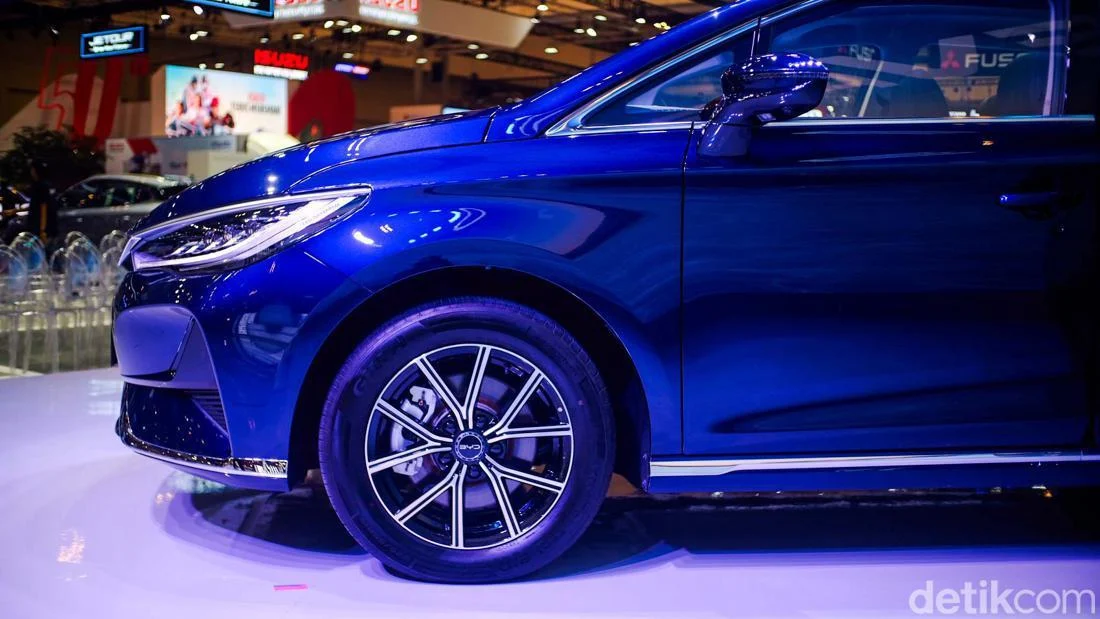
The Indonesian automotive landscape is bracing for a significant shift as Build Your Dreams (BYD), the world’s leading manufacturer of new energy vehicles, appears to be preparing for the launch of its latest offering, the BYD M6 Plug-in Hybrid Electric Vehicle (PHEV). Evidence of this strategic move has surfaced in official government documentation, specifically within the Ministry of Home Affairs Regulation (Permendagri) Number 11 of 2024, which outlines the Basic Value of Motor Vehicle Sales (NJKB) and taxes for the current year. Within this legal framework, a new series of vehicle codes under the "MEH" designation has been identified, which industry analysts and observers strongly associate with the BYD M6 PHEV, a model known in other international markets as the BYD Song Max DM-i.
The registration of these codes marks a critical milestone in BYD’s aggressive expansion into the Southeast Asian market, particularly in Indonesia, where the company has already made a splash with its battery electric vehicles (BEVs) such as the Dolphin, Atto 3, and Seal. By introducing a PHEV model, BYD aims to bridge the gap for consumers who may still experience range anxiety or reside in areas with developing charging infrastructure, while still offering the efficiency and environmental benefits of an electrified powertrain.
Understanding the NJKB Registration and Variant Breakdown
The official documents list a total of eight variants under the "MEH" code, suggesting that BYD intends to offer a comprehensive range of trims to cater to various market segments, from entry-level fleet options to high-end luxury configurations. The registered NJKB values for these models range from approximately Rp 104 million to Rp 123 million. While these figures may appear remarkably low to the average consumer, it is essential to distinguish between the NJKB and the final On-The-Road (OTR) price.
The NJKB represents the basic market value of the vehicle before the application of various taxes and fees, including Value Added Tax (VAT), Luxury Goods Sales Tax (PPnBM), motor vehicle registration fees (BBNKB), and dealership margins. In the Indonesian context, the NJKB serves as the baseline for the government to calculate the annual motor vehicle tax. Historically, BYD has demonstrated a disruptive pricing strategy; for instance, with the Atto 1 (known locally as the BYD M6 BEV in some contexts), the final pricing remained highly competitive despite the inherent costs of importing or assembling advanced technology.
The specific variants registered are as follows:
- MEH-FWD-10A6 (4×2) A/T: Rp 123,000,000
- MEH-FWD-10A7 (4×2) A/T: Rp 122,000,000
- MEH-FWD-10T (4×2) A/T: Rp 104,000,000
- MEH-FWD-10Y6 (4×2) A/T: Rp 113,000,000
- MEH-FWD-10Y7 (4×2) A/T: Rp 112,000,000
- MEH-FWD-20T (4×2) A/T: Rp 105,000,000
- MEH-FWD-20Y6 (4×2) A/T: Rp 116,000,000
- MEH-FWD-20Y7 (4×2) A/T: Rp 115,000,000
The "FWD" designation confirms a front-wheel-drive configuration across the board, which is standard for vehicles in the Multi-Purpose Vehicle (MPV) category focused on urban efficiency and interior space optimization.
Technical Specifications: The DM-i Hybrid Advantage
The BYD M6 PHEV, or Song Max DM-i, is built upon BYD’s proprietary "Dual Mode intelligent" (DM-i) technology. This system is designed primarily for fuel efficiency and smooth electric-first driving, differing from traditional performance-oriented hybrids. Under the hood, the vehicle features a 1,498cc (1.5-liter) naturally aspirated gasoline engine specifically tuned for the Atkinson cycle to maximize thermal efficiency.
The internal combustion engine produces approximately 110 PS and 135 Nm of torque. However, the true powerhouse of the system is the permanent magnet synchronous motor, which delivers a robust 145 kW (equivalent to 197 PS) and 325 Nm of torque. This electric motor allows the vehicle to handle most urban commuting tasks without ever engaging the gasoline engine.
Supporting the electric drivetrain is BYD’s renowned "Blade Battery" technology, utilizing Lithium Iron Phosphate (LFP) chemistry, which is celebrated for its safety, longevity, and resistance to thermal runaway. The M6 PHEV is expected to carry an 18.3 kWh battery pack. According to the New European Driving Cycle (NEDC), this battery enables an all-electric range of up to 105 kilometers. When the battery is depleted, the system transitions into a hybrid mode where the engine acts primarily as a generator for the motor or assists in high-speed cruising. With a full tank of fuel and a full charge, the M6 PHEV boasts a combined range of nearly 1,000 kilometers, making it an ideal candidate for long-distance travel across the Indonesian archipelago.
Strategic Context: BYD’s Timeline in Indonesia
BYD’s entry into the Indonesian passenger car market has been rapid and calculated. After years of operating in the commercial sector—providing electric buses for TransJakarta and electric taxis for Blue Bird—the company officially launched its passenger vehicle brand in Indonesia in February 2024.
The chronology of BYD’s recent milestones highlights its commitment to the region:
- January 2024: Initial announcements regarding the entry into the Indonesian passenger car market.
- February 2024: Official brand launch and the unveiling of the Dolphin, Atto 3, and Seal.
- April 2024: Announcement of a major investment plan for a manufacturing facility in Subang, West Java, with a production capacity of 150,000 units per year.
- July 2024: Strong presence at the Gaikindo Indonesia International Auto Show (GIIAS), where the BYD M6 BEV (Battery Electric version) was officially launched as the first all-electric MPV in its class.
- Late 2024: The appearance of the "MEH" codes in government tax documents, signaling the next phase of the product rollout with the PHEV variant.
By introducing the M6 in both BEV and PHEV formats, BYD is positioning itself to dominate the MPV segment, which remains the most popular vehicle category in Indonesia due to the cultural emphasis on large family transport.
Market Analysis and Competitive Landscape
The introduction of the BYD M6 PHEV places it in direct competition with established players and emerging challengers. Its most formidable rival is the Toyota Innova Zenix Hybrid, which has seen immense success in the Indonesian market. While the Innova Zenix uses a traditional "strong hybrid" (HEV) system that cannot be plugged in, the BYD M6 PHEV offers the added benefit of external charging and a significantly longer pure-electric driving range.
Furthermore, the M6 PHEV will compete with other electrified SUVs and MPVs like the MG HS PHEV and potentially upcoming models from GWM (Great Wall Motor) and Chery. BYD’s advantage lies in its vertical integration; because it manufactures its own batteries, semiconductors, and motors, it can maintain tighter control over costs and supply chains compared to traditional OEMs.
The Indonesian government’s stance on electrified vehicles also plays a pivotal role. Under Presidential Regulation No. 79 of 2023, the government provides various incentives for companies that commit to local production (CKD). These incentives include exemptions from import duties and luxury taxes for a certain period. As BYD moves forward with its Subang plant, the M6 PHEV is likely to benefit from these policies, allowing for a price point that could undercut its Japanese competitors while offering more advanced technology.
Implications for the Indonesian Automotive Industry
The arrival of the BYD M6 PHEV is more than just a new car launch; it is a signal of the accelerating energy transition in Indonesia. The country, which holds the world’s largest nickel reserves, is positioning itself as a global hub for the EV supply chain. BYD’s presence and its diversification into PHEVs suggest a nuanced understanding of the local market.
PHEVs serve as a crucial "transitional technology." In a country where the charging network is still concentrated in major cities like Jakarta, Surabaya, and Bandung, the ability to rely on a gasoline engine for cross-provincial travel while enjoying zero-emission driving in the city is a compelling value proposition. It reduces the "infrastructure hurdle" that often prevents families from switching to fully electric vehicles.
From an economic perspective, BYD’s investment in local assembly will likely spur job creation and knowledge transfer in the high-tech manufacturing sector. As local components (TKDN) increase, the ecosystem for EV parts—from tires to interior plastics—will grow to meet the standards of global players like BYD.
Conclusion and Future Outlook
While BYD Indonesia has yet to make an official statement regarding the specific launch date or final pricing of the M6 PHEV, the inclusion of the "MEH" codes in the NJKB registry is a definitive precursor to its arrival. The specifications suggest a vehicle that is well-suited to the demands of the Indonesian middle class: spacious, technologically advanced, and remarkably efficient.
As the automotive industry continues to evolve, the success of the M6 PHEV will depend on BYD’s ability to establish a robust after-sales network and maintain its reputation for battery safety. If the pricing follows the aggressive trend set by the Atto 3 and the M6 BEV, the PHEV variant could very well become a catalyst for the mass adoption of plug-in technology in Indonesia, challenging the long-standing dominance of internal combustion engines in the family vehicle segment. For now, the industry watches closely as the "MEH" code moves from a regulatory document to the showroom floor, marking another chapter in Indonesia’s journey toward sustainable mobility.