Azin Asro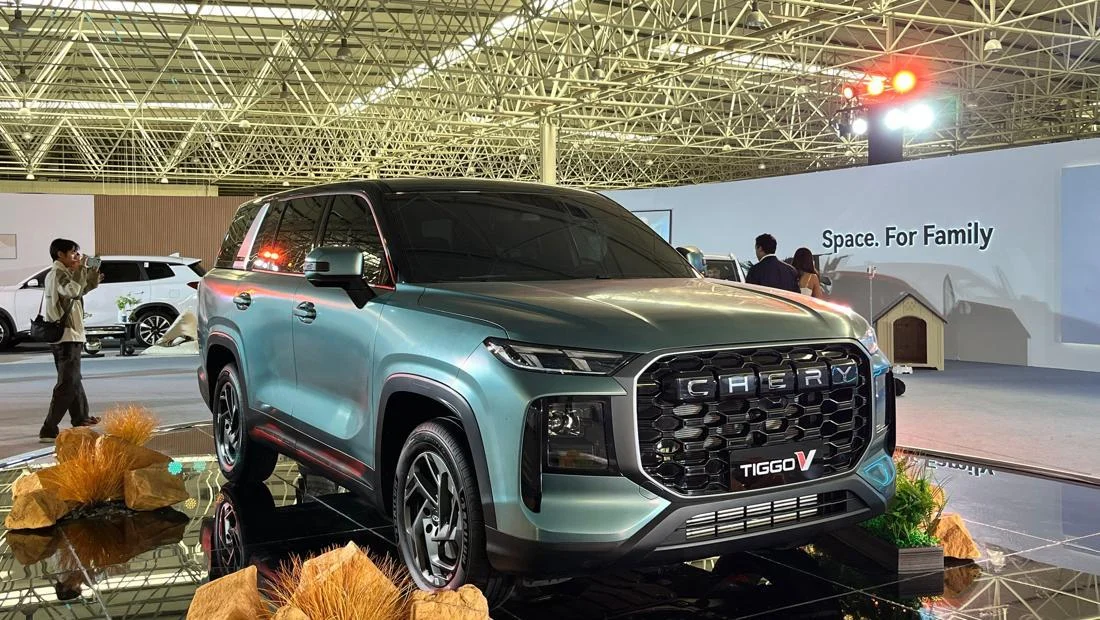
Chery International has officially signaled a profound shift in its global operational strategy, identifying Indonesia not merely as a high-potential sales market but as a primary manufacturing and export cornerstone for the Southeast Asian region and beyond. Speaking at the Chery International Business Summit 2024 held at the company’s headquarters in Wuhu, China, President of Chery International Zhang Guibing outlined a vision where Indonesia evolves into a central production hub, leveraging its vast demographic advantages and competitive economic landscape. This strategic pivot comes at a time when the global automotive industry is witnessing a significant migration of manufacturing expertise from traditional centers to emerging economies that offer a combination of skilled labor, resource availability, and strategic geographic positioning.
The rationale behind Chery’s commitment to Indonesia is multifaceted, rooted in both current economic realities and long-term demographic projections. Zhang Guibing emphasized that Indonesia’s profile today mirrors many of the characteristics that fueled China’s own industrial boom in previous decades. With a population exceeding 278 million people, Indonesia represents the fourth most populous nation globally, providing a dual benefit: a massive internal consumer base and a deep pool of human capital. According to Zhang, the cost of production in Indonesia has become increasingly attractive, even when compared to contemporary China, where labor costs have risen in tandem with the country’s transition toward a high-income economy. The President of Chery International noted that Indonesia currently holds more comparative advantages in manufacturing overheads, making it an ideal candidate for large-scale industrialization.
Strategic Production Infrastructure and Current Operations
Chery’s footprint in Indonesia is already established, though the company views its current operations as a foundational phase rather than a final state. Presently, Chery vehicles are assembled in Indonesia through a Completely Knocked Down (CKD) scheme. The primary assembly takes place at the facilities of PT Handal Indonesia Motor (HIM), located in Bekasi, West Java. This facility currently manages a production capacity of approximately 4,000 units per year, focusing on popular models such as the Tiggo Pro series and the Omoda 5. Furthermore, Chery has expanded its operational reach by utilizing the Wanaherang facility in Bogor, West Java, managed by Inchcape, to bolster its assembly requirements.
Despite these existing arrangements, the leadership at Chery acknowledges that the current capacity is a bottleneck for their ambitious growth targets. Zhang Guibing revealed that the company is in active negotiations with the Indonesian government and local partners to significantly scale up production capabilities. The limitation of the current partner-led facilities means that Chery cannot always ramp up production volumes quickly enough to meet fluctuating market demands or to satisfy large export orders. The goal for the near future is to move beyond limited assembly and establish a more robust, high-volume manufacturing presence that can serve as a "right-hand drive" (RHD) production center for global markets.
The Demographic Dividend and Future Market Potential
Supporting this industrial vision is a keen understanding of Indonesia’s demographic shift. Zeng Shuo, the President Director of PT Chery Sales Indonesia, highlighted the "Golden Generation" as a primary driver for the brand’s optimism. Indonesia is currently experiencing a demographic dividend, where a large portion of its population is of productive age. This generation is characterized by its tech-savviness, openness to new brands, and a preference for modern, feature-rich vehicles.
"We see Indonesia as a very promising market in the future because it has the fourth-largest population in the world. In addition, Indonesia also has a very large number of young generations," Zeng Shuo stated during the summit. He further elaborated that the youth are the "future of the industry," and their purchasing power is expected to grow exponentially over the next decade. By establishing a local production base now, Chery aims to build brand loyalty among these younger consumers, positioning itself as a local manufacturer rather than just an importer.
Chronology of Chery’s Indonesian Expansion
The journey of Chery in Indonesia has been one of persistence and strategic recalibration. After an initial entry in the early 2000s that saw limited success, the brand made a high-profile return to the Indonesian market in 2022. This "New Chery" era was marked by a complete overhaul of its product lineup and service philosophy.
- 2022 Re-entry: Chery officially returned to the Indonesian market at the Indonesia International Motor Show (IIMS) 2022, showcasing the Tiggo 7 Pro and Tiggo 8 Pro.
- Late 2022: The company commenced local assembly via PT Handal Indonesia Motor, signaling its commitment to local value-add requirements (TKDN).
- 2023 Growth: The launch of the Omoda 5 proved to be a turning point, with the model gaining significant traction in the compact SUV segment. Chery also began exploring export possibilities, sending Indonesia-assembled units to neighboring ASEAN countries like Vietnam and the Philippines.
- 2024 and Beyond: The focus has shifted toward "New Energy Vehicles" (NEVs), with the introduction of the Omoda E5, Chery’s first electric vehicle in the Indonesian market. The 2024 Business Summit in Wuhu serves as the formal announcement of the next phase: transitioning from a local assembler to a regional manufacturing hub.
Supporting Data and Economic Context
The push to make Indonesia a hub is backed by robust economic indicators. According to data from the Association of Indonesia Automotive Industries (GAIKINDO), the national automotive market consistently targets sales of approximately one million units per year. While the market has faced fluctuations, the long-term trajectory remains upward. Furthermore, the Indonesian government has implemented aggressive policies to attract foreign direct investment (FDI) in the automotive sector, particularly for Electric Vehicles (EVs).
Indonesia’s "downstreaming" policy, which restricts the export of raw nickel to encourage the domestic production of EV batteries, aligns perfectly with Chery’s global "Green Strategy." By producing in Indonesia, Chery can potentially tap into a localized supply chain for batteries, which accounts for nearly 40-50% of an EV’s production cost. This synergy would provide Chery with a significant price advantage in both the domestic and international markets.
Regional Competition and Export Strategy
The ASEAN Free Trade Area (AFTA) agreements allow for zero or near-zero tariffs on vehicles traded between member nations, provided they meet specific local content requirements (usually around 40%). By establishing a major production base in Indonesia, Chery can bypass the high import duties that would otherwise apply to vehicles shipped directly from China to countries like Thailand, Malaysia, or the Philippines.
However, Chery is not alone in this strategy. The Indonesian automotive landscape is becoming increasingly crowded with Chinese manufacturers. Brands like BYD, Great Wall Motor (GWM), and Wuling have also made significant investments in local production. This competition is driving a "race to the bottom" in terms of pricing and a "race to the top" in terms of technology. Chery’s response is to emphasize its "International Business" pedigree, utilizing its Wuhu-based R&D to provide vehicles that are tailored specifically for the rugged terrain and climatic conditions of Southeast Asia.
Analysis of Implications for the Indonesian Economy
Chery’s decision to deepen its roots in Indonesia carries significant implications for the national economy. Firstly, the transition to a full-scale production hub will necessitate the development of a local tier-1 and tier-2 supplier ecosystem. This means more jobs not just in the assembly plants, but in the manufacturing of components, glass, tires, and electronics.
Secondly, the focus on exports will help improve Indonesia’s trade balance. Historically, Indonesia has lagged behind Thailand in terms of automotive export volumes. Chery’s ambition to use Indonesia as a base for right-hand drive markets—which include major economies like Australia, South Africa, and various nations in South Asia—could position Indonesia as a formidable competitor to Thailand’s "Detroit of the East" status.
Thirdly, the transfer of technology is a critical factor. As Chery introduces more advanced manufacturing techniques and NEV technology, the local workforce will gain high-value skills in automation, software integration, and battery management systems. This aligns with the Indonesian government’s "Making Indonesia 4.0" roadmap, which identifies the automotive industry as a key sector for digital and industrial transformation.
Official Responses and Collaborative Outlook
The Indonesian government, through the Ministry of Industry, has frequently expressed support for Chery’s expansion. Officials have noted that the presence of global players like Chery validates Indonesia’s investment climate. While the specific details of the "increased capacity" mentioned by Zhang Guibing remain under negotiation, industry analysts suggest that Chery may eventually seek to build its own dedicated manufacturing facility, independent of third-party contractors, once volume thresholds are consistently met.
In closing the summit session, Zhang Guibing reiterated that the relationship between Chery and Indonesia is symbiotic. As China’s domestic market reaches a level of maturity and saturation, the growth of the "Chery Global" brand is inextricably linked to the success of its international hubs. Indonesia, with its unique blend of low production costs, a massive young population, and supportive government policies, stands at the very center of that global roadmap. For Chery, Indonesia is no longer just a destination for its cars; it is the future starting point for its global journey.