Azin Asro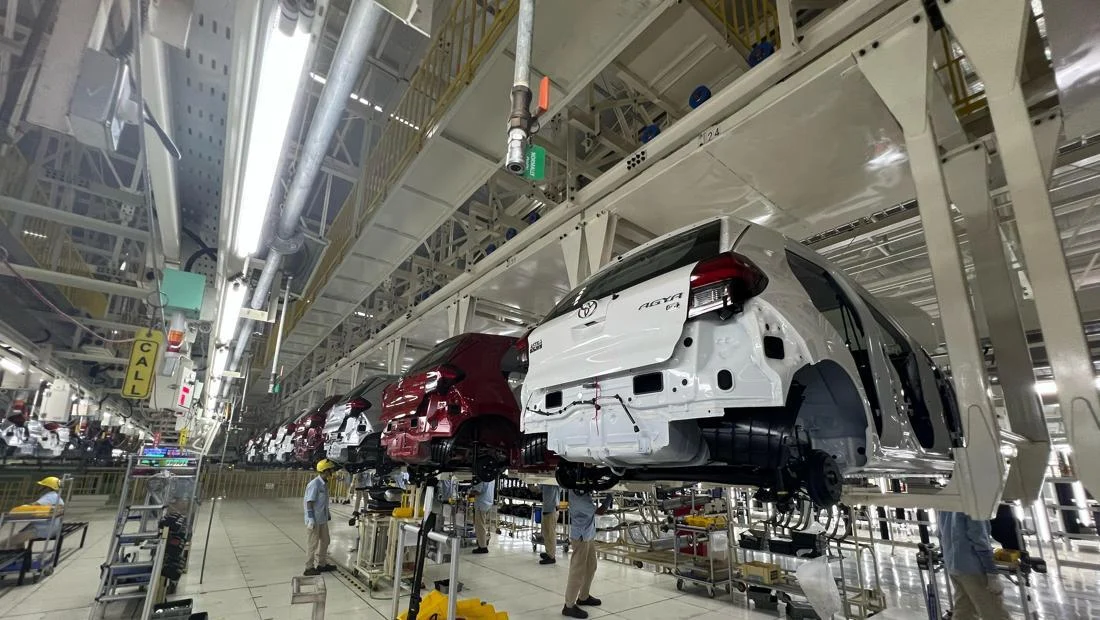
PT Astra Daihatsu Motor (ADM) has announced a substantial 11 percent increase in vehicle production during the first five months of 2024, signaling a robust recovery and expansion phase for one of Indonesia’s largest automotive manufacturers. This growth, occurring amidst a complex global economic landscape, underscores the resilience of the Indonesian automotive sector and its critical role as a regional manufacturing hub. According to data released by the company, the total production volume reached approximately 169,000 units from January to May, a marked improvement from the 152,400 units recorded during the same period in the previous year. This upward trajectory is not merely a reflection of increased sales but serves as a testament to the effectiveness of Daihatsu’s integrated supply chain, which heavily involves local small and medium-sized enterprises.
The strategic importance of this production spike extends far beyond the factory walls in Sunter and Karawang. Marketing Director and Corporate Communication Director of PT Astra Daihatsu Motor, Sri Agung Handayani, emphasized that the company’s operations are deeply intertwined with the domestic economy. By engaging approximately 1,700 supply chain partners, including 700 local Micro, Small, and Medium Enterprises (MSMEs), Daihatsu has created a vast economic ecosystem that supports hundreds of thousands of livelihoods. These vendors are categorized into Tier 1, Tier 2, and Tier 3 suppliers, representing a diverse range of manufacturing capabilities from high-tech component fabrication to the production of specialized nuts, bolts, and plastic moldings.
The Architecture of a Localized Supply Chain
The integration of 700 MSMEs into the production of high-quality automotive vehicles is a significant feat of industrial management. In the automotive industry, Tier 1 suppliers typically provide major assemblies or modules directly to the Original Equipment Manufacturer (OEM). Tier 2 suppliers provide parts to Tier 1, and Tier 3 suppliers provide raw materials or basic components. For Daihatsu to maintain a 700-strong MSME network within this structure indicates a high level of Domestic Component Level (TKDN), which aligns with the Indonesian government’s industrialization goals.
Sri Agung Handayani noted that the company feels a profound responsibility toward these 1,700 entities. "We have a responsibility toward 1,700 supply chain partners, and as you know, 700 of those are MSMEs," she stated during a press briefing in Depok. This partnership model ensures that when Daihatsu thrives, the benefits trickle down to smaller industrial players, fostering a sustainable manufacturing environment. The "multiplier effect" of the automotive industry is well-documented; for every job created on the assembly line, several more are created in the supply chain and service sectors. Estimates suggest that the Daihatsu production ecosystem directly and indirectly supports nearly one million families across Indonesia.
Comparative Data and Market Performance
The 11 percent year-to-date (YTD) growth is composed of two distinct performance metrics: domestic demand and export volume. While the domestic market showed a steady and healthy growth of 3.6 percent, the real driver of the production surge was the export sector. Exports of Daihatsu-produced vehicles skyrocketed by nearly 30 percent compared to the previous year. This divergence highlights a strategic shift where Indonesia is increasingly serving as a global production base for compact vehicles.
In the domestic market, Daihatsu has consistently maintained its position as the second-best-selling brand in Indonesia, trailing only its partner, Toyota. The 3.6 percent growth in domestic production reflects stable consumer confidence despite inflationary pressures and fluctuating interest rates. However, the 30 percent jump in exports indicates that Indonesian-made vehicles are becoming increasingly competitive on the global stage, particularly in emerging markets across Southeast Asia, South America, and parts of Africa.
The total production figure of 169,000 units by May provides a strong foundation for the company to meet its year-end targets. If this momentum continues, PT Astra Daihatsu Motor is on track to surpass its total 2023 output, further solidifying its role as a cornerstone of the Astra International conglomerate and the wider Daihatsu Motor Company global network.
The Synergy Between Daihatsu and Toyota
A unique aspect of PT Astra Daihatsu Motor’s operations in Indonesia is its role as a contract manufacturer for Toyota. This synergy is a result of the long-standing global alliance between the two Japanese entities. In Indonesia, ADM plants produce several flagship models that carry the Toyota badge, including the Toyota Avanza, Rush, Veloz, and Raize, alongside their Daihatsu counterparts like the Xenia, Terios, and Rocky.
This dual-brand production strategy allows for massive economies of scale. By utilizing the same platforms and components across different brands, ADM can optimize factory utilization and reduce unit costs. This efficiency is what allows the company to involve so many local MSMEs; the high volume of production makes it viable for small vendors to invest in the tooling and quality control systems required to meet international automotive standards. When Agung mentions that production is "increasing," she refers to the total output of these facilities, which serves both the Daihatsu and Toyota retail networks.
Resilience Amidst Global Economic Uncertainty
The announcement of increased production comes at a time when many global automotive manufacturers are facing headwinds. Supply chain disruptions, particularly in the semiconductor industry, and rising raw material costs have hampered production in various parts of the world. Furthermore, discussions regarding "manpower" and potential layoffs have been prevalent in the news as some sectors grapple with an economic slowdown.
Agung addressed these concerns directly, asserting that Daihatsu’s current trajectory is one of expansion rather than contraction. "Yesterday, someone asked for our opinion on manpower and other issues related to the economic crisis. We want to emphasize once again that our production has actually increased compared to last year," she clarified. This statement serves to reassure both the workforce and the investment community that the automotive manufacturing sector remains a "bright spot" in the Indonesian economy. The term "ngebul" (a colloquial Indonesian term for a chimney or engine producing smoke) was used to describe the industry’s continuous activity and productivity, symbolizing a healthy, running engine of economic growth.
Strategic Implications for Indonesia’s Automotive Future
The success of PT Astra Daihatsu Motor provides a blueprint for the Indonesian government’s "Making Indonesia 4.0" roadmap, which identifies the automotive industry as a priority sector. The ability to grow exports by 30 percent suggests that the quality of Indonesian manufacturing is meeting international standards. This is crucial for the country’s ambition to become a leading automotive exporter in the ASEAN region, challenging the long-standing dominance of Thailand.
Furthermore, the focus on MSMEs aligns with national policies to increase local content. By nurturing 700 small-scale vendors, Daihatsu is effectively conducting a massive technology transfer program. These small businesses are required to adopt lean manufacturing principles, rigorous quality checks, and disciplined delivery schedules. Over time, these capabilities allow local vendors to diversify their client base, potentially serving other industries or even entering international markets independently.
Timeline of Recent Developments
To understand the current surge, it is helpful to look at the recent timeline of Daihatsu’s industrial activities in Indonesia:
- Early 2023: Daihatsu announced a major investment for the construction of a new assembly line at the Karawang Plant (Line 2). This investment, totaling approximately 2.9 trillion IDR, was designed to replace the aging Line 1 at the Sunter plant and increase efficiency through automation and sustainable manufacturing practices.
- Late 2023: The company began ramping up production of "New Generation" compact cars, focusing on fuel efficiency and affordability, which resonated well in both domestic and export markets.
- January–May 2024: The production shift toward export-heavy models began to yield results, culminating in the nearly 30 percent export growth reported by Sri Agung Handayani.
- Present: The company continues to optimize its 1,700-vendor supply chain to ensure that production remains "effective and productive" despite global logistics challenges.
Conclusion and Outlook
The 11 percent increase in production at PT Astra Daihatsu Motor is more than just a corporate milestone; it is a significant indicator of industrial health for Indonesia. By balancing domestic stability with aggressive export growth, Daihatsu has insulated itself from localized economic fluctuations while contributing to the nation’s foreign exchange reserves.
The inclusion of 700 MSMEs ensures that the wealth generated by the automotive sector is distributed across a broad spectrum of the population, supporting the "one million families" mentioned by the company leadership. As Indonesia moves toward a more competitive global position, the model established by ADM—combining high-volume OEM production with a deeply rooted local supply chain—will likely serve as a standard for other manufacturing sectors to follow. For now, the "smoke" continues to rise from Daihatsu’s factories, signaling a period of sustained productivity and economic contribution that defies the broader narrative of global industrial stagnation.