Nila Kartika Wati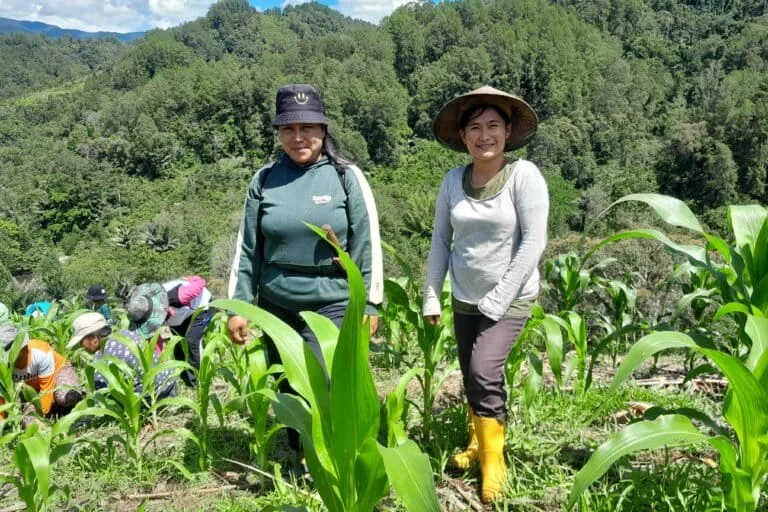
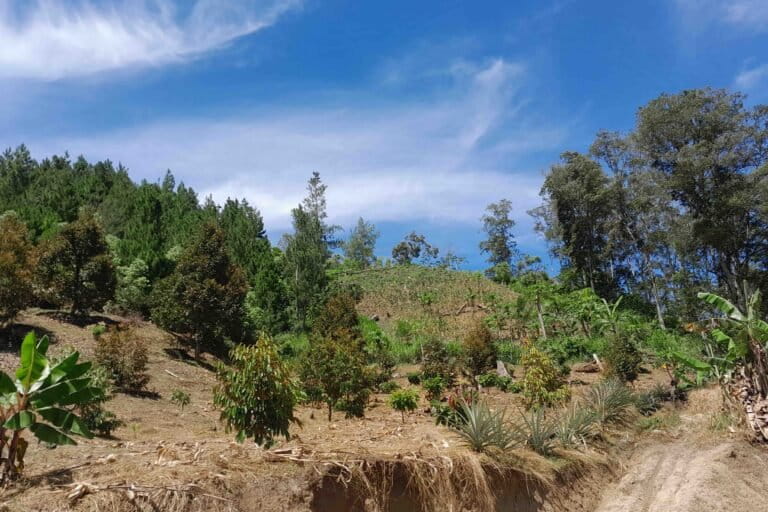
The first light of dawn breaks over the eastern horizon of the Kulawi highlands as a group of women walks in a steady rhythm toward the lush green slopes of Lonca Village. To their left and right, the landscape is a tapestry of cocoa and durian trees, while the silhouettes of distant pines frame the clear morning sky. This daily pilgrimage is not merely a routine of labor but a profound act of community preservation led by the Tobine Mohintuhu, a collective of women dedicated to the ancestral and economic revitalization of their land in Sigi Regency, Central Sulawesi.
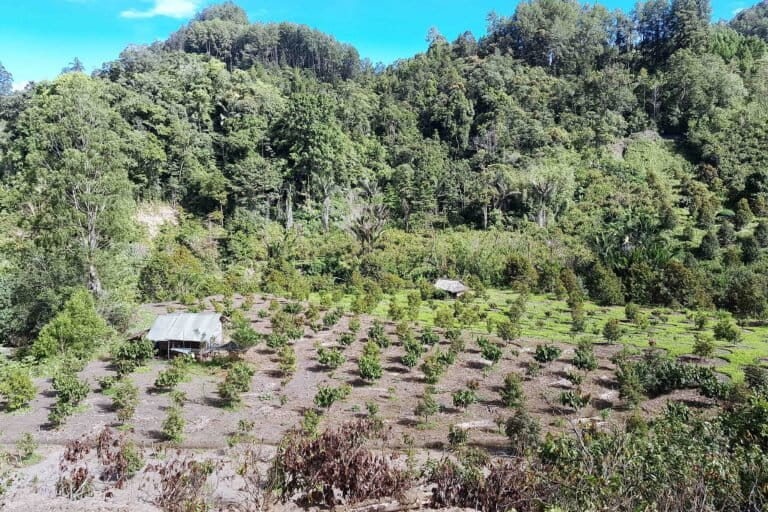
In the local Uma language, Tobine Mohintuhu translates to "Women United." This organization is unique in its structure, with a membership and leadership composed entirely of local women who have taken the mantle of agricultural management. Their primary focus is the cultivation of the "pampa," a traditional land-use system that has become the cornerstone of their push for food sovereignty. Unlike industrial monocultures, a pampa is a multi-layered garden that integrates seasonal crops with long-term perennials, creating a resilient ecosystem that serves both the kitchen table and the regional market.
The Cultural and Ecological Significance of the Pampa System
The pampa represents more than just a plot of land; it is a philosophy of permanent agriculture. Elna Hadajuga, a prominent member of the Tobine Mohintuhu, explains that while the village also engages in larger-scale farming, the pampa is where the heart of the household’s nutrition resides. These gardens typically feature a mix of corn, rice, vegetables, and fruit trees. "In our village dialect, we call these gardens pampa," Elna noted during a recent discussion on the community’s progress. "It refers to any garden where we plant a variety of things—from hardwood trees like durian and cocoa to essential crops like coffee."
While the Tobine Mohintuhu manages a communal pampa, individual families in Lonca also maintain their own private plots. The management of these areas falls predominantly to the women. This gendered division of labor is a long-standing tradition in the Kulawi region, where women are seen as the primary stewards of the family’s immediate food needs, while men often focus on the more labor-intensive harvesting of timber or cash crops further into the forest.
The agricultural cycle in Lonca often begins with corn. When a new area of land is cleared, corn is the pioneer crop, providing a quick harvest while slower-growing trees like cocoa or durian establish themselves. This method ensures that the land remains productive throughout its transition from a field to a mature agroforestry plot. The women practice "mapalus," a traditional form of mutual cooperation where they work each other’s fields in rotation, ensuring that no single household is overwhelmed by the demands of the planting or harvesting seasons.
Economic Transitions: From Coffee to Cocoa
The economic landscape of Lonca Village has undergone significant shifts over the last two decades. Historically, coffee was the dominant cash crop in the Kulawi highlands. However, as global market demands shifted and the price of cocoa surged in the early 2000s, many farmers began to replace their coffee groves with cocoa trees.
"We used to have a lot of coffee, but we cut much of it down to plant durian and chocolate (cocoa)," Elna explained. By 2026, the price of cocoa has stabilized at approximately Rp60,000 per kilogram, though local farmers recall peak years when prices soared above Rp150,000. This economic volatility has taught the community the importance of diversification. While cocoa remains a primary source of income, the integration of durian, pine resin, and forest honey provides a financial buffer against fluctuating commodity prices.
Despite the dominance of cocoa, it is not a crop for local consumption. Sigi Regency lacks large-scale processing facilities, meaning the raw beans are almost exclusively destined for export. This highlights a critical vulnerability in the local economy: the dependence on global supply chains for cash, while the actual food they eat must be grown at home to ensure survival.
Traditional Wisdom and Disaster Mitigation
The management of the pampa is guided by ancestral knowledge that serves as a primitive yet effective form of land-use planning. Amos, a resident of Lonca, emphasizes that the community does not plant indiscriminately. "Our elders taught us which areas are off-limits. They would say, ‘Don’t plant here; this area is prone to disasters or erosion,’" he said.
This traditional ecological knowledge is vital in the Sigi Regency, which is characterized by steep terrain and high rainfall, making it susceptible to landslides. By maintaining "permanent" gardens (pampa) rather than returning to the older "bonde" system of shifting cultivation, the villagers are able to keep the soil stabilized with deep-rooted trees.
Syukur Umar, a Professor of Forest Economics at Tadulako University in Palu, clarifies the distinction between these systems. "Pampa is the Kulawi term for permanent gardens, usually managed by women for daily vegetables and fruit," Umar noted. "In contrast, bonde refers to shifting cultivation. While bonde was common in the past, it is becoming less feasible as land availability decreases and the population’s needs grow." The transition to permanent pampa allows for higher land productivity and better environmental protection, aligning traditional practices with modern conservation needs.
The 2018 Earthquake: A Catalyst for Food Sovereignty
The drive for food sovereignty in Lonca Village was significantly accelerated by the catastrophic 7.5-magnitude earthquake and subsequent liquefaction that struck the Palu-Sigi-Donggala region in September 2018. The disaster severed supply lines, leaving many mountain communities isolated and without access to outside food aid for weeks.
Yarni Ijo, the Head of Lonca Village, recalls how the trauma of the earthquake changed the community’s perspective on farming. "The 2018 earthquake was a wake-up call. We realized how dangerous it is to depend on the outside world for our basic survival," she said. Since then, the village government has aggressively campaigned for "Kedaulatan Pangan" (Food Sovereignty).
The establishment of the Tobine Mohintuhu three years ago was a direct result of this initiative. Beyond just planting crops, the community group functions as a social safety net, operating a microfinance (simpan-pinjam) system that allows members to borrow money for seeds, tools, or emergency family needs. This financial independence ensures that the women are not exploited by high-interest informal lenders during lean seasons.
"I am very firm when it comes to food security," Yarni added. "This is not just for the women; I encourage the youth in the Karang Taruna (youth organization) and every head of household to participate. We have received help from NGOs in the form of vegetable seeds, but our goal is to eventually not need any outside help at all. We want to be truly independent."
Supporting Data and Regional Context
Central Sulawesi is one of Indonesia’s largest cocoa-producing regions, contributing significantly to the nation’s status as one of the world’s top three cocoa exporters. However, the Sigi Regency specifically faces unique challenges due to its geography. A large portion of the regency lies within the boundaries of the Lore Lindu National Park, which limits the expansion of agricultural land and necessitates more intensive and sustainable farming practices like the pampa.
Data from the Central Bureau of Statistics (BPS) indicates that the agricultural sector remains the largest employer in Sigi, with over 60% of the workforce involved in farming. However, the shift from food crops to cash crops like cocoa has historically led to a "food desert" effect in rural areas, where farmers have money but no access to fresh produce. The Tobine Mohintuhu’s focus on vegetables—mustard greens, eggplant, tomatoes, and chilies—directly addresses this imbalance. Most of these crops are consumed by the families or sold within the village, ensuring that nutritional wealth stays within the community.
Institutional Support and the Role of Social Forestry
The sustainability of the pampa system is also bolstered by the Village Forest Management Institution (LPHD). Adi Talua, the Chairman of LPHD Lonca, explains that their role is to ensure that agricultural expansion does not encroach on protected forest areas while still allowing villagers to benefit from non-timber forest products.
"In Lonca, we generally encourage the planting of chili and corn alongside cocoa when new land is opened," Adi Talua said. This intercropping strategy is part of a broader social forestry framework encouraged by the Indonesian government, which grants communities legal rights to manage forest lands sustainably. By integrating the LPHD’s oversight with the Tobine Mohintuhu’s grassroots labor, Lonca has created a model of "community-based forest management" that balances economic aspirations with environmental limits.
Implications for the Future
The story of Lonca Village and the Tobine Mohintuhu serves as a blueprint for other rural communities in Indonesia facing the dual pressures of climate change and economic globalization. By reclaiming the pampa system, these women are proving that traditional land-use practices can be adapted to solve modern problems of food insecurity and gender inequality.
The broader implications of this movement are significant. As the global climate becomes more unpredictable, localized food systems like those in Lonca offer a buffer against global food price spikes. Furthermore, the empowerment of women as the primary decision-makers in agricultural management has been shown to lead to better health and education outcomes for children in the community, as women are statistically more likely to reinvest agricultural profits back into the household.
For the women of Lonca, the walk to the pampa every morning is a walk toward a self-sufficient future. In the shade of the cocoa and durian trees, they are growing more than just food; they are growing a resilient society that can withstand both the tremors of the earth and the fluctuations of the market. As Yarni Ijo summarized, "Independence means being able to feed ourselves. Everything else comes after that."