Nasution Nanang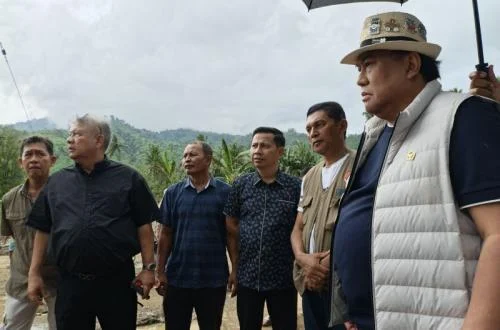
GORONTALO, INDONESIA – The Regional Parliament (DPRD) of North Gorontalo (Gorontalo Utara) has thrown its full weight behind an ambitious concept to transform the flood-prone settlement of the Remote Indigenous Community (Komunitas Adat Terpencil – KAT) Didingga into a vibrant tourism village. This innovative proposal, championed by Indonesian House of Representatives (DPR RI) member Rachmat Gobel, aims to address long-standing environmental challenges while simultaneously fostering sustainable economic growth and empowering the approximately 65 families residing in Dusun Buade, Desa Didingga, Kecamatan Biau. The initiative, first formally discussed on Monday, June 29, 2024, signals a pivotal shift in development strategy for one of Gorontalo’s most vulnerable communities.
A Vision for Transformation: From Vulnerability to Vibrancy
Dedy Dunggio, Chairman of the Gorontalo Utara DPRD, articulated the regional legislative body’s unwavering support, hailing Rachmat Gobel’s vision as "a brilliant idea." The core of the concept revolves around re-envisioning the KAT Didingga settlement, historically plagued by severe seasonal flooding, as an eco-cultural tourism destination. This transformation is not merely about aesthetic improvements; it is a holistic approach designed to enhance the community’s resilience against natural disasters, diversify their livelihoods, and integrate them more robustly into the regional economy through sustainable tourism practices. The strategic intervention seeks to leverage the area’s inherent natural beauty – lush green hills, fertile land, and serene environment – to create a unique visitor experience while ensuring the cultural integrity and well-being of the Didingga community.
For decades, the Didingga community has endured the relentless cycle of floods, primarily triggered by the overflowing Didingga River. The river, particularly during heavy rainy seasons, often exceeds its capacity, exacerbated by compromised or non-existent protective embankments. This precarious situation has led to significant property damage, disruption of daily life, and persistent economic hardship for the residents. Rachmat Gobel, following a direct inspection of the site, recognized that beneath the surface of this vulnerability lay immense untapped potential. He observed the fertile soil, capable of supporting diverse agricultural endeavors, and the picturesque landscape, offering a compelling backdrop for ecotourism and cultural experiences. It was this confluence of urgent need and latent potential that spurred the conception of the tourism village model.
The Socio-Economic Imperative: Empowering the KAT Didingga Community
The Komunitas Adat Terpencil (KAT) designation highlights the unique challenges faced by communities like Didingga. Often geographically isolated, these groups frequently grapple with limited access to essential services, inadequate infrastructure, and economic marginalization. The Didingga community, comprising roughly 65 households, epitomizes this struggle, with traditional livelihoods often disrupted by environmental calamities. The proposed tourism village offers a pathway out of this cycle of poverty and vulnerability by introducing new income streams and fostering skills development.
The concept envisions a multi-pronged approach to economic empowerment. Beyond direct tourism-related employment – such as guides, hospitality staff, and craftspeople – the plan includes robust programs in agriculture and livestock. For instance, the fertile lands could be utilized for organic farming, cultivating indigenous crops that can be marketed to tourists or supplied to local eateries. Livestock farming could be scaled up sustainably, providing both food security and additional income. Furthermore, the development of local handicrafts, traditional culinary experiences, and cultural performances could create authentic attractions, generating revenue while preserving and promoting the Didingga community’s rich heritage. This diversification is crucial, as it reduces reliance on climate-sensitive primary sector activities and builds a more resilient local economy.
Chronology of Engagement and Support
The journey towards this ambitious project can be traced back to earlier engagements by national and local stakeholders focused on regional development and disaster mitigation. While the exact timeline for Rachmat Gobel’s initial assessment is not explicitly detailed, his recent visit culminating in the concept’s formal unveiling on June 29, 2024, marks a significant milestone. This event served as a crucial platform for galvanizing local support.
- Pre-2024: Persistent flooding issues in Didingga, documented by local disaster management agencies and reported by residents, underscore the long-standing nature of the problem. Previous, often piecemeal, attempts at mitigation may have been made, highlighting the need for a comprehensive solution.
- Early 2024 (Inferred): Rachmat Gobel, a prominent figure in national politics known for his focus on regional development and economic empowerment, likely initiated preliminary studies or site visits to various underserved areas in Gorontalo, including Didingga. His background in business and commitment to local development would naturally draw him to areas with significant potential for transformation.
- June 29, 2024: The official presentation or discussion of the tourism village concept by Rachmat Gobel to local stakeholders, including the Gorontalo Utara DPRD and village officials. This date signifies the formal endorsement and commitment from key regional actors. Dedy Dunggio’s strong statement of support immediately followed, underscoring the local government’s alignment with the national legislator’s vision.
- Post-June 29, 2024: The current phase involves active lobbying for budget allocation, detailed planning for infrastructure development, and community engagement to ensure the project aligns with local needs and aspirations. This period will also involve crucial coordination with various government agencies, from river management to tourism promotion.
Infrastructure Imperatives and Inter-Agency Collaboration
The realization of the Didingga tourism village hinges critically on robust infrastructure development, with flood mitigation being the paramount concern. The Gorontalo Utara DPRD has explicitly called for the swift and effective construction of representative river protection embankments by the Balai Sungai (River Agency). This crucial piece of infrastructure is not merely a component of the project but its foundation, ensuring the safety and stability of the community and the viability of any tourism ventures. Without effective flood control, investments in housing, facilities, and economic programs would remain vulnerable.
Beyond flood control, the infrastructure plan encompasses:
- Community Housing Redevelopment: Potentially relocating homes to safer, elevated areas or fortifying existing structures to be flood-resistant, while preserving cultural aesthetics.
- Tourism Facilities: Development of guesthouses, homestays, communal spaces for cultural performances, information centers, and local product markets.
- Access Roads: Improving connectivity to and within the village to facilitate visitor access and local logistics.
- Utilities: Ensuring reliable access to clean water, electricity, and sanitation systems, which are often lacking in remote communities.
- Digital Connectivity: Implementing internet access to support online marketing, booking systems, and educational opportunities for residents.
The complexity of these infrastructural requirements necessitates close collaboration among various government bodies. The DPRD Gorontalo Utara, as the legislative oversight body, will play a crucial role in advocating for and allocating regional budgets. The local government and village administration are essential for ground-level implementation and community mobilization. The Balai Sungai must deliver on the critical flood control measures. Furthermore, provincial and national ministries – such as those for Public Works and Housing, Tourism and Creative Economy, and Social Affairs – will be vital for technical assistance, additional funding, and integrating the project into broader national development frameworks. The "all-of-government" approach is indispensable for a project of this scale and ambition.
Funding Challenges and Community Engagement
Dedy Dunggio openly acknowledged that realizing this "brilliant idea" will require "a struggle" to secure the necessary budget allocations. Large-scale infrastructure projects, especially those in remote areas, are inherently costly. The regional government’s commitment, while strong, may not be sufficient without significant support from the provincial and national levels. This is where Rachmat Gobel’s influence as a DPR RI member becomes critical, as he can champion the project within national budgetary discussions and advocate for its inclusion in relevant national programs for rural development, poverty alleviation, and disaster risk reduction.
Community engagement is another cornerstone of the project’s success. The 65 families of KAT Didingga are not merely beneficiaries but active participants. Their input on the design of housing, the nature of tourism activities, and the management of natural resources is crucial for ensuring cultural appropriateness and long-term sustainability. Programs aimed at skill development in hospitality, organic farming, handicraft production, and tour guiding must be tailored to their needs and cultural context. Ensuring fair distribution of benefits and transparent decision-making processes will foster a sense of ownership and commitment among the residents. Without genuine buy-in and active participation from the KAT Didingga community, even the most well-intentioned project risks failure.
Broader Implications: A Model for Sustainable Development
The Didingga tourism village initiative holds significant implications beyond the immediate community. If successful, it could serve as a powerful model for sustainable development in other remote and vulnerable communities across Indonesia, particularly those grappling with similar challenges of environmental degradation, economic marginalization, and cultural preservation.
- Economic Diversification: It demonstrates how tourism, when planned sustainably, can be a potent tool for economic diversification in regions traditionally reliant on resource-intensive or climate-sensitive sectors.
- Disaster Risk Reduction: The integration of flood mitigation with economic development offers a holistic approach to disaster risk reduction, moving beyond reactive responses to proactive resilience-building.
- Cultural Preservation: By showcasing and integrating local culture into the tourism experience, the project can foster a renewed appreciation for indigenous heritage among both residents and visitors, contributing to its preservation and revitalization.
- Inter-Agency Synergy: The project’s reliance on multi-level government collaboration highlights the importance of synergistic efforts between national, provincial, and local authorities, alongside community involvement, for effective regional development.
- Ecotourism Potential: Gorontalo, with its rich biodiversity and scenic landscapes, has immense untapped ecotourism potential. The Didingga project could be a flagship example, attracting further investment and attention to sustainable tourism development in the province. This includes the potential for birdwatching, trekking, and experiencing the unique flora and fauna of the region.
The transformation of KAT Didingga into a thriving tourism village, while ambitious, is underpinned by a clear vision and strong multi-stakeholder support. It represents a significant step towards addressing the complex interplay of environmental vulnerability, economic hardship, and the need for sustainable growth in Indonesia’s remote indigenous communities. The journey will undoubtedly involve challenges, from securing consistent funding to managing the social and environmental impacts of tourism, but the potential rewards – a resilient community, a vibrant local economy, and a preserved cultural heritage – make this endeavor a beacon of hope for Gorontalo Utara and beyond. The prayer for budget allocation, as Dedy Dunggio urged, encapsulates the collective hope for a brighter future for the Didingga community, where the beauty of their land can finally become a source of prosperity and pride.