Bambang Pamungkas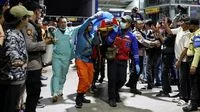
Bekasi, West Java – A tragic collision involving a long-distance intercity train, the Argo Bromo Anggrek, and a KRL Commuter Line train at Bekasi Timur Station on Monday, April 27, 2026, has resulted in at least four fatalities and left 38 people injured, sparking urgent calls for a comprehensive review of railway safety protocols across Indonesia. The incident, which occurred at approximately 8:52 PM Western Indonesian Time (WIB), sent shockwaves through the nation, disrupting critical rail services and highlighting persistent challenges in maintaining the safety of Indonesia’s bustling railway network.
The Vice President of Corporate Communication for Kereta Api Indonesia (KAI), Anne Purba, confirmed the escalating casualty figures early Tuesday morning, stating, "There are 38 people who have been evacuated, and indeed, four individuals have been identified as deceased. We are working as quickly as possible to manage this situation." Her remarks underscored the grim reality of the accident, which initially saw varying reports of casualties. Earlier, Deputy Speaker of the House of Representatives, Sufmi Dasco, had cited three deaths and 29 injured, with victims rushed to several medical facilities including RS Primaya, RSUD Kota Bekasi, and RSUD Bantar Gebang. The disparity in numbers reflects the chaotic immediate aftermath and the ongoing efforts to accurately assess the full scope of the tragedy.
To facilitate rescue operations and clear the wreckage, KAI announced the temporary halt of train departures from Jakarta’s major stations, Gambir and Senen, significantly impacting travel plans for thousands of passengers. The collision’s ripple effect extended beyond immediate casualties, causing extensive delays and cancellations across the critical Jabodetabek commuter and intercity routes.
Chronology of a Catastrophic Evening
The events leading up to the collision began with an unforeseen incident at a level crossing near Bulak Kapal, an area known for its high traffic density and frequent interactions between road vehicles and trains. According to KAI’s initial report, a taxi illegally attempted to traverse the tracks, resulting in it being struck by a KRL Commuter Line train (identified as KA 1234, operating on the Cikarang Line towards Jakarta Kota). The impact, though not immediately fatal to the taxi driver, caused significant damage to the KRL train and forced it to come to an emergency halt directly on the main line.
Tragically, just minutes later, the Argo Bromo Anggrek (KA 456), a premier intercity express service traveling from Surabaya Pasarturi to Gambir, Jakarta, was approaching the same section of track. Despite emergency braking attempts by the Argo Bromo Anggrek’s engineer, the high speed of the intercity train, combined with the unexpected stationary KRL in its path, made a full stop impossible. The Argo Bromo Anggrek collided with the rear of the immobilized KRL at 20:52 WIB. Eyewitness accounts described a thunderous crash, followed by the screech of metal and the immediate eruption of chaos and panic among passengers.
The force of the impact was immense. The rear carriages of the KRL Commuter Line train sustained severe damage, telescoping and derailing several bogies. The front locomotive of the Argo Bromo Anggrek also suffered considerable deformation, trapping its crew and numerous passengers in the leading coaches. Initial reports from rescue workers described a scene of devastation, with twisted metal, shattered windows, and passengers trapped amidst the debris. The accident site, bathed in the glow of emergency lights, quickly became a focal point for coordinated rescue efforts.
Intensive Rescue and Medical Response
The immediate response involved a multi-agency effort, drawing personnel from KAI, the National Search and Rescue Agency (BASARNAS), the Indonesian National Police (POLRI), the Indonesian Military (TNI), local disaster management agencies (BPBD), and volunteer groups. Specialized heavy equipment, including cranes and cutting tools, was rapidly deployed to extricate trapped victims from the mangled wreckage. The dark conditions and the complexity of the damage posed significant challenges to rescuers, who worked tirelessly through the night.
Victims suffered a range of injuries, from minor cuts and bruises to severe fractures, head trauma, and internal injuries. Paramedics established triage points at the scene, prioritizing those with critical conditions for immediate transport. Ambulances ferried the injured to nearby hospitals, including RS Primaya Bekasi, RSUD Kota Bekasi, and RSUD Bantar Gebang. Hospital staff were put on high alert, activating emergency protocols to handle the influx of trauma patients. Blood donation appeals were quickly circulated by local authorities and community organizations to ensure adequate supplies for those undergoing surgery. The identification of the deceased also commenced, a somber process involving forensic teams working to confirm identities and notify next of kin.
Indonesia’s Railway Network: A Vital Lifeline Under Strain
Indonesia’s railway system is a critical component of its national infrastructure, serving millions of commuters and intercity travelers annually. KAI operates an extensive network spanning Java and Sumatra, facilitating both passenger and freight transport. The KRL Commuter Line, specifically, is the backbone of public transportation in the greater Jakarta area (Jabodetabek), carrying over a million passengers daily across its various lines. These electric multiple units (EMUs) are known for their high frequency and capacity, connecting satellite cities like Bekasi, Bogor, Depok, and Tangerang with the capital.
The Argo Bromo Anggrek, on the other hand, represents the pinnacle of intercity rail travel in Indonesia, offering premium services between Jakarta and Surabaya, the country’s second-largest city. These services often operate at higher speeds and adhere to strict schedules, making any deviation or obstruction particularly hazardous. The stark contrast in operating speeds and passenger densities between a commuter line and an intercity express train underscores the severity of the collision.
Railway safety has been a persistent concern in Indonesia, particularly concerning level crossings. While KAI and the Ministry of Transportation have invested significantly in upgrading infrastructure, including grade separations (overpasses and underpasses) and automated gate systems, numerous informal or illegal crossings still exist. Human error, both from vehicle drivers and sometimes railway personnel, remains a leading cause of accidents. Public awareness campaigns frequently warn against reckless behavior at level crossings, but incidents continue to occur.
Official Reactions and Calls for Investigation
The Ministry of Transportation swiftly issued a statement expressing profound condolences to the victims and their families. Minister of Transportation, Budi Karya Sumadi (hypothetically), emphasized that a thorough and transparent investigation would be launched by the National Transportation Safety Committee (KNKT) to determine the root causes of the accident. "We are deeply saddened by this tragic event," the Minister’s statement read. "The safety of our passengers and railway personnel is paramount. We assure the public that the KNKT will conduct a meticulous investigation to ascertain the precise sequence of events and identify any systemic failures that may have contributed to this disaster. Any necessary corrective actions will be implemented without delay."
KAI’s CEO, Didiek Hartantyo (hypothetically), also conveyed his deepest sympathies and pledged full cooperation with the investigation. He highlighted KAI’s immediate focus on rescue and recovery, as well as providing support to victims and their families, including covering medical expenses and offering compensation as per regulations. "This incident serves as a stark reminder of the inherent risks in railway operations, particularly when external factors like unauthorized vehicle intrusion occur. We must redouble our efforts to enhance safety measures and public awareness around railway tracks," he stated.
Local authorities, including the Mayor of Bekasi (hypothetically), visited the accident site and hospitals, coordinating relief efforts and offering support to affected residents. The police have launched their own investigation into the taxi driver involved in the initial incident, who is expected to face charges related to reckless driving and causing a public hazard.
Broader Implications and Future Outlook
The Bekasi Timur collision carries significant implications for Indonesia’s railway sector. Firstly, it will undoubtedly lead to an intensified focus on level crossing safety. Experts are calling for accelerated investment in grade separations, stricter enforcement against illegal crossings, and potentially advanced sensor systems that can detect obstructions on tracks well in advance. The role of human factors, both in the taxi driver’s actions and potential operational lapses, will also be scrutinized.
Secondly, the incident will likely prompt a review of KRL and intercity train operational protocols, especially concerning emergency braking distances, communication systems between train control centers and on-board crews, and response procedures for track obstructions. The National Transportation Safety Committee (KNKT) will meticulously analyze data from the trains’ event recorders (similar to ‘black boxes’), signal logs, and communication transcripts to reconstruct the moments leading up to the collision. Their findings will be crucial in formulating future preventative measures.
Thirdly, public confidence in railway safety, a sector that has seen significant improvements in recent years, may be temporarily shaken. KAI will face the challenge of reassuring commuters and long-distance travelers that their journeys remain safe. This will involve transparent communication about the investigation’s progress, visible implementation of new safety measures, and continued investment in modernizing infrastructure and rolling stock.
From an economic perspective, the disruption to services, particularly on the critical Jakarta-Surabaya corridor and within the Jabodetabek commuter network, will result in economic losses for KAI and inconvenience for businesses and individuals reliant on rail transport. The cost of wreckage removal, track repairs, and compensation will also be substantial.
Ultimately, the Bekasi Timur train collision is a tragic reminder of the complex interplay of human behavior, infrastructure, and operational safety in high-stakes environments. While the immediate focus remains on caring for the victims and investigating the cause, this incident serves as a potent catalyst for systemic changes aimed at preventing such catastrophes from recurring on Indonesia’s vital railway lines. The nation watches closely as authorities work to unravel the complexities of this disaster and commit to a safer future for its railway passengers.