Nila Kartika Wati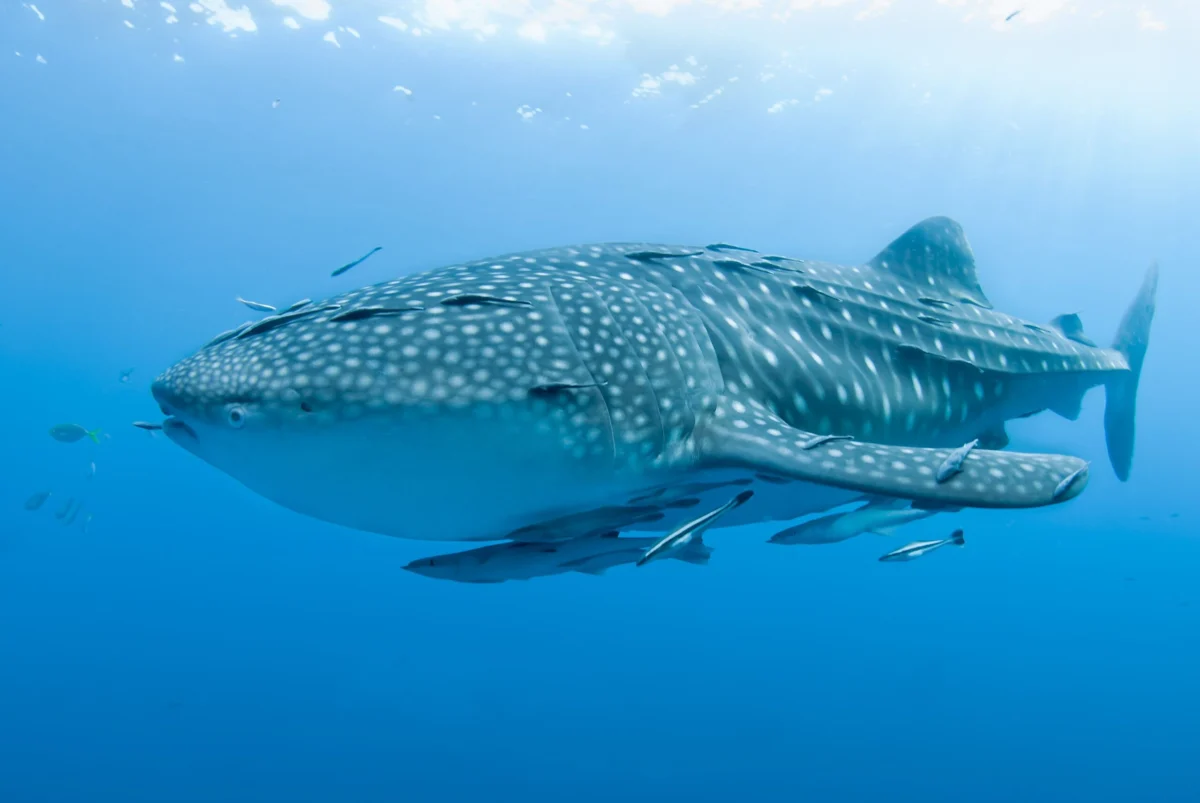
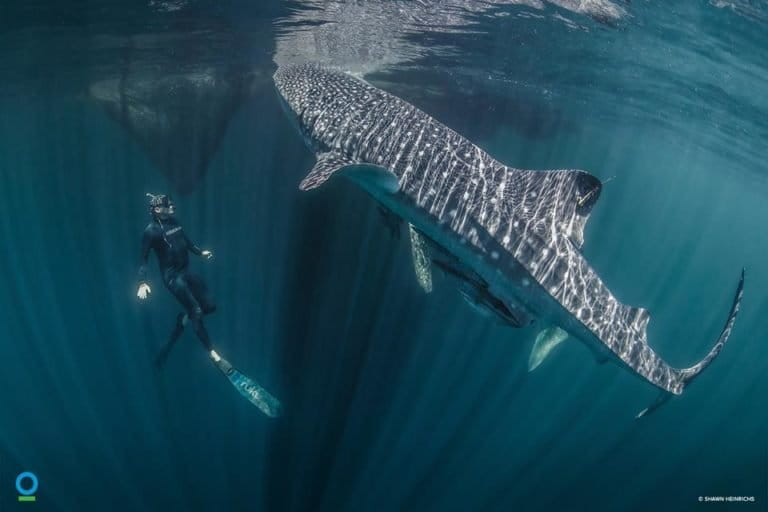
The whale shark (Rhincodon typus), recognized as the world’s largest fish, has long captivated the scientific community with its immense size, reaching up to 10 meters in length and weighing approximately nine tons at maturity. This prehistoric species, which has navigated the Earth’s oceans for over 60 million years, is a filter-feeding giant that relies primarily on plankton for sustenance. Recent breakthroughs in marine research have now shed unprecedented light on the complex migratory behaviors of these gentle giants, revealing that their survival depends on a vast, interconnected network of international waters and coastal habitats. A comprehensive 10-year study, conducted between 2015 and 2025 and published in the journal Frontiers in Marine Science in 2026, has mapped the movements of 70 individual whale sharks across the Indo-Pacific, challenging existing conservation paradigms and highlighting the urgent need for transnational cooperation.
The Evolutionary Legacy and Biological Profile of the Whale Shark
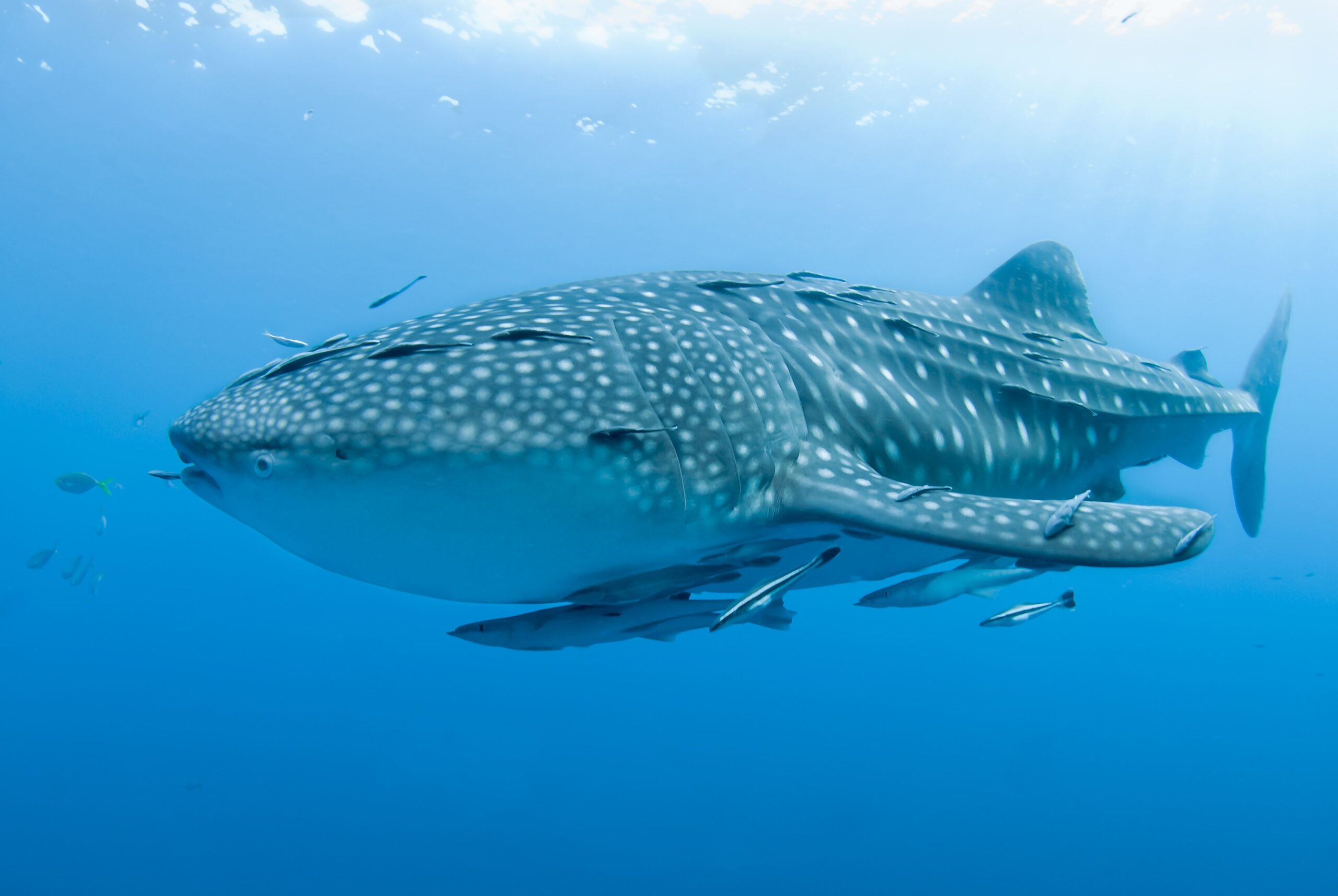
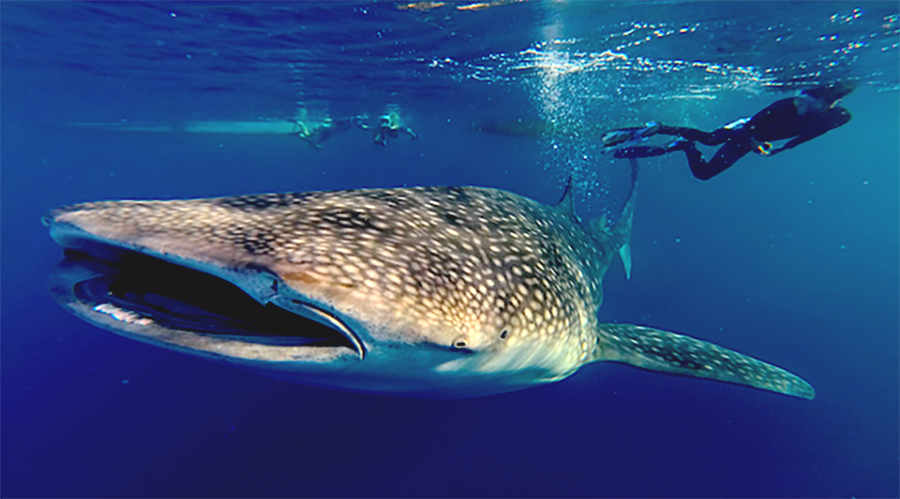
The whale shark is a biological marvel, characterized by its distinctive "starry" pattern of white spots and stripes—a configuration unique to every individual, much like a human fingerprint. These markings have allowed researchers to utilize photo-identification databases to track individuals over decades. With a lifespan that can extend up to 70 years, whale sharks are nomadic by nature, preferring the warm, tropical waters of the world’s oceans. While they are often seen cruising in shallow coastal areas, they are capable of extraordinary vertical migrations, diving to depths of up to 914 meters to navigate cooler currents or follow deep-sea prey.
The species was first scientifically described in 1828 after a specimen was captured in Table Bay, Cape Town, South Africa. Andrew Smith, a renowned zoologist, provided the formal description of the species the following year. Cape Town, situated at the confluence of the Indian and Atlantic Oceans, remains a significant historical marker for megafauna research. However, the focus of modern conservation has shifted toward the "Coral Triangle" in Southeast Asia, particularly Indonesia, which serves as a critical hub for whale shark activity due to its unique oceanographic conditions and abundant food sources.
A Decade of Discovery: The 2015-2025 Longitudinal Study
Led by Konservasi Indonesia in collaboration with a consortium of academic and research institutions—including the Elasmobranch Institute Indonesia, the University of Indonesia, Diponegoro University, and Conservation International—the decade-long study represents one of the most ambitious tracking efforts in marine biology. Researchers deployed advanced satellite tags on 70 whale sharks across four primary Indonesian aggregation sites: Cendrawasih Bay (Central Papua), Saleh Bay (West Nusa Tenggara), Kaimana (West Papua), and Tomini Bay (Gorontalo).
The data collected over ten years revealed a startling reality: whale sharks are not merely seasonal visitors to specific bays but are international travelers that traverse the maritime boundaries of at least 13 different nations and extensive stretches of the high seas. The tracked individuals were found to move through the waters of Indonesia, Australia, Christmas Island, Timor-Leste, the Gilbert Islands (Kiribati), Guam, the Marshall Islands, Micronesia, Nauru, Palau, Papua New Guinea, the Philippines, and the Solomon Islands.
Mochamad Iqbal Herwata Putra, a lead researcher from Konservasi Indonesia, noted that this study provides a new "horizon" for understanding marine megafauna. The ability to track these animals for a decade allowed scientists to move beyond anecdotal sightings to a data-driven mapping of critical habitats, movement corridors, and environmental drivers. The findings indicate that while some bays serve as "permanent" homes or frequent return points, the sharks’ broader survival strategy involves following specific environmental cues across thousands of miles.
The Role of Ocean Dynamics and Upwelling
The migration of the whale shark is not a random wandering but a calculated response to the physical dynamics of the ocean. Anindya Wirasatrya, a Professor of Oceanography at Diponegoro University, explains that whale sharks utilize "oceanic highways" created by currents and biological phenomena. One of the most critical factors is "upwelling"—a process where deep, cold, and nutrient-rich water rises to the surface.
These nutrients, primarily nitrates and phosphates, act as fertilizer for the ocean, sparking massive blooms of phytoplankton. This, in turn, attracts zooplankton and small fish, creating a concentrated feeding ground for whale sharks. Because upwelling occurs at different times and locations across the Indo-Pacific, whale sharks must remain mobile to capitalize on these transient pulses of productivity. This explains why a shark seen in the shallow waters of a bay in Papua might eventually be tracked thousands of kilometers away to the southern coast of Java or the remote reaches of the Pacific.
The interconnectedness of the marine system means that any disruption in one part of the ocean—whether through climate change affecting current patterns or localized pollution—can have a cascading effect on the migratory success of the species. Understanding these spatio-temporal patterns is essential for predicting where whale sharks will be at any given time, which is the first step in mitigating human-wildlife conflict.
Beyond Borders: The Shift Toward Transnational Conservation
The revelation that whale sharks spend a significant portion of their lives in the high seas—areas outside of any single nation’s jurisdiction—presents a massive challenge for conservationists. Edy Setyawan, Lead Conservation Scientist at the Elasmobranch Institute Indonesia, emphasized that traditional Marine Protected Areas (MPAs), while vital, are insufficient on their own.
"Most of the migration routes are located outside of protected zones," Setyawan stated. "The movement across international borders and into the high seas occurs in regions where management is currently limited." This spatial gap in protection exposes whale sharks to various risks, including ship strikes in busy shipping lanes, accidental entanglement in industrial fishing gear (bycatch), and the impacts of unregulated tourism.
To address these threats, the research team advocates for a multi-layered policy approach:
- Regional Agreements: Countries within the Indo-Pacific must establish shared conservation agendas to protect migratory corridors.
- Shipping Regulations: Implementing mandatory speed reductions for large vessels in "high-use" areas to prevent fatal collisions.
- Bycatch Mitigation: Developing and enforcing "bycatch release" protocols for industrial fisheries operating in international waters.
- Sustainable Tourism: Standardizing whale shark interaction guidelines to ensure that local economic benefits from tourism do not come at the cost of the animals’ health.
Indonesia has already taken a leading role by granting the whale shark full protection under national law since 2013. However, the study suggests that Indonesia should now implement "specialized protection" for juvenile populations. Specific sites like Cendrawasih Bay and Saleh Bay are known to be nurseries for young males. Protecting these specific life-stage habitats requires a combination of MPA management and specific regulations that prioritize the sharks’ biological needs over industrial development.
The Long Road to Recovery
The urgency of these conservation measures is underscored by the whale shark’s precarious status. The International Union for Conservation of Nature (IUCN) currently lists the species as "Endangered," while CITES (the Convention on International Trade in Endangered Species of Wild Fauna and Flora) includes them in Appendix II. Global populations are estimated to have declined by more than 50 percent over the last 75 years, primarily due to historical overfishing and ongoing habitat degradation.
Because whale sharks are slow-growing and late-maturing—reaching reproductive age only after 25 to 30 years—their ability to recover from population losses is extremely limited. Experts estimate that it would take at least 100 years of concerted, global protection for the species to return to its historical population levels.
The decade of data from 2015-2025 serves as a roadmap for this century-long recovery effort. By treating the ocean as a single, connected ecosystem rather than a series of isolated bays, scientists and policymakers can create a safety net that follows the whale shark from the coastal shallows to the deep blue of the high seas. As an "umbrella species," the protection of the whale shark inevitably leads to the protection of the broader marine environment, ensuring that the "starry" giants of the deep continue to roam the oceans for another 60 million years.