Azin Asro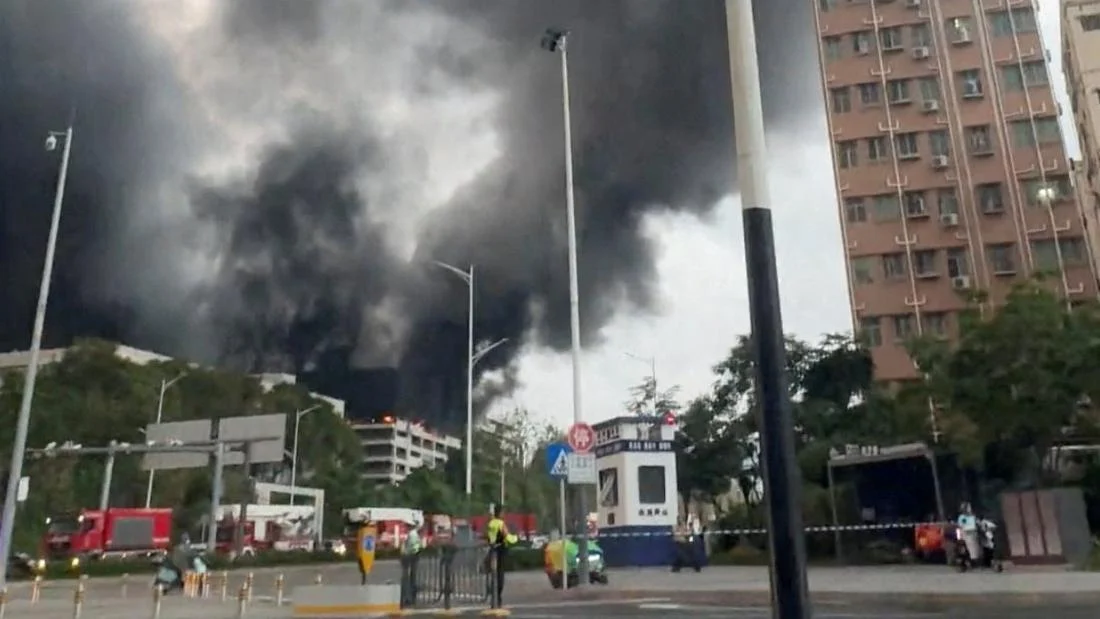
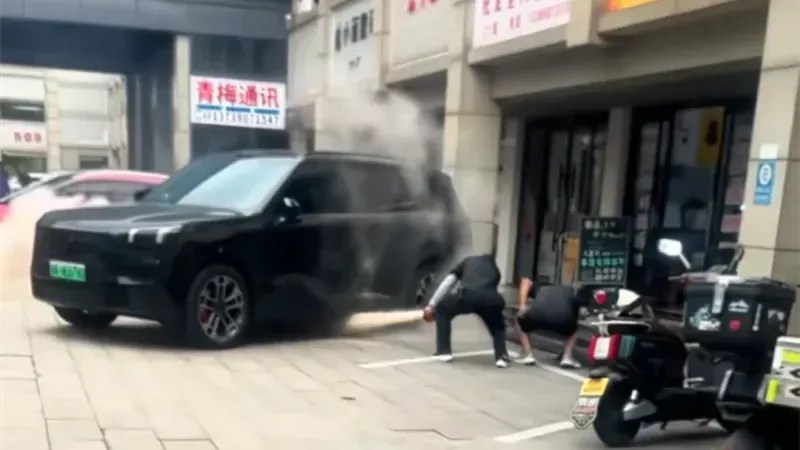
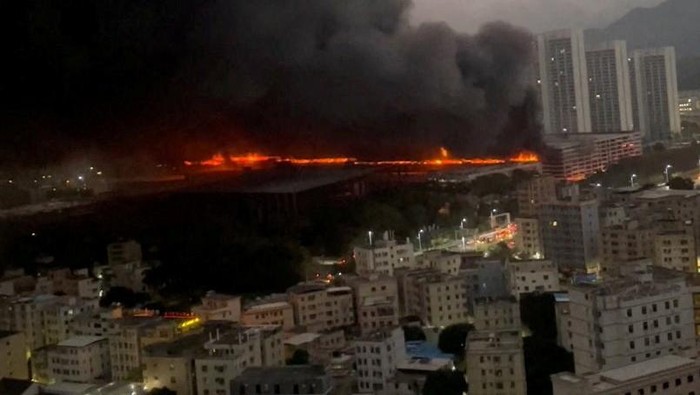
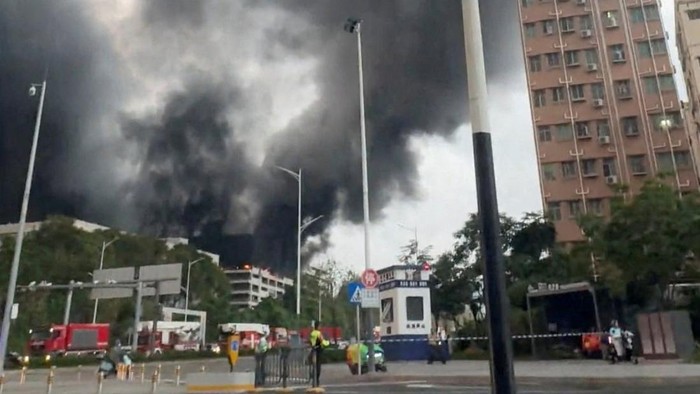
The industrial landscape of Shenzhen was momentarily disrupted in the early hours of Tuesday, April 14, 2026, when a significant fire erupted at a facility owned by BYD, the world’s leading manufacturer of new energy vehicles (NEVs). The incident, which occurred within the sprawling industrial complex that serves as a cornerstone of BYD’s global operations, was concentrated in a multi-story parking structure. According to official statements from the company and local emergency services, the fire was detected during the pre-dawn hours, prompting an immediate and large-scale response from the Shenzhen Fire and Rescue Department. While images of thick black smoke billowing from the site circulated rapidly on social media, BYD has moved quickly to reassure stakeholders that the incident was localized and did not result in casualties or significant disruptions to its primary manufacturing output.
Chronology of the Incident and Emergency Response
The fire was first reported at approximately 2:30 AM local time on Tuesday. Security personnel at the Shenzhen facility noticed smoke emanating from the upper levels of a dedicated multi-story parking unit located on the periphery of the main industrial zone. By 3:00 AM, multiple fire engines were on the scene, battling flames that had spread across several sections of the parking structure.
Witnesses nearby reported seeing bright flashes and hearing muffled sounds, typical of automotive components reacting to high heat, although the company has not confirmed any secondary explosions. The Shenzhen Fire and Rescue Department utilized specialized high-reach equipment and chemical suppressants to prevent the blaze from spreading to adjacent manufacturing plants and R&D laboratories. By 5:30 AM, the fire was largely contained, and by 8:00 AM, cooling operations were underway to ensure no reignition occurred in the structural embers.
The timing of the fire proved critical in minimizing the risk to human life. Because the incident occurred during a shift change and in an area primarily used for vehicle storage rather than active assembly, the number of personnel in the immediate vicinity was low. Emergency evacuation protocols were successfully activated for the skeleton crew on duty, and BYD confirmed shortly after sunrise that all employees and contractors were accounted for, with zero injuries or fatalities reported.
Investigating the Cause: The Role of External Contractors
Preliminary investigations conducted by BYD’s internal safety team, in collaboration with local fire investigators, have pointed toward a likely cause: external construction activities. The multi-story parking facility was reportedly undergoing structural maintenance and upgrades involving third-party contractors.
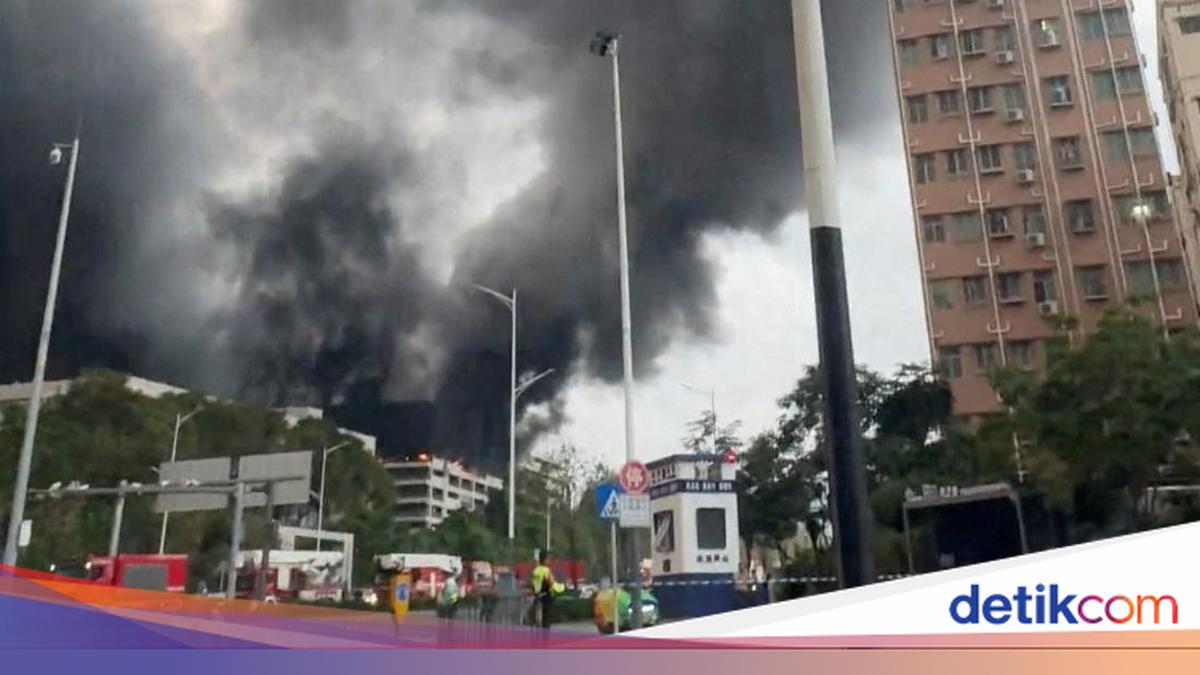
Initial findings suggest that "hot work"—which typically includes welding, grinding, or cutting—was being performed in a manner that did not strictly adhere to the facility’s rigorous safety protocols. Sparks or heat transfer from these activities are suspected to have ignited flammable materials stored within the parking area, leading to the rapid spread of the fire.
BYD has stated that it is conducting a comprehensive audit of all external contractors currently working across its Shenzhen sites. The company emphasized that it maintains a "zero-tolerance" policy regarding safety violations and will seek accountability if the investigation proves that negligence or a breach of standard operating procedures (SOPs) led to the blaze. This focus on external factors highlights the challenges large industrial firms face when balancing continuous facility upgrades with the stringent safety requirements of high-density automotive storage.
Analysis of the Affected Area and Vehicle Inventory
The specific location of the fire is of particular interest to market analysts and industry observers. The multi-story parking structure was not a dispatch hub for new, customer-ready vehicles. Instead, it served several internal functions essential to BYD’s lifecycle management and research and development (R&D) cycles.
The area was primarily utilized for the storage of:
- Test Vehicles: Units used for long-term durability testing, crash-test preparation, and software validation.
- Validation Units: Pre-production models used to calibrate assembly lines and test new components before they are integrated into mass production.
- Scrap and End-of-Life Vehicles: Older units or prototypes that had reached the end of their utility and were awaiting decommissioning or recycling.
Among the vehicles stored in this facility were various iterations of BYD’s most popular global models, including the Dolphin hatchback, the Atto 3 crossover (known as the Yuan Plus in China), and the Seal sedan. These models represent the core of BYD’s "Ocean" and "Dynasty" series, which have driven the company’s explosive growth in international markets. While several dozen vehicles were damaged or destroyed in the blaze, BYD clarified that these were not part of the commercial inventory destined for dealerships or export hubs. Consequently, the financial impact regarding "lost sales" is expected to be negligible.
Production Resilience and Global Supply Chain Impact
One of the most critical takeaways from the incident is the resilience of BYD’s production infrastructure. Despite the scale of the fire in the parking area, the company’s core manufacturing lines—where the actual assembly of batteries, motors, and vehicle chassis occurs—remained entirely unaffected.
"Our production operations in Shenzhen and across our global network continue to run at normal capacity," a BYD spokesperson stated in a press release following the event. "The incident was isolated to a non-production storage facility. We do not anticipate any delays in deliveries to our domestic or international customers."
This statement is particularly important for the Indonesian market, where BYD has recently made significant inroads. As Indonesia seeks to become a regional hub for EV adoption, the stability of BYD’s supply chain is under constant scrutiny. Indonesian consumers awaiting deliveries of the Dolphin, Atto 3, or Seal can expect their timelines to remain unchanged. Furthermore, BYD’s plans for localized manufacturing and infrastructure investment in Southeast Asia are proceeding according to the established 2026 roadmap.
Context: BYD’s Safety Standards and the "Blade Battery"
Whenever a fire occurs at an EV facility, questions inevitably arise regarding battery safety. BYD has built its reputation on the "Blade Battery," a Lithium Iron Phosphate (LFP) chemistry that is widely regarded as one of the safest in the industry. The Blade Battery is designed to pass the "nail penetration test" without catching fire or emitting smoke, a benchmark that many traditional NCM (Nickel Cobalt Manganese) batteries struggle to meet.
While the fire at the Shenzhen facility involved vehicles, there is currently no evidence to suggest that a battery defect was the cause. In fact, the preliminary focus on construction activity shifts the narrative away from product safety and toward industrial site management. Industry experts note that in any automotive fire, the high concentration of plastics, upholstery, and tires provides ample fuel for a blaze, regardless of whether the powertrain is electric or internal combustion. BYD’s ability to quickly identify the source of the fire as external to the vehicle technology itself will be vital in maintaining consumer confidence in its battery safety claims.
The Broader Implications for Industrial Safety in the EV Era
The incident at BYD’s Shenzhen facility serves as a reminder of the inherent risks in large-scale industrial operations, particularly those involving high-density storage of complex machinery. As the global demand for EVs continues to surge, manufacturers are under pressure to expand facilities at a breakneck pace. This expansion often involves overlapping construction and operational phases, which can increase the risk of industrial accidents if not managed with extreme precision.
Shenzhen, often referred to as the "Silicon Valley of Hardware," is home to some of the world’s most advanced manufacturing ecosystems. The local government has historically maintained strict fire safety regulations for its industrial zones. This incident is likely to trigger a city-wide review of fire safety protocols in multi-story parking and storage structures, particularly those housing electric vehicles or prototypes.
For BYD, the focus moving forward will be on two fronts:
- Contractor Management: Strengthening the oversight of third-party firms to ensure that "hot work" and other high-risk activities are performed under more rigorous supervision.
- Facility Modernization: Potentially integrating more advanced automated fire suppression systems in older storage structures that were built before the current peak of EV production.
Conclusion
The April 14 fire at BYD’s Shenzhen facility, while visually dramatic, appears to be a manageable industrial setback rather than a systemic crisis. By successfully containing the blaze to a non-essential storage area and ensuring the safety of its workforce, BYD has demonstrated the effectiveness of its emergency response protocols.
As the company continues to dominate the global NEV market, its ability to navigate such incidents with transparency and operational resilience will be key to its long-term success. For now, the message from Shenzhen is clear: the production lines are moving, the global supply chain is intact, and the "Ocean" and "Dynasty" series vehicles will continue to roll off the assembly lines as planned, heading toward markets in China, Europe, Southeast Asia, and beyond. The investigation continues, but the primary takeaway is one of localized damage and a swift return to business as usual for the electric vehicle giant.