Bambang Pamungkas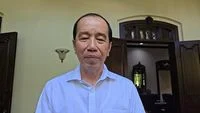
The absence of Indonesia’s 7th President, Joko Widodo (Jokowi), from the official commemoration of Pancasila Day on Saturday, June 1, 2026, at the Ministry of Foreign Affairs (Kemlu) Complex in Central Jakarta, has drawn significant attention. The ceremony, a cornerstone event in the national calendar, was attended by a host of current and former dignitaries, including incumbent President Prabowo Subianto, former President Megawati Soekarnoputri, and former Vice Presidents Jusuf Kalla and Ma’ruf Amin. Jokowi’s aide, AKBP Syarif Muhammad Fitriansyah, clarified the former president’s non-attendance, stating unequivocally that no invitation had been received. This development has initiated discussions regarding state protocol and the transition of leadership, particularly at such a symbolically charged national event.
Pancasila Day: A Foundation of Indonesian Identity
Pancasila Day, observed annually on June 1st, commemorates the birth of Indonesia’s state ideology, Pancasila. Derived from two Old Javanese words, "pañca" (five) and "śīla" (principles), Pancasila encapsulates the philosophical foundation of the Indonesian state. These five principles are: Belief in the One and Only God, Just and Civilized Humanity, The Unity of Indonesia, Democracy Guided by the Inner Wisdom in the Unanimity Arising Out of Deliberations Amongst Representatives, and Social Justice for All Indonesians.
The date marks the speech delivered by Sukarno, Indonesia’s first president, on June 1, 1945, during the investigatory committee for the preparation of Indonesian independence (BPUPKI). In this pivotal address, Sukarno outlined the five foundational principles that would later be enshrined in the preamble to the 1945 Constitution. Pancasila is not merely a political doctrine but is deeply interwoven with the nation’s cultural and social fabric, serving as a unifying ideology for a country rich in ethnic, religious, and linguistic diversity. The annual commemoration is a solemn occasion for national reflection, reaffirming commitment to these core values and fostering national unity. The Gedung Pancasila, where the ceremony took place, holds particular historical significance as the very site where Sukarno delivered his seminal speech, adding layers of symbolic weight to the event.
Chronology of Events on June 1, 2026
The morning of June 1, 2026, presented a stark contrast in the activities of Indonesia’s current and former leaders.
-
Morning in Solo: Jokowi’s Public Engagement: While official state ceremonies were being prepared in the capital, former President Joko Widodo was reportedly at his private residence in Sumber, Banjarsari, Solo, Central Java. According to reports from detikJateng, Jokowi spent his morning interacting with local citizens, accommodating requests for photographs. This engagement took place amidst the long holiday weekend commemorating Waisak 2570 BE/2026, a significant Buddhist holy day observed throughout Indonesia. The former president, known for his populist approach and direct engagement with the public, maintained this tradition even in his post-presidency. At approximately 12:33 PM Western Indonesia Time (WIB), Jokowi was observed departing his residence, dressed in a casual white shirt and black trousers, his destination not immediately disclosed.
-
Jakarta: The Official Pancasila Day Ceremony: Concurrently, hundreds of kilometers away in Jakarta, the official state ceremony for Pancasila Day commenced at 09:50 AM WIB at the Gedung Pancasila within the Ministry of Foreign Affairs complex. The event was led by the newly inaugurated President Prabowo Subianto, who served as the Inspector of the Ceremony. The attendance list for this high-profile event underscored its national importance. Among the distinguished guests were former President Megawati Soekarnoputri, who also serves as the Chairwoman of the Indonesian Democratic Party of Struggle (PDI-P), former Vice President Jusuf Kalla (who served two terms, 2004-2009 and 2014-2019), and former Vice President Ma’ruf Amin (2019-2024), who served alongside Jokowi. The gathering also included leaders of various high state institutions, members of President Prabowo’s newly formed ‘Red and White Cabinet,’ and other officials of ministerial rank, all observing the national holiday with due solemnity.
The Invitation Controversy: A Matter of Protocol
The primary reason cited for Jokowi’s absence was the lack of an official invitation. AKBP Syarif Muhammad Fitriansyah, an aide to the former president, confirmed this, stating, "Until this morning, we have not received an invitation for Mr. Joko Widodo to attend the Pancasila Day Commemoration Ceremony." He further emphasized the point, clarifying, "There was no invitation, either in the form of an official letter or any other form of communication. Therefore, Bapak [Mr. Jokowi] did not attend the event."
This statement immediately raised questions about the standard protocol for inviting former heads of state to national ceremonies. In Indonesia, as in many nations, it is customary for former presidents and vice presidents to be invited to and often attend significant national events, symbolizing continuity, respect for past leadership, and national unity. Such invitations are typically handled by the State Secretariat, which is responsible for coordinating presidential and vice-presidential affairs, including official functions and state protocols. The absence of an invitation for a former president to an event as fundamental as Pancasila Day, especially one who only recently left office, is highly unusual and warrants scrutiny.
Potential Implications and Broader Context
Jokowi’s absence and the stated reason have several layers of potential implications, touching upon political dynamics, public perception, and institutional practices.
-
Political Dynamics in the Post-Jokowi Era: The incident unfolds in the immediate aftermath of a significant political transition. President Prabowo Subianto, who succeeded Jokowi, was heavily endorsed by the outgoing president during his campaign. Despite this apparent continuity, the relationship between various political factions remains complex. Megawati Soekarnoputri, a key figure in Indonesian politics and the head of Jokowi’s former party (PDI-P), was notably present. The PDI-P’s relationship with Jokowi had grown strained in the run-up to the 2024 elections, particularly following his son Gibran Rakabuming Raka’s decision to run as Prabowo’s vice president, a move that required a controversial court ruling on age limits. Jokowi’s absence, juxtaposed with Megawati’s presence, could be interpreted through the lens of these ongoing political realignments. While ostensibly a matter of protocol, such incidents often acquire symbolic weight in the charged atmosphere of Indonesian politics.
-
Questions of State Protocol and Coordination: The core issue of a missing invitation highlights potential gaps or miscommunications within the state protocol system. For an event of this magnitude, the process of inviting key dignitaries, especially former heads of state, is usually meticulously planned and executed well in advance. The State Secretariat, as the central coordinating body, would typically ensure that all relevant individuals receive formal invitations. The aide’s categorical denial of receiving any form of invitation suggests either an oversight, a breakdown in communication, or a deliberate decision. If it was an oversight, it points to a significant procedural flaw that needs to be addressed to avoid similar incidents in the future. If it was a deliberate omission, the political implications would be far more serious, suggesting a potential rupture in the customary courtesies extended to former leaders.
-
Public Perception and Media Scrutiny: Such an event is bound to attract considerable public and media attention. Jokowi, even after leaving office, maintains a high level of popularity among a significant segment of the Indonesian population. His active engagement with citizens in Solo, even during a national holiday, reinforces his image as a "man of the people." His absence from a formal state ceremony, particularly when contrasted with his public appearance, could be interpreted in various ways by the public: some might see it as a deliberate snub, others as a symptom of disorganization, and some might even view his decision to interact with ordinary citizens as a more profound form of national service on Pancasila Day. The media, both traditional and social, will undoubtedly dissect the incident, fueling debates about decorum, political relationships, and the role of former presidents.
-
Precedents and Future Implications: The incident sets a precedent, albeit an unusual one. How future national ceremonies handle invitations to former leaders, particularly those who have just transitioned out of office, will be closely watched. It could lead to a review and clarification of existing state protocols to prevent similar ambiguities. The symbolism of unity and continuity, which these ceremonies aim to project, is undermined when key figures are absent due to procedural issues. Ensuring smooth transitions and respectful engagement with former leaders is crucial for maintaining political stability and reinforcing national cohesion.
Responses and Way Forward
As of the immediate aftermath, the statement from Jokowi’s aide remains the primary explanation for his absence. There has been no official statement from the State Secretariat or the organizing committee of the Pancasila Day ceremony to clarify the invitation process or address the aide’s claim. This silence, in itself, contributes to the ambiguity surrounding the incident. It is customary for state institutions to provide clarity on such matters, especially when they touch upon protocol and the involvement of high-ranking officials.
The incident underscores the delicate balance required in managing the roles of former presidents. While they transition out of executive power, they continue to hold significant symbolic authority and influence. Their presence at national events is often seen as a testament to national unity and a respectful acknowledgment of their past service. Any perceived deviation from established protocol, whether intentional or accidental, can become a point of public discussion and political interpretation.
Moving forward, it would be beneficial for the relevant state bodies to issue a clear statement regarding the invitation procedures for former presidents to national ceremonies. This would not only address the immediate questions surrounding Jokowi’s absence but also help to reinforce confidence in the integrity and consistency of state protocols. Ultimately, the incident serves as a subtle reminder that even seemingly minor procedural issues can carry significant weight in the complex tapestry of national politics and public life. The enduring principles of Pancasila, which the ceremony sought to uphold, include unity and civility, values that should extend to the treatment and recognition of all national leaders, past and present.