Nila Kartika Wati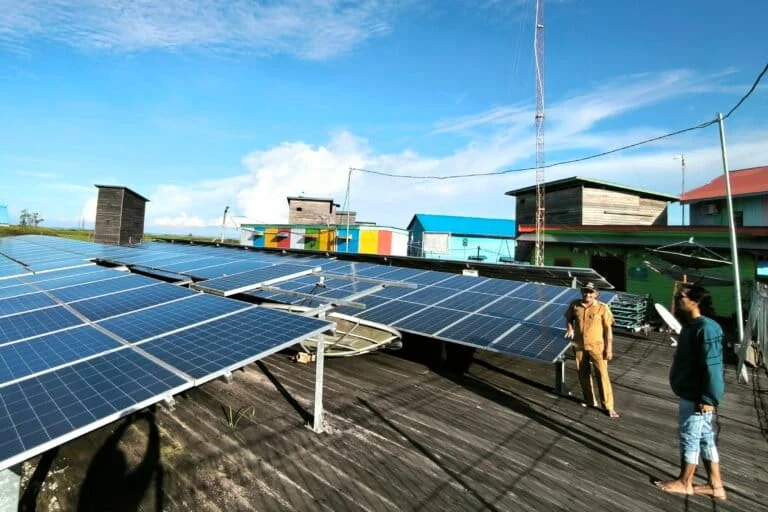
The transformation of Muara Enggelam, a remote floating village in the Muara Wis District of Kutai Kartanegara, East Kalimantan, serves as a global benchmark for how decentralized renewable energy can catalyze radical economic and social shifts in isolated communities. For decades, the village was defined by its geographic isolation and its reliance on expensive, polluting fossil fuels. Today, the hum of diesel generators has been replaced by the silent efficiency of a communal Solar Power Plant (Pembangkit Listrik Tenaga Surya or PLTS), providing 24-hour electricity that has unlocked new industries, empowered women entrepreneurs, and bridged the digital divide for its 750 residents.
A Geographic Anomaly: Life on the Water
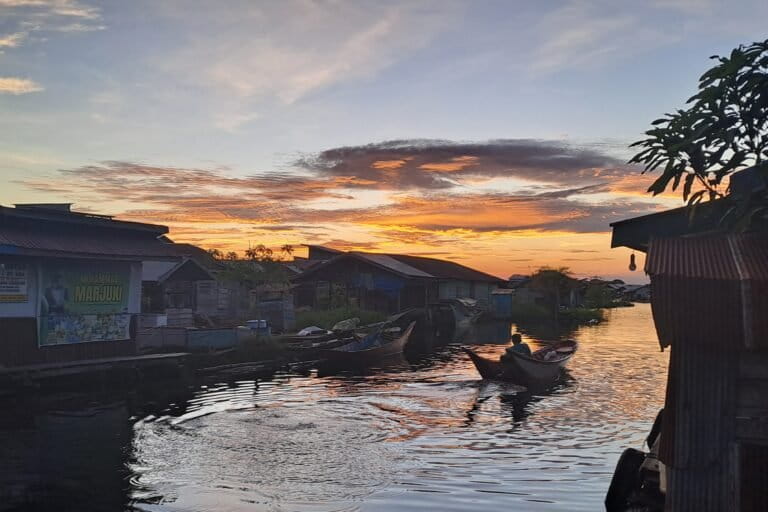
To understand the magnitude of Muara Enggelam’s transition, one must first understand its unique setting. Spanning approximately 10,000 hectares at the confluence of the Enggelam River and Lake Melintang, the village possesses no solid ground. Its 195 families live in wooden houses built on floating platforms or stilts, navigating their daily lives entirely by boat. The nearest urban center, Kota Bangun, is a one-to-two-hour journey across the water, depending on the season and engine power.
For residents like Asniah, who moved to the village in the early 1990s, the darkness of the night was once an absolute reality. When the sun set over the western horizon, the village would dissolve into a shadowy landscape illuminated only by the flickering glow of small oil lamps, known locally as pelita. The sounds of the night—the splash of water, the chirping of crickets, and the occasional roar of a passing motorboat—were the only companions for a community largely cut off from the modern world.
The Era of Diesel Dependency: 2000–2014
In the early 2000s, the arrival of portable diesel generators (gensets) offered a glimpse of modernization, but it came at a staggering cost. Only a handful of wealthy families could afford the machines, which required roughly 15 liters of solar (diesel) to run for just 12 hours. At the time, this translated to a monthly expenditure in the millions of rupiah—a prohibitive sum for a community primarily composed of traditional fishermen.
Recognizing the struggle, the local district government eventually provided communal generators managed by neighborhood units. However, this system was fraught with challenges. Residents were required to pay a daily fee of Rp10,000 (roughly Rp300,000 per month), a significant burden for many. Even then, electricity was restricted to a 12-hour window from 6:00 PM to 6:00 AM. The machines were prone to frequent breakdowns, and if a few neighbors failed to pay their dues, the fuel would run out early, plunging the entire sector back into darkness. The air was often thick with black smoke, and the constant mechanical rattle of the engines disrupted the tranquility of the wetland ecosystem.
The 2015 Turning Point: Harvesting the Sun
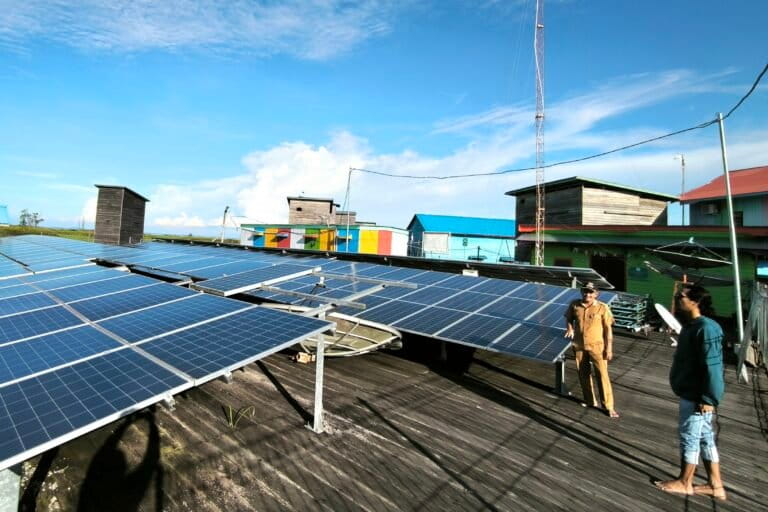
The trajectory of Muara Enggelam changed permanently in 2015 through the "Indonesia Terang" (Bright Indonesia) initiative. Through the Ministry of Energy and Mineral Resources (ESDM), a capital investment of Rp3.4 billion was allocated to construct a centralized Solar Power Plant (PLTS) with an initial capacity of 30 kilowatt-peak (kWp).
The engineering of the plant was tailored to the village’s aquatic environment. Large solar arrays were mounted on 15-meter-high platforms constructed from ulin (Borneo ironwood), a timber renowned for its steel-like durability and resistance to rot in water. These elevated structures served a dual purpose: they protected the sensitive batteries and regulators from the region’s seasonal flooding while maximizing exposure to the equatorial sun.
The transition was not merely a change in hardware; it required a total shift in village governance. The management of the PLTS was handed to the Village-Owned Enterprise (BUMDes) Muara Enggelam. Initially, there was skepticism. Some residents argued that since sunlight is free and the equipment was a government gift, the electricity should be provided at no cost. However, village leaders remained firm, establishing a tiered tariff system to ensure a reserve fund for maintenance and future repairs. This foresight would prove critical to the project’s long-term sustainability.
Economic Empowerment and the Rise of the Female Entrepreneur
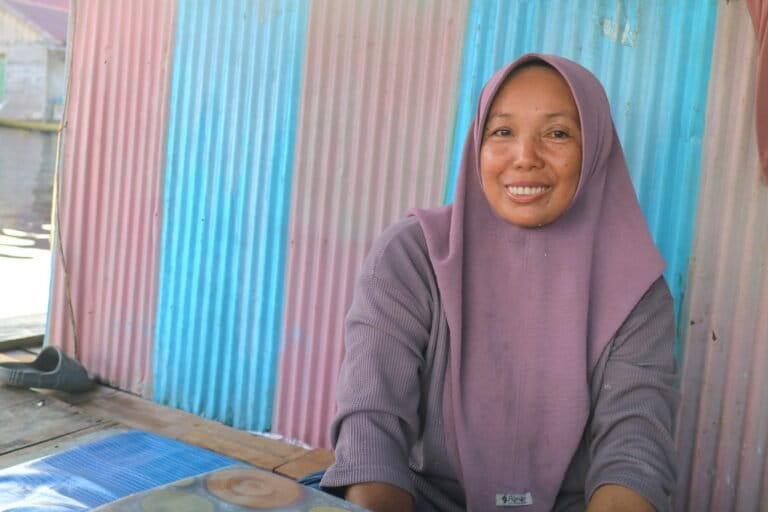
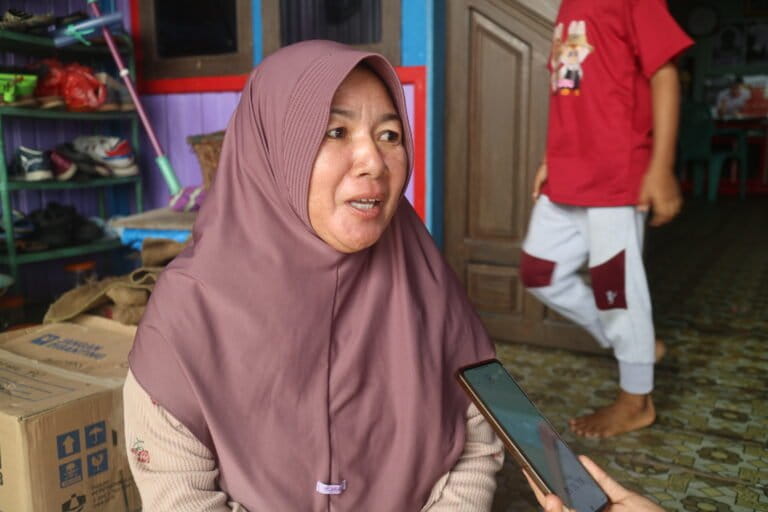
The arrival of 24-hour stable electricity acted as a primary catalyst for economic diversification. For women like Asniah, the availability of power meant the end of grueling manual labor. Asniah, a mother of three, launched a business producing amplang, a traditional Indonesian fish cracker. Previously, she had to grind fish meat and spices by hand, a process that took hours and limited her output. With a reliable electric blender, the production time was slashed, and her physical strain was significantly reduced.
"Before, using a blender was a source of anxiety because it would drain the fuel of the genset so quickly," Asniah recalled. "Now, I can produce at any time, day or night."
The stability of the power grid also facilitated the arrival of mobile internet. While speeds remain modest compared to urban centers, the availability of 4G signals allowed residents to access social media platforms like WhatsApp and Facebook. These tools transformed from entertainment apps into digital storefronts. Asniah expanded her business portfolio to include a fried food stall and an online clothing boutique. Her fried food business alone now generates a daily turnover of up to Rp1 million, a figure unimaginable during the diesel era.
BUMDes Muara Enggelam: A Model of Circular Economy
Under the leadership of Director Jam’ah, the BUMDes has turned the solar power plant into a profitable and socially responsible engine for the village. The enterprise collects fees every ten days, with rates ranging from Rp3,000 per day for a 300-watt limit to Rp10,000 for a 700-watt limit. This revenue, which averages over Rp120 million annually, is meticulously distributed to ensure the village’s holistic growth.
According to the BUMDes charter, 25% of profits are funneled directly into the village treasury, while other portions are allocated for social funds, operational costs, and business expansion. The social fund has been used to renovate the local school, provide emergency medical assistance for sick residents, and support community festivities.
The success of the solar project has allowed the BUMDes to diversify into five other business units:
- Swiftlet Bird Houses: Capitalizing on the high market value of edible bird’s nests.
- Clean Water Filtration: Providing potable water to residents who previously relied on filtered lake water.
- Savings and Loans: Offering micro-finance to local fishermen and small vendors.
- Cable TV: Bringing information and entertainment to every household.
- BRI-Link: Serving as a local banking agent to facilitate financial transactions without traveling to the mainland.
Technological Evolution: The 2024 Expansion
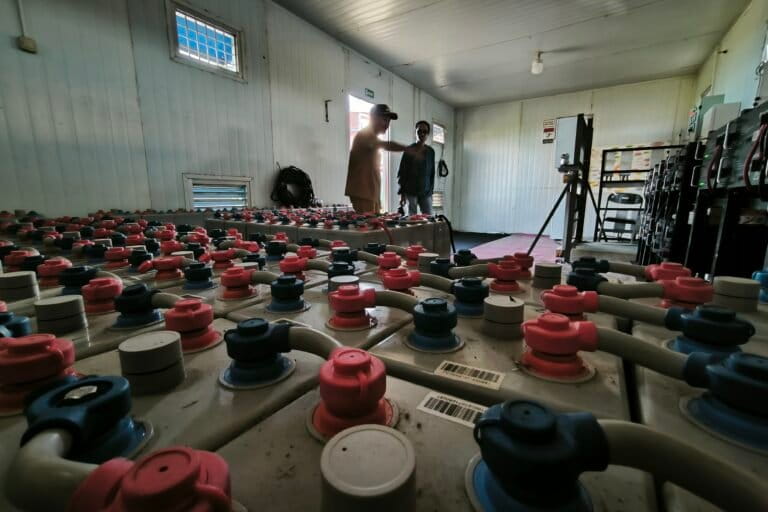
As the village’s economy grew, so did its hunger for power. By 2023, the original 30 kWp capacity was stretched to its limit. Recognizing this, the Kutai Kartanegara Regency Government provided an additional 23.1 kWp expansion in late 2024, backed by a Rp4.5 billion investment. This new phase introduced cutting-edge lithium-ion battery technology, which is significantly more efficient and longer-lasting than the tubular gel batteries used in the initial installation.
Today, the total capacity of the Muara Enggelam solar grid stands at 80 kWp. This system is robust enough to maintain power for the entire village even during three consecutive days of heavy cloud cover. "We have experienced two days of solid overcast weather, and the lights stayed on without a hitch," said Madi, the Head of Muara Enggelam Village.
Challenges and Future Horizons
Despite the overwhelming success, the journey toward total energy independence remains ongoing. The current power limits (maxing at 700 watts for the highest tier) mean that energy-intensive appliances like large refrigerators and air conditioners remain a luxury. Residents still have to purchase blocks of ice from neighboring villages at Rp3,000 each to preserve their daily catch.
To address this, BUMDes plans to launch a communal cold storage facility and an ice-making plant within the next year. This will allow fishermen to store their catch longer, preventing price drops during harvest gluts and increasing the village’s bargaining power with wholesalers in Samarinda and beyond. Furthermore, the village is eyeing the development of a mechanical workshop for boat repairs, which requires high-voltage machinery currently beyond the grid’s capacity.
Broader Implications for Indonesia’s Energy Transition
The story of Muara Enggelam is a microcosm of Indonesia’s broader energy goals. As the world’s largest archipelagic nation, Indonesia faces unique logistical hurdles in electrifying its "3T" regions (frontier, outermost, and least developed). The Muara Enggelam model demonstrates that when the central government provides the initial infrastructure and the local community is empowered to manage it, renewable energy can be both sustainable and transformative.
From an environmental perspective, the shift has protected the delicate peatland and lake ecosystem of Muara Wis from oil spills and air pollution. Economically, it has proven that the "cost" of renewable energy is significantly lower than fossil fuels when factoring in the long-term health and productivity of the community.
As the sun sets today over Muara Enggelam, the village no longer fades into the dark. Instead, LED lights flicker on across the water, children study with bright lamps, and entrepreneurs like Asniah upload photos of their products to a global market. The "Golden Energy" of the sun has not only lit their homes but has also ignited a sustainable future for one of Indonesia’s most unique communities.