Chalifah Fatihah
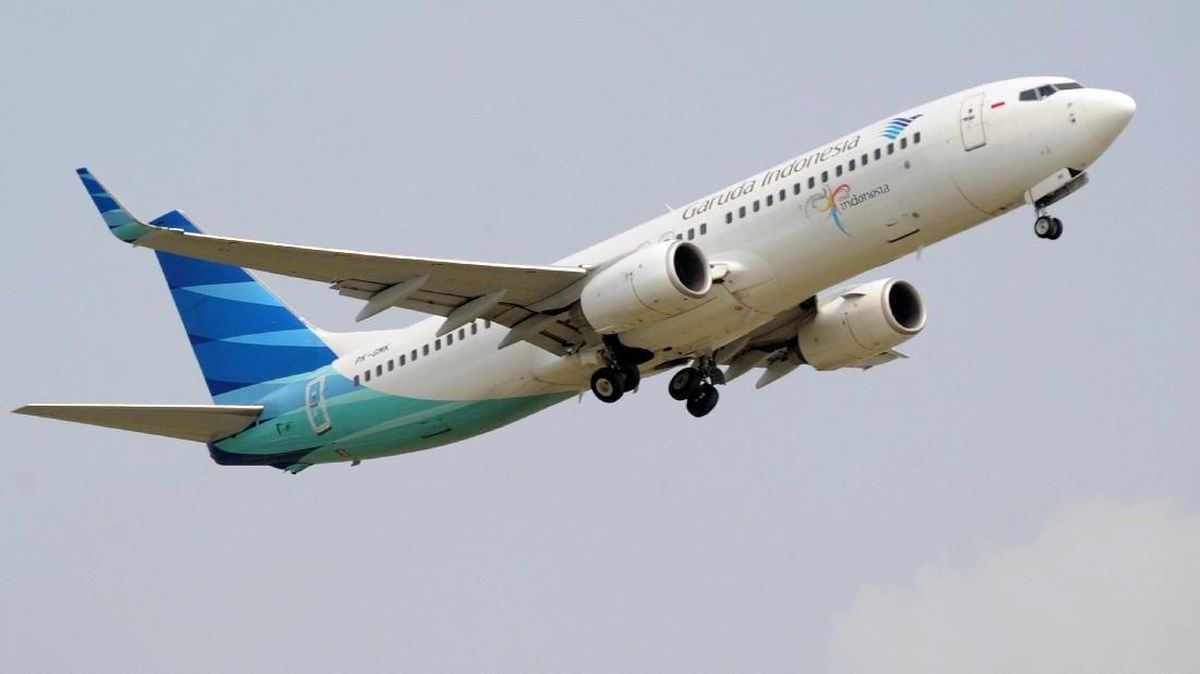
A Garuda Indonesia Airbus A330-900neo operating flight GA4208 from Jeddah, Saudi Arabia, to Medan, Indonesia, was compelled to maintain an unusual and prolonged holding pattern over Indian airspace for more than four hours on May 8, 2026. The extended aerial wait, which significantly lengthened the flight duration, was reportedly a consequence of a large-scale airspace closure implemented by Indian authorities for a missile test.
The Airbus A330-900neo, registered as PK-GHI, typically completes its route from Jeddah (JED) to Medan (KNO) in approximately eight hours. However, on this specific occasion, the flight time stretched to an extraordinary 12 hours and 39 minutes. This deviation from the norm has raised several questions regarding operational planning, fuel management, and the communication protocols surrounding such significant airspace restrictions.
The Unprecedented Holding Pattern
The flight commenced its journey as scheduled, traversing Saudi Arabia, Oman, and the Arabian Sea. Approximately five hours and twenty minutes into the flight, as the aircraft was projected to enter Indian airspace over the southern region, it was directed into a holding pattern. While holding patterns are a standard procedure in air traffic control, often implemented to manage air traffic density or in anticipation of landing sequences, the duration experienced by GA4208 was far from routine. The aircraft remained in this circular holding pattern for a staggering four hours and thirty minutes, effectively circling over the same geographical area for nearly five hours.
Following the eventual clearance to proceed, the Garuda Indonesia aircraft still required an additional two hours and fifty minutes of flight time to reach its destination in Medan. This extended delay not only impacted the passengers onboard but also presented significant operational and economic challenges for the airline.
Reason for the Extended Hold: Missile Test
Sources indicate that the extensive airspace closure was necessitated by India’s planned test of its Agni-6 missile system. The Agni-6 is a sophisticated, multi-warhead ballistic missile developed by India’s Defence Research and Development Organisation (DRDO). As a strategic weapon system, its testing requires stringent safety protocols, including the temporary exclusion of civilian air traffic from a significant operational radius to prevent any potential hazards.
While airspace closures for military exercises and missile tests are a recognized practice globally, the magnitude and duration of the closure that impacted Garuda Indonesia’s flight have drawn scrutiny. The sheer expanse of the restricted airspace allegedly made rerouting options for commercial aircraft impractical or impossible, forcing them into prolonged waiting periods.
Operational and Economic Implications
The incident raises several critical questions for the aviation industry, particularly concerning flight planning and risk management in the face of unforeseen or extended airspace restrictions.
Fuel Management and Cost Implications
One of the primary concerns revolves around the aircraft’s fuel reserves. In an era of volatile and often soaring jet fuel prices in 2026, carrying an additional five hours of fuel to accommodate such an extensive delay represents a substantial financial burden. Airlines are typically mandated to carry sufficient fuel for their planned route, plus a reserve for diversions and unforeseen delays. However, anticipating a holding pattern of this unprecedented length would necessitate carrying a significantly larger fuel load, impacting the aircraft’s payload capacity and overall operational efficiency.
Speculation has arisen as to whether the flight crew had prior intelligence of potential delays, prompting them to carry extra fuel. Alternatively, they may have engaged in "tankering," a practice of loading more fuel than immediately required at the origin airport to take advantage of lower fuel prices, though this also comes with its own weight and efficiency penalties. The decision-making process leading up to the flight’s departure, in light of any potential airspace advisories, is a key area of inquiry.
The Decision to Fly or Delay
A significant point of contention among aviation experts is the decision to proceed with the flight rather than delaying or canceling it. If Garuda Indonesia’s operational teams had prior knowledge of potential airspace closures, even with an uncertain duration, many would question why the departure was not postponed. A delay on the ground, while inconvenient for passengers, typically incurs fewer costs than maintaining an aircraft in a holding pattern for an extended period, which consumes fuel and incurs operational expenses without progressing towards the destination.
This situation suggests a complex calculation of risk and probability, where the airline’s operations department may have gambled on navigating the restricted zone before the full impact of the closure. However, the outcome indicated that they faced the "worst-case scenario" of waiting for airspace to reopen while airborne.
Strategic Operational Planning
The incident also highlights the challenges of strategic operational planning in a dynamic geopolitical environment. The vastness of the airspace closure, reportedly encompassing a significant portion of the Bay of Bengal region, likely overwhelmed standard rerouting procedures. Aircraft typically have alternative routes available, but if the entire potential diversionary path is also affected or leads to significant detours, the options become severely limited. This scenario underscores the need for robust contingency planning and effective communication channels between airlines and air traffic control authorities in different countries.
Timeline of the Incident
- May 8, 2026: Garuda Indonesia flight GA4208 departs from Jeddah, Saudi Arabia (JED), bound for Medan, Indonesia (KNO).
- Approximately 5 hours 20 minutes into flight: The Airbus A330-900neo (PK-GHI) enters Indian airspace and is directed into a holding pattern over the southern part of the country.
- From approximately 5 hours 20 minutes to 9 hours 50 minutes into flight: The aircraft maintains a holding pattern for 4 hours and 30 minutes.
- Approximately 9 hours 50 minutes into flight: The aircraft receives clearance to proceed.
- Approximately 12 hours 39 minutes into flight: The aircraft lands in Medan, Indonesia (KNO).
Supporting Data and Context
The Agni-6 missile, reportedly the reason for the airspace closure, is a significant development in India’s strategic defense capabilities. While specific details of its testing are often classified, previous Agni series tests have involved extensive safety zones. The Agni-VI is reported to be a two-stage, solid-fuelled missile with a range estimated to be between 5,000 and 7,000 kilometers, potentially capable of carrying multiple independent re-entry vehicles (MIRVs). Such a weapon system requires a substantial launch trajectory, necessitating a wide exclusion zone for safety.
The cost of aviation fuel in 2026, while not specified in the original report, has been a recurring concern for airlines globally. Fluctuations in crude oil prices, geopolitical events, and demand-supply dynamics have contributed to high operating costs. According to industry analyses from leading aviation consultancies, fuel typically accounts for 20-30% of an airline’s operating expenses. An extra five hours of flight time for an Airbus A330-900neo, which consumes approximately 5,000-6,000 liters of fuel per hour, translates to a significant expenditure.
Potential Reactions and Analysis
While no official statements from Garuda Indonesia or Indian aviation authorities were immediately available at the time of reporting, such an incident would typically prompt a review of operational protocols. Garuda Indonesia, as a national carrier, would likely conduct an internal investigation to assess the decision-making processes and identify any potential areas for improvement in their risk management and contingency planning for such extraordinary events.
Indian aviation authorities, responsible for air traffic management and airspace security, would also be expected to review the incident. This could involve evaluating the communication of the airspace closure, the designated size and duration of the exclusion zone, and the coordination with international air traffic control bodies.
The broader implications of this event extend to passenger experience and airline reliability. Extended delays can lead to passenger dissatisfaction, increased operational costs for airlines due to crew duty time limitations and aircraft scheduling disruptions, and potential ripple effects on subsequent flights. For passengers, the uncertainty and prolonged confinement in a confined space can be physically and mentally taxing.
Conclusion
The Garuda Indonesia flight’s extended holding pattern over India serves as a stark reminder of the complex interplay between aviation operations, national security, and geopolitical events. While the necessity of ensuring safety during missile tests is understood, the prolonged duration of the delay for GA4208 highlights the need for enhanced communication, more precise forecasting of airspace closure durations, and robust contingency planning by airlines to mitigate the impact on passengers and operational efficiency. The incident prompts a critical examination of how commercial aviation navigates situations where national defense activities significantly disrupt flight paths, emphasizing the importance of foresight and adaptability in the ever-evolving global air travel landscape.