Tyo Susilo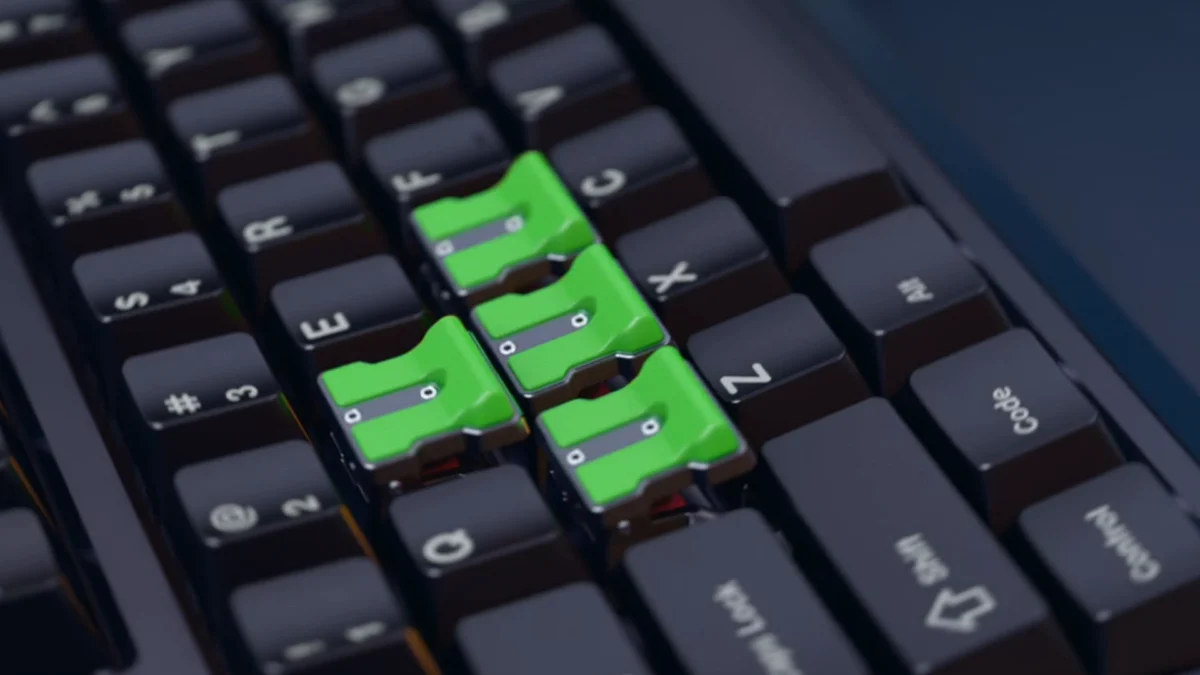
In the highly competitive landscape of modern PC gaming, milliseconds can mean the difference between victory and defeat. For decades, the WASD key cluster has remained the epicenter of intense virtual combat, bearing the brunt of frantic movements, evasive maneuvers, and split-second tactical reactions. Recognizing that a shorter travel distance directly correlates with faster input times, hardware manufacturer GMK has introduced an ingenious and unconventional peripheral innovation: the GMK TriggerKey. This specialized keycap set is designed to allow gamers to fine-tune the actuation point of their mechanical keyboard switches by up to 2 millimeters, completely bypassing the traditional need to desolder or replace the underlying mechanical switches. By bridging the gap between conventional mechanical keyboards and the highly sought-after rapid-trigger capabilities typically exclusive to Hall Effect magnetic switches, GMK is offering a compelling hybrid solution for enthusiasts and competitive players alike.
The Evolution of Mechanical Actuation and the Hall Effect Phenomenon
To understand the significance of the GMK TriggerKey, one must examine the rapid evolution of gaming keyboards over recent years. Traditional mechanical keyboards rely on physical metal leaves making contact inside a switch housing to register an electrical signal. For years, the industry standard dictated fixed actuation points—typically hovering around 2.0mm to 2.2mm for standard switches, or roughly 1.0mm to 1.5mm for specialized speed switches.
However, the advent of magnetic Hall Effect switches fundamentally altered the market landscape. By utilizing magnetic sensors instead of physical contacts, keyboards powered by Hall Effect technology introduced adjustable actuation, allowing users to dynamically set how far a key must travel before registering an input—often down to a fraction of a millimeter. Furthermore, these switches enabled rapid trigger functionality, where the key resets the exact moment it travels upward, eliminating physical reset delays.
While the performance benefits of Hall Effect keyboards are undeniable, they come with a significant catch for mechanical keyboard enthusiasts. Many gamers have invested heavily in custom mechanical setups featuring carefully lubricated switches, custom springs, and bespoke keycap profiles that deliver specific acoustic profiles and tactile feedback. Abandoning these customized builds to adopt a magnetic keyboard often meant sacrificing the typing experience and tactile feel that enthusiasts cherish. GMK’s TriggerKey aims to solve this dilemma directly, allowing users to retain their preferred mechanical switch characteristics while harvesting the competitive advantages of custom actuation depths.

Anatomy of the GMK TriggerKey: Mechanism and Customization
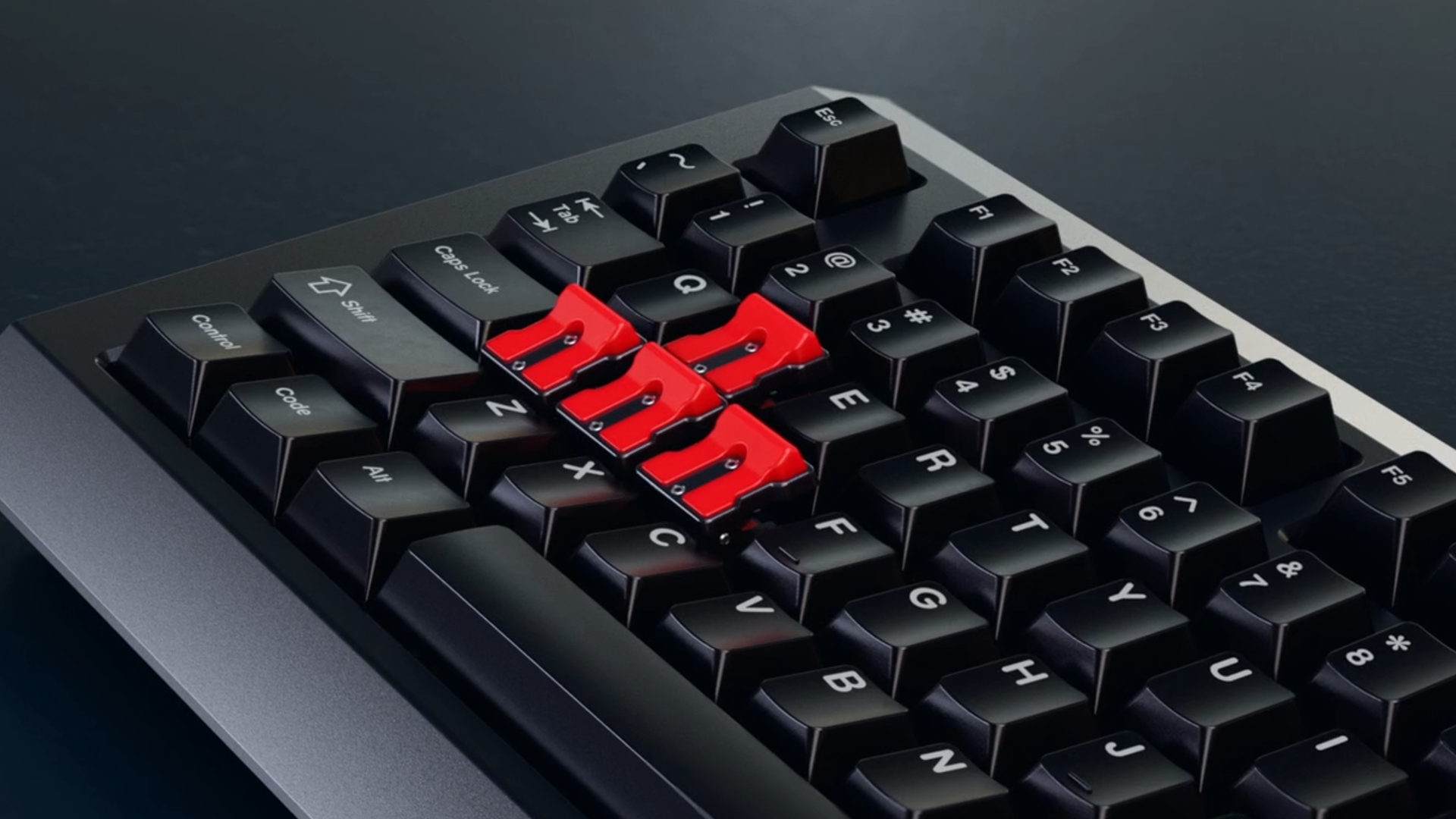
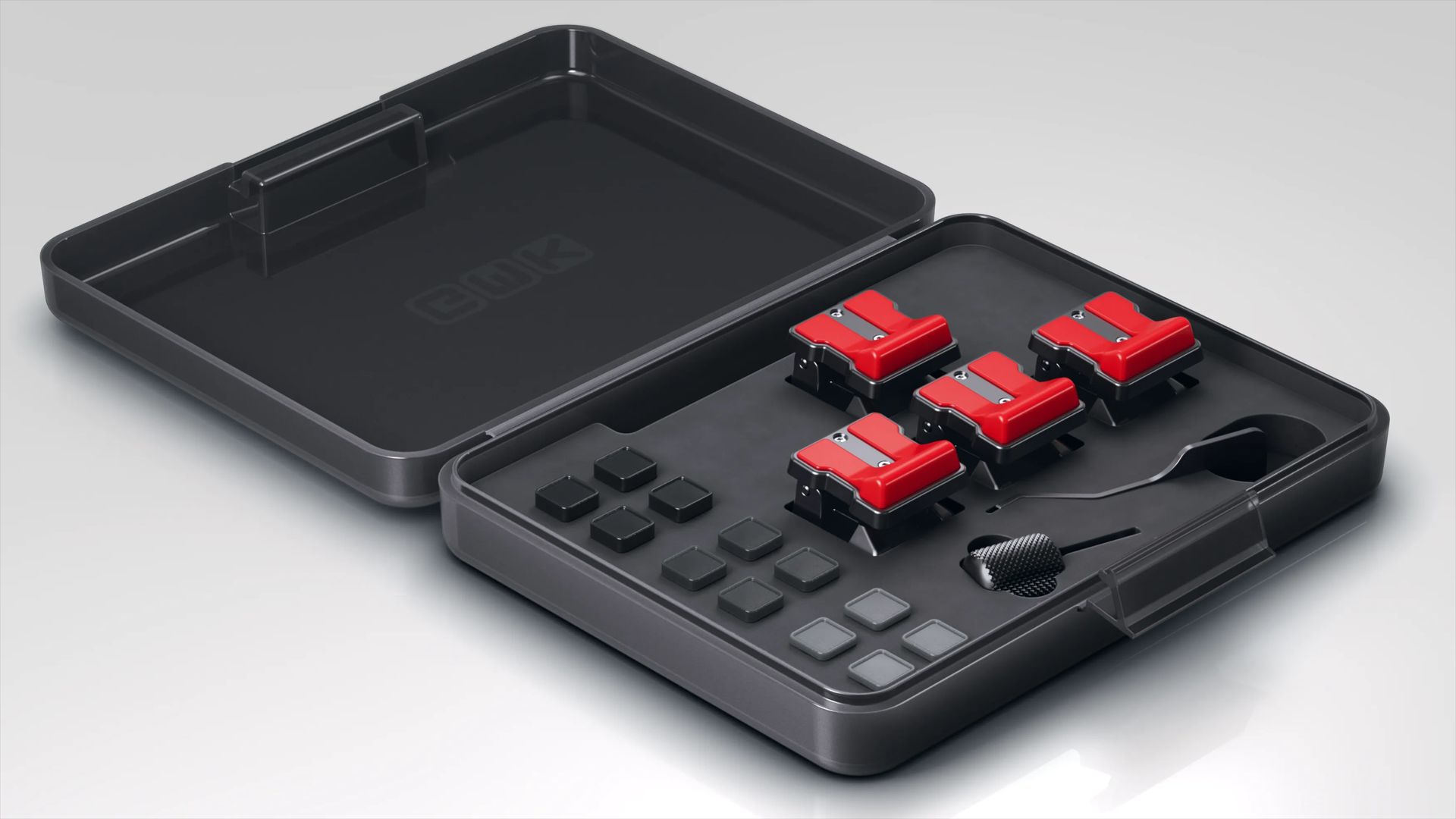
At its core, the GMK TriggerKey replaces standard WASD keycaps with a sophisticated mechanical leverage system. Rather than relying solely on the standard travel path dictated by the switch stem, the TriggerKey incorporates an adjustable internal mechanism. Utilizing an integrated screw system accessible via the keycap itself, users can manually adjust the actuation point across a precise range of 0 to 2 millimeters. This mechanism effectively pre-loads the switch stem, forcing it to engage earlier in its downward trajectory than it normally would.
The customization options extend far beyond simple depth adjustment. GMK engineered the TriggerKey to offer multi-dimensional adaptability. Each individual keycap can be physically tilted by up to 34 degrees, enabling players to angle the WASD cluster to better match their natural hand placement and ergonomic preferences during extended gaming sessions. Additionally, the package includes three distinct choices of stem caps featuring varying heights—specifically 0.7 mm, 1.2 mm, and 1.7 mm. By swapping these stem components, users can further tailor the resistance profile and tactile engagement point of the keys.
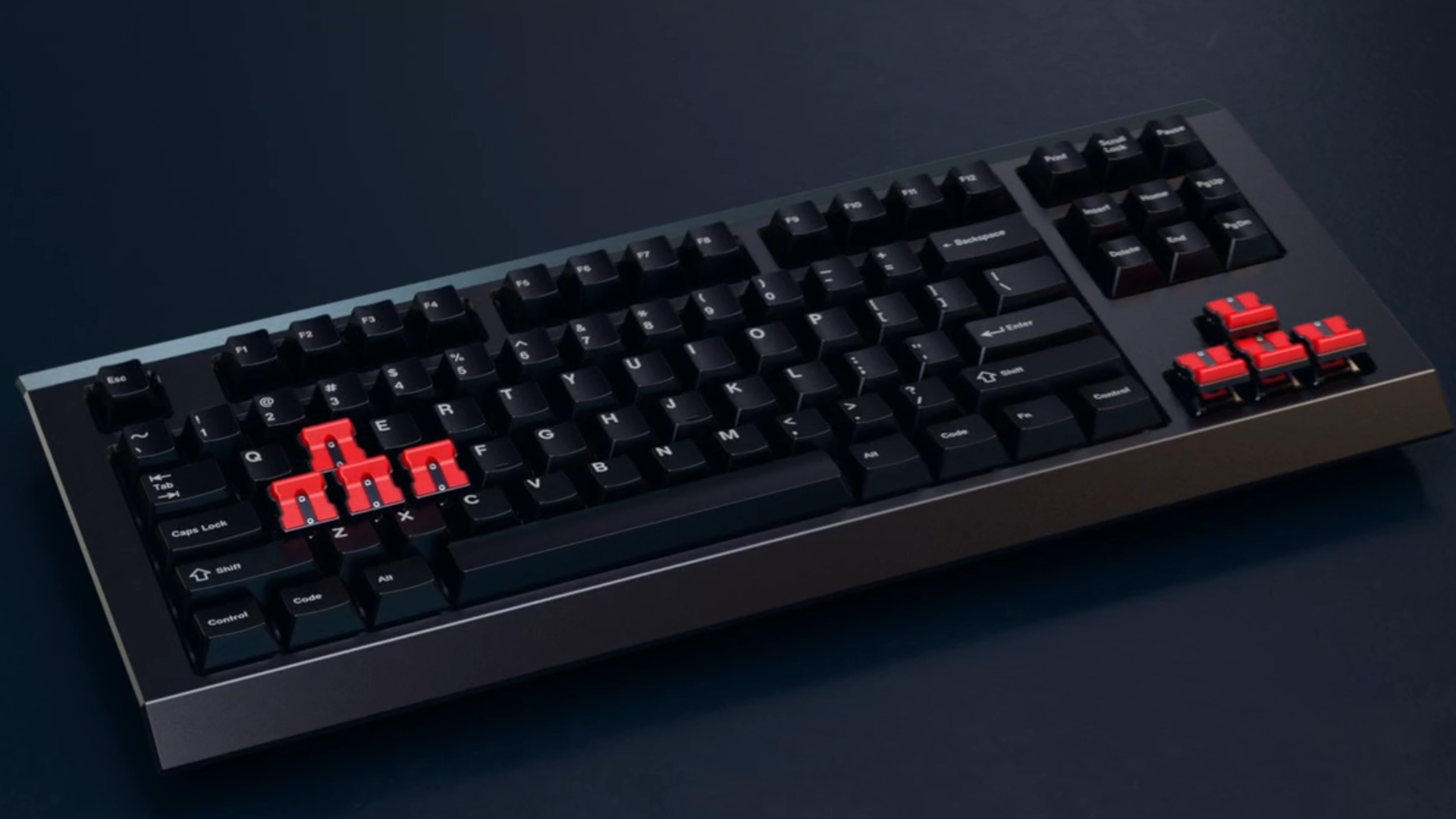
This multi-layered approach grants competitive gamers unprecedented control over their hardware. A player can maintain the heavy, buttery smoothness of a customized linear switch or the satisfying click of a tactile switch, yet configure the WASD cluster to respond instantly to the lightest touch.
Compatibility Constraints and Ergonomic Limitations
Despite its innovative engineering, the GMK TriggerKey is not a universal panacea for all mechanical keyboards, and prospective buyers must navigate certain technical limitations. According to GMK’s product specifications, the TriggerKey system is engineered for compatibility primarily with MX-style switch housings. This includes industry staples such as Cherry MX switches and the vast majority of standard Gateron offerings.
However, the physical constraints of the internal leverage mechanism mean that the keycaps are incompatible with a substantial portion of the market. Most notably, they do not support Hall Effect switches—an ironic restriction given that the product mimics Hall Effect features—nor are they compatible with Kailh Box switch designs due to the unique shape of their perimeter walls and stem surrounds. Enthusiasts utilizing non-standard housing geometries will find themselves unable to install the system.
Furthermore, GMK has been transparent regarding the intended use case of the product. The company explicitly markets the TriggerKey as a specialized gaming accessory rather than an all-purpose daily driver. The internal leverage mechanism alters the natural stability and feel of the keypress, meaning that extended typing sessions, document processing, or casual web browsing can feel unnatural or fatiguing when using the modified WASD cluster. The product is purposefully designed for high-stakes, competitive gaming environments where raw speed and response optimization take absolute precedence over typing comfort.
Pricing, Market Positioning, and Industry Implications
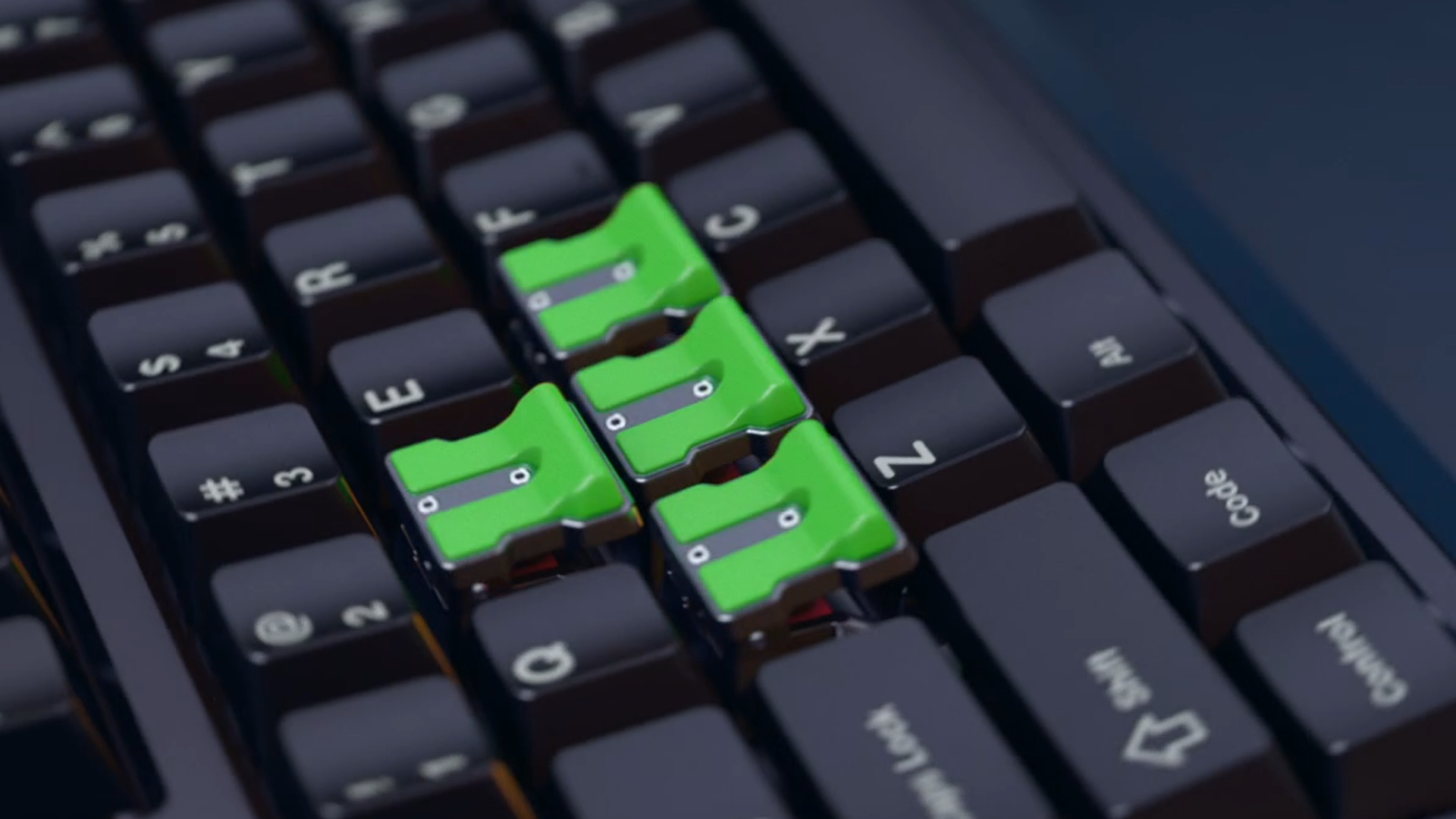
Priced at $55 for a specialized four-button package, the GMK TriggerKey sits at a notably high price point relative to standard keycap sets. For the cost of four specialized WASD caps, a consumer could easily purchase an entire budget mechanical keyboard. However, market analysts note that GMK is not targeting the mainstream casual demographic; rather, the product is squarely aimed at the high-end mechanical keyboard enthusiast community—a demographic routinely willing to invest heavily in niche components to optimize their desktop setups.
The introduction of the TriggerKey highlights a broader trend within the PC peripheral industry: the democratization of high-performance features. As manufacturers race to out-innovate one another, hardware modifications that once required buying an entirely new keyboard are increasingly being addressed via modular accessories. If the TriggerKey proves commercially successful, it may pave the way for a wave of aftermarket mechanical accessories designed to bring advanced technological features to legacy switch formats.
Ultimately, the GMK TriggerKey offers a fascinating compromise for gamers torn between the customizable feel of traditional mechanical switches and the raw actuation speed of modern magnetic keyboards. By providing a physical, mechanical workaround to a digital performance gap, GMK has carved out a unique space in the hardware market. Whether competitive players will embrace a $55 aftermarket upgrade exclusively for four keys remains to be seen, but the innovation undeniably pushes the boundaries of what is possible within traditional keyboard architecture.