Tata Titiana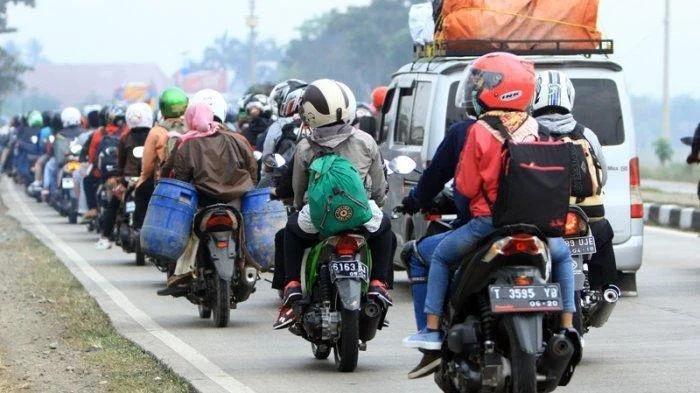
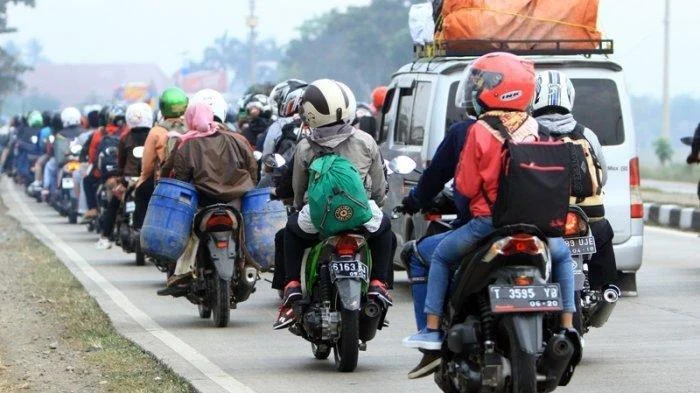
The annual tradition of returning to one’s hometown for the post-Ramadan festivities, widely known in Indonesia as mudik, was officially permitted by the central government for the celebration of Eid al-Fitr 1442 Hijri. This policy marked a distinct departure from the absolute travel bans enforced during the onset of the global health crisis in 2020. The definitive announcement was articulated by the Minister of Transportation, Budi Karya Sumadi, during a formal working session with Commission V of the House of Representatives (DPR RI). While the policy greenlit interstate and intercity travel for the holiday season, transport authorities emphasized that the decision did not constitute a government mandate or active encouragement for citizens to travel, noting that the Ministry of Transportation inherently lacks the administrative jurisdiction to compel or urge citizens to migrate across regions.
To prevent the annual pilgrimage from transforming into a public health catastrophe, particularly for vulnerable rural demographics, the Ministry of Transportation coordinated directly with the national COVID-19 Task Force. The primary objective of this inter-agency collaboration was the formulation of a comprehensive operational mechanism designed to mitigate virus transmission risks. Through official public updates and institutional briefings, the government underscored its reliance on multi-sector consultations to maintain a controlled and orderly travel window. These measures included heightened surveillance, localized contact tracing protocols, and the implementation of rigorous entry and exit screening requirements across major transportation hubs nationwide.
Chronology of the 2021 Mudik Policy Shift
The policy evolution regarding the 2021 holiday travel season unfolded through a series of parliamentary discussions and public health evaluations during the first quarter of the year. The official trajectory began to take shape in mid-March 2021, setting off weeks of intense debate among policymakers, epidemiologists, and the general public.
- March 16, 2021: Minister of Transportation Budi Karya Sumadi formally stated during a hearing with DPR Commission V that the government would not outrightly prohibit mudik for the 2021 Idul Fitri holiday, signaling a shift toward regulated mobility compared to the strict prohibitions of 2020.
- Late March 2021: The Ministry of Transportation, alongside the COVID-19 Task Force and the Ministry of Health, initiated inter-agency coordination meetings to draft stringent health protocols and screening mechanisms specifically tailored for the exodus.
- Early April 2021: Public health experts and epidemiologists from major academic institutions, including Universitas Gadjah Mada, publicly expressed skepticism, citing low vaccination coverage and the persistent threat of community transmission.
- Mid-April 2021: The government finalized logistical preparations, integrating rapid screening technologies—such as the domestically developed GeNose C19 breathalyzer test—into major terminals, railway stations, and airports to facilitate rapid diagnostics for travelers.
- Late April to May 2021: Authorities rolled out tightened administrative requirements, shortened validity windows for medical screenings, and increased enforcement of physical distancing across all approved public transit networks.
Regulatory Framework and Travel Conditions
To operationalize the decision safely, the Ministry of Transportation outlined a strict regulatory framework governing all forms of holiday transit. The framework rested on three core pillars: uncompromising health protocols across all transit phases, proactive mitigation of passenger surges through aggressive tracing, and the shortening of validity periods for diagnostic screening tools such as rapid antigen tests and molecular diagnostics.
The mandated health protocols applied uniformly from departure points and transit corridors down to final destinations. Travelers were legally required to maintain proper face mask compliance, adhere to social distancing guidelines, and respect reduced passenger capacity limits implemented across buses, trains, ships, and aircraft. Furthermore, transport operators were instructed to conduct routine disinfection procedures on all vehicles, terminals, and station facilities at regular intervals.
Despite these regulatory safeguards, transportation officials repeatedly appealed to public civic consciousness. The government emphasized that administrative enforcement alone would prove insufficient without widespread voluntary compliance from citizens. Consequently, institutional communication campaigns urged travelers to strictly monitor their own health conditions, minimize non-essential stops during transit, and promptly report any symptoms upon arrival in their hometowns.
Epidemiological Concerns and Public Health Warnings
The government’s permissive stance toward the 2021 holiday migration immediately triggered pushback from the scientific and epidemiological communities. Independent public health experts warned that relaxing mobility restrictions prematurely could reverse months of hard-won pandemic containment gains.
Riris Andono Ahmad, a prominent epidemiologist from Universitas Gadjah Mada (UGM), emerged as a leading voice of caution during the policy debates. Dr. Riris analyzed that the policy rationale appeared to stem from an overestimation of the protective shield provided by early-stage national immunization programs. At the time of the policy announcement, vaccine rollout phases were strictly prioritized for frontline medical workers and elderly populations, meaning the broader civilian demographic—including the vast majority of potential travelers—remained entirely unprotected.
The core epidemiological dilemma, according to public health specialists, did not lie within the concept of immunization itself, but rather in behavioral compliance. Experts stressed that even partially vaccinated individuals retained the physiological capacity to contract and transmit the SARS-CoV-2 virus if public health disciplines were abandoned in crowded social and familial settings. Because rural communities often house higher concentrations of elderly residents—a demographic at elevated risk for severe COVID-19 outcomes—the influx of urban travelers presented a distinct vector for severe local outbreaks.
Private Vehicles Versus Public Transit: The Control Dilemma
A critical point of discussion within the epidemiological assessment of the 2021 mudik involved the choice of transit modalities. Public health analysts pointed out a profound operational paradox: while mass public transportation systems offered regulated environments with built-in oversight, travelers utilizing private automobiles or motorcycles presented an unmonitored risk profile.
Data from previous years indicated that a substantial percentage of the traveling public preferred private cars and motorcycles for flexibility and perceived safety from crowded terminals. However, public health experts argued that private travel severely hampered governmental ability to conduct contact tracing and diagnostic screening. Without mandatory checkpoints, private travelers could transit across multiple provincial boundaries unchecked, potentially seeding viral clusters in remote districts devoid of advanced medical infrastructure.
To counteract this vulnerability, transportation authorities strongly encouraged citizens to utilize official public transit networks. By funneling travelers through formalized terminals, stations, and airports equipped with advanced screening devices—most notably the GeNose C19 breath test units deployed across strategic transport hubs—the state sought to maintain a verifiable paper trail and diagnostic barrier.
Broader Implications and Long-Term Legacy
The 2021 mudik debate served as a foundational stress test for Indonesia’s pandemic management strategy, illustrating the perpetual tension between socio-cultural imperatives and epidemiological safety. Eid al-Fitr holds profound cultural and religious significance across the archipelago, making prolonged travel restrictions politically and socially unsustainable over multi-year horizons.
The policy compromise attempted in 2021—permitting travel under intensely regulated conditions rather than enforcing an absolute ban—highlighted the administrative limits of state intervention during prolonged public health emergencies. It demonstrated that as a pandemic stretches across years, public policy must inevitably transition from total containment to calculated risk management.
Ultimately, the discourse surrounding the 2021 holiday migration underscored critical lessons in crisis communication, inter-agency coordination, and public health infrastructure readiness. It reinforced the reality that technological interventions, such as rapid screening tools and localized contact tracing, must operate in tandem with sustained civic compliance. As national health authorities continued to navigate subsequent holiday cycles, the framework established in 2021 provided a vital reference point for balancing economic and social mobility with the imperative of safeguarding public health at a national scale.