Azin Asro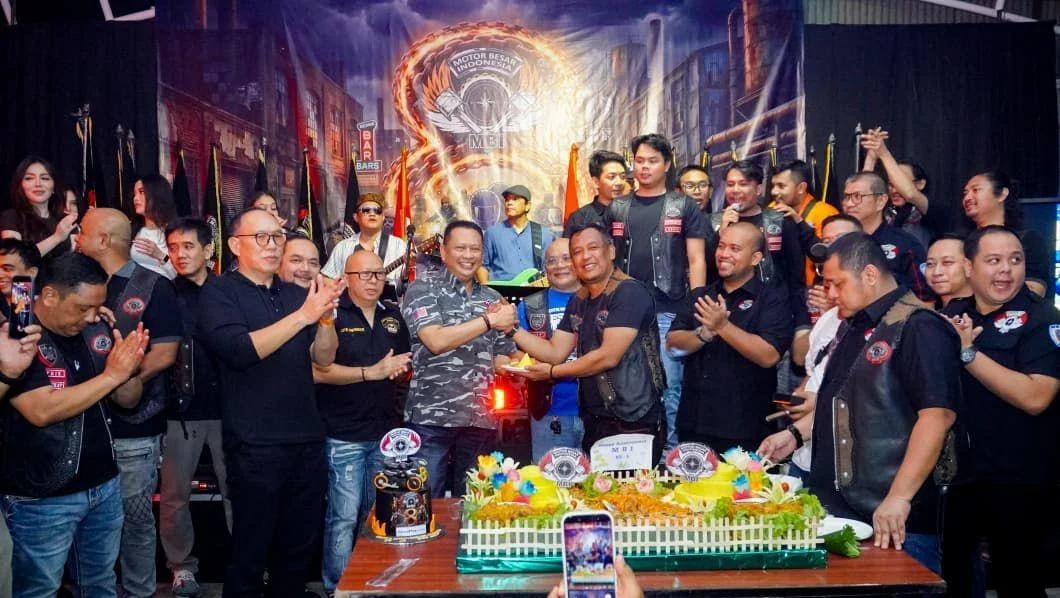
The Chairman of the Advisory Board of the Indonesian Motor Association (IMI), Bambang Soesatyo, has highlighted the critical role that automotive communities play in maintaining national unity amidst a landscape of increasing social polarization, economic disparity, and the strengthening of identity-based divisions within society. Speaking at a high-profile event in Jakarta, Soesatyo, who also served as the 20th Speaker of the Indonesian House of Representatives (DPR RI), articulated that the automotive sector has evolved far beyond a mere collection of hobbyists. It has transformed into a robust social ecosystem that bridges diverse professional backgrounds, cultures, age groups, and regional identities under a unified spirit of brotherhood. This shift, he noted, is particularly vital as Indonesia navigates the complexities of modern social dynamics and the digital age.
The remarks were delivered during the 8th-anniversary celebration of Motor Besar Indonesia (MBI), held in Jakarta on the evening of Friday, May 15, 2026. The event served as a focal point for hundreds of enthusiasts and community leaders, marking nearly a decade of the organization’s contribution to the nation’s social fabric. Soesatyo, often referred to by his nickname Bamsoet, emphasized that the "brotherhood" inherent in these communities serves as a potent antidote to the fragmentation often seen in political and social discourse. By fostering a culture of mutual cooperation, or "gotong royong," these groups provide a neutral ground where the primary focus is shared passion and national pride rather than divisive affiliations.
The Evolution of Automotive Communities as Social Forces
The transformation of automotive clubs from exclusive niche groups to influential social organizations has been a defining trend in Indonesia over the past decade. Throughout 2025 and into early 2026, the nation witnessed a significant uptick in "nationalistic touring" events, large-scale social services, blood donation drives, and cross-regional collaborations. These activities are no longer sporadic but have become institutionalized components of the annual calendars for major automotive organizations. Bamsoet noted that this evolution represents a maturing of the community, where the thrill of the road is balanced by a profound sense of civic duty.
In his address, Bamsoet explained that while social media and political identity politics have often served to isolate individuals within echo chambers, the physical reality of the automotive community offers a "fluid space" for interaction. When riders embark on a touring expedition, they are forced to interact with environments and people outside their usual social circles. This interaction, he argued, creates a sense of equality. On the road, a rider’s socio-economic status or religious background becomes secondary to their role as a member of the convoy and a fellow traveler. This leveling effect is what Soesatyo believes can be leveraged to heal social rifts and promote a more inclusive national identity.
Statistical Insights into Community Engagement
Supporting Bamsoet’s assertions, data from the Indonesian Automotive Association (Asosiasi Automotif Indonesia) indicates a significant shift in the priorities of its members. Recent surveys show that more than 60% of automotive community members nationwide are now actively involved in social advocacy or charitable activities. This involvement ranges from disaster relief efforts to localized community development projects. The data suggests that the "social multiplier effect" of these clubs is substantial, as a single touring event can generate significant revenue for local Micro, Small, and Medium Enterprises (MSMEs) in rural areas and provide direct aid to underserved populations.
The economic impact of these communities is also noteworthy. "Touring should no longer be interpreted merely as a convoy of vehicles," Bamsoet stated. Instead, it must be viewed as a strategic movement that brings tangible benefits to the regions visited. When a large group of riders visits a remote district, they contribute to the local economy through spending on hospitality, food, and local crafts. Furthermore, many clubs now integrate "sport tourism" into their itineraries, actively promoting Indonesia’s hidden gems to a wider audience through their digital platforms, thereby supporting the government’s efforts to diversify tourism destinations beyond traditional hubs like Bali.
A Chronology of the 8th Anniversary and MBI’s Growth
The 8th-anniversary celebration of Motor Besar Indonesia (MBI) was not just a festive gathering but a reflection of the organization’s growth since its inception. Founded with the goal of bringing together owners of large-capacity motorcycles, MBI has consistently advocated for a positive image of bikers. In its early years, the organization focused on establishing safety standards and internal governance. However, as it reached its mid-point around 2021-2022, the focus shifted toward social responsibility.
The timeline of the anniversary event itself reflected this transition. The Friday night proceedings began with a reflection on the past year’s achievements, which included several successful cross-provincial tours that doubled as charity missions. Following the formal speeches, the organization announced a series of upcoming initiatives for the remainder of 2026, including a nationwide blood donation marathon and a partnership with local governments to improve road safety education for younger generations. Bamsoet, in his capacity as the Chairman of the MBI Honorary Board, praised the leadership for maintaining the delicate balance between the joy of riding and the weight of social responsibility.
Addressing the Challenges of Public Perception and Safety
One of the primary challenges discussed during the event was the ongoing struggle against negative stereotypes associated with motorcycle clubs. In the past, "bikers" were often unfairly equated with "gangs" or disruptive behavior. Bamsoet acknowledged that the biggest challenge for today’s automotive communities is maintaining the equilibrium between their unique group identity and their broader responsibilities as citizens. He stressed that the "brotherhood" within a club must not lead to exclusivity or a "law-unto-themselves" mentality.
To counter these perceptions, IMI and MBI have been rigorous in enforcing a code of conduct that prioritizes traffic discipline and public respect. "When bikers are able to become role models in social solidarity and road etiquette, they are actively participating in the preservation of Indonesia’s unity," Bamsoet remarked. He urged all members to act as ambassadors of the nation, especially when traveling through diverse regions where their presence is highly visible. By being exemplary citizens on the road, they demonstrate that the automotive community is a constructive and disciplined segment of society.
Broader Implications for National Stability
From a broader analytical perspective, the rise of these social-automotive hybrids comes at a time when traditional social institutions are often viewed with skepticism. Automotive communities offer a decentralized form of social capital. They are self-organizing, self-funded, and highly mobile, allowing them to respond to crises—such as natural disasters—with a speed that bureaucratic entities sometimes lack. This agility makes them a vital partner for the state in building national resilience.
Furthermore, the promotion of local culture through touring acts as a soft-power tool for domestic integration. By visiting diverse ethnic enclaves and participating in local traditions, riders help to weave a tighter national fabric. Bamsoet noted that Indonesia requires more of these "spaces of brotherhood" that can transcend the boundaries of religion, politics, and social status. The automotive community, with its inherent diversity and shared passion, is uniquely positioned to fill this role.
Future Outlook: The Road Ahead for 2026 and Beyond
As the event concluded, the vision for the future was clear: the integration of technology, tourism, and philanthropy. Bamsoet and other leaders within the IMI ecosystem are looking toward 2027 as a year of "Digital Integration," where automotive apps will not only help with navigation and safety but also track social impact and facilitate more efficient charitable giving. The goal is to quantify the "good" that these communities do, providing hard data to further legitimize their role in national development.
"Indonesia needs more spaces of brotherhood that can transcend political, religious, and social differences. The automotive community can take on that role," the Chairman concluded. The message was a call to action for all automotive enthusiasts in Indonesia to look beyond their handlebars and see the vast landscape of social needs that their communities can help address. As the 8th-anniversary celebration of Motor Besar Indonesia drew to a close, the sentiment remained that while the engines provide the power, it is the spirit of unity and service that provides the direction for the nation’s riders.
The event ended with a symbolic commitment from the MBI leadership to continue their "Bakti Sosial" (Social Service) programs, ensuring that the legacy of the 8th anniversary would be felt not just in the memories of the participants, but in the lives of the communities they serve across the Indonesian archipelago. With the continued guidance of figures like Bambang Soesatyo and the institutional support of IMI, the automotive sector is poised to remain a cornerstone of Indonesia’s social stability and national pride for years to come.