Nila Kartika Wati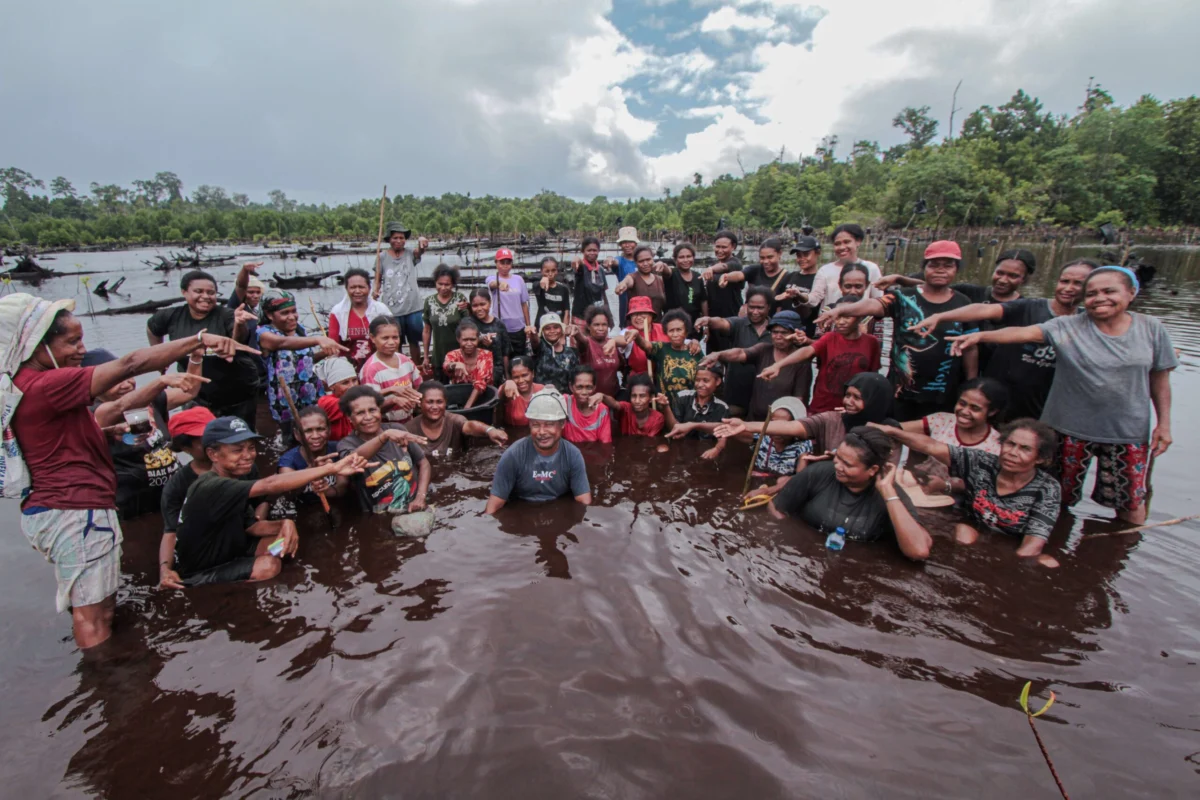
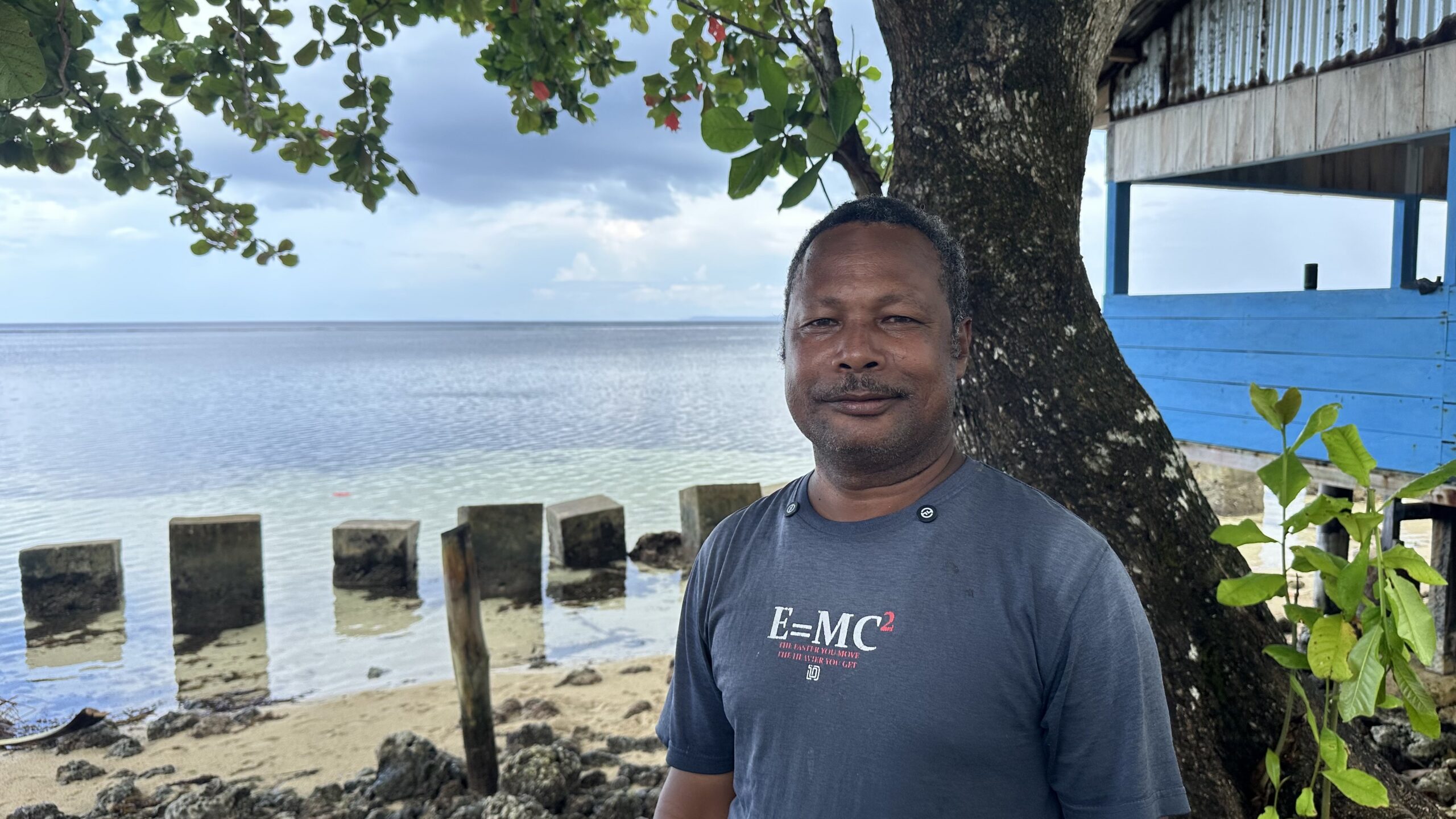
Efraim Rumkoren, now 45, carries a vivid and indelible memory of the day his village was engulfed by what he then called "the flood from the sea," a phenomenon he would later understand as a devastating tsunami. He was only 15 years old, a junior high school student, when the ocean rose without warning, forever altering the landscape of his home in Kampung Tanjung Barari—known locally as Menurwar—in the Oridek District of Biak Numfor Regency, Papua. On that fateful afternoon of February 17, 1996, at approximately 12:59 PM Eastern Indonesia Time (WIT), a massive tectonic shift in the Pacific Plate triggered a 1.2-magnitude (Mw) earthquake, sending waves as high as seven meters crashing into the northern coast of Biak and its surrounding islands. In the ensuing panic, Efraim and his siblings scrambled for the highest ground they could find, eventually clinging to the branches of a tree ten meters above the ground, where they remained for hours, watching the water claim the world they knew.
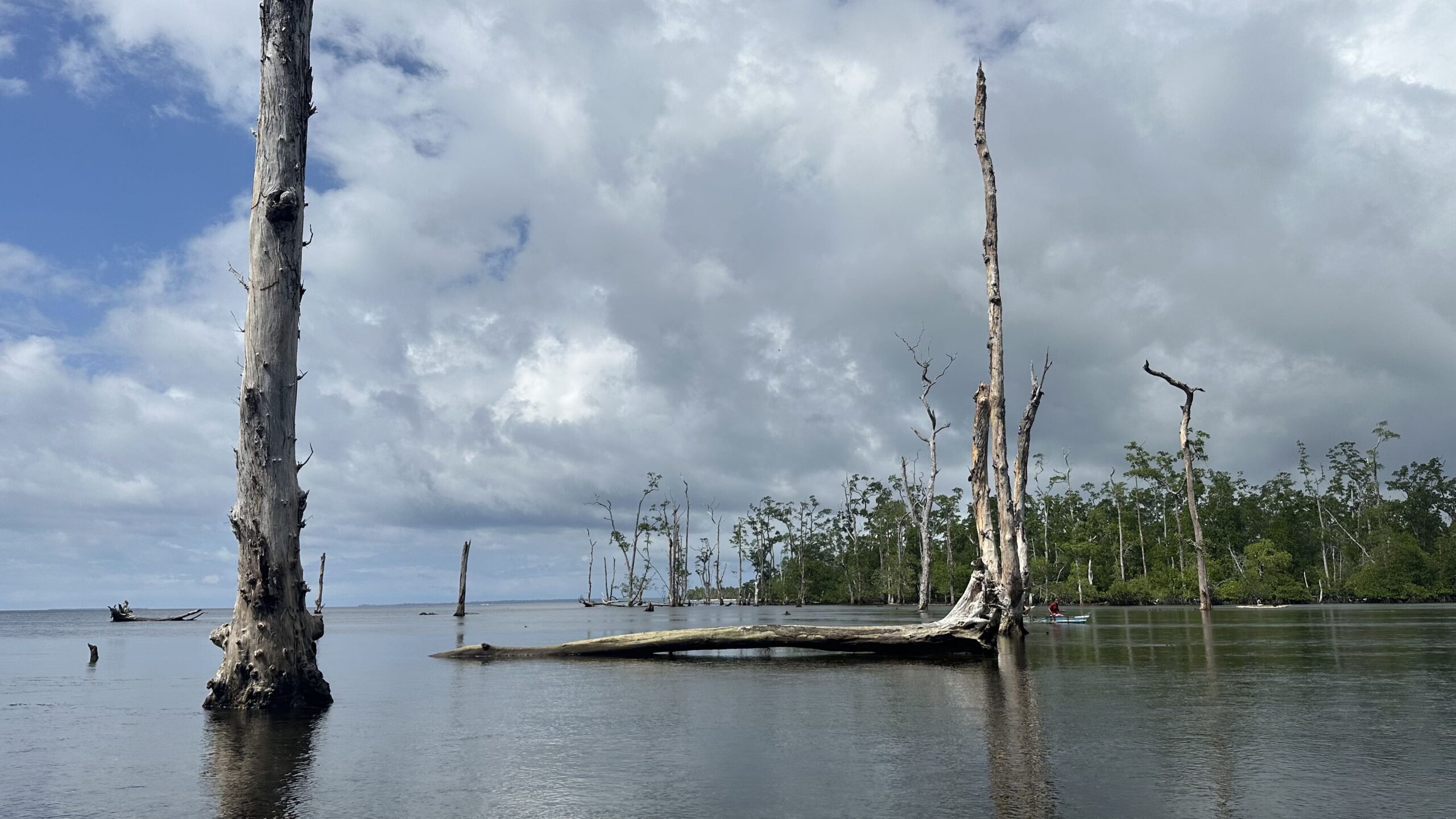
While the village of Tanjung Barari was fortunate to record no fatalities during the event, the physical and ecological scars remained. Three decades later, Efraim, now a prominent community figure, observes a transformation that is perhaps more insidious than the immediate violence of the wave: the slow, relentless erosion of the coastline. Standing before the GKI Jemaat Bahtera Injili church, he estimates that the shoreline has receded by at least 30 meters. This geophysical shift, he realizes, is inextricably linked to the destruction of the mangrove forests that once served as a natural bulwark against the Pacific. Where lush canopies once thrived, only skeletal remains of grey, sun-bleached wood now stand. The loss of these forests has decimated the local economy, as the crabs, shrimp, and shellfish that once provided a steady livelihood have vanished along with their habitat.
The Scientific and Historical Context of the 1996 Biak Tsunami
To understand the scale of Efraim’s current restoration efforts, one must look at the magnitude of the disaster that necessitated them. The 1996 Biak earthquake remains one of the most powerful seismic events in Indonesian history. Located near the New Guinea Trench, the earthquake resulted from the subduction of the Pacific Plate beneath the Australian Plate. The resulting tsunami was particularly destructive because of the steep bathymetry of the region, which allowed the waves to maintain high energy until they hit the shore.
The ecological impact was catastrophic. Mangrove forests, which are specifically adapted to survive in the intertidal zone, can be overwhelmed by the sheer mechanical force of a tsunami and the subsequent changes in soil salinity and sedimentation. In Tanjung Barari, Efraim estimates that more than 10 hectares of mangrove forest were lost or degraded in the years following the disaster. Without the root systems of the mangroves to trap sediment and break the energy of incoming tides, the coastline began to crumble. This phenomenon, known as coastal squeeze, has become a primary concern for environmental scientists and local residents alike, as rising sea levels exacerbate the existing damage.
From Trauma to Action: The Vision for Restoration
For Efraim, the realization that the environment would not heal itself was a turning point. He understood that while the tsunami was a past event, its consequences were a present and growing threat to the survival of his village. "At the very least, even if it cannot return exactly to the way it was, the mangroves must be there," Efraim states. "They protect the coast and provide our source of food."
Restoring 10 hectares of coastal land is a monumental task, requiring at least 10,000 mangrove seedlings. The challenge Efraim faced was twofold: technical and social. He needed to find a way to source thousands of viable seedlings and, more importantly, he needed to mobilize a community that was often preoccupied with the daily struggle for survival. Leveraging his position as a community leader and a member of the church renovation committee, Efraim began to look for a social structure that could sustain a long-term environmental project. He found his answer in the "mama-mama"—the local women who hold the keys to both the domestic economy and the social fabric of the village.
The Socio-Ecological Role of Papuan Women
In the coastal communities of Biak, gender roles are often clearly defined by the geography of labor. While men frequently venture into the deep sea for fishing, women are the primary stewards of the mangroves. They are the ones who navigate the mud, often knee-deep, to forage for mangrove crabs, "bia" (clams), and the fruit of the Bruguiera sp. (locally known as aibon), which serves as a traditional food staple.
"The women here understand the mangroves better than anyone," Efraim explains. "They are the ones who spend their days in the mud. They know where the water flows and where the trees grow best." Recognizing this, Efraim decided to integrate the restoration project with the existing "Kelompok Sel Pemuridan" (KSP)—small discipleship groups within the church. By transforming these prayer groups into environmental action cells, he was able to tap into a highly organized and disciplined network of 146 women across 16 different groups.
A Sustainable Financial Model for Conservation
The restoration project gained significant momentum through a partnership with ILMMA (Indonesian Locally Managed Marine Area), a non-profit organization dedicated to community-based resource management. With support from the COAST project, ILMMA provided a financial framework that aligned the environmental goals of the project with the economic needs of the community and the spiritual goals of the church.
The scheme is designed for transparency and mutual benefit. The women are provided with incentives for every seedling they successfully plant and grow. Simultaneously, the "ajir"—the wooden stakes used to support the young plants—are treated as a donation to the church’s renovation fund. This "triple-bottom-line" approach ensures that the project addresses ecological health, household income, and community infrastructure.
Fransisca Ferderica Sinom, a community facilitator from ILMMA, notes the effectiveness of this approach. "Involving women is crucial because they are the economic engines of the family. By routing the activity through the church, the movement becomes culturally and socially acceptable, making it much easier for the community to embrace," she says.
Decentralized Nurseries: The Backyard Innovation
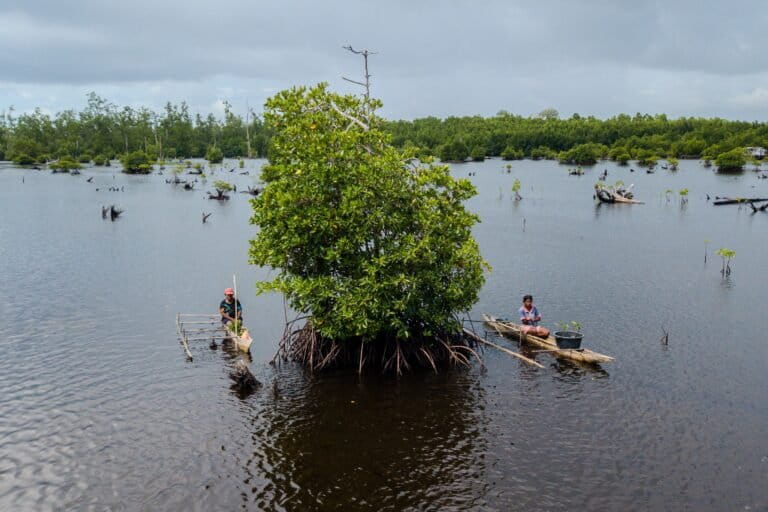
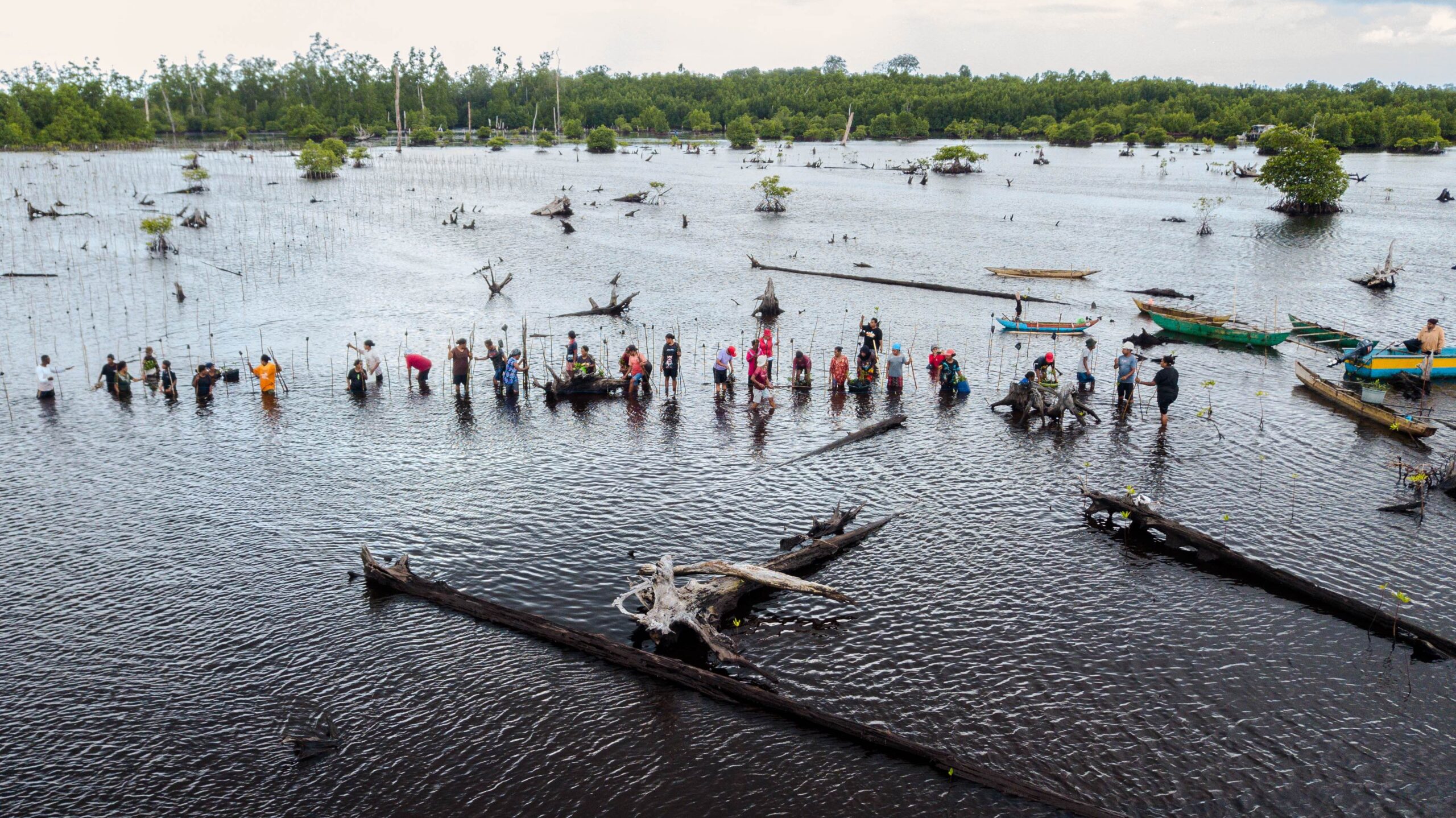
One of the most innovative aspects of the Tanjung Barari project is its departure from the traditional model of large, centralized nurseries. Instead, the community adopted a decentralized approach where each woman manages a small nursery in her own backyard. Seedlings are placed in small plots and shaded with coconut fronds to protect them from the harsh tropical sun.
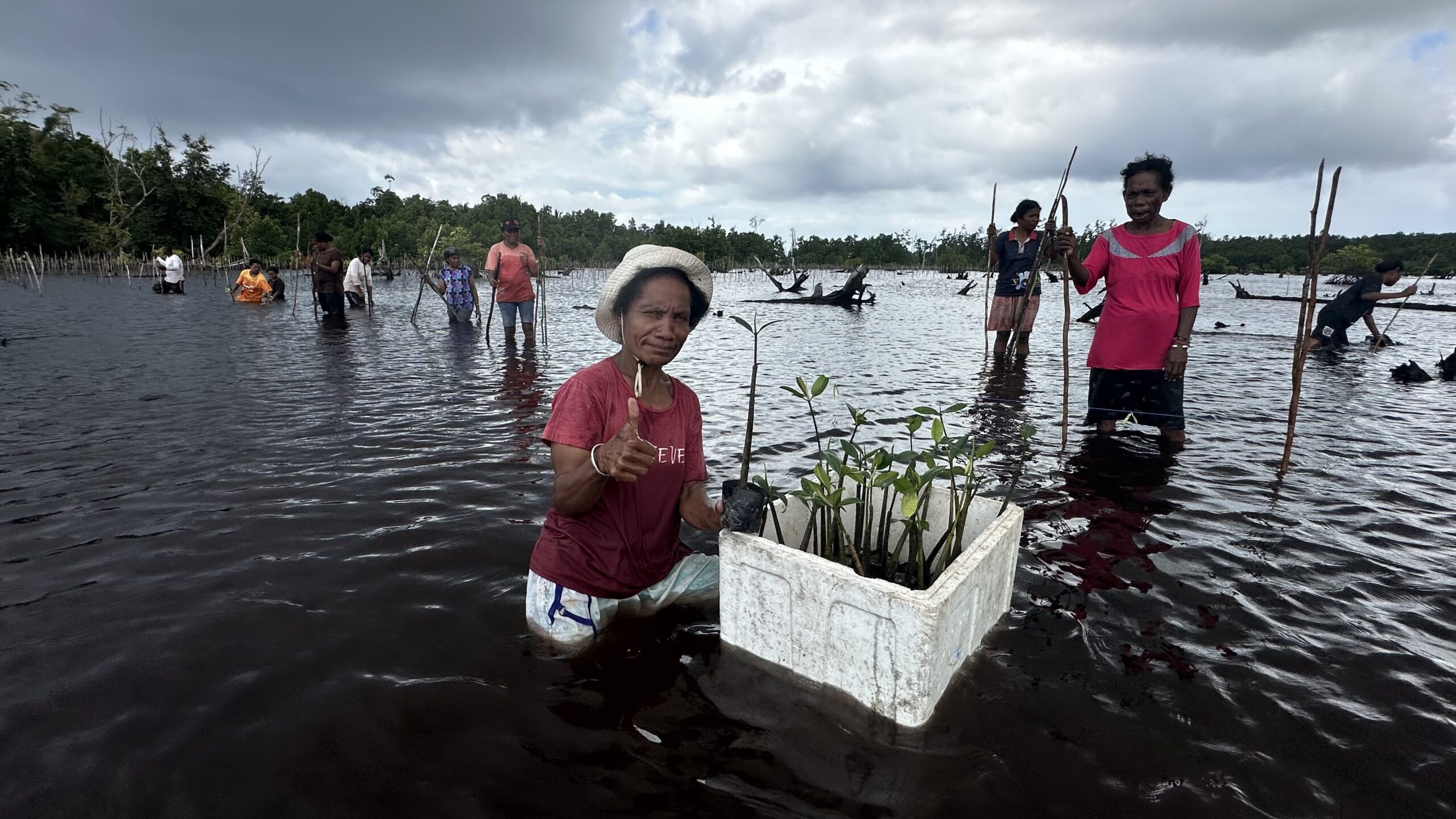
This method has several advantages. First, it allows the women to monitor the plants daily without having to travel long distances to a central site. Second, it fosters a sense of individual ownership over the restoration process. May Yosina Imbir, a 34-year-old village youth active in the project, describes the daily routine: "When we return from the forest or the coast, we bring back mangrove seeds—Rhizophora (mampiu) and Bruguiera (aibon). we plant them in polybags filled with mud right next to our houses. It becomes part of our daily life."
The technical cycle is rigorous. After two to three weeks, the seeds begin to sprout. Within a month, the first leaves appear. After three months, once the seedlings reach a height of about 20 centimeters and have developed several leaves, they are ready to be transplanted to the degraded coastal zones. To reach the goal of 10,000 trees, each KSP group is responsible for producing and planting approximately 625 seedlings.
Broader Implications and the Future of Biak’s Coastline
The efforts in Tanjung Barari represent a microcosm of a larger global movement toward community-led climate adaptation. Mangroves are among the most carbon-rich ecosystems on the planet, capable of sequestering up to four times more carbon than terrestrial forests. For a region like Papua, which is on the front lines of climate change, the restoration of these forests is not just an act of historical healing but a vital strategy for future resilience.
As of early 2026, the project has completed four waves of planting. The results are already beginning to manifest, not just in the visible green shoots along the mudflats, but in the renewed social cohesion of the village. Efraim’s vision extends beyond mere replanting; he hopes that a restored mangrove forest will eventually pave the way for sustainable ecotourism, providing a permanent economic alternative to resource extraction.
The success of the Tanjung Barari model offers a powerful lesson for environmental policy: conservation is most effective when it is rooted in local culture and driven by those who have the most to lose. By connecting the trauma of the 1996 tsunami to a proactive, church-supported, and women-led initiative, Efraim Rumkoren has turned a story of destruction into a blueprint for coastal survival.
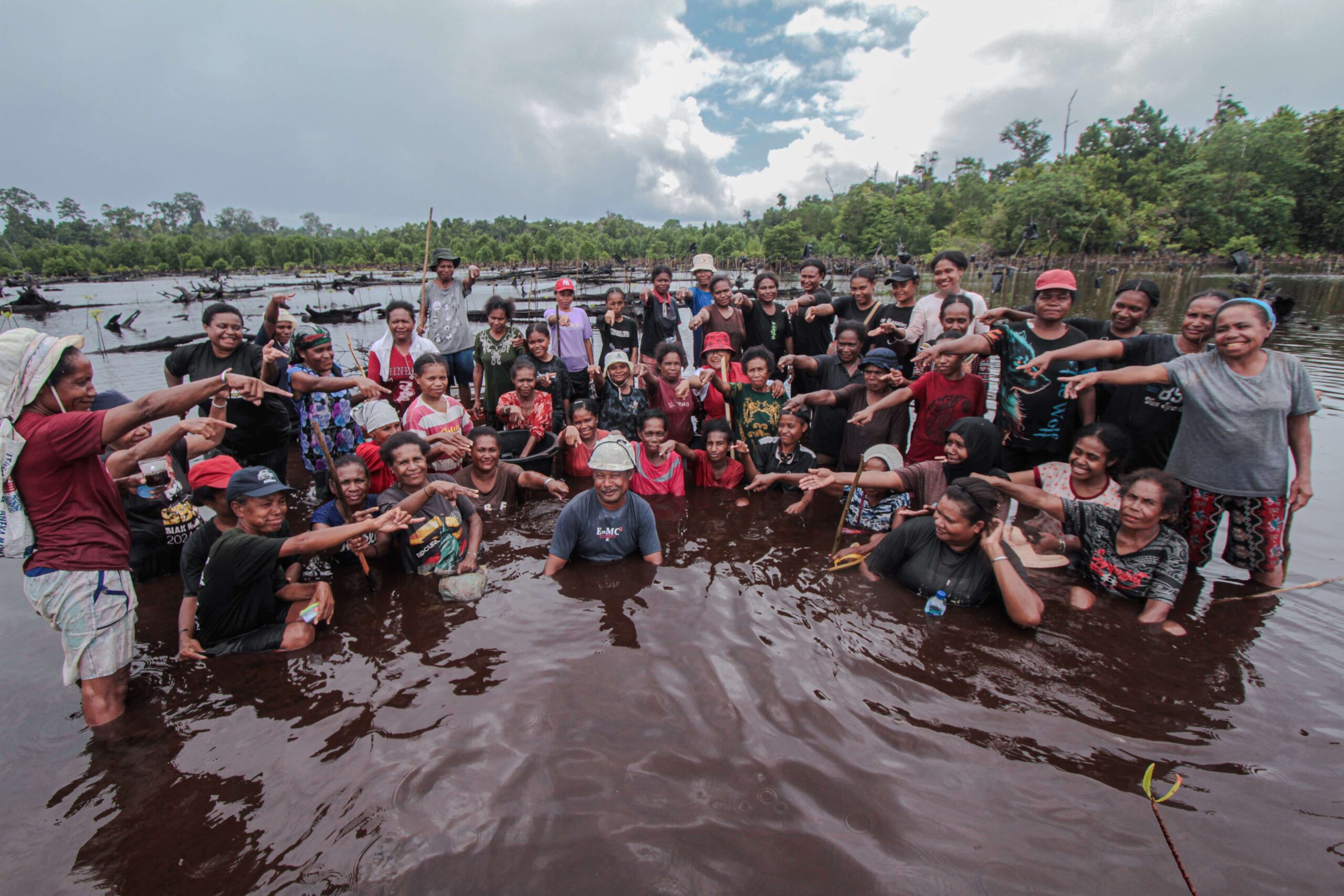
As the "mama-mama" of Tanjung Barari continue to plant their future in the mud of the Pacific coast, they are doing more than just growing trees. They are reclaiming a shoreline that was once lost to the sea, ensuring that the next generation of Biak children will not have to climb trees to survive the rising tide, but will instead find a thriving, protected ecosystem that sustains their lives and their heritage.