Nila Kartika Wati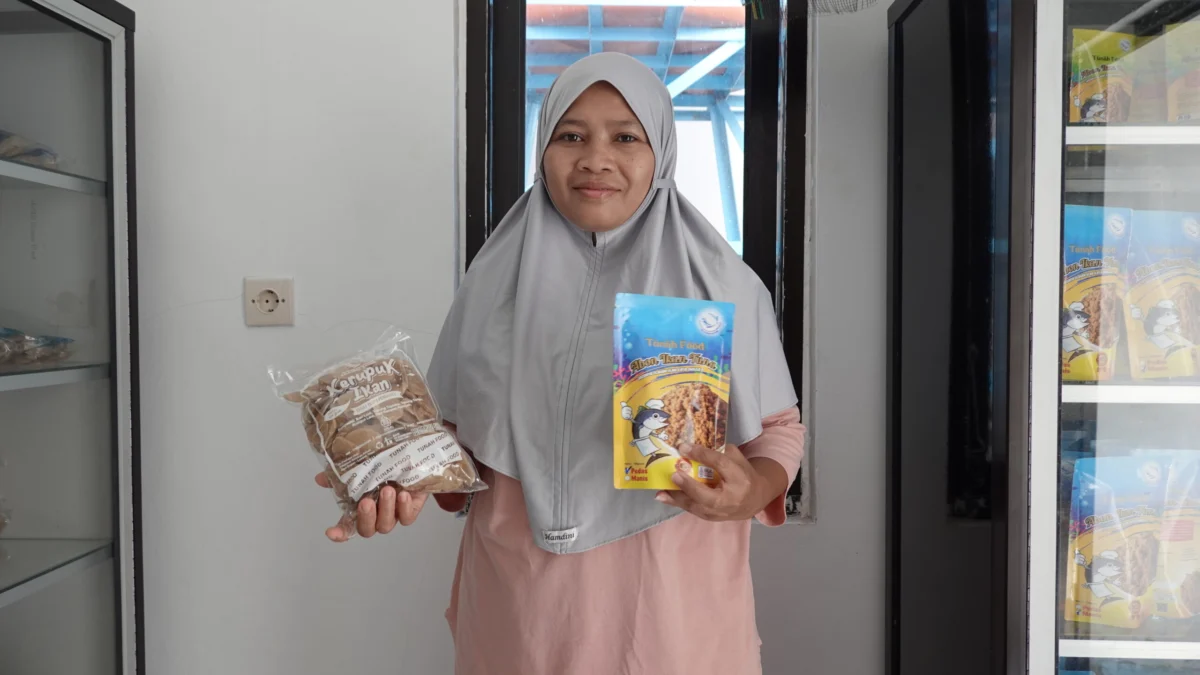
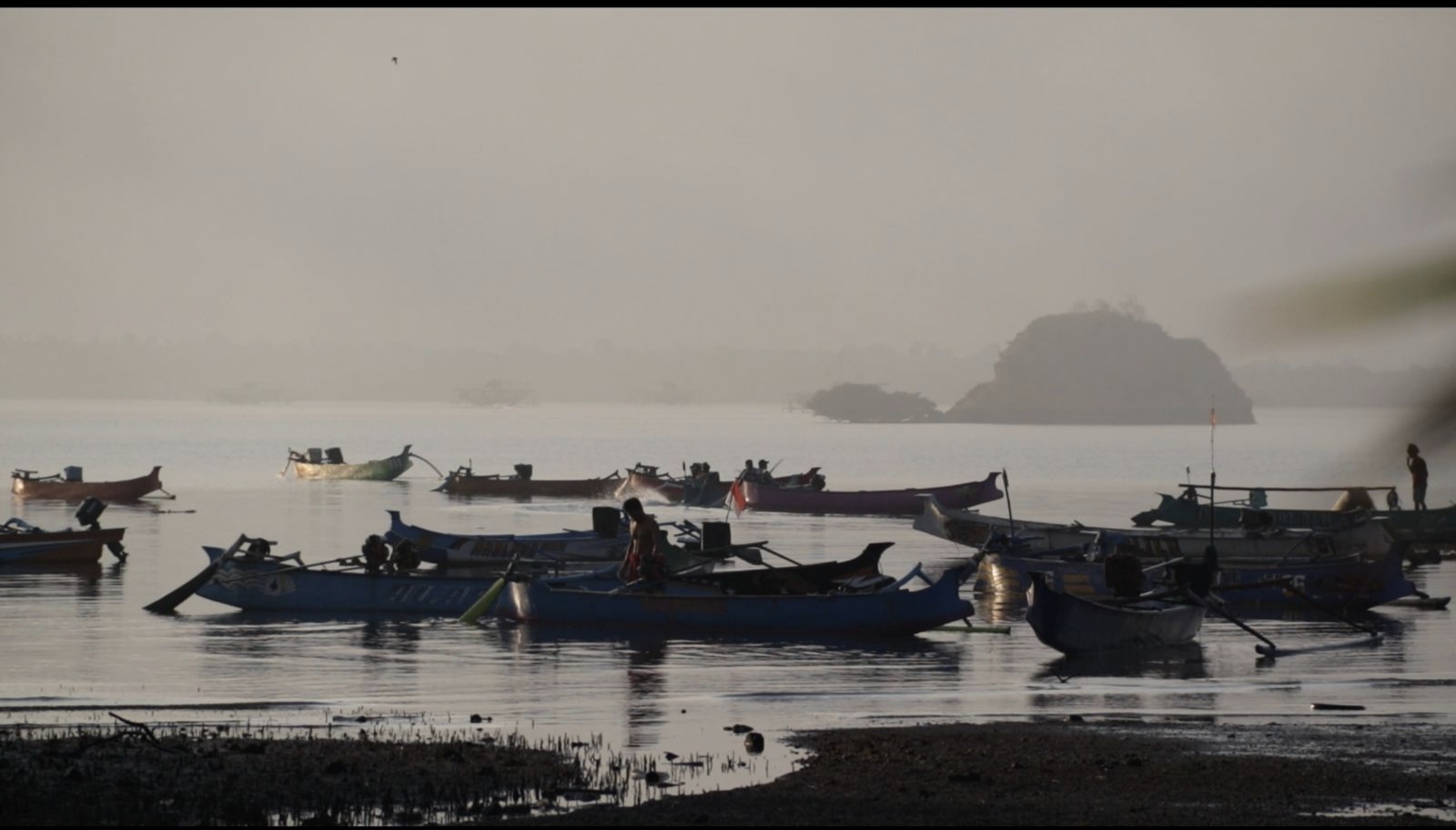
The salty morning breeze swept across the coast of Kuranji Hamlet in Paremas Village, East Lombok, on a Tuesday morning in late March. Along the modest wooden pier, a group of women stood with their gazes fixed on the horizon, waiting for the return of small outrigger boats that had spent the night battling the unpredictable currents of the Alas Strait. Among them was 52-year-old Harniati, a woman whose life has been dictated by the rhythm of the sea for decades. Holding a plastic basket, she searched for the familiar silhouette of her husband’s boat. For generations, the women of Paremas could read the sea like a book, knowing exactly when the winds would turn and when the clouds signaled a bountiful harvest. However, in recent years, that ancient knowledge has been rendered obsolete by the volatile reality of a changing global climate.
The challenges facing Harniati and her community are no longer seasonal anomalies but have become a permanent state of precariousness. In the past, the "paceklik" or famine season was a predictable period of few months where families would tighten their belts and perhaps take modest credit from local kiosks. Today, the traditional lunar and wind-based calendars used by Indonesian fishermen are failing. Extreme weather events occur with increasing frequency, and the "fish season" has become a ghost of its former self. When Harniati’s husband finally docked his 10-horsepower engine boat that morning, the haul was disheartening: a few kilograms of mixed small fish and two baskets of mangrove crabs. It was barely enough to cover the rising costs of diesel fuel, ice blocks, and provisions for the journey.
The Economic Impact of a Warming Ocean
The situation in East Lombok is a microcosm of a broader crisis affecting Indonesia’s 2.7 million small-scale fishermen. As the world’s largest archipelagic nation, Indonesia is uniquely vulnerable to climate change. Rising sea surface temperatures are driving fish stocks into deeper, cooler waters, far beyond the reach of the traditional 10-15 PK (horsepower) engines used by the inhabitants of Paremas and Sugian. According to data from the Indonesian Ministry of Marine Affairs and Fisheries, the country has seen a significant shift in fish migration patterns, which, coupled with habitat degradation, has led to a decrease in catch per unit of effort for traditional coastal fishers.
For Harniati, the macro-statistics of global warming translate directly into the micro-realities of her household ledger. When the catch is low, the kitchen fire struggles to stay lit. In many coastal villages, this economic gap is often bridged by "rentenirs" or informal moneylenders who charge exorbitant interest rates. "We borrow today, and next week we pay back much more. If we don’t, what will the children eat?" Harniati explained. This cycle of debt has forced many men in the village to abandon the sea entirely, seeking work as migrant laborers in Malaysia or elsewhere in Southeast Asia. Harniati’s own husband spent three years abroad, leaving her to manage the household and the children alone—a common narrative in East Lombok where the "feminization of migration" and the "feminization of poverty" often intersect.
Turning Waste into Value: The Crab Shell Innovation
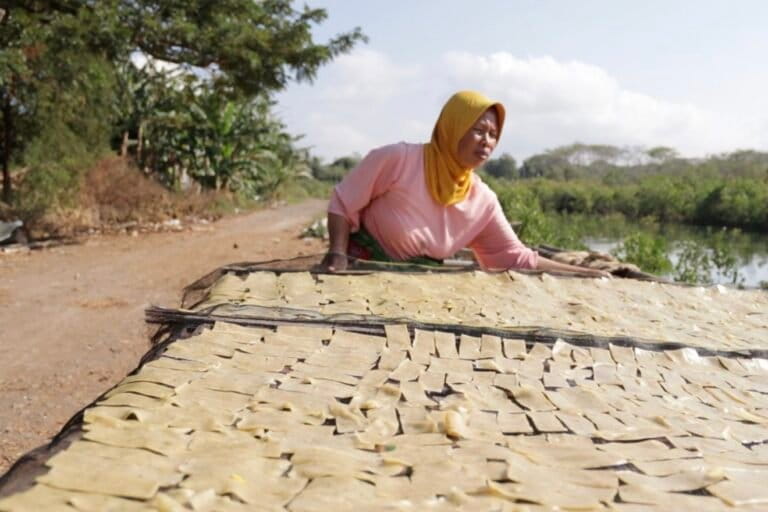
Faced with the diminishing returns of raw seafood sales, Harniati refused to remain a passive victim of environmental circumstances. She recognized that the traditional model of selling fresh catch was no longer sustainable due to price fluctuations and the perishability of the product. Her solution lay in what was previously considered garbage: crab shells. After the meat is extracted from the mangrove crabs, the shells were historically discarded as waste. Harniati began collecting these shells, cleaning them, and processing them into a fine powder to be mixed with flour and spices.
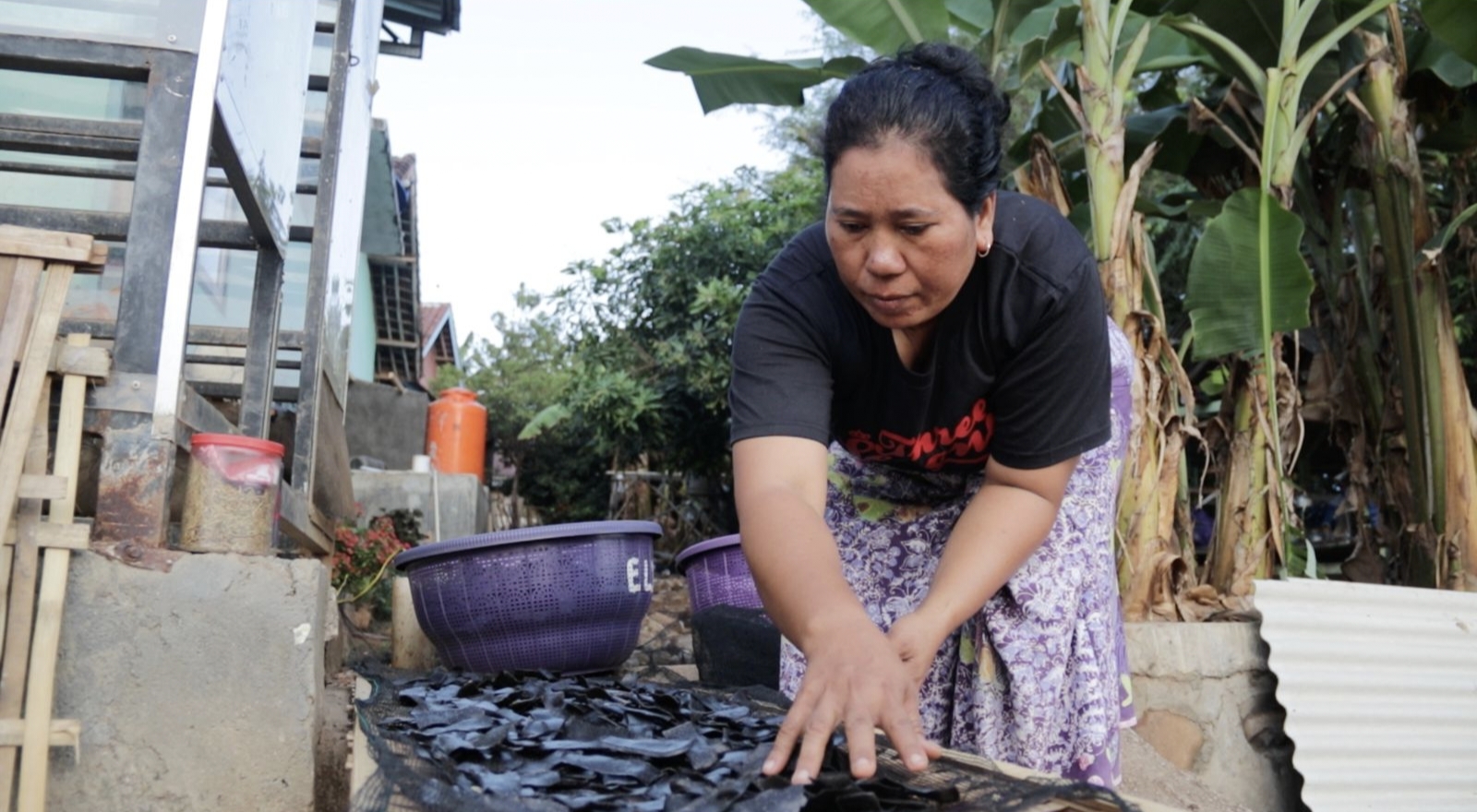
Today, she produces a variety of crab-shell crackers in flavors ranging from spicy-sweet and balado to roasted corn and original. This innovation has transformed a zero-value waste product into a consistent revenue stream. Selling each pack for between Rp5,000 and Rp10,000, Harniati can generate an additional monthly income of Rp1 million to Rp2 million (approximately USD 65 to USD 130). This "value-added" approach is a critical pillar of climate adaptation, as it decouples household income from the sheer volume of the daily catch. By processing the shells, Harniati ensures that even a meager haul of crabs provides a buffer against the days when the boats cannot leave the pier.
Diversification and Collective Action in Sugian Village
A few kilometers away in the coastal village of Sugian, a similar movement is taking hold. Here, a women’s collective known as "Keluarga Bahari" (Maritime Family) has focused its efforts on tuna, a staple of the local economy that often suffers from extreme price volatility. When the tuna catch is abundant, local prices plummet, leaving fishermen with little profit. When the weather is poor, the supply vanishes.
Nurhasunah, one of the leaders of the group, oversees a small production house where women process fresh tuna into "abon" (shredded dried fish), fish crackers, fish balls, and sambal. "If the waves are high, my husband might not go to sea for a week," Nurhasunah said. "In the past, that meant zero income. Now, we still have money coming in from the processed goods." The ability to preserve fish through processing is a game-changer for food security. Unlike fresh fish, which must be sold immediately regardless of the price, shredded tuna and crackers have a long shelf life, allowing the women to wait for better market conditions or sell their products through social media and local exhibitions.
Scientific Perspectives on Coastal Resilience
The efforts of these women are being lauded by environmental and academic experts as a prime example of grassroots climate resilience. Sukuryadi, an academic and lecturer at the Master of Environmental Science program at Muhammadiyah University of Mataram, notes that the changes observed by the villagers are backed by hard data. "Climate change is already at our doorstep," Sukuryadi remarked. He explained that rising sea temperatures lead to coral bleaching and the destruction of seagrass beds—the primary habitats for the fish and crabs that the people of East Lombok depend on.
As these habitats are destroyed, fish move further offshore. Simultaneously, sea-level rise and increased storm surges bring the water closer to the villagers’ homes, causing coastal abrasion. Sukuryadi argues that while mitigation is a global task, adaptation must be local. "What these women are doing is a form of economic adaptation. They are diversifying their livelihoods so that they are no longer 100% dependent on the volatile state of the ocean’s natural resources," he added. He urged the government to move beyond symbolic gestures and provide structural support for these initiatives.
Government Response and Structural Challenges
The local government acknowledges the vital role these women play in the coastal economy. Mastur, the Acting Head of the Marine Affairs and Fisheries Office of East Lombok Regency, stated that the government provides training and coaching for groups involved in fishery product processing. However, he admitted that budgetary constraints prevent these programs from reaching every household in need. "Our budget is limited. We often collaborate with NGOs to fill the gaps in areas we cannot reach," Mastur explained.
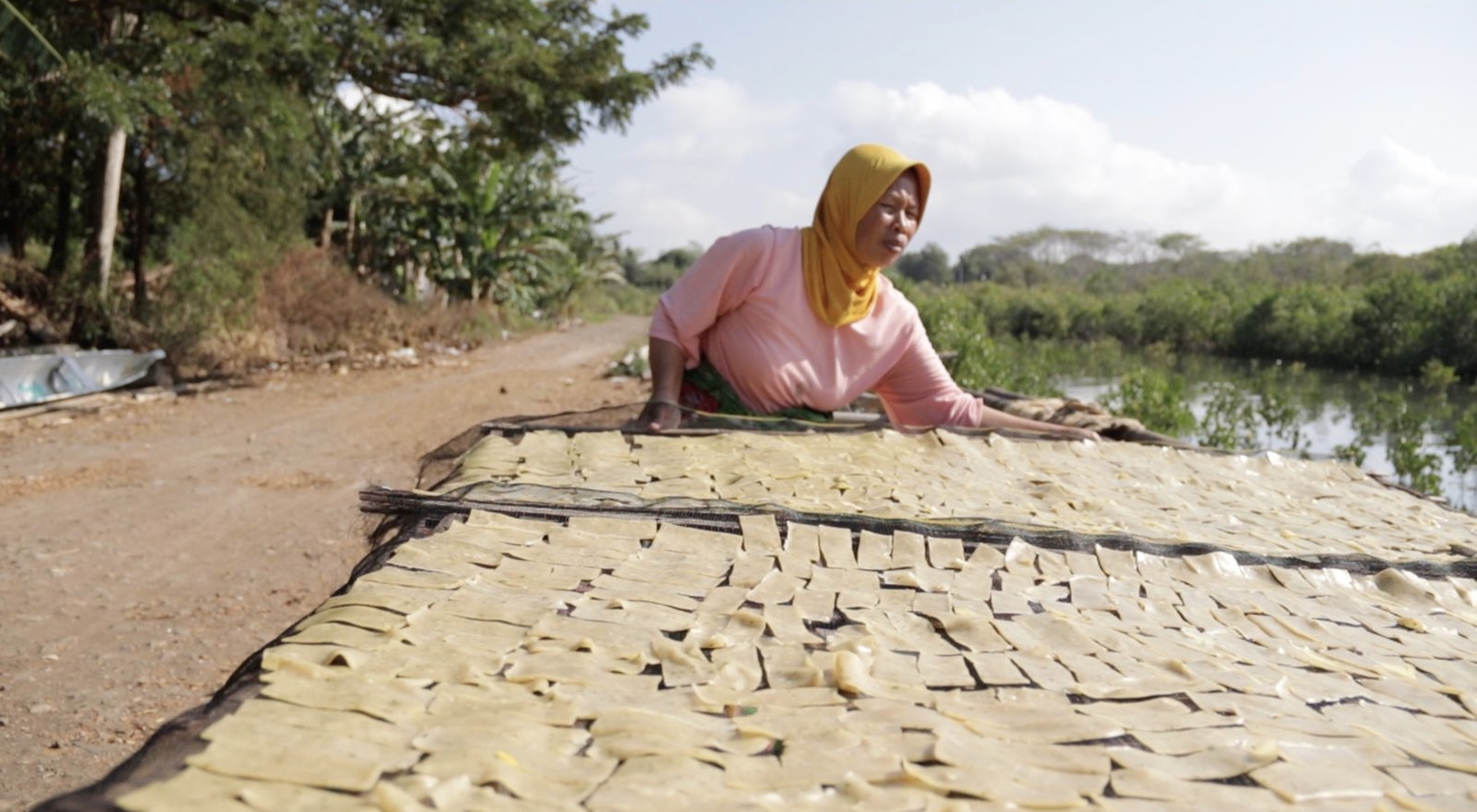
Despite the success stories of Harniati and Nurhasunah, significant hurdles remain. Many women’s groups struggle with the "double burden"—the societal expectation that they must generate income while also performing 100% of the domestic labor, including childcare and housework. Furthermore, small-scale producers often lack access to modern packaging technology, formal food safety certifications (such as BPOM), and stable distribution networks. Without these, their products often struggle to compete with factory-made snacks in larger supermarkets.
A Blueprint for the Future
The story of the women of East Lombok is a testament to the fact that the front lines of the climate crisis are often located in the kitchen. As the global community debates carbon credits and emissions targets in distant conference halls, Harniati and her peers are implementing practical solutions to keep their families afloat. Their work demonstrates that climate resilience is not just about building sea walls or planting mangroves; it is about economic empowerment and the creative use of available resources.
By turning crab shells into crackers and tuna into shelf-stable goods, these women are doing more than just earning a living; they are preserving a way of life. They are proving that while the sea may be becoming more unpredictable, the human spirit—particularly the spirit of coastal women—remains a formidable force against the rising tide. The success of these initiatives suggests that future climate policy must prioritize the "blue economy" at the household level, ensuring that the most vulnerable communities have the tools, the credit, and the technology to adapt to a world where the old rules of nature no longer apply. For Harniati, the goal remains simple: "As long as we can process what the sea gives us, the fire in our kitchen will not go out."