Azin Asro
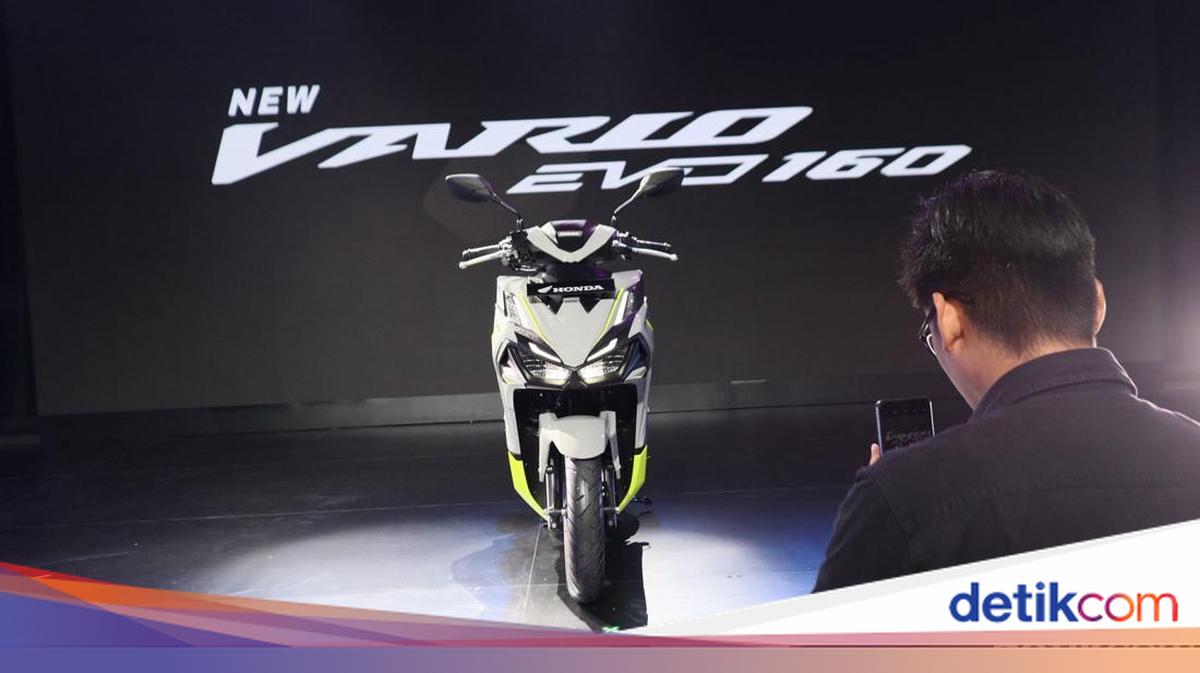
The Indonesian automotive landscape has witnessed a significant shift in the premium scooter segment with the official launch of the Honda Vario EVO 160. PT Astra Honda Motor (AHM), the nation’s leading motorcycle manufacturer, introduced this latest iteration as a direct successor to the previous Vario 160 model, signaling a total transition in their production line. The unveiling, which took place in Cikarang, West Java, serves not only as a product update but as a strategic move to solidify Honda’s dominance in the 160cc engine class, a category that has seen exponential growth among urban commuters seeking a balance between power and agility.
With the arrival of the Vario EVO 160, PT Astra Honda Motor has confirmed a definitive change in its manufacturing strategy. Octavianus Dwi, the Marketing Director of AHM, stated during the launch event that the production of the previous Honda Vario 160 model has officially ceased. This decision marks a "full transition" phase, where the focus shifts entirely to the newer, optimized "EVO" variant. While some units of the older model may still be found within the inventory of various authorized dealers across the archipelago, they represent the final remaining stock of the outgoing generation.
The Strategic Transition and Distribution Timeline
The transition from the standard Vario 160 to the Vario EVO 160 has been planned to ensure minimal disruption to the market while maximizing the availability of the new technology. According to the company’s leadership, the distribution of the EVO model commenced on the very day of its official launch. This aggressive rollout strategy aims to replace floor models in showrooms as quickly as possible, though the speed of availability will vary depending on the geographical location of the dealerships.
In the Indonesian market, logistics play a critical role in product launches due to the country’s vast archipelagic geography. While major urban centers in Java and Bali are expected to receive the Vario EVO 160 units almost immediately, outlying regions such as Papua, Sulawesi, and Kalimantan will see a slightly staggered arrival. Octavianus Dwi emphasized that the logistics network is currently working at full capacity to ensure that the transition is seamless across all provinces. For consumers, this means that while the old model is being phased out, the new EVO variant is already available for booking and delivery in most primary markets.
The decision to discontinue the previous model immediately upon the launch of the new one is a standard practice for AHM when introducing "major changes" or "evolutions" of a flagship product. By doing so, the manufacturer prevents internal competition between two generations of the same motorcycle and ensures that the brand’s latest innovations reach the hands of consumers without delay.
Pricing Structures and Variant Availability
The Honda Vario EVO 160 enters the market with a tiered pricing strategy designed to cater to different consumer needs, ranging from daily commuters to enthusiasts who prioritize safety and premium features. The prices are quoted as On The Road (OTR) for the Jakarta area, which serves as the benchmark for national pricing.
The lineup begins with the CBS (Combi Brake System) variant, which is positioned as the entry-level option for the EVO series. Priced at approximately Rp 28.5 million, it offers the core performance upgrades of the EVO line while maintaining a competitive price point. For riders seeking a more distinctive aesthetic and mid-range features, the Nitro variant is offered at Rp 28.7 million. At the top of the range is the ABS (Anti-lock Braking System) variant, which commands a premium price of Rp 31.4 million. This top-tier model is equipped with advanced braking technology, providing an extra layer of safety for riders navigating high-traffic urban environments or wet road conditions.
These price points reflect a slight adjustment from the previous generation, accounting for the technological optimizations and aesthetic refinements integrated into the EVO series. Industry analysts suggest that despite the slight increase, the Vario EVO 160 remains highly competitive against its primary rivals in the 160cc maxi-scooter and sporty-scooter segments.
Aesthetic Refinements and Functional Design Changes
One of the most immediate differences between the Vario EVO 160 and its predecessor is the visual language of the front fascia. Honda’s designers have implemented a more aggressive and modern look, characterized by a new headlamp cover. This cover features a dark, smoked finish complemented by air-hole accents that suggest a more aerodynamic profile. This change is not merely cosmetic; it aligns the Vario series with the "sporty-premium" identity that Honda has been cultivating for its higher-displacement scooters.
Beyond the front end, several other physical components have undergone redesigns. The side panels now feature sharper lines and new contours, contributing to a more muscular silhouette. Furthermore, the swing arm has been updated, and the rear grip (behel) has been redesigned for better ergonomics and a more integrated look. Even smaller details, such as the mirrors and the utility hook (gantungan barang), have been revised to improve both the aesthetic appeal and the daily utility of the vehicle.
These changes are aimed at a demographic that values both style and substance. In Indonesia, the Vario series has long been perceived as a "unisex" scooter that appeals to both male and female riders, but the EVO 160’s sharper design language leans more toward a "high-tech" and "sporty" persona, likely targeting younger professionals and tech-savvy urbanites.
Technical Specifications and Performance Optimization
Under the hood—or rather, beneath the seat—the Honda Vario EVO 160 continues to utilize the proven 160cc, 4-valve, liquid-cooled eSP+ (enhanced Smart Power Plus) engine architecture. However, AHM engineers have not simply carried over the engine without improvements. The EVO model features an optimized ignition system designed to enhance the engine’s efficiency and responsiveness.
As a result of this optimization, the torque output has seen a marginal but significant increase, now reaching 14 Nm. This improvement in torque is particularly beneficial for the "stop-and-go" traffic conditions prevalent in major Indonesian cities like Jakarta and Surabaya, allowing for quicker acceleration from a standstill. The power output remains stable at 11.3 kW, and the vehicle is capable of reaching a maximum speed of 109 km/h.
Despite the focus on performance and "sportiness," Honda has managed to maintain the fuel efficiency that the Vario brand is known for. The Vario EVO 160 boasts a fuel consumption rate of 46.7 kilometers per liter, measured using the WMTC (World Motorcycle Test Cycle) method. This efficiency is achieved through the integration of the Idling Stop System (ISS), which automatically shuts off the engine during periods of inactivity (such as at traffic lights) and restarts it instantly when the throttle is twisted. In an era of fluctuating fuel prices, this efficiency remains a major selling point for the Indonesian consumer base.
Advanced Features and Practicality
In addition to performance and design, the Vario EVO 160 introduces several quality-of-life features that align it with modern technological standards. Recognizing the "always-connected" lifestyle of its users, Honda has replaced or upgraded the charging port to a USB Type-C socket. This allows riders to charge their smartphones or other electronic devices directly without the need for an additional adapter, providing a more convenient and faster charging experience compared to traditional USB-A ports.
The scooter also retains the Honda Smart Key System, which includes the Answer Back System and an anti-theft alarm. This keyless ignition system has become a staple of Honda’s premium lineup, offering both convenience and security. For storage, the Vario EVO 160 maintains an 18-liter under-seat compartment. While not the largest in its class, the 18-liter trunk is designed to be deep enough to hold a variety of items, including a standard open-face helmet or personal belongings like raincoats and bags.
The inclusion of these features underscores Honda’s strategy to position the Vario EVO 160 as a "complete package"—a vehicle that is as technologically advanced as it is mechanically sound.
Market Implications and Competitive Landscape
The launch of the Vario EVO 160 comes at a time of intense competition in the Indonesian two-wheeler market. The 150cc-160cc segment is currently the "sweet spot" for manufacturers, as consumers move away from entry-level 110cc scooters in favor of more powerful machines that can handle longer commutes and occasional touring.
By refreshing the Vario 160 so soon after its initial 2022 debut, AHM is demonstrating its agility in responding to market trends and consumer feedback. The "EVO" branding suggests an evolutionary step rather than a revolutionary one, yet the cumulative effect of the design changes and engine optimizations makes it a formidable competitor against rivals like the Yamaha Aerox 155.
Furthermore, the cessation of the old model’s production reflects a broader trend in the automotive industry toward shorter product lifecycles. As technology advances and consumer tastes evolve, manufacturers must constantly iterate to maintain their market share. For AHM, the Vario EVO 160 is a crucial pillar in their goal to maintain a market share that currently exceeds 70% in Indonesia.
Conclusion and Future Outlook
The Honda Vario EVO 160 represents a calculated move by PT Astra Honda Motor to refine one of its most successful products. By focusing on "evolutionary" improvements—better torque, modernized aesthetics, and updated tech features—Honda is ensuring that the Vario remains the top choice for Indonesian riders who demand versatility.
As the old stock of the previous Vario 160 dwindles and the new EVO units flood the market, the transition will be closely watched by industry analysts. The success of this model will likely serve as a bellwether for future updates to other Honda models, such as the PCX 160 or the ADV 160. For now, the Vario EVO 160 stands as a testament to Honda’s commitment to innovation and its deep understanding of the Indonesian rider’s psyche: a rider who wants a bike that looks fast, feels powerful, yet remains practical for the rigors of daily life in the tropics.