Bambang Pamungkas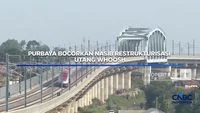
Jakarta, Indonesia’s commitment to upholding its promises and contractual obligations remains steadfast, a principle emphatically reiterated by Finance Minister Purbaya Yudhi Sadewa. This declaration follows a crucial meeting with Chinese Finance Minister Lan Fo’an, where discussions centered on the complex restructuring of debt related to the Jakarta-Bandung high-speed rail project, widely known as Whoosh. Minister Purbaya underscored that these negotiations are now complete, and the government is merely awaiting the opportune moment to make a public announcement regarding the final outcome. He further emphasized that the resolution of this restructuring is intrinsically linked to the long-term cooperative relationship between Indonesia and China, highlighting the strategic significance of the partnership beyond immediate financial considerations. While the details of the agreement remain under wraps, Minister Purbaya’s statements project confidence in the integrity of the process and Indonesia’s position on the global financial stage.
Background: The Whoosh High-Speed Rail Project
The Jakarta-Bandung high-speed rail project, officially named Kereta Cepat Jakarta-Bandung (KCJB) and rebranded as Whoosh (Waktu Hemat, Operasi Optimal, Sistem Hebat), stands as a monumental undertaking and a symbol of modern infrastructure development in Southeast Asia. Conceived as a flagship project, it aims to drastically cut travel time between Indonesia’s capital, Jakarta, and its third-largest city, Bandung, from approximately three hours by conventional train to around 40 minutes. The 142.3-kilometer line, featuring four stations, represents Indonesia’s ambitious leap into high-speed rail technology and is the first of its kind in the region.
The project’s genesis can be traced back to the mid-2010s, with intense competition between Chinese and Japanese consortia for the lucrative contract. Indonesia ultimately selected China’s proposal in 2015, primarily due to its offer of a business-to-business (B2B) scheme that initially promised no requirement for Indonesian state budget guarantees or loans. This approach was attractive to the Indonesian government, keen to avoid adding to its sovereign debt burden. The project was structured as a joint venture, PT Kereta Cepat Indonesia China (KCIC), comprising a consortium of Indonesian state-owned enterprises (SOEs) led by PT Kereta Api Indonesia (KAI) and China Railway International Co. Ltd. The primary financing was to come from the China Development Bank (CDB).
Beyond its immediate transportation benefits, Whoosh was envisioned as a catalyst for economic growth along its corridor, fostering new business opportunities, urban development, and increased tourism. It also cemented Indonesia’s role in China’s Belt and Road Initiative (BRI), positioning the archipelago as a key partner in Beijing’s ambitious global infrastructure strategy.
A Chronology of Challenges and Development
The journey of the Whoosh project has been marked by a series of significant milestones and considerable challenges, leading directly to the current debt restructuring discussions.
- 2015: Indonesia awards the high-speed rail project to China, opting for a B2B financing model without government guarantees. The initial estimated cost is approximately $6.07 billion.
- January 2016: Groundbreaking ceremony takes place, officially commencing construction.
- 2017-2019: Construction progresses, but initial estimates for land acquisition and various permits prove optimistic. Challenges related to geological conditions, particularly in mountainous terrain, and logistical hurdles begin to emerge.
- 2020: The COVID-19 pandemic severely impacts construction progress, causing delays and increasing operational costs. It exacerbates existing financial pressures.
- Late 2020 – Early 2021: Reports surface regarding significant cost overruns, with estimates suggesting an increase of around $1.2 billion, pushing the total project cost to approximately $7.27 billion. This substantial increase necessitates a re-evaluation of the financing structure.
- October 2021: Facing mounting financial strain and the inability of KCIC to cover the cost overruns solely through its B2B model, the Indonesian government, under Presidential Regulation No. 93 of 2021, approves the use of the state budget (APBN) to inject capital into the project. This marks a significant deviation from the initial "no government guarantee" promise. PT KAI, as the lead Indonesian SOE, receives state capital injection (PMN) to participate in the project’s financing.
- 2022: Discussions officially begin between Indonesia and China regarding the restructuring of the project’s debt, particularly concerning the financing of the cost overruns. Key points of contention include the interest rate for the additional loans, the loan tenure, and the grace period.
- October 2023: After several delays, the Whoosh high-speed rail officially begins commercial operations, inaugurated by President Joko Widodo. Despite its operational status, financial issues, particularly the unresolved debt restructuring, continue to loom.
- November 2023 – Present: Intensive negotiations continue between the Indonesian Ministry of Finance and its Chinese counterpart, culminating in the recent meeting between Minister Purbaya Yudhi Sadewa and Minister Lan Fo’an. The objective is to finalize the terms of the debt restructuring to ensure the project’s long-term financial viability and minimize the burden on the Indonesian state.
The Nuances of Debt Restructuring
The need for debt restructuring for the Whoosh project arose primarily from the unforeseen and substantial cost overruns. While initial estimates placed the project at $6.07 billion, the final figure ballooned to approximately $7.27 billion, representing an increase of around 20%. This additional $1.2 billion, coupled with delays and lower-than-projected initial ridership during the pandemic and early operational phase, placed immense pressure on KCIC’s financial health.
Debt restructuring typically involves renegotiating the terms of an existing loan to make it more manageable for the borrower. In this context, the discussions between Indonesia and China would have focused on several critical parameters:
- Interest Rates: A key point of negotiation would be the interest rate applied to the additional loans required to cover the cost overruns. Indonesia would naturally seek the lowest possible rate to reduce its long-term financial obligations. China, through the CDB, would aim for a rate that reflects market conditions and its risk assessment.
- Loan Tenure: Extending the repayment period (tenure) would reduce the annual principal and interest payments, making the debt more sustainable for KCIC and, by extension, the Indonesian government.
- Grace Period: A grace period allows for a temporary suspension of principal payments, providing immediate relief to the borrower. Indonesia would likely have sought a generous grace period to allow the project to ramp up its revenue generation.
- Currency Hedging: Given the loans are denominated in foreign currency (likely USD and/or CNY), currency fluctuations pose a risk. Discussions might have included mechanisms for currency hedging or risk-sharing to mitigate this exposure.
- Government Guarantees: While the initial promise was no government guarantee, the injection of state budget funds effectively changed this. The restructuring would solidify the nature and extent of government backing for the debt.
Indonesia’s objective throughout these negotiations has been multifaceted: to secure sustainable financial terms that do not excessively burden the state budget, to protect its sovereign credit rating, and to ensure the long-term operational success of Whoosh. For China, the goal would be to safeguard its significant investment in a flagship BRI project, maintain its reputation as a reliable development partner, and preserve the broader strategic relationship with Indonesia. The delicate balance lies in finding mutually agreeable terms that address both parties’ economic and strategic interests.
Indonesia’s Unwavering Commitment to Credibility
Minister Purbaya Yudhi Sadewa’s emphatic statement that Indonesia "always upholds its promises and agreed contracts to maintain state credibility" is not merely a diplomatic platitude. It reflects a core principle of Indonesia’s economic governance and its strategy for engaging with the international community. For a nation like Indonesia, which relies heavily on foreign direct investment (FDI) and international financial markets for its development agenda, maintaining a strong reputation for contractual integrity is paramount.
This commitment has several profound implications:
- Attracting Foreign Investment: A country known for honoring its agreements is more attractive to foreign investors. This reduces perceived risk, potentially lowering the cost of capital for future projects and encouraging more businesses to establish operations in Indonesia.
- Sovereign Credit Ratings: International credit rating agencies (such as Fitch, Moody’s, and S&P) closely monitor a nation’s adherence to financial obligations. Any perceived default or unilateral renegotiation of terms could lead to a downgrade, making it more expensive for Indonesia to borrow on international markets. Purbaya’s statement helps reinforce confidence in Indonesia’s fiscal prudence.
- International Standing: Adherence to international norms and contractual law strengthens a country’s standing on the global stage, fostering trust and facilitating diplomatic relations.
- Rule of Law: It underscores Indonesia’s commitment to the rule of law, both domestically and internationally, which is a fundamental requirement for sustainable economic development.
Indonesia has a history of navigating complex financial situations, including the Asian Financial Crisis of the late 1990s, where it undertook significant reforms and debt restructuring under the guidance of the IMF. The lessons learned from that period have instilled a deep-seated caution and commitment to fiscal discipline and the sanctity of contracts within the Ministry of Finance. The current Whoosh debt restructuring, while challenging, is being handled within this established framework, seeking a negotiated solution rather than a confrontational one.
Bilateral Economic Diplomacy and Strategic Partnership
The discussions surrounding the Whoosh debt restructuring cannot be viewed in isolation; they are intricately woven into the broader tapestry of Indonesia-China bilateral relations. China is Indonesia’s largest trading partner and a significant source of foreign investment. The Whoosh project itself is a cornerstone of China’s Belt and Road Initiative in Southeast Asia, intended to showcase Chinese infrastructure prowess and foster regional connectivity.
These negotiations, therefore, transcend mere financial figures. They are a test of the strategic partnership between the two nations. Both countries have a vested interest in a successful resolution:
- For Indonesia: It’s about securing fair terms for a crucial national infrastructure project while preserving its fiscal health and sovereignty. It’s also about managing public perception of a project that has drawn criticism over its escalating costs and government involvement.
- For China: It’s about demonstrating the viability and benefits of the BRI, protecting its substantial investment, and maintaining its diplomatic influence in a strategically important region. A smooth resolution reinforces China’s image as a reliable partner.
The diplomatic approach taken by both finance ministers, emphasizing long-term cooperation, suggests a mutual understanding of the high stakes involved. The willingness to engage in detailed negotiations rather than resorting to unilateral actions reflects a mature and pragmatic relationship, even when confronting difficult financial realities. The outcome will likely serve as a benchmark for future BRI projects in the region, influencing how other developing nations perceive the risks and rewards of large-scale infrastructure partnerships with China.
Implications for Future Infrastructure and Investment
The resolution of the Whoosh debt restructuring will have significant implications, not only for the project itself but also for Indonesia’s broader infrastructure development strategy and its attractiveness to foreign investors.
- Precedent Setting: The terms agreed upon will set a precedent for how Indonesia handles large-scale, foreign-funded infrastructure projects, especially those experiencing cost overruns. It will provide a clearer framework for risk allocation between the government, SOEs, and foreign partners.
- Enhanced Due Diligence: The experience is likely to lead to more rigorous due diligence, feasibility studies, and risk assessments for future projects, with a stronger emphasis on realistic cost projections, land acquisition challenges, and environmental impact.
- Investment Climate: A successful and transparent resolution will bolster investor confidence in Indonesia’s commitment to contractual obligations and its capacity to manage complex financial arrangements. This could encourage further foreign investment in other priority sectors. Conversely, a prolonged or contentious dispute could deter potential investors.
- Fiscal Prudence: The need for state budget intervention in Whoosh highlights the delicate balance between accelerating infrastructure development and maintaining fiscal prudence. Future projects may face stricter scrutiny regarding government guarantees and potential state budget liabilities.
- Bilateral Project Model: The experience will refine the model for Indonesia-China cooperation on large infrastructure projects, potentially leading to more robust joint risk assessment and management mechanisms from the outset.
- Regional Impact: As the first high-speed rail in Southeast Asia and a prominent BRI project, the Whoosh experience and its debt restructuring resolution will be closely watched by other ASEAN nations contemplating similar large-scale infrastructure initiatives with international partners.
Anticipating the Final Announcement
Minister Purbaya’s indication that the government is "just waiting for the right time" to announce the final results signals that the core negotiations are concluded, and the agreement is largely in place. The delay in public disclosure could be attributed to several factors: the need for internal governmental approvals from both sides, the finalization of legal documentation, or a strategic timing decision to maximize positive impact or coincide with other significant events.
When the announcement is made, stakeholders will be scrutinizing the details for several key aspects:
- Interest Rate: The exact interest rate agreed upon for the additional loans will be a critical indicator of the financial burden on Indonesia.
- Loan Term and Grace Period: The length of the repayment period and any grace period will determine the immediate and long-term cash flow implications for KCIC and the Indonesian state.
- Government Guarantees: Clarity on the extent and nature of any explicit or implicit government guarantees will be important for assessing sovereign risk.
- Transparency: The level of detail provided to the public will reflect the government’s commitment to transparency regarding such a high-profile and costly project.
- Impact on KCIC’s Viability: The terms should ideally ensure the long-term financial viability of KCIC, allowing it to cover operational costs and debt servicing through passenger revenue.
- Future Financial Support: Any provisions for potential future financial support or contingency plans will also be of interest.
The resolution of the Whoosh debt restructuring is a pivotal moment for Indonesia. It not only addresses the immediate financial challenges of a signature infrastructure project but also reinforces the nation’s commitment to sound financial management and its standing as a credible partner in international cooperation. The outcome will undoubtedly shape the narrative around large-scale foreign-funded projects in Indonesia for years to come.