Hadi Wijaya
The discourse surrounding the choice to remain childless, commonly referred to as the childfree lifestyle, has ignited a profound debate across Indonesia’s social media landscape and broader society. This controversy gained significant momentum following public statements made by influencer and YouTuber Gita Savitri Devi, known as Gitasav, who characterized children as a financial and psychological burden. In a direct response to this narrative, Rr. Sarwi Peni Wulandaru, a prominent business coach and community leader popularly known as Coach Wulan, has stepped forward to offer a counter-perspective based on her personal experience as a mother of ten children and a successful professional.
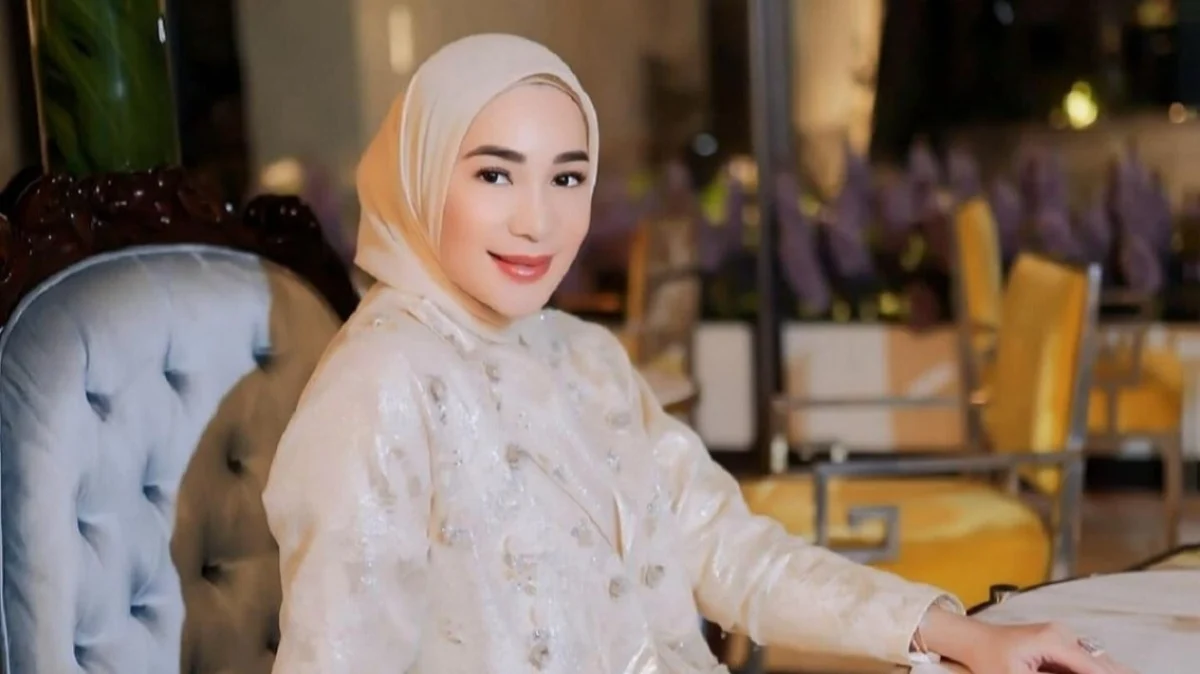
At 48 years of age, Coach Wulan represents a living antithesis to the claim that motherhood inherently restricts a woman’s personal growth or professional trajectory. With a household comprising ten children—the eldest being 18 and the youngest only a year old—she continues to maintain a rigorous schedule involving business consultancy, organizational leadership, and community activism. Speaking in Yogyakarta, Coach Wulan emphasized that her large family has not necessitated a retreat from public life; rather, she manages her diverse responsibilities without the assistance of domestic workers, a feat she attributes to disciplined management and a specific ideological framework.
The Genesis of the Childfree Controversy in Indonesia
The current national conversation was largely catalyzed by Gitasav’s assertions on social media, where she suggested that not having children is a "natural anti-aging" secret and that the absence of children allows for a more stress-free, affluent lifestyle. These comments resonated with a segment of the millennial and Gen Z populations who are increasingly concerned about the rising cost of living, environmental sustainability, and the mental health demands of parenting. However, the remarks also drew sharp criticism from various sectors of Indonesian society, including religious leaders, medical professionals, and fellow influencers, who viewed the comments as a dismissal of traditional family values and the biological realities of aging.
The backlash highlights a growing ideological rift in Indonesia between Western-influenced individualistic philosophies and the communal, faith-based values that have traditionally defined the Indonesian family unit. While the childfree movement is gaining visibility globally, its reception in Indonesia remains contentious due to the country’s deep-rooted cultural emphasis on lineage and the religious doctrine that views children as a divine blessing.
Challenging the "Burden" Narrative with Professionalism
Coach Wulan’s rebuttal focuses on dismantling the perception that children are a limitation to a woman’s intellectual or career development. "I have 10 children, and I am still active in business, organizations, and various activities. I do not have a maid," she stated during an interview on February 11, 2023. Her involvement in prestigious organizations such as the Association of Indonesian Muslim Intellectuals (ICMI), the Indonesian Chamber of Commerce and Industry (Kadin), and the Sharia Economic Society (MES) of the Special Region of Yogyakarta serves as evidence that maternal duties and professional excellence can coexist.
From a business coaching perspective, Wulan argues that the skills required to manage a large household—such as time management, conflict resolution, and financial planning—are the same skills required to lead a successful enterprise. She posits that instead of being a burden, children can serve as a "heart-soother" (penyejuk hati) and a source of motivation that drives a parent to achieve more. She advocates for the belief that "many children bring many blessings (rezeki), much happiness, and many prayers," a sentiment that aligns with the traditional Indonesian proverb "banyak anak, banyak rejeki."
The Spiritual and Theological Framework of Motherhood
Central to Coach Wulan’s perspective is the Islamic view of the mother’s role, which she describes as one of the most noble positions a human can occupy. She referenced the prophetic tradition (Hadith) where the Prophet Muhammad emphasized the honor due to a mother three times over that of a father. This elevation of the mother’s status is not merely symbolic but is rooted in the physical and emotional sacrifices inherent in childbearing and upbringing.
"Why is ‘your mother’ mentioned three times? Because the Prophet truly understood that a mother’s journey is full of struggle," Wulan explained. She categorized the hardships of pregnancy, the life-threatening nature of childbirth—which in Islamic tradition is likened to "jihad" or a holy struggle—and the physical and mental demands of breastfeeding as spiritual milestones rather than reasons for avoidance. By framing these challenges as a path to spiritual elevation, she seeks to shift the narrative from one of "burden" to one of "honor and sacrifice."
Furthermore, she addressed the financial anxieties associated with large families. In the Islamic worldview, the concept of rizq (provision) is not solely dependent on human effort but is guaranteed by the Creator for every living soul. Coach Wulan argued that a fear of poverty or financial instability should not be the primary driver for choosing a childfree life, as this suggests a lack of faith in divine providence.
Demographic Context and Economic Implications
The debate between Coach Wulan and the childfree movement occurs against a backdrop of shifting demographic trends in Indonesia. Data from the Indonesian Central Bureau of Statistics (BPS) indicates a steady decline in the Total Fertility Rate (TFR) over the past several decades. In the 1970s, the TFR was approximately 5.6 children per woman; by 2022, that number had dropped to 2.1, which is the "replacement level" fertility required to maintain a stable population.
While Indonesia is currently benefiting from a "demographic bonus"—a period where the working-age population outnumbers dependents—social scientists warn that a rapid shift toward childfree lifestyles could lead to a "demographic cliff" similar to those faced by Japan, South Korea, and parts of Western Europe. These nations are currently struggling with aging populations, labor shortages, and shrinking tax bases, which place immense pressure on social security systems.
Economists note that while an individual might feel more financially secure without children in the short term, a societal shift toward childlessness can lead to long-term economic stagnation. Coach Wulan’s stance reflects a concern for the continuity of the "demographic bonus," suggesting that the next generation is not a burden but the very human capital required for Indonesia’s future prosperity.
The Role of Family and Media Literacy
In an era dominated by social media influencers, Coach Wulan issued a cautionary message to the younger generation regarding the consumption of digital content. She urged millennials and Gen Z to be more discerning and not to accept the views of influencers "raw" or without critical reflection. She pointed out that values regarding what is considered "good" or "bad" are often shaped by one’s environment, including family, religion, and the media.
"If young people begin to orient their obsessions toward the afterlife and their values toward obedience, and if their sources are the Quran and Hadith, then, God willing, their path will be smooth," she said. She emphasized that the family unit is the first line of defense in instilling values that can withstand external pressures or trends that deviate from religious and cultural norms.
Broader Societal Reactions and Analysis
The response to Coach Wulan’s statements has been varied, reflecting the complexity of the issue. Supporters of her view praise her for being a role model of the "modern Muslim woman" who balances traditional roles with professional ambition. Many commenters on social media platforms noted that her ability to raise ten children without domestic help is a testament to extraordinary resilience and organizational skill.
Conversely, some critics and advocates of the childfree movement argue that Wulan’s experience is an outlier and may not be replicable for everyone. They point out that factors such as mental health, genetic predispositions, and varying levels of economic support play a significant role in one’s capacity to parent. However, Wulan’s primary argument remains that the choice should be informed by a desire for growth and spiritual fulfillment rather than a fear of responsibility.
The debate also touches upon the concept of "feminism" in an Indonesian context. While Western feminism often emphasizes individual autonomy and the right to choose a life free from traditional domesticity, "Islamic feminism"—as interpreted by figures like Coach Wulan—emphasizes the empowerment of women through their roles as mothers and educators of the next generation. In this view, a woman’s value is not diminished by her domestic roles but is enhanced by her ability to contribute to both her family and her society.
Conclusion: A Call for Lifelong Learning
As the conversation continues to evolve, Coach Wulan remains steadfast in her message to women across Indonesia: do not limit yourselves. She believes that being a mother and a wife should never be seen as a barrier to increasing one’s value or pursuing knowledge. Her life serves as a case study in the possibility of integrating large-scale family life with a meaningful professional presence.
The clash between the childfree narrative and the "many children, many blessings" philosophy is more than just a social media trend; it is a fundamental discussion about the future of the Indonesian family and the values that will guide the nation’s next generation. For Coach Wulan, the answer lies in returning to spiritual foundations while embracing the challenges of the modern world with confidence and faith. By centering her life on the principles of the Quran and Hadith, she argues that women can find a balance that provides success not only in this world but also in the hereafter.