Azin Asro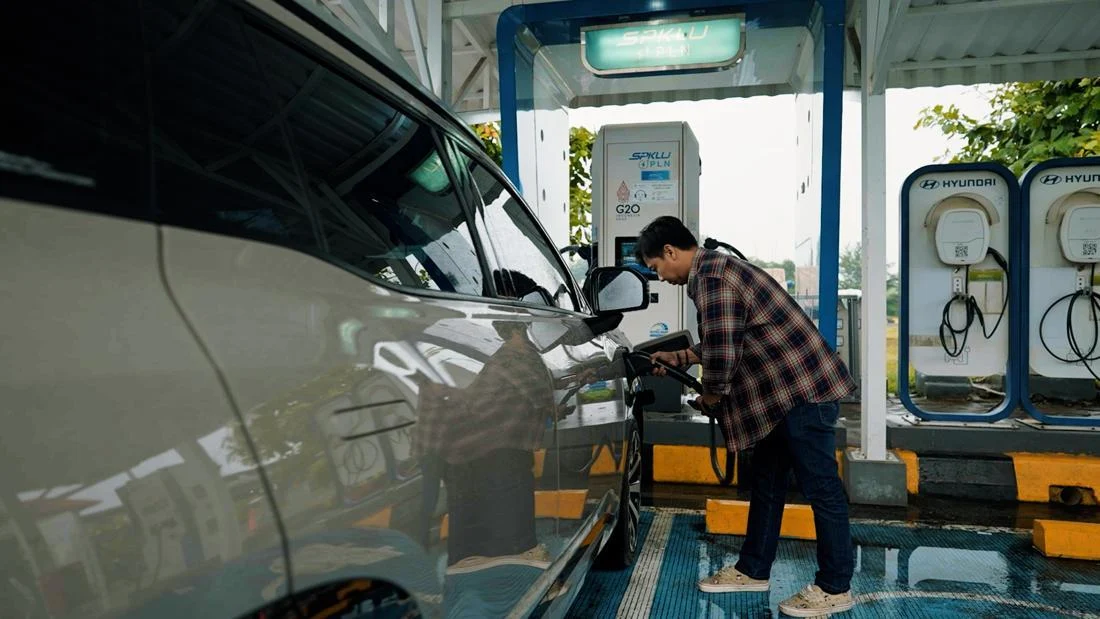
The Minister of Home Affairs, Tito Karnavian, has officially issued a high-priority circular letter addressed to all governors across Indonesia, instructing them to maintain and enforce tax exemptions for battery-based electric vehicles (EVs). This strategic move is designed to ensure that the transition toward sustainable transportation remains on track, despite recent regulatory shifts that altered the classification of electric vehicles in provincial taxation frameworks. The circular, numbered 900.1.13.1/3764/SJ, specifically targets the Motor Vehicle Tax (PKB) and the Motor Vehicle Ownership Transfer Fee (BBNKB), directing local governments to provide 100 percent fiscal incentives for owners of battery electric vehicles (BEVs).
The issuance of this circular serves as a critical clarification following the enactment of Minister of Home Affairs Regulation (Permendagri) Number 11 of 2026. Under this new regulation, electric vehicles were no longer explicitly listed as objects automatically excluded from regional taxes. Instead, the regulation shifted the authority to provincial governments, granting them the legal standing to provide incentives in the form of tax reductions or full exemptions. To prevent a fragmented tax landscape where some provinces might choose to levy taxes on EVs while others do not, Minister Karnavian’s circular establishes a unified national policy, ensuring that the zero-percent tax incentive remains a standard across the archipelago.
The Regulatory Framework and Legal Foundations
The directive issued by the Ministry of Home Affairs is not an isolated policy but a vital component of a broader legal hierarchy aimed at positioning Indonesia as a global leader in the electric vehicle ecosystem. The circular acts as a follow-up to Presidential Regulation (Perpres) Number 79 of 2023, which amended the landmark Perpres Number 55 of 2019 regarding the Acceleration of the Battery Electric Vehicle Program for Road Transportation. These presidential decrees outline Indonesia’s commitment to reducing carbon emissions and decreasing the nation’s reliance on imported fossil fuels by incentivizing the domestic adoption and production of EVs.
The transition from Permendagri Number 6 of 2023 to Permendagri Number 11 of 2026 created a momentary period of uncertainty for consumers and industry players. While the previous regulation explicitly stated that EVs were not taxable objects, the 2026 regulation adopted a more nuanced approach by categorizing them under the jurisdiction of local fiscal incentives. By signing the circular on April 22, 2026, Minister Tito Karnavian effectively bridged this regulatory gap, mandating that the "authority" to grant incentives must be exercised as an "obligation" to support national green energy goals.
Chronology of Electric Vehicle Taxation Policy in Indonesia
The evolution of EV taxation in Indonesia reflects a progressive shift from early-stage pilot programs to a comprehensive national strategy. In 2019, the government laid the groundwork with Perpres 55/2019, which identified fiscal incentives as the primary driver for market penetration. At that time, many local governments were hesitant to waive taxes due to concerns over Regional Original Income (PAD), as vehicle taxes represent one of the largest revenue streams for provincial budgets.
By 2023, the central government tightened the integration of these policies. Permendagri Number 6 of 2023 was a significant milestone, as it mandated a 0 percent PKB and BBNKB rate for electric vehicles, effectively removing them from the tax rolls. However, as the legal landscape evolved with the New Omnibus Law on Financial Relations between the Central Government and Regional Governments (UU HKPD), tax structures were redefined. This led to the creation of Permendagri Number 11 of 2026, which sought to harmonize regional tax codes with the new law.
The April 2026 circular letter represents the latest stage in this chronology. It serves as an administrative safeguard to ensure that the bureaucratic changes introduced by the 2026 regulation do not result in a sudden price hike for EV consumers. Without this circular, there was a risk that provincial revenue offices (Samsat) would begin charging the standard 10 percent to 12.5 percent BBNKB and annual PKB on electric cars and motorcycles, which would have significantly dampened consumer demand.
Supporting Data: The Economic and Environmental Impact
The decision to maintain tax exemptions is backed by compelling data regarding the growth of the EV sector in Indonesia. According to data from the Association of Indonesian Automotive Industries (Gaikindo), the implementation of zero-percent tax incentives between 2022 and 2025 led to a 400 percent increase in the adoption of electric passenger vehicles. In the first quarter of 2026 alone, EV sales reached record highs, driven largely by the affordability afforded by the absence of BBNKB, which can save a consumer anywhere from IDR 30 million to IDR 100 million depending on the vehicle’s price point.
Furthermore, the Ministry of Energy and Mineral Resources (ESDM) notes that for every 100,000 internal combustion engine (ICE) vehicles replaced by BEVs, the nation saves approximately 150,000 kiloliters of fuel annually and reduces CO2 emissions by nearly 300,000 tons. The fiscal "loss" incurred by local governments through waived taxes is viewed by the central government as a long-term investment. The reduction in fuel subsidies—which have historically burdened the national state budget (APBN)—far outweighs the foregone regional tax revenue.
Indonesia’s massive nickel reserves also play a role in this fiscal strategy. By stimulating domestic demand through tax exemptions, the government encourages global manufacturers like Hyundai, Wuling, and BYD to establish local assembly plants. This, in turn, creates high-value jobs and fosters a domestic battery supply chain, ultimately contributing more to the national GDP than individual vehicle taxes would.
Stakeholder Reactions and Industry Sentiment
The automotive industry has responded to the Minister’s circular with overwhelming positivity. Representatives from the Indonesian Electric Vehicle Industry Association (Periklindo) stated that policy consistency is the most critical factor for investors. "The circular provides the legal certainty that manufacturers and consumers need. If tax exemptions were revoked, the price of electric vehicles would immediately jump by 10 to 15 percent, making them less competitive against traditional vehicles," a spokesperson for the association noted.
Environmental advocacy groups have also lauded the move, though they emphasize that tax exemptions are only one part of the puzzle. While the 0 percent PKB and BBNKB are essential for the "purchase" phase, these groups argue that the government must continue to expand the "usage" phase incentives, such as the expansion of Public Electric Vehicle Charging Stations (SPKLU) and dedicated lanes for EVs in congested urban areas like Jakarta and Surabaya.
On the regional level, some provincial governors have expressed the need for a compensatory mechanism. Since PKB and BBNKB are vital for infrastructure maintenance and regional development, some local leaders have requested that the central government provide "incentive grants" or a larger share of the General Allocation Fund (DAU) to offset the revenue lost from the growing fleet of tax-exempt electric vehicles.
Analysis of Implications: Local vs. National Interests
The instruction from Minister Tito Karnavian highlights a classic tension in Indonesian governance: the balance between regional autonomy and national strategic priorities. Under the decentralization framework, provinces have the right to manage their own revenue sources. However, the climate crisis and the global shift toward green energy are classified as national interests that transcend regional boundaries.
By using a circular letter (Surat Edaran) rather than a mere suggestion, the Ministry of Home Affairs is exercising its supervisory role over regional heads. This ensures that a resident in East Java enjoys the same fiscal benefits when buying an EV as a resident in West Java or North Sulawesi. This uniformity is essential for the secondary market as well; if taxes varied wildly between provinces, it would create a distorted market for used electric vehicles, complicating ownership transfers and devaluing the assets.
From a socio-economic perspective, the 0 percent tax policy helps bridge the price gap between EVs and ICE vehicles. Currently, the "green premium"—the extra cost of buying an electric car compared to a similar gasoline car—remains a barrier for the middle class. The removal of registration taxes and annual ownership taxes acts as a powerful equalizer, making the total cost of ownership (TCO) for an EV significantly lower over a five-year period.
Future Outlook and the Path to Net Zero 2060
Looking ahead, the Ministry of Home Affairs circular is expected to remain the guiding document for provincial tax offices for the foreseeable future. As Indonesia moves closer to its goal of reaching Net Zero Emissions by 2060, the reliance on fiscal incentives will likely transition from "broad-based exemptions" to "targeted support." For now, the priority remains market saturation.
The government is also exploring the implementation of "Congestion Pricing" and "Low Emission Zones" (LEZ) in major cities, where EVs would be exempt from entry fees that gasoline vehicles must pay. When combined with the tax exemptions mandated by Minister Karnavian, these policies create a comprehensive "carrot and stick" approach that makes EV ownership not just an environmental choice, but the most logical financial choice for Indonesian citizens.
In conclusion, the circular letter issued by Minister Tito Karnavian is a decisive intervention that reinforces Indonesia’s commitment to the electric vehicle revolution. By mandating that governors continue to provide 100 percent tax exemptions for BEVs, the Ministry has removed a significant potential roadblock to adoption. This policy ensures that the momentum gained in the past five years is not lost and that Indonesia remains on a steady course toward a cleaner, more sustainable, and technologically advanced transportation future. The success of this directive will now depend on the swift implementation by regional revenue agencies and the continued cooperation between central and local governments to balance fiscal health with environmental necessity.