
 Nila Kartika Wati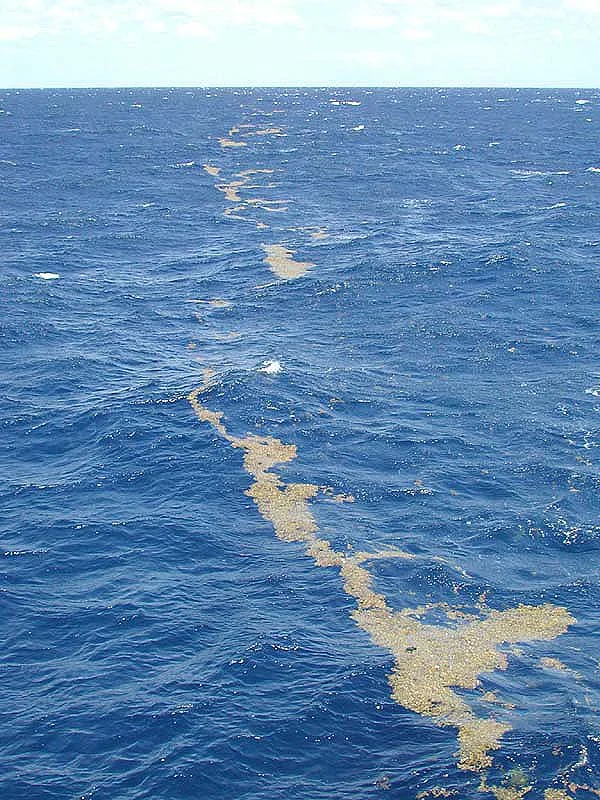
The global geography of our oceans is typically defined by the tactile presence of coastlines, peninsulas, and continental shelves. From the Java Sea, cradled by the islands of Indonesia, to the Mediterranean, enclosed by the continents of Europe, Africa, and Asia, most marine bodies are bounded by land. Even vast stretches like the Caribbean Sea rely on island arcs and continental masses to delineate their borders. Yet, in the heart of the North Atlantic, there exists a profound anomaly: the Sargasso Sea, a massive, swirling expanse of water that lacks a single mile of coastline.
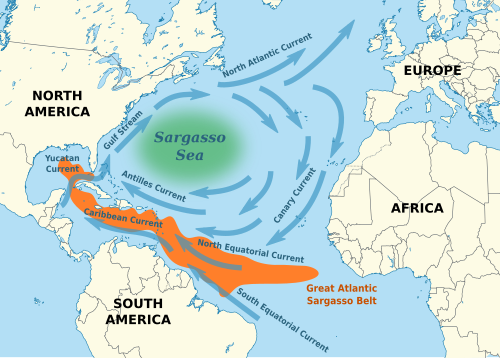
Defined not by land, but by the relentless rotation of four major ocean currents, the Sargasso Sea represents a unique ecological niche. It stretches approximately 1,100 kilometers in width and 3,200 kilometers in length, centered around the Bermuda archipelago. Its boundaries are dictated by the Gulf Stream to the west, the North Atlantic Current to the north, the Canary Current to the east, and the North Equatorial Current to the south. Driven by the Earth’s rotation and prevailing trade winds, these currents form a clockwise-rotating subtropical gyre, trapping water in a region of relative calm, high salinity, and extraordinary clarity. Because these currents are dynamic, the physical boundaries of this "sea without shores" are constantly shifting, rendering it a transient, fluid geographic entity.
A Historical Legacy of Exploration and Misconception
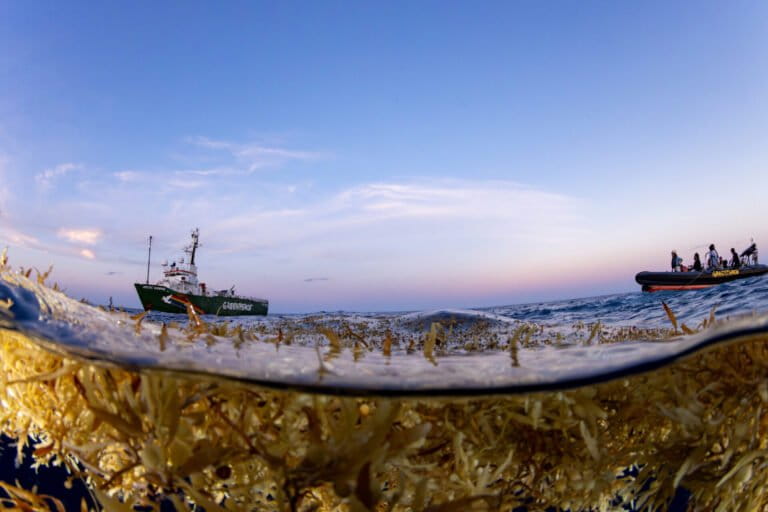
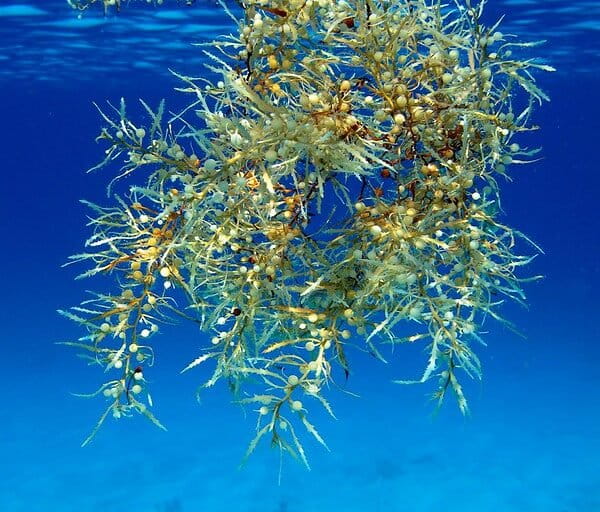
The Sargasso Sea earned its name from the Sargassum genus, a type of brown macroalgae that blankets its surface. Unlike typical seaweed that anchors itself to the ocean floor, Sargassum natans and Sargassum fluitans are holopelagic, meaning they spend their entire life cycle adrift. They remain buoyant through tiny, air-filled, grape-like bladders—a feature that led Portuguese sailors to name the plant sargaço.
The mystery of this region has captivated explorers for centuries. The first recorded European encounter occurred during Christopher Columbus’s maiden voyage in 1492. Logs from the expedition note the crew’s growing alarm at the sight of vast, tangled mats of vegetation, fearing they had reached shallow waters or were approaching a landmass that would trap their vessels. Columbus’s journals document the anxiety of the crew, who worried the ship would become permanently entangled. However, history proved these fears unfounded; the mats of algae, while visually dense, were never thick enough to obstruct the passage of a wooden caravel.
An Ecological Sanctuary in the Open Ocean
While the Sargasso Sea is notoriously nutrient-poor—a characteristic that contributes to its crystalline blue appearance—the Sargassum mats serve as vital, floating "oases." These mats provide shelter, hunting grounds, and nurseries for a staggering array of marine life.
Researchers have identified over 100 species of invertebrates that call these floating forests home, including specialized crabs, shrimp, and snails. The Sargassum frogfish (Histrio histrio) is perhaps the most remarkable resident; through evolutionary adaptation, it has developed colors and textures that render it virtually invisible within the algae.
Furthermore, the region is a critical nursery for migratory species. The mahi-mahi (Coryphaena hippurus) and the endangered loggerhead sea turtle (Caretta caretta) rely on these mats during their early developmental stages. For decades, the period between the hatching of loggerhead turtles on Florida beaches and their return to coastal waters remained a mystery to scientists, often referred to as the "lost years." Research now confirms that these juvenile turtles spend these formative years within the safety of the Sargasso’s drifting algae, finding both protection and nourishment.
The Great Eel Migration: A Biological Enigma
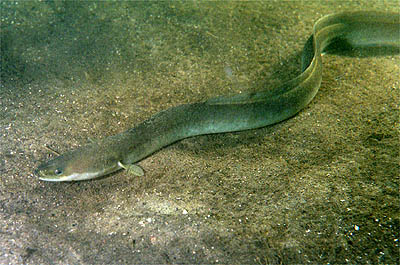
Perhaps the most compelling mystery of the Sargasso Sea is its role in the life cycle of the European eel (Anguilla anguilla) and the American eel (Anguilla rostrata). In the early 20th century, Danish biologist Johannes Schmidt hypothesized that the Sargasso was the sole spawning ground for these species. After years of tracking larvae, he found that the smallest, most underdeveloped specimens were consistently located in this region.
The life cycle is one of nature’s most grueling migrations. Adult eels travel thousands of kilometers from the river systems of Europe and North America to reach the Sargasso, where they spawn and subsequently perish. The resulting larvae, transparent and willow-leaf-shaped, are carried by the Gulf Stream and other currents back to the continental coasts—a journey that can take more than a year. The European eel, now classified as Critically Endangered by the IUCN, faces immense pressure from habitat fragmentation, overfishing of "glass eels," and pollution, making the protection of their spawning grounds a matter of international urgency.
Environmental Stressors: Warming, Acidification, and Pollution
The Sargasso Sea is one of the most meticulously monitored regions of the open ocean. Since 1954, the Hydrostation S program has provided consistent data on water temperature, salinity, and oxygen levels. The more recent Bermuda Atlantic Time-series Study (BATS), established in 1988, has allowed for a deep analysis of environmental trends.
Data spanning the last four decades reveals a concerning trajectory. Since 1983, the surface temperature of the Sargasso has risen by approximately 1 degree Celsius. Simultaneously, increased atmospheric carbon dioxide levels have led to ocean acidification, lowering the pH of the water. This chemical shift poses a significant threat to calcifying organisms—such as pteropods and certain plankton species—that rely on stable pH levels to build their calcium carbonate shells.
Furthermore, the same gyre that defines the region’s borders acts as a vacuum for marine debris. The North Atlantic subtropical gyre collects vast quantities of microplastics from the surrounding oceans. Surveys have recorded plastic densities exceeding 200,000 pieces per square kilometer. These fragments are often indistinguishable from the natural detritus of the Sargassum mats, leading to ingestion by juvenile turtles and fish. The cumulative impact of climate change, acidification, and plastic pollution threatens to degrade this essential ecological corridor.
Navigating the Legal Frontier: The BBNJ Agreement
Managing and protecting the Sargasso Sea presents a unique geopolitical challenge. Because the vast majority of the region lies in international waters—outside the Exclusive Economic Zone (EEZ) of Bermuda—it lacks a single sovereign guardian.
In 2014, a coalition of nations, including Bermuda, the Azores, Monaco, the United Kingdom, and the United States, signed the Hamilton Declaration. This established the Sargasso Sea Commission, an advisory body tasked with raising awareness and advocating for the protection of the ecosystem. While the Commission lacks formal regulatory power, it has effectively leveraged international scientific consensus to influence global fishing and shipping policies.
A major breakthrough occurred in January 2026, with the full implementation of the Biodiversity Beyond National Jurisdiction (BBNJ) treaty. This landmark agreement provides a legal framework for establishing Marine Protected Areas (MPAs) in the high seas. Under this treaty, member states can now formally propose the Sargasso Sea as a protected zone, subject to approval by a conference of parties. This shift from soft-law advocacy to binding international regulation marks a new chapter for the Sargasso, offering a long-awaited mechanism to shield this "sea without shores" from the mounting pressures of the Anthropocene. As climate change continues to alter the ocean’s chemistry, the international community’s ability to coordinate under the BBNJ framework may determine whether this unique, floating sanctuary survives for future generations.









