Nila Kartika Wati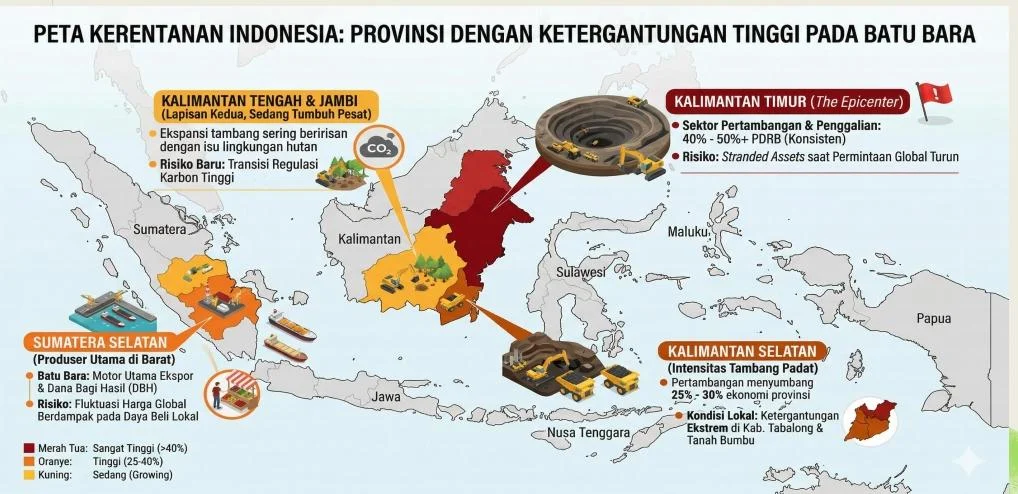
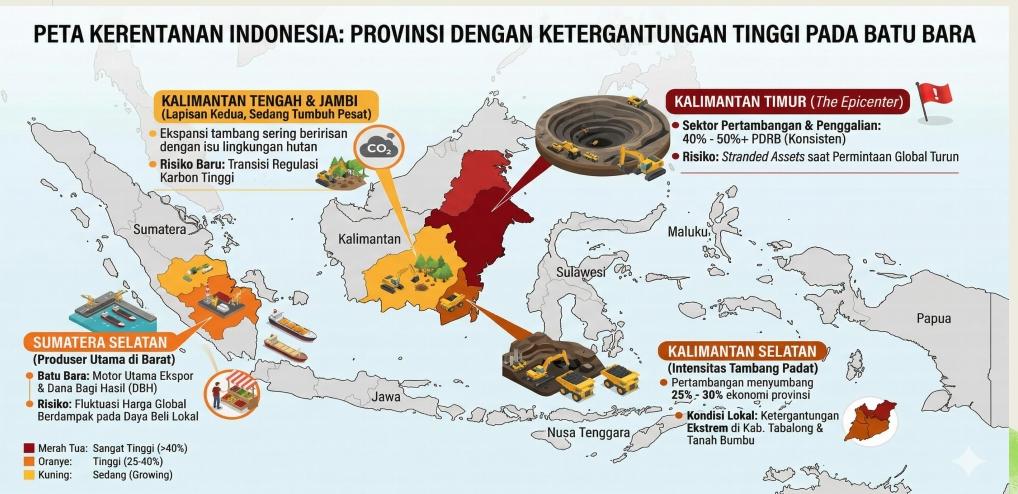
The high level of dependency on the coal sector has emerged as a formidable challenge to the economic sustainability of Indonesia’s primary mining regions, particularly as global market dynamics shift toward a low-carbon future. In recent discussions held during the Pesta Media 2026, experts and policy analysts emphasized that coal-producing regions must urgently diversify their economic bases to mitigate the risks associated with the global energy transition. The reliance on a single commodity, while historically profitable, now poses a systemic threat to the long-term stability of local budgets, employment rates, and social cohesion in provinces that have long served as the backbone of Indonesia’s energy production.
Martha Jesica Solomasi Mendrofa, the Manager of Policy Research and Just Transition at the Institute for Essential Services Reform (IESR), highlighted that the economic survival of regions such as Paser in East Kalimantan and Muara Enim in South Sumatra is increasingly precarious. As international markets pivot away from fossil fuels and toward renewable energy sources, these regions face a "transition risk" that could lead to stranded assets and fiscal insolvency if alternative industries are not developed with urgency. According to Mendrofa, the transformation of these local economies must be directed toward creating competitive, interconnected, and diversified sectors that can thrive independently of the coal extraction industry.
The Fiscal Reality of Coal Dependency in Paser and Muara Enim
The depth of this dependency is quantified in the IESR research report titled "Just Transition in Indonesia’s Coal Producing Regions: Case Studies of Paser and Muara Enim." The study reveals a stark fiscal reality: coal mining royalties and taxes, distributed through the Revenue Sharing Fund (Dana Bagi Hasil or DBH), constitute a massive portion of local government budgets (APBD). In Muara Enim, these funds account for approximately 20% of the regional budget, while in Paser, the figure is even higher, averaging 27%.
This fiscal structure creates a "resource trap" where local governments are incentivized to maintain high levels of coal production to fund public services, infrastructure, and administrative costs. However, this reliance leaves the regions extremely vulnerable to fluctuations in global coal prices. When international demand drops or prices plummet, the resulting budget shortfalls can lead to the suspension of critical development projects and a decline in public service quality. Mendrofa argued that simply finding a "replacement" sector is insufficient; instead, regions must build a synergy between various sectors to create a robust and resilient local value chain.
The challenge of transitioning is further complicated by a lack of preparedness. In many coal-producing areas, the infrastructure, workforce skills, and regulatory frameworks are almost exclusively geared toward mining. This lack of readiness for alternative economic activities creates a "readiness gap" that threatens to leave thousands of workers unemployed as mines eventually close or reduce operations. Furthermore, the social and economic inequalities that have persisted for decades in these regions could be exacerbated if the transition is not managed inclusively.
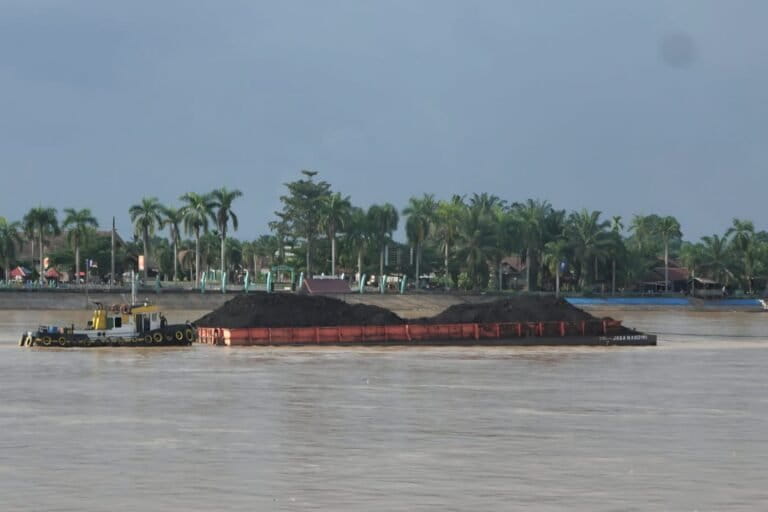
The Policy Paradox: Net Zero Ambitions vs. Fossil Fuel Reality
The transition away from coal is not merely a regional issue but a national one, characterized by what experts call a "policy paradox." Aryanto Nugroho, the National Coordinator of Publish What You Pay (PWYP) Indonesia, noted that while the central government has articulated a vision for achieving Net Zero Emissions (NZE) by 2050, several current policies appear to contradict this goal.
One primary example of this contradiction is the National Electricity General Plan (RUKN), specifically Ministry of Energy and Mineral Resources (ESDM) Decree No. 314.K/TL.01/MEM.L/2024, issued by Minister Bahlil Lahadalia. The document indicates that Indonesia’s national power grid will continue to rely on fossil-fuel-based energy, including coal, until at least 2060. This timeline extends well beyond the targets suggested by international climate agreements and the government’s own NZE rhetoric.
Furthermore, the target for the renewable energy mix in Indonesia has recently been revised downward. Initially, the government aimed for renewables to constitute 23% of the energy mix by 2025. However, under the Draft Government Regulation on National Energy Policy (RPP KEN), this target has been adjusted to a range of 17% to 19%. This scaling back of ambitions sends mixed signals to investors and local governments, potentially stalling the momentum needed for a genuine energy transition.
The economic weight of coal remains a significant barrier to change. Non-tax state revenue (PNBP) from the mineral and coal sectors continues to dominate the national treasury, contributing roughly 52.84% of total export value. On the domestic front, coal-fired power plants (PLTU) still dominate approximately 85% of the national electricity generation capacity. This massive installed base represents significant sunk costs and political interests that make the "early retirement" of coal plants a complex and expensive endeavor.
Social Implications and the Necessity of a Just Transition
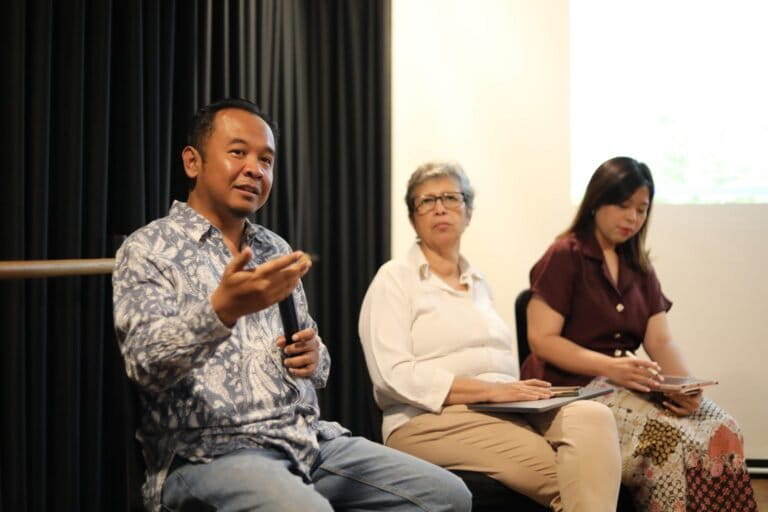
Beyond the fiscal and technical aspects of energy, the human element remains the most critical component of the transition. Suraya Abdulwahab Afiff, an anthropologist from the University of Indonesia, emphasized that any solution focused solely on reducing carbon emissions without addressing social and economic inequality is doomed to fail. A "Just Transition" requires the active involvement of all stakeholders, including laborers, local communities, consumers, and the broader public.
In many coal-rich regions, the interests of capital owners—who often seek to maintain the status quo to protect their investments—tend to outweigh the voices of the local populace. This power imbalance slows the process of change and prevents the formation of a shared vision for the future. Afiff noted that without inclusive planning, the transition could lead to "green structural adjustment," where the costs of the transition are disproportionately borne by the poor and the working class, while the benefits of new green industries are captured by the same elite groups that controlled the fossil fuel era.
The risks of a poorly managed transition include:
- Mass Unemployment: Tens of thousands of direct and indirect workers in the coal supply chain face job insecurity.
- Economic Migration: As local economies collapse, a "brain drain" may occur as skilled workers leave for other regions, further impoverishing the original mining towns.
- Social Unrest: The loss of livelihoods combined with existing inequalities can lead to increased social tension and instability.
Global Context and Market Volatility
Indonesia’s coal sector does not operate in a vacuum. It is heavily influenced by the policies of major importers like China and India, both of which are aggressively expanding their own domestic renewable energy capacities. As these nations reduce their reliance on imported coal to meet their climate commitments, the demand for Indonesian coal is expected to face a structural decline.
The volatility of global commodity prices also poses a systemic risk. While coal prices reached record highs following the geopolitical shifts in 2022, the long-term trend is one of uncertainty. For regions like Paser and Muara Enim, relying on a volatile commodity for 20-27% of their budget is a high-stakes gamble. Analysts suggest that the "boom and bust" cycles of the mining industry prevent the development of stable, long-term economic planning, as local governments often prioritize short-term spending during boom years rather than investing in sustainable alternatives.
Strategies for Economic Transformation and Diversification
To navigate these challenges, Aryanto Nugroho argues that transformation must go beyond simply reducing coal production. It must involve the active creation of new growth engines. This includes:
1. Developing Renewable Energy Infrastructure
Regions with a history of energy production are well-positioned to pivot toward renewable energy. This could involve repurposing former mining lands for solar farms or utilizing local geographical features for wind and hydro projects. This would not only provide clean energy but also create new technical jobs for the local workforce.
2. Investing in Sustainable Agriculture and Tourism
Many coal-producing regions possess significant potential in sectors that have been neglected due to the dominance of mining. Diversifying into high-value sustainable agriculture, agro-industry, and eco-tourism can provide more stable and environmentally friendly sources of income.
3. Implementing a "People and Planet Centered" Approach
Policies must be designed to protect the environment while simultaneously fulfilling the rights of workers and communities. This includes retraining programs for coal miners, social safety nets for those affected by plant closures, and ensuring that local communities have an equity stake in new energy projects.
4. Strengthening Private Sector Involvement
The burden of transition cannot rest solely on the government. Private energy companies, many of which have profited immensely from coal, must be incentivized—or mandated—to reinvest a portion of their earnings into renewable energy and local economic diversification projects.
Conclusion: The Path Toward a Resilient Future
The transition from coal dependency to a diversified economy is perhaps the greatest challenge facing Indonesia’s resource-rich provinces in the 21st century. The data from IESR and the insights from PWYP Indonesia underscore a critical message: the window for proactive planning is closing. Without a clear, inclusive, and well-funded strategy for transformation, regions like Paser and Muara Enim risk being left behind in the global shift toward a green economy.
The "paradox" of Indonesian energy policy—balancing the immediate fiscal benefits of coal against the long-term necessity of a green transition—requires a bold recalibration. National targets must align with local realities, and the voices of those most affected by the transition must be elevated to the center of the policy-making process. Only through a holistic approach that prioritizes both "people and planet" can Indonesia ensure that its energy transition is not just a change in fuel sources, but a foundation for a more equitable and sustainable national economy.