Nasution Nanang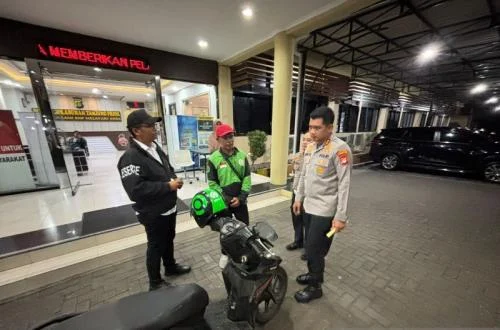
Jakarta, Indonesia – In a stark reminder of the risks faced by gig economy workers, Sutrisno, an online motorcycle taxi (ojol) driver, became the victim of a cunning motorcycle theft after being enticed by an unusually generous offline payment offer of Rp600,000 (approximately US$40). The incident, orchestrated by a perpetrator identified as WS, unfolded on Thursday, June 18th, as Sutrisno transported the suspect from Tambun Station in Bekasi to the bustling port areas of Muara Baru and Tanjung Priok in North Jakarta. The swift and decisive action by the Polres Pelabuhan Tanjung Priok (Tanjung Priok Port Resort Police) led to WS’s arrest within mere hours of the crime, recovering Sutrisno’s primary means of livelihood and bringing a rapid conclusion to a distressing ordeal. This case highlights the persistent vulnerability of drivers to criminal schemes that exploit their economic pressures and the critical role of prompt law enforcement response in combating such urban crimes.
The Temptation of an Unusually Large Offer
Sutrisno recounted the sequence of events that led to the theft, painting a picture of a driver struggling with the daily grind and susceptible to what appeared to be a golden opportunity. On that fateful Thursday, Sutrisno was waiting for orders at Tambun Station, a common hub for commuters and drivers alike, in Bekasi. The day had been slow, with only two completed rides, a situation common among many online drivers whose livelihoods depend on a high volume of trips. It was against this backdrop of financial pressure that WS approached him, proposing an offline ride – a transaction conducted outside the official application platform – to Pelabuhan Muara Baru. The offered fare was an astounding Rp660,000, a sum significantly higher than typical fares for such a distance, instantly capturing Sutrisno’s attention. "I had only gotten two orders that day, and he came offering a large sum of money. I was tempted," Sutrisno candidly admitted during an interview in Jakarta on Monday evening, June 22nd.
The perpetrator, WS, meticulously built a narrative designed to instill trust and confidence. He claimed the large payment would be disbursed after meeting his "boss" at the port, a powerful figure he described as a Chinese national owning ten ships. To further sweeten the deal and make it irresistible, WS also promised Sutrisno two brand-new mobile phones. This particular promise resonated deeply with Sutrisno, who had recently spent money repairing his own damaged phone. "I had just repaired my broken phone, and this strengthened my resolve to take the perpetrator," he added, illustrating how personal circumstances can amplify the persuasive power of a seemingly lucrative but fraudulent offer. The allure of immediate financial relief and the promise of valuable assets clouded his judgment, leading him to overlook the inherent risks of an unregulated offline transaction.
Navigating Jakarta’s Bustling Port Districts: A Calculated Deception
The journey from Bekasi to North Jakarta’s port areas served as the stage for WS’s elaborate deception. The Pelabuhan Muara Baru and Pelabuhan Tanjung Priok areas are among Indonesia’s busiest maritime hubs, teeming with commercial activity, large cargo ships, and a constant flow of goods and people. This environment provided a plausible backdrop for WS’s claims of a powerful shipping magnate boss. Upon their arrival at the Muara Baru port area, WS instructed Sutrisno to wait and enjoy a cup of coffee while he purportedly went to the dock to observe fish loading and unloading activities. This maneuver was likely intended to establish a sense of normalcy and further lull Sutrisno into a false sense of security, making him believe that WS was genuinely engaged in business.
After a short while, WS returned, seemingly having completed his inspection. He then requested to be taken to another location within the vicinity of Pelabuhan Tanjung Priok, claiming he needed to meet family members working at the Customs office there. This shift in destination was a critical part of the perpetrator’s plan, as it allowed him to guide Sutrisno deeper into an unfamiliar and potentially less populated area, away from the immediate hustle of Muara Baru.
During the ride towards Tanjung Priok, WS executed another calculated move. He asked Sutrisno to store his bag and jacket inside the motorcycle’s seat compartment, citing convenience or security. This seemingly innocuous request had a dual purpose: it placed Sutrisno’s valuable personal belongings, including his identification and documents, out of his immediate reach, and it also subtly gave WS more control over the motorcycle’s storage. Following this, WS offered to take turns driving the motorcycle, a suggestion that further chipped away at Sutrisno’s control over his vehicle. While seemingly a friendly gesture, it was a crucial step in gaining physical possession of the motorcycle.
The Moment of Theft and the Immediate Aftermath
The final act of the deception unfolded in front of the Kantor Kesehatan Pelabuhan (Port Health Office) on Jalan Pelabuhan Nusantara II, within the Tanjung Priok area. Upon reaching this location, WS asked Sutrisno to dismount, claiming he needed to pick up a friend. By this point, Sutrisno’s trust had been meticulously cultivated over hours of travel and conversation. Feeling secure and believing in WS’s fabricated story, Sutrisno complied. However, the moment Sutrisno stepped off the motorcycle, WS wasted no time. He immediately "tancap gas" (accelerated rapidly), speeding away with Sutrisno’s motorcycle, leaving the bewildered driver stranded.
The theft was not merely a simple snatch-and-run; it was a brazen act designed to hinder immediate pursuit and identification. Sutrisno later discovered the extent of WS’s deliberate actions to cover his tracks. "The license plate and mirrors were discarded. The wallet containing the STNK (vehicle registration certificate) and SIM (driver’s license) was also thrown away by the perpetrator," Sutrisno recounted, detailing the perpetrator’s efforts to make the stolen vehicle untraceable and to deprive Sutrisno of essential documents. This immediate discarding of identifying features underscored WS’s experience and preparedness in committing such crimes. The loss of the motorcycle, combined with the loss of crucial documents, left Sutrisno in a state of shock and despair, realizing the full extent of the betrayal and the immediate impact on his ability to earn a living.
Swift Police Response and Apprehension
Fortunately, Sutrisno’s ordeal did not last long. The prompt and efficient response from the local law enforcement agencies proved to be a turning point. Kapolres Pelabuhan Tanjung Priok AKBP Aris Wibowo confirmed that the perpetrator, WS, was apprehended by the Satreskrim (Criminal Investigation Unit) team of Polres Pelabuhan Tanjung Priok just two hours after the theft occurred. "The perpetrator WS was arrested by the Satreskrim team of Polres Pelabuhan Tanjung Priok in the Pademangan area, North Jakarta," AKBP Aris Wibowo stated.
The speed of the arrest was remarkable and speaks volumes about the dedication and effectiveness of the police force in the area. Upon discovering the distressed Sutrisno after the incident, officers immediately guided him through the process of filing a formal report. This quick action allowed the police to launch an immediate investigation, utilizing local intelligence, potential CCTV footage, and eyewitness accounts to track down the suspect. The rapid response not only prevented WS from escaping but also minimized the time Sutrisno was left without his crucial asset. From the moment Sutrisno reported the crime, the police sprang into action, understanding the urgency given the nature of the theft and the victim’s reliance on his motorcycle for income.
Following the arrest, the police successfully recovered the stolen motorcycle, albeit with its license plate already removed by the perpetrator, as Sutrisno had described. The discarded vehicle registration documents were also found, corroborating Sutrisno’s account and providing key evidence. WS was subsequently transported to the Mapolres Pelabuhan Tanjung Priok (Tanjung Priok Port Resort Police Headquarters) for further interrogation and processing. The swift resolution brought immense relief to Sutrisno, who expressed his gratitude for the police’s quick action. The recovery of his motorcycle meant he could soon resume his work, mitigating what could have been a devastating financial blow.
Broader Implications: The Vulnerability of Gig Workers and the Fight Against Crime
This incident serves as a critical case study illustrating the inherent vulnerabilities faced by online motorcycle taxi drivers and other gig economy workers in Indonesia. The gig economy, while offering flexibility and income opportunities, often exposes workers to risks associated with unregulated transactions and direct interaction with strangers. The promise of a large offline payment, bypassing the safety nets of official applications, often preys on the economic desperation of drivers who rely on every single fare to make ends meet. According to various reports, many online drivers operate on thin margins, making a Rp600,000 offer an irresistible temptation, especially on a slow day. Motorcycle theft remains a significant concern in urban areas across Indonesia, with official police statistics often reporting thousands of such cases annually in major cities like Jakarta. Perpetrators frequently target online drivers due to their constant movement and the ease with which motorcycles can be resold or dismantled for parts.
The prompt arrest of WS by the Tanjung Priok Port Police also underscores the effectiveness of local law enforcement in addressing urban crime. Such rapid apprehension not only brings justice to victims but also acts as a deterrent to potential criminals. It reinforces public trust in the police’s ability to respond decisively to incidents that impact the daily lives of citizens. AKBP Aris Wibowo’s statement and the swift action of his team highlight a commitment to maintaining security, particularly in economically vital areas like the port, where criminal activity can disrupt livelihoods.
In the aftermath of such incidents, online transportation platforms often issue warnings to their drivers about the dangers of offline transactions. These platforms emphasize that engaging in rides outside the application voids insurance coverage and removes the safety features embedded within the app, such as GPS tracking and passenger verification. For drivers like Sutrisno, the lesson learned is a harsh one, but one that hopefully reinforces the importance of adhering to official protocols, no matter how tempting an offline offer may seem. The incident also calls for greater awareness among the public about the modus operandi of such criminals, who often rely on elaborate stories and psychological manipulation to achieve their goals.
Moving forward, WS is expected to face charges under Indonesian law, likely related to theft with aggravating circumstances (e.g., Pasal 363 KUHP), which carries significant penalties, including imprisonment. The investigation will continue at the Mapolres Pelabuhan Tanjung Priok, where further details about WS’s background, potential accomplices, and any previous criminal record will be uncovered. This case, while distressing for Sutrisno, ultimately showcases the resilience of victims and the unwavering dedication of law enforcement in protecting the community from cunning criminal schemes. The recovery of Sutrisno’s motorcycle within hours of the theft stands as a testament to the vigilance and efficiency of the Tanjung Priok Port Police, offering a glimmer of hope and justice in the face of urban adversity.