Nasution Nanang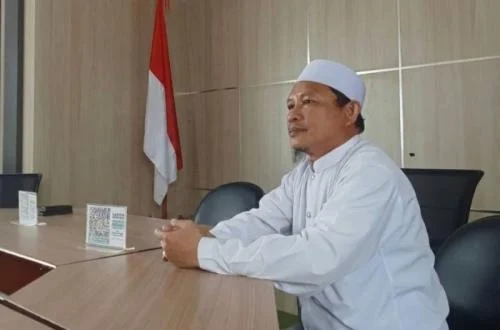
PALU, Central Sulawesi – On the auspicious occasion of National Education Day, Pengurus Besar (PB) Alkhairaat, one of Indonesia’s largest and most venerable Islamic educational organizations, publicly declared its renewed commitment to harmonizing its educational programs with the national curriculum. This strategic alignment, articulated by Suhban Lasawedi, Head of the PB Alkhairaat Secretariat, aims to significantly enhance the institution’s active role in fostering national intelligence and ensuring its graduates contribute meaningfully to all strata of society. The announcement, made in Palu, Central Sulawesi, underscored a forward-thinking approach that seeks to blend contemporary educational standards with the profound spiritual and moral legacy of its founder.
The initiative represents a critical juncture for Alkhairaat, an organization with deep historical roots and an extensive network of educational institutions spanning across Eastern Indonesia. This adaptation is meticulously designed to occur without compromising the fundamental identity or core principles of the institution. By integrating the national curriculum with the time-honored values espoused by Habib Idrus bin Salim Aljufri, affectionately known as ‘Guru Tua’ (The Old Teacher), Alkhairaat is poised to produce a new generation of graduates who possess not only a robust understanding of religious tenets but are also well-equipped with the knowledge and skills necessary to actively participate in national development.
According to Suhban Lasawedi, the enduring legacy of Guru Tua is far more than a historical narrative; it serves as the immutable bedrock upon which Alkhairaat’s entire educational philosophy is constructed. A central focus on the cultivation of noble character (akhlak) and an unwavering love for knowledge remains at the heart of every educational endeavor within Alkhairaat’s vast network. Lasawedi emphasized that the strong character formation, so vigorously advocated by Guru Tua, is deemed indispensable in an increasingly complex world. This holistic approach ensures that students are not merely recipients of information but are shaped into individuals of integrity, compassion, and critical thought.
In tandem with its curricular integration, Alkhairaat is also aggressively embracing technological advancements in both its pedagogical methods and institutional management. The systematic adoption of digital learning tools and sophisticated computerized management systems is expected to significantly broaden the reach of its educational services, making quality learning more accessible, and simultaneously elevate the standard of material delivery across all its schools and madrasahs. This modernization drive reflects a pragmatic understanding that while tradition provides an essential anchor, innovation is crucial for relevance and effectiveness in the 21st century.
However, Lasawedi cautioned against viewing technology as an end in itself. He reiterated that digital tools are merely facilitators, designed to streamline and enhance comprehension. The irreplaceable value of direct interaction between educators and students, coupled with the exemplary role modeling provided by teachers, will continue to define the distinctive character of Alkhairaat’s educational approach. In crafting its diverse programs, all administrators and educators within Alkhairaat are explicitly guided to uphold a principle of judicious balance, ensuring that technological integration complements rather than supplants human-centric learning.
The Historical Tapestry of Alkhairaat: A Legacy of Enlightenment
To fully appreciate the significance of this policy shift, it is imperative to delve into the rich historical context of Alkhairaat. Founded in 1930 by Habib Idrus bin Salim Aljufri, an eminent Islamic scholar and spiritual leader from Hadramaut, Yemen, Alkhairaat emerged during a period of intense colonial rule and limited access to formal education in the Dutch East Indies. Guru Tua’s vision was to establish an educational institution that would not only impart Islamic knowledge but also instill a strong sense of national identity and community service among the indigenous populations, particularly in the underdeveloped eastern regions of Indonesia.
From its humble beginnings as a small madrasah in Palu, Alkhairaat rapidly expanded its influence. Guru Tua’s charismatic leadership, profound scholarship, and unwavering dedication attracted thousands of students and inspired countless followers. He emphasized the importance of mastering both religious sciences and practical skills, a philosophy remarkably ahead of its time. His teachings transcended sectarian divides, fostering unity and mutual respect, which were crucial for nation-building efforts. By the time of his passing in 1969, Alkhairaat had grown into a formidable educational and social movement, establishing hundreds of schools, madrasahs, and orphanages across Sulawesi, Maluku, Papua, and other parts of Eastern Indonesia.
Today, Alkhairaat boasts an extensive network of institutions, including thousands of schools from elementary to tertiary levels, and a university, Universitas Alkhairaat (UNISA), in Palu. This vast educational ecosystem serves hundreds of thousands of students annually, making it a pivotal force in shaping the intellectual and moral landscape of the region. Its enduring presence underscores its foundational role in providing access to education, especially in areas where government infrastructure was historically sparse. This historical commitment to accessibility and quality forms the bedrock of its current strategic evolution.
National Education Day: A Platform for Renewal
The choice of National Education Day (Hardiknas) for this announcement is profoundly symbolic. Commemorated annually on May 2nd, the birthday of Ki Hajar Dewantara, a pioneer of Indonesian education, Hardiknas celebrates the nation’s commitment to enlightenment and progress through learning. By making this declaration on such a significant day, PB Alkhairaat aligns its institutional goals with the broader national aspirations for educational excellence and inclusivity. It signals a unified front in addressing the challenges of contemporary education and preparing Indonesian youth for global competitiveness while firmly rooting them in their cultural and religious heritage.
Strategic Integration: Balancing Tradition and Modernity
The integration of the national curriculum into Alkhairaat’s programs is not a simple adoption but a nuanced synthesis. The national curriculum, developed by the Ministry of Education and Culture and the Ministry of Religious Affairs, typically covers subjects ranging from sciences, mathematics, and languages to social studies and civic education. Alkhairaat’s approach will involve:
- Curriculum Mapping: Detailed analysis to identify commonalities and areas for seamless integration between national standards and existing Alkhairaat curricula.
- Teacher Training and Development: Extensive programs to equip Alkhairaat educators with the methodologies and pedagogical approaches required for national curriculum delivery, alongside continuous professional development in Islamic studies.
- Resource Development: Creation or adaptation of textbooks and learning materials that incorporate both national curriculum content and Alkhairaat’s specific moral and spiritual teachings.
- Assessment Alignment: Ensuring that student assessments meet national standards while also evaluating their understanding of Alkhairaat’s distinct values and religious knowledge.
This dual-focused curriculum aims to produce graduates who are not only academically proficient and technologically literate but also possess strong ethical foundations, critical thinking skills, and a deep sense of social responsibility – attributes consistently emphasized by Guru Tua. For instance, while learning national history, students will also explore the historical contributions of Islamic scholars and institutions. In science classes, the wonder of creation will be linked to theological understanding.
Technological Advancement: Expanding Horizons
Alkhairaat’s move towards technology-driven education is a pragmatic response to the evolving demands of the 21st century. The implementation includes:
- Learning Management Systems (LMS): Platforms for online course delivery, resource sharing, and interactive learning, particularly beneficial for institutions in remote areas.
- Digital Libraries and Resources: Access to vast databases of academic and religious texts, journals, and multimedia content.
- Computerized Administration: Streamlining school management, student records, admissions, and financial processes, enhancing efficiency and transparency.
- STEM and Digital Literacy Programs: Introducing coding, robotics, and advanced IT skills to prepare students for future careers in a technology-driven economy.
This technological thrust is crucial for extending Alkhairaat’s educational reach and ensuring that students, regardless of their geographical location within Eastern Indonesia, have access to high-quality, modern learning resources. It also addresses the growing demand for digital fluency in the Indonesian workforce, preparing Alkhairaat graduates to be competitive in a rapidly changing job market.
Inferred Reactions and Broader Implications
The announcement by PB Alkhairaat is likely to elicit widespread positive reactions from various stakeholders:
- Ministry of Religious Affairs/Education: Officials would likely commend Alkhairaat for its proactive step in aligning with national educational goals. Such initiatives serve as a model for other private and religious educational institutions across Indonesia, promoting national unity in education while preserving institutional distinctiveness. This alignment can also facilitate smoother transitions for Alkhairaat graduates into higher education and professional fields nationwide.
- Alumni Associations: Alkhairaat alumni, many of whom hold influential positions in various sectors, would likely express pride and support for the institution’s commitment to continuous improvement. They might see this as an affirmation of Alkhairaat’s enduring relevance and its ability to adapt without losing its soul.
- Parents and Students: For parents, this initiative offers reassurance that their children will receive an education that is both spiritually grounded and nationally recognized, enhancing their future opportunities. Students stand to benefit from a richer, more diverse curriculum and access to modern learning tools.
- Local Communities: Given Alkhairaat’s deep community roots, local leaders and residents would likely view this as a progressive step that strengthens the educational infrastructure and human resource development in their regions.
The broader implications of Alkhairaat’s policy shift are significant. Firstly, it strengthens the national education system by integrating a major private educational network more formally into its framework, contributing to a more cohesive national standard. Secondly, it offers a compelling model for other religious educational institutions in Indonesia to navigate the balance between preserving their unique identities and adapting to national and global educational demands. This equilibrium is vital for fostering an educated populace that is both deeply rooted in its cultural and religious values and capable of contributing effectively to a modern, pluralistic society.
Moreover, by emphasizing strong character, love for knowledge, and technological proficiency, Alkhairaat is directly addressing critical national priorities such as combating radicalism through holistic education, enhancing human capital, and promoting social cohesion. The graduates emerging from this reformed system are envisioned to be not only bright and technologically skilled but also individuals with unwavering moral compasses, embodying the spirit of Guru Tua in their contributions to society.
Every policy decision and every proposed change within Alkhairaat’s framework is meticulously deliberated, often involving a wide array of experts and community leaders. This consultative approach ensures that all developments remain in perfect harmony with Guru Tua’s overarching vision: to cultivate individuals who are both learned and morally upright. Suhban Lasawedi’s call for collective support for this vision underscores the idea that integrating with the national system and embracing technology are not departures from tradition but rather indispensable steps forward.
With a spirit of unity and unwavering determination, Alkhairaat remains optimistic about its continued role as a leading educational platform. It aims to nurture generations who are not only intellectually astute and technologically proficient but also possess noble hearts, embodying the comprehensive excellence envisioned by its esteemed founder. This strategic pivot on National Education Day reaffirms Alkhairaat’s enduring legacy as a beacon of enlightenment and a vital contributor to Indonesia’s future.