Nila Kartika Wati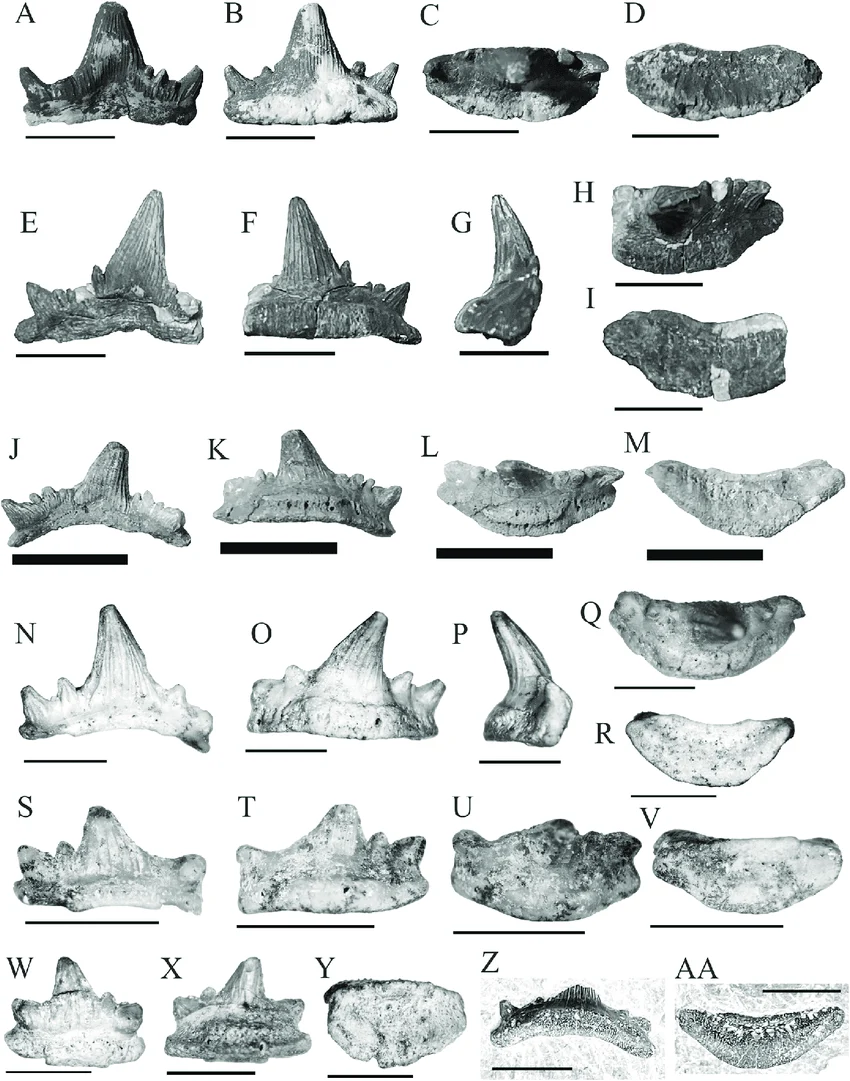
Millions of years before the first dinosaur walked the Earth, the shallow seas covering much of the planet were already dominated by formidable predators that occupied the top of the food chain. Among the oldest lineages of vertebrates, sharks had already evolved into apex hunters long before giant reptiles or mammals emerged. Much of our understanding of these ancient marine rulers is reconstructed from fragmented teeth and jawbones that have survived the geological pressures of hundreds of millions of years. A recent and significant paleontological discovery within the Mammoth Cave system in Kentucky, United States, has provided groundbreaking insights into this era, unveiling two previously unknown shark species that thrived approximately 325 million years ago.
The identification of these two species, Troglocladodus trimblei and Glikmanius careforum, offers a rare glimpse into the Mississippian sub-period of the Carboniferous. These findings, detailed in the Journal of Vertebrate Paleontology, indicate that these sharks were substantial in size, with body lengths estimated between 3 and 3.6 meters—comparable to a modern-day small family car. Their discovery within the labyrinthine passages of Mammoth Cave, the longest mapped cave system in the world, which stretches over 675 kilometers, highlights the importance of subterranean environments in preserving delicate paleontological records.
The Evolutionary Context of Ctenacanth Sharks
Both newly identified species belong to the Ctenacanthiformes, a distinct group of ancient sharks defined by their prominent, sharp dorsal spines. These structures likely served as a critical defensive mechanism against other predators or as a means of stabilization in the turbulent coastal waters of the era. The classification was made possible through an exhaustive analysis of fossilized teeth and jaw fragments embedded within the limestone walls of the cave.

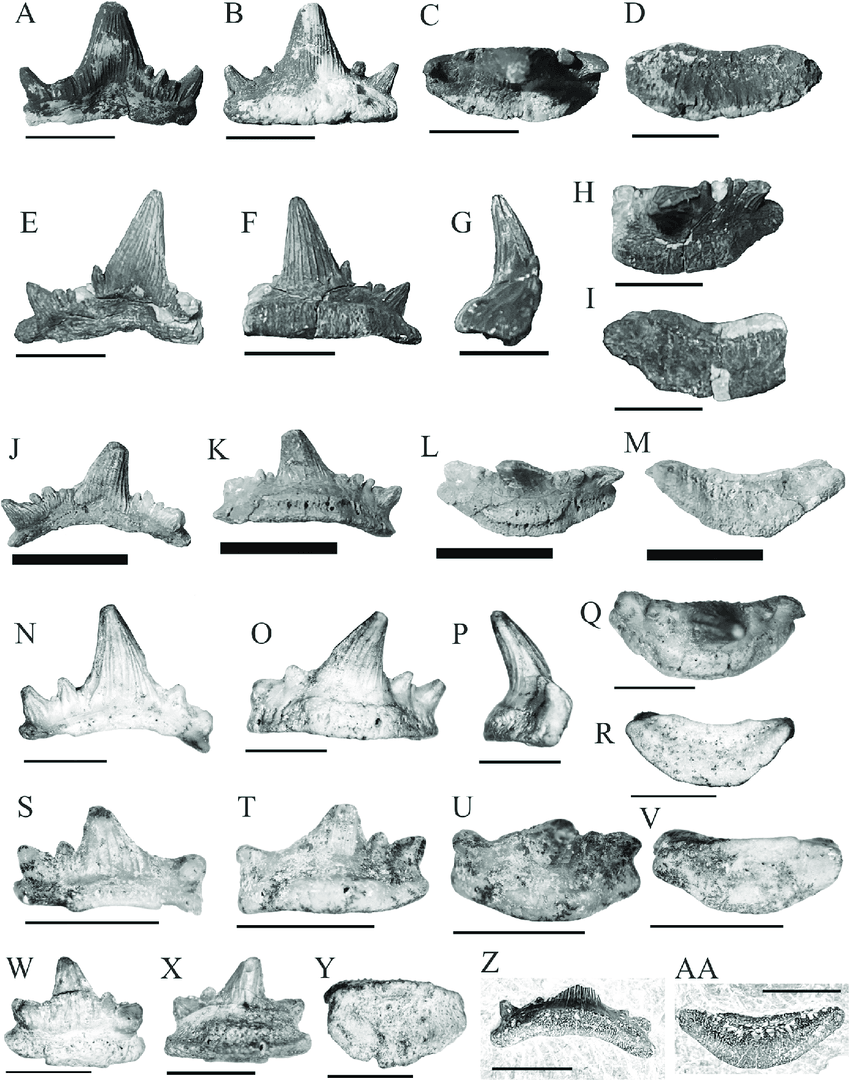
The discovery places these sharks in a time when the Earth’s geography was vastly different. Approximately 325 million years ago, the tectonic plates were coalescing to form the supercontinent Pangea. The shallow, epicontinental seas that covered parts of North America were teeming with life, providing a rich hunting ground for these predators. Troglocladodus trimblei, in particular, exhibits teeth with a unique, fork-like branching structure. This morphology is highly specialized, allowing the shark to grip slippery prey, such as bony fish and orthocones—ancient cephalopods characterized by elongated, conical shells—in the murky, sediment-rich waters of the coastal shelf.
Glikmanius careforum, by contrast, presents a different evolutionary strategy. The recovered fossils include a partial lower jaw, likely from a juvenile individual. The presence of such a structure is remarkable, as shark skeletons are composed primarily of cartilage, which typically degrades rapidly in most fossilization conditions. The preservation of these jaw elements has allowed researchers to reconstruct the bite force and head shape of the predator, suggesting a specialized morphology suited for powerful, crushing strikes.
The Challenges of Subterranean Paleontology
The recovery of these fossils was far from a conventional excavation. The Mammoth Cave system is a challenging environment, characterized by extreme humidity, total darkness, and confined spaces. According to researchers involved in the project, including those from the Cave Research Foundation, the expedition required navigating deep underground rivers and squeezing through narrow passages that offered barely enough room for a human body.
The meticulous nature of the work cannot be overstated. Most of the specimens identified were small teeth, some no larger than a human fingernail, embedded deep within the cave’s limestone walls. The success of the mission was attributed to the collaborative efforts of paleontologists and cave exploration teams who utilized advanced mapping techniques to pinpoint areas where the limestone layers, dating back to the Mississippian period, were exposed.
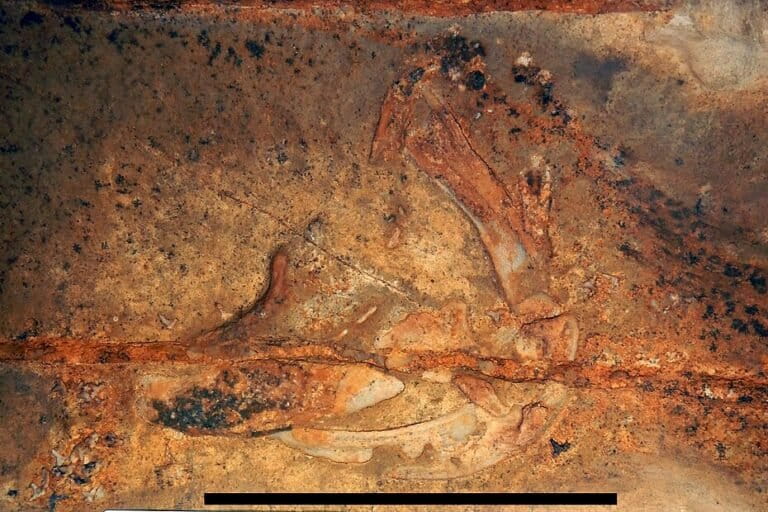
The environmental conditions within Mammoth Cave acted as a natural preservation chamber. The subterranean environment maintains a stable, cool temperature and low oxygen levels, protected from the erosive forces of wind, rain, and UV radiation that typically destroy fragile cartilaginous remains on the surface. This geological "time capsule" effect allowed for the preservation of delicate biological structures that would have otherwise been lost to time.
Scientific Implications and Global Connections
The implications of this discovery extend well beyond the borders of Kentucky. By comparing these fossils with similar specimens discovered in regions that are now part of Europe and North Africa, scientists are beginning to map the interconnectedness of ancient marine pathways. These similarities suggest that the shallow seas of the Carboniferous period were vast, continuous, and facilitated the migration of apex predators across what are now thousands of miles of continental separation.
This research provides a critical data point for understanding the global biodiversity of the Paleozoic Era. Before the rise of the dinosaurs, the marine world was a theater of intense evolutionary competition. The presence of predators of this magnitude indicates a robust and highly productive ecosystem capable of supporting large-bodied vertebrates. The study also refines our understanding of the Ctenacanth lineage, helping to clarify where these species fit in the broader evolutionary tree of Chondrichthyes (cartilaginous fish).
Official Responses and Future Research
Barclay Trimble, the Superintendent of Mammoth Cave National Park, has emphasized that this discovery is a testament to the ongoing importance of the park as a site of scientific exploration. "The discovery of these sharks reinforces that Mammoth Cave is not just a geological wonder, but a massive, untapped repository of prehistoric life," Trimble noted. The park service has indicated that future efforts will continue to focus on cataloging these fossils and ensuring they are protected for further study.
The research team, led by J.P.M. Hodnett, has underscored that the process of extraction and analysis is far from complete. With hundreds of miles of the cave system yet to be fully explored or surveyed for paleontological value, there is a high probability that more specimens await discovery. The team’s work has set a new standard for how cave systems should be surveyed, demonstrating that interdisciplinary cooperation between geologists, biologists, and expert cavers can yield high-impact scientific results.
A Legacy of Survival
Sharks have survived five mass extinction events, including the Permian-Triassic extinction—often called "The Great Dying"—which wiped out nearly 96% of all marine species. The discovery of Troglocladodus trimblei and Glikmanius careforum serves as a poignant reminder of the longevity and resilience of the shark lineage. While their physical forms have changed over 325 million years, the fundamental role they play as regulators of marine health remains consistent.
As researchers continue to clean and stabilize the recovered fragments, the scientific community anticipates further publications that will detail the dietary habits, locomotion, and sensory capabilities of these ancient predators. This discovery is not merely an addition to a list of extinct animals; it is a vital chapter in the history of life on Earth, reminding us that the oceans have been home to complex, powerful, and fascinating creatures for a duration that dwarfs the history of humankind.
In conclusion, the Mammoth Cave fossils provide a bridge to a remote past, offering clear evidence of a sophisticated marine environment that existed long before the terrestrial world was dominated by the iconic reptiles of the Mesozoic. The work conducted by the researchers serves as a critical contribution to our collective understanding of vertebrate evolution, emphasizing that the most significant discoveries often lie hidden in the quiet, dark corners of our planet, waiting for the right light to reveal them.