Tata Titiana
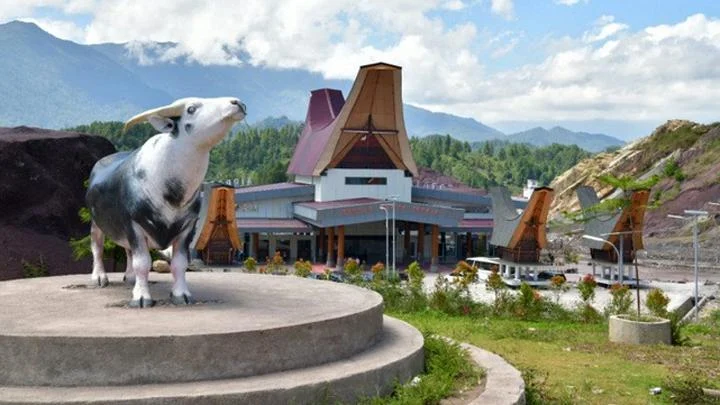
President Joko Widodo officially inaugurated the Toraja Airport on Thursday, March 18, 2021, a significant infrastructure development formerly known as Buntu Kunik Airport in Tana Toraja Regency, South Sulawesi. The inauguration ceremony, broadcast live via the Presidential Secretariat’s YouTube channel, was marked by President Widodo’s optimistic outlook on the airport’s potential to stimulate economic growth, generate employment opportunities, and foster the emergence of new economic centers within the region.
The development of Toraja Airport is a testament to sustained governmental commitment, with its initial construction commencing in 2011 as a replacement for the aging Pongtiku Airport in Ratentayo. While the project experienced periods of stagnation, its revitalization under President Widodo’s administration began in 2018. The first phase of construction, funded by the central government, was successfully completed by mid-2020. To ensure immediate operational capacity, two airlines, Wings Air and Citilink, have commenced regular flight services connecting Makassar and Toraja, a crucial step in enhancing regional accessibility.
A Decade of Development: The Journey of Toraja Airport
The genesis of Toraja Airport can be traced back to 2011, a strategic initiative aimed at modernizing air transport infrastructure in the Tana Toraja region. The decision to build a new airport was driven by the limitations of the existing Pongtiku Airport and the growing need for improved connectivity to support the area’s economic and tourism potential. However, the project faced considerable challenges, primarily due to the complex and challenging topography of Tana Toraja, a region renowned for its dramatic highland landscapes.
Construction was initiated with the ambition of creating a gateway that would better serve the unique geographical characteristics of the area. Early stages involved extensive land preparation and foundational work. Despite the initial momentum, the project encountered unforeseen hurdles, leading to delays that extended its completion timeline. These setbacks were not uncommon for large-scale infrastructure projects in mountainous terrains, requiring significant geological surveys, engineering solutions, and resource allocation.
A pivotal moment arrived in 2018 when the administration of President Joko Widodo recommitted to the project, recognizing its strategic importance. This renewed focus injected fresh impetus into the construction efforts. The central government assumed a leading role in overseeing and funding the subsequent phases of development, ensuring that the project moved towards its culmination. By the middle of 2020, the first phase of construction was officially completed, marking a significant milestone after years of planning and execution. This phase focused on establishing the core operational facilities, including the runway, apron, and taxiway, laying the groundwork for the airport’s eventual operational status.
Technical Specifications and Phased Expansion
The Toraja Airport’s infrastructure has been meticulously planned to accommodate a range of aircraft and passenger volumes, with its development unfolding in distinct phases. The total land area allocated for the airport spans an impressive 141 hectares, providing ample space for current facilities and future expansion.
In its initial operational phase, the airport features a runway measuring 1,600 meters in length. This length is specifically designed to accommodate ATR-type aircraft, which are commonly used for regional routes and are well-suited to the operational demands of such airports. Complementing the runway are an apron of 94.5 x 67 meters, providing sufficient parking and servicing space for aircraft, and a taxiway measuring 124.5 x 15 meters, facilitating the smooth movement of planes between the runway and the apron.
The second phase of development is poised to significantly enhance the airport’s capacity and operational capabilities. This phase will see the runway extended to 2,000 meters. This increase in length will enable the airport to handle larger aircraft, such as the Boeing 737, thereby opening up possibilities for longer-haul flights and increased passenger capacity. The terminal building, a crucial element for passenger experience and operations, covers an area of 1,000 square meters. It is designed to accommodate approximately 150 passengers, ensuring efficient processing and comfort for travelers.
The Transformative Power of Connectivity: Presidential Vision
During the inauguration ceremony, President Joko Widodo articulated a clear vision for the impact of Toraja Airport. His remarks emphasized the dual objectives of economic empowerment and enhanced regional integration. "We hope that with the presence of this airport, it can be utilized to improve the economy in the region, create more job opportunities, and revive new economic centers," President Widodo stated, underscoring the government’s commitment to leveraging infrastructure development for tangible socio-economic benefits.
The President’s focus on economic improvement is particularly relevant for Tana Toraja, a region rich in cultural heritage and natural beauty, yet often hindered by accessibility challenges. Improved air connectivity is expected to unlock its tourism potential, attracting a larger number of domestic and international visitors. This influx of tourists can, in turn, stimulate local businesses, from hospitality and transportation to handicraft production and culinary services, creating a ripple effect of economic activity.
Furthermore, the creation of new economic centers is a strategic goal that acknowledges the airport’s potential to act as a catalyst for diversified development. Beyond tourism, enhanced connectivity can facilitate trade and commerce, making it easier for local products to reach wider markets and for businesses to invest in the region. This could lead to the establishment of new industries and services, contributing to a more robust and resilient local economy. The creation of jobs, both directly and indirectly related to the airport’s operations and the subsequent economic growth, is a paramount objective that will directly benefit the residents of Tana Toraja.
Navigating the Terrain: Engineering Marvels and Challenges
The construction of Toraja Airport is a remarkable feat of engineering, particularly given the challenging mountainous terrain of Tana Toraja. Minister of Transportation, Budi Karya Sumadi, highlighted the extraordinary efforts involved in its development. He noted the immense difficulty posed by the steep topography, a characteristic feature of the region. "The construction of this airport was very difficult because of the steep topographical conditions," Minister Sumadi remarked.
To achieve the required runway length, a significant engineering undertaking was necessary: the cutting and reshaping of three large hills. This process involved extensive excavation, land stabilization, and the meticulous planning of earthworks to ensure the structural integrity and safety of the runway. The ambition to create a 2,000-meter runway necessitated overcoming these substantial geographical obstacles.
The Presidential tweet further elaborated on this engineering challenge, stating, "Three hills were cut to build the Toraja Airport runway, which is 2,000 x 30 meters. This is the airport that I just inaugurated in Tana Toraja, South Sulawesi." This direct acknowledgment from the President underscores the scale of the engineering required and the visual transformation of the landscape to accommodate modern aviation infrastructure.
The commitment to safety and operational efficiency extends beyond the initial construction. Minister Sumadi also indicated that further development would continue in 2021, specifically focusing on addressing any remaining obstacles. "In 2021, its construction will still continue to cut hill obstacles on the side of the runway," he stated. This ongoing work reflects a dedication to ensuring that the airport meets the highest safety standards and can operate effectively under various conditions. The meticulous attention to detail in navigating and mitigating the challenges posed by the natural environment is a hallmark of this ambitious project.
Rebranding for Identity and Recognition: The Name Change
The renaming of the airport from Buntu Kunik to Toraja Airport is a significant aspect of its inauguration, reflecting a collective decision aimed at enhancing regional identity and recognition. This change was not a unilateral decree but rather a process rooted in community consensus and official endorsement.
The decision to rename the airport was the result of a collaborative agreement between the Tana Toraja regency government and various indigenous community leaders representing the 19 sub-districts within Tana Toraja. This inclusive approach ensured that the new name would resonate with the local population and accurately represent the cultural and geographical identity of the region. Such a process is vital for fostering a sense of ownership and pride in the new infrastructure.
Following the consensus among local stakeholders, the proposed name change underwent a formal ratification process. It was subsequently submitted to the Regional People’s Representative Council (DPRD) for approval during a plenary session. This legislative step provided the official endorsement at the regional level. The process then extended to the provincial government, which reviewed and forwarded the proposal to the Ministry of Transportation for final approval. This multi-tiered approval process highlights the meticulous administrative procedures involved in such significant decisions and underscores the collaborative spirit that guided the rebranding.
The choice of "Toraja Airport" directly links the facility to its namesake region, Tana Toraja, renowned globally for its unique culture, ancestral traditions, and stunning landscapes. This rebranding serves not only to simplify identification but also to actively promote the cultural heritage of the Toraja people, potentially drawing greater attention to the region’s distinct attractions and contributing to its cultural preservation and tourism appeal.
Economic and Tourism Implications: A Catalyst for Growth
The inauguration of Toraja Airport is poised to have profound and multifaceted implications for the region’s economy and tourism sector. For decades, Tana Toraja has been a destination of significant interest due to its rich cultural heritage, including elaborate funeral ceremonies, traditional houses (Tongkonan), and ancient burial sites. However, its remoteness and challenging access have historically limited the volume of visitors and the economic benefits derived from tourism.
The introduction of regular commercial flights dramatically reduces travel time and enhances accessibility. Previously, reaching Tana Toraja from major cities like Makassar often involved long and arduous journeys by road, taking several hours. With the airport operational, travel time can be reduced to a fraction of that, making Tana Toraja a more feasible and attractive destination for both domestic and international tourists. This increased accessibility is expected to lead to a substantial rise in tourist arrivals, translating into increased revenue for local businesses.
The tourism industry in Tana Toraja encompasses a wide range of services, including accommodation, dining, transportation, and the sale of local handicrafts. A surge in visitor numbers will directly benefit hotels, restaurants, tour operators, and local artisans, creating a multiplier effect throughout the local economy. Furthermore, improved connectivity can facilitate business travel and investment, potentially leading to the development of new industries and diversification beyond traditional sectors.
Beyond tourism, the airport’s strategic location and improved connectivity can foster the development of new economic hubs. The ease of transporting goods and people can encourage agricultural and manufacturing enterprises to establish operations in the region, further stimulating economic growth and creating diverse employment opportunities. The government’s vision of creating "new economic centers" is directly tied to the airport’s function as a logistical and commercial nexus.
Data from the Ministry of Tourism and Creative Economy indicates that regions with well-developed air connectivity tend to experience higher tourism growth rates. For instance, Bali, with its extensive airport infrastructure, has consistently been a leading tourist destination in Indonesia. While Tana Toraja’s tourism profile differs, the principle remains: improved accessibility is a critical enabler of tourism growth. The Ministry of Transportation’s projections for airport utilization often factor in anticipated increases in passenger traffic driven by such infrastructure investments. The operationalization of Toraja Airport is expected to align with these trends, significantly boosting the region’s economic output and creating a more prosperous future for its inhabitants. The airport’s role in facilitating cultural exchange and showcasing the unique heritage of the Toraja people on a larger scale cannot be overstated, positioning the region for sustainable economic and cultural development.