Nasution Nanang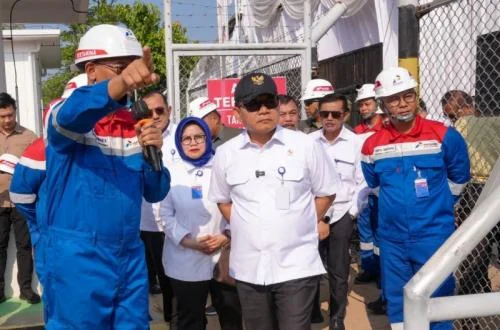
The Presidential Staff Office (KSP) has intensified its coordination efforts to expedite the development of a Mother Station Compressed Natural Gas (CNG) facility in Tanjung Enim, Muara Enim Regency, South Sumatra. This crucial initiative is strategically positioned to reinforce national energy security and stimulate the creation of new employment opportunities across the region. Recognized as a National Strategic Project (PSN), the endeavor underscores the government’s unwavering commitment to leveraging domestic energy resources for sustainable development and economic upliftment.
General (Ret.) Dudung Abdurachman, Head of the Presidential Staff Office, confirmed that his team has successfully concluded the necessary coordination pertaining to this vital project. He emphasized the unanimous agreement among all stakeholders to swiftly bring the project to fruition, recognizing its profound importance for the nation’s welfare and progress. "My team and I have finalized the coordination for the construction of the CNG Mother Station planned for Tanjung Enim. While certain issues initially emerged, the consensus that this is a national project, a National Strategic Project essential for our country’s development, ensured collective agreement to move forward," Dudung stated in a KSP press release, cited Saturday.
The coordination meeting, held on Friday, July 3rd, addressed several administrative aspects that require finalization, including adjustments to the Detailed Spatial Plan (RDTR). Despite these procedural requirements, Dudung assured that the administrative processes and the commencement of physical construction would proceed concurrently. This parallel execution strategy is designed to ensure that the project remains on track for completion within the current year, demonstrating a pragmatic approach to overcoming potential bureaucratic bottlenecks. "Given the urgency and the target for completion this year, the project will commence work immediately, even as administrative processes are being finalized," he asserted, highlighting the KSP’s proactive stance in project management and its role in streamlining complex infrastructure initiatives.
Understanding the Mother Station CNG Project and Its Strategic Importance
A Mother Station CNG facility serves as a central hub for processing, compressing, and storing natural gas before it is distributed to various end-users, typically through smaller daughter stations or directly to large industrial consumers. This infrastructure is critical for expanding the reach of natural gas, particularly in regions where traditional pipeline infrastructure is limited or cost-prohibitive. By establishing a Mother Station in Tanjung Enim, the government aims to unlock the vast potential of natural gas resources in South Sumatra, enabling their efficient utilization for transportation, industrial, and potentially residential sectors. The choice of Tanjung Enim is particularly strategic, given its proximity to significant gas reserves, including conventional natural gas fields and the burgeoning potential of Coalbed Methane (CBM).
Coalbed Methane (CBM) represents an unconventional natural gas resource extracted from coal seams. Indonesia possesses substantial CBM reserves, estimated at around 453 trillion cubic feet (Tcf) by the Ministry of Energy and Mineral Resources (ESDM), with South Sumatra being one of the most promising regions, holding an estimated 80-100 Tcf. Developing CBM requires specialized extraction techniques and infrastructure, and its integration into the national energy mix offers a crucial pathway to diversify away from conventional gas and oil, thereby enhancing overall energy security. The Tanjung Enim Mother Station is thus not merely a distribution point but a critical component in a larger strategy to monetize and integrate these unconventional resources into the national energy grid. This integration aligns with Indonesia’s broader energy transition agenda, which seeks to reduce reliance on more carbon-intensive fuels while ensuring a stable, affordable, and domestically sourced energy supply. The project also contributes to reducing the country’s carbon footprint, as natural gas burns cleaner than coal or petroleum.
The Role of National Strategic Projects (PSN) in Indonesia’s Development Agenda
National Strategic Projects (PSN) are a cornerstone of Indonesia’s infrastructure development agenda, designed to accelerate economic growth, improve public welfare, and enhance the nation’s competitiveness. Initiated under Presidential Regulation No. 3 of 2016 and subsequently updated, the list of PSNs currently encompasses hundreds of projects across various sectors, including energy, transportation, telecommunications, and social infrastructure. The government designates certain projects as PSN to provide them with priority status, which includes streamlining regulatory approvals, facilitating land acquisition processes, and ensuring coordinated support from various ministries and agencies. The KSP plays a pivotal role in overseeing and accelerating the implementation of these PSN, acting as a troubleshooter and coordinator to remove impediments that might hinder progress.
The inclusion of the Tanjung Enim CNG Mother Station as a PSN reflects its perceived national importance, not only in terms of energy supply but also for regional economic development and environmental sustainability. The KSP’s active involvement, as demonstrated by General Dudung’s statements, underscores the high-level commitment to ensuring the project’s timely and successful execution. This proactive approach is vital for maintaining investor confidence and demonstrating the government’s capacity to deliver on its development promises, especially in complex infrastructure projects that often involve multiple stakeholders and intricate regulatory frameworks. The parallel processing of administrative tasks and physical work, as outlined by KSP, is a testament to its mandate to cut through bureaucracy and accelerate progress where possible, thereby minimizing delays that typically plague large-scale projects. This strategic oversight ensures that the benefits of such projects are realized sooner, contributing to the nation’s broader development goals.
Economic and Social Impacts: A Catalyst for Regional Prosperity
The KSP elaborated that robust cross-sectoral coordination remains a continuous priority to oversee the implementation of presidential priority programs. This approach is crucial for addressing and resolving various on-the-ground implementation hurdles, ensuring that PSNs proceed on schedule and deliver maximum benefits to the populace. General Dudung emphasized that beyond fortifying national energy resilience, this project is poised to generate direct economic advantages. "The most significant impact will undoubtedly be the creation of employment opportunities, followed by the strengthening of national energy security," he stated, highlighting the dual benefits for both local communities and the national economy.
The construction phase of the Mother Station alone is expected to generate a substantial number of jobs for local residents, ranging from skilled labor such as engineers and technicians to semi-skilled and unskilled workers in various capacities. Post-construction, the operational phase will require a permanent workforce for maintenance, distribution, and management, thereby providing sustained employment opportunities and contributing to a stable local economy. Furthermore, the availability of cleaner, more affordable natural gas can spur the growth of local industries, reducing their operational costs and making them more competitive. This, in turn, can attract new investments to the region, fostering a virtuous cycle of economic development and diversification beyond traditional resource extraction. The project’s emphasis on job creation directly aligns with the government’s broader agenda of improving livelihoods and reducing unemployment, particularly in resource-rich areas that sometimes struggle with job diversification.
Moreover, the improved energy access provided by the CNG Mother Station can have transformative effects on the daily lives of people in South Sumatra. Access to cleaner energy for cooking and transportation can reduce household expenses, improve indoor air quality, and enhance public health. For businesses, a reliable and cost-effective energy source is a fundamental prerequisite for growth and expansion, enabling increased productivity and innovation. The ripple effect of such an infrastructure project extends far beyond its immediate operational scope, touching various facets of socio-economic life, from improved public services to enhanced environmental quality. The long-term economic benefits include increased local government revenue through taxes and levies, which can then be reinvested in community development initiatives.
South Sumatra: A Hub of Abundant Energy Potential
General Dudung further elucidated that South Sumatra was selected as the project’s location due to its abundant energy resource potential, encompassing both natural gas and coal. The region is deemed highly strategic for supporting the advancement of the national energy sector. Indeed, South Sumatra is one of Indonesia’s richest provinces in terms of natural resources. It boasts significant conventional natural gas fields, extensive coal reserves (Indonesia is one of the world’s largest coal producers), and considerable undeveloped CBM potential. The province’s strategic geographical location, with access to major transportation routes and ports like Palembang and Panjang (Lampung), further enhances its appeal as an energy hub, facilitating both domestic distribution and potential export opportunities.
The development of the Tanjung Enim Mother Station is thus a logical step in harnessing these domestic resources. By converting natural gas into CNG, it becomes more easily transportable and usable across various applications, from powering vehicles and public transport fleets to fueling industrial boilers and small-scale power generation. This move aligns with the government’s long-term vision to optimize domestic energy production, reducing reliance on imported fuels and bolstering energy independence, which is a key component of national security. The synergy between coal and CBM resources in the region also presents unique opportunities for integrated energy development, where different energy sources can complement each other to create a more resilient and diversified energy supply chain. This approach not only enhances energy security but also contributes to a more balanced and sustainable energy mix for the nation, preparing it for future energy demands and challenges.
PGN’s Pivotal Role as Subholding Gas Pertamina
Meanwhile, Arief K. Risdianto, President Director of PT PGN (Perusahaan Gas Negara), affirmed that the support from KSP is critically important in overseeing the optimization of domestic gas resources, particularly concerning the development of Coalbed Methane (CBM) in Tanjung Enim and the associated distribution infrastructure in Pagardewa. He underscored PGN’s readiness, as the Subholding Gas of Pertamina, to serve as the crucial link between the potential supply of domestic gas and the nation’s energy demands. "With the infrastructure and experience possessed by PGN as Pertamina’s Gas Subholding, we are prepared to fulfill our role as the connector between the potential domestic gas supply and the national energy needs," Arief reiterated, highlighting the company’s strategic position and extensive capabilities within the national energy landscape.
PGN, as the largest integrated gas company in Indonesia and a subholding of the state-owned energy giant Pertamina, possesses extensive experience and infrastructure in the natural gas sector. Its involvement is crucial for the successful implementation and operation of the Tanjung Enim Mother Station. PGN’s expertise covers the entire gas value chain, from upstream exploration and production (indirectly through its parent company Pertamina) to midstream processing and transportation, and downstream distribution to end-users. This comprehensive capability makes PGN an ideal and indispensable partner for the government in realizing its energy objectives. PGN currently operates over 12,000 kilometers of gas pipelines and serves millions of customers across various segments, demonstrating its capacity for large-scale energy projects.
The development of CBM in Tanjung Enim and the associated infrastructure in Pagardewa represents a significant investment and a complex undertaking. PGN’s role will involve ensuring the efficient and safe transportation of CBM from the extraction sites to the Mother Station, its compression into CNG, and subsequent distribution to industrial, commercial, and transportation sectors. This integrated approach, with PGN at the helm of the gas infrastructure, is vital for maximizing the economic viability and operational efficiency of the entire project. Furthermore, PGN’s commitment to connecting domestic gas supply with national demand aligns perfectly with the overarching goal of enhancing energy security and promoting the use of cleaner, domestically sourced energy, thereby strengthening the national economy and reducing import dependency.
Broader Implications for Indonesia’s Energy Transition and Climate Goals
The acceleration of the Tanjung Enim CNG Mother Station project holds significant implications for Indonesia’s broader energy transition strategy and its commitment to climate action. While the nation continues to rely heavily on coal and oil for its energy needs, there is a growing imperative to shift towards cleaner energy sources to meet environmental commitments and ensure long-term energy sustainability. Natural gas, particularly in its CNG form, serves as an important bridge fuel in this transition. It offers a cleaner alternative to diesel and gasoline for transportation and industrial uses, producing significantly fewer greenhouse gas emissions and local air pollutants such like particulate matter, sulfur oxides, and nitrogen oxides.
By expanding CNG infrastructure, Indonesia can gradually reduce its consumption of more carbon-intensive fuels, contributing to its Nationally Determined Contributions (NDC) under the Paris Agreement. Indonesia has pledged to reduce its greenhouse gas emissions by 31.89% independently and 43.2% with international support by 2030. The focus on unlocking unconventional resources like CBM further diversifies the energy portfolio, reducing dependence on a single source and enhancing resilience against global energy market fluctuations. This project also sets a precedent for how the government, through coordinated efforts like those led by the KSP, can effectively fast-track critical infrastructure necessary for achieving national energy and environmental goals.
The initiative also signals a proactive approach to resource management. Indonesia is blessed with abundant natural gas, but challenges in infrastructure and market access have often hindered its optimal utilization. Projects like the Tanjung Enim Mother Station aim to overcome these hurdles, ensuring that domestic resources are efficiently channeled to meet domestic demand, thereby reducing the need for imports and strengthening the national economy. The long-term vision includes developing a robust natural gas ecosystem that supports industrial growth, improves air quality, and provides affordable energy to a wider segment of the population, thereby enhancing overall quality of life and fostering sustainable development.
Challenges and Future Outlook
Despite the accelerated coordination and strong governmental backing, the project is not without its challenges. The mention of administrative aspects, such as the adjustment of the Detailed Spatial Plan (RDTR), highlights the complexities inherent in large-scale infrastructure development. Ensuring full compliance with environmental regulations, securing land rights in a densely populated region, and managing community expectations will be ongoing tasks requiring careful attention and sustained dialogue. The KSP’s role in mitigating these challenges through proactive coordination and stakeholder engagement will remain crucial throughout the project’s lifecycle, from planning to operation.
Furthermore, the successful integration of CBM into the broader gas supply chain requires continued technological advancements and significant investment. While CBM holds substantial promise, its extraction can be more technically challenging and potentially more costly than conventional gas, requiring specialized drilling and completion techniques. Sustained government support, coupled with private sector investment and technological innovation, will be essential for realizing the full potential of this resource and ensuring its economic viability in the long term. Monitoring the environmental impact of CBM extraction and ensuring sustainable practices will also be paramount.
Looking ahead, the Tanjung Enim CNG Mother Station could serve as a model for similar developments in other resource-rich regions of Indonesia, particularly those with significant unconventional gas reserves. Its successful implementation will demonstrate the viability of utilizing domestic unconventional gas resources, expanding gas infrastructure, and achieving multiple national objectives simultaneously. The project’s completion this year, as targeted, would mark a significant milestone in Indonesia’s journey towards a more secure, sustainable, and diversified energy future, contributing substantially to both national energy resilience and regional economic vitality. The continued vigilance and coordination from the Presidential Staff Office will be key to navigating the remaining complexities and ensuring the project delivers its intended transformative impact for the benefit of all Indonesians. The integrated approach of the government, leveraging the capabilities of state-owned enterprises like Pertamina/PGN and coordinating through KSP, exemplifies a concerted effort to build a stronger, more energy-independent nation.