Bambang Pamungkas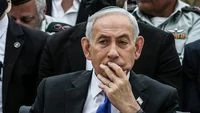
Jerusalem, Israel – Prime Minister Benjamin Netanyahu faced unprecedented public condemnation and intense pressure from dozens of opposition Members of Knesset (MKs) during a tumultuous parliamentary session on Tuesday, July 15, 2026. The session, held just days before the Knesset’s dissolution, saw Netanyahu jeered and shouted down by opponents, culminating in his premature departure from the chamber. Despite the chaotic scenes and the Prime Minister’s absence during the final votes, a series of highly controversial bills, proposed by his ruling coalition, were swiftly passed into law, igniting a firestorm of criticism across Israeli society and drawing immediate legal challenges.
The raucous scenes unfolded as opposition MKs repeatedly interrupted Netanyahu, chanting "Shame! Go! Get out!" The chorus of condemnation created such a disruptive atmosphere that the Prime Minister eventually left the plenum, missing the critical voting procedures. The legislative rush, completed by Friday, July 17, before the Knesset officially disbanded ahead of national elections scheduled for October 27, 2026, has been widely interpreted by political analysts as a calculated move by Netanyahu to consolidate his political base and secure the loyalty of his ultra-Orthodox (Haredi) and far-right allies.
A Legislative Blitz Before Elections
The rapid passage of these contentious laws is seen as a crucial element of Netanyahu’s strategy to ensure his political survival. Facing ongoing legal challenges and a deeply divided public, the Prime Minister’s reliance on his Haredi and right-wing partners has grown increasingly vital. Political analyst Nadav Eyal articulated this dynamic, stating, "Netanyahu is fighting for his political survival, and the Haredi parties are crucial for that." Eyal further suggested that Netanyahu aims to demonstrate to his Haredi partners that he alone can effectively advance their interests. This legislative push underscores the deep ideological fissures within Israeli politics, particularly concerning the role of religion in state affairs, military service, and the future of the West Bank.
The Enduring Conscription Controversy
At the heart of the legislative package lies the highly contentious issue of Haredi conscription, a debate that has simmered in Israel for decades and frequently sparked political crises. One of the most scrutinized measures was the amendment to a Basic Law that designates Torah study as a fundamental value of the state. Critics argue that this legal framing could provide a robust judicial basis for maintaining the long-standing exemption from mandatory military service for ultra-Orthodox men, should the issue be challenged again before the Supreme Court.
Compounding this, the Knesset also approved a separate law granting temporary immunity from conscription to tens of thousands of ultra-Orthodox men until the end of January 2027. This specific policy has drawn severe criticism, particularly from within the Israel Defense Forces (IDF), which currently reports a shortfall of at least 12,000 personnel amidst ongoing conflicts in Gaza and along its northern borders.
Lieutenant General Eyal Zamir, Chief of Staff of the IDF, issued a rare public rebuke of the legislation, labeling it "absurd" and fundamentally inconsistent with the military’s operational needs. He warned that such a policy could erode the trust and morale of soldiers who faithfully fulfill their mandatory service. Zamir’s outspoken criticism, a significant departure from the typically apolitical stance of military leadership, immediately provoked a furious backlash from Netanyahu’s coalition partners. Several members of the Likud party publicly called for his dismissal, while Aryeh Deri, leader of the ultra-Orthodox Shas party, accused Zamir of engaging in political maneuvering.
The swift passage of the conscription bill was met with an equally rapid response from the judicial branch. Within hours of the vote, opposition parties filed a petition with the Supreme Court of Israel, which promptly issued an interim order to suspend the implementation of the law. This judicial intervention highlights the ongoing constitutional struggle between the legislative and judicial branches in Israel, a conflict that has intensified dramatically over the past few years with the government’s attempts at judicial overhaul. The Supreme Court’s role as a check on parliamentary power remains a focal point of public and political debate.
Historical Context of Conscription Exemptions:
The issue of Haredi conscription dates back to the early days of the state of Israel. David Ben-Gurion, Israel’s first Prime Minister, granted exemptions to a few hundred yeshiva students in 1948, believing their intensive Torah study was crucial for the spiritual continuity of the Jewish people after the Holocaust. Over the decades, this exemption expanded dramatically, becoming a source of deep resentment among secular and modern Orthodox Israelis who serve in the military, often for extended periods, and contribute to the national economy.
Efforts to reform the exemption have repeatedly failed or been overturned by the Supreme Court. The "Tal Law," enacted in 2002, attempted to regulate the deferment but was ultimately deemed unconstitutional by the Supreme Court in 2012 for failing to promote equality in the burden of service. Subsequent attempts to legislate a new framework have similarly floundered, often leading to coalition crises. The current legislation, framed around "Torah study as a basic value," represents another attempt to circumvent judicial scrutiny and enshrine the exemption.
Broader Legislative Agenda: Media and Education
Beyond the conscription debate, the Knesset also passed other significant, albeit less publicized, pieces of legislation that have raised concerns about the country’s democratic health. One bill amended media regulations, which critics argue will expand governmental influence over the press and undermine freedom of expression. This move is seen by many as part of a broader trend by the current government to tighten its grip on public discourse and reduce critical media coverage.
Additionally, parliament approved the expansion of higher education programs that segregate students by gender. This policy has drawn sharp condemnation from universities and women’s rights organizations, who argue that it is discriminatory, compromises the principle of equality, and threatens academic standards. Opponents contend that such segregation limits opportunities for women and fosters an environment inconsistent with modern academic principles, potentially isolating segments of the population from mainstream society and economic opportunities.
Expanding West Bank Settlements
Further exacerbating tensions, Finance Minister Bezalel Smotrich, a staunch advocate for Jewish settlement in the West Bank, announced a significant funding package for settlements amounting to approximately NIS 2.4 billion (around US$790 million). This substantial allocation is earmarked for the construction of new settlement neighborhoods and access roads, as well as the legalization of 34 previously unauthorized outposts. Smotrich proudly stated that the current administration has approved 104 new settlement locations, underscoring the government’s commitment to expanding Israeli presence in the disputed territories.
This expansion policy is highly controversial internationally, with most of the world viewing Israeli settlements in the West Bank as illegal under international law and a significant impediment to a two-state solution with the Palestinians. The move is expected to draw condemnation from the United Nations, the European Union, and potentially even Israel’s key ally, the United States, which has consistently voiced concerns about settlement expansion undermining prospects for peace. For the government’s right-wing base, however, these actions are seen as a fulfillment of their ideological vision and a demonstration of sovereignty over the biblical land of Israel.
Public Opinion and Netanyahu’s Calculated Risk
Despite the government’s legislative successes, public sentiment appears largely unfavorable to many of these policies. A recent survey by Israel’s Channel 12 television revealed that a substantial majority of the Israeli public disapproves of the controversial laws. Specifically, 66 percent of respondents rejected the legislation making Torah study a basic state value, while 61 percent expressed a desire for the next government coalition to exclude ultra-Orthodox parties. These figures suggest a significant disconnect between the government’s agenda and the broader public’s preferences.
However, Prime Minister Netanyahu is widely believed to be making a calculated gamble that the political fallout from these policies will be temporary. A source from the Likud party reportedly indicated that public memory tends to be short, suggesting that maintaining coalition stability is considered more paramount than the temporary unpopularity of specific laws. The source also implied that Netanyahu is not overly concerned by potential judicial intervention, viewing legal battles as an opportunity to reinforce his long-standing anti-judicial narrative, a key theme in his past and anticipated future election campaigns. This strategy reflects a deep understanding of Israeli political dynamics, where appeals to a loyal base can often outweigh broader public disapproval, especially in a highly polarized environment.
Implications for Israeli Society and Democracy
The recent legislative frenzy and the political turmoil surrounding it carry profound implications for Israeli society and its democratic institutions. The conscription debate, in particular, exacerbates existing social tensions between secular and religious segments of the population, raising fundamental questions about shared national burdens and the definition of citizenship. The IDF’s vocal criticism and the Supreme Court’s intervention underscore a growing crisis of trust between key state institutions.
The aggressive expansion of West Bank settlements further complicates Israel’s international standing and prospects for peace, potentially isolating the country on the global stage. Domestically, the legislative changes concerning media and education raise alarms about the erosion of democratic checks and balances and the potential for increased societal segregation.
As Israel gears up for another general election in October 2026, the issues highlighted by this parliamentary showdown are likely to dominate the political discourse. Netanyahu’s strategy of solidifying his right-wing and Haredi base, even at the cost of broader public disapproval and institutional conflict, will be tested at the ballot box. The coming months will determine whether his calculated risks will secure his political future or further entrench the deep divisions plaguing Israeli society. The ongoing struggle between legislative power, judicial oversight, and the will of a diverse populace will undoubtedly shape the future trajectory of the nation.