
 Paryono Ramadhan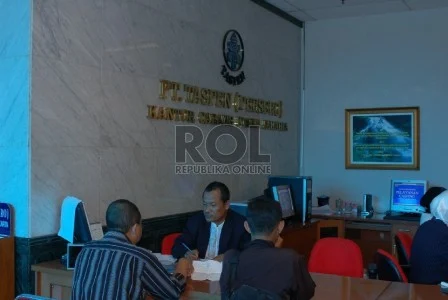
PT Taspen (Persero), the state-owned enterprise entrusted with managing social insurance programs for civil servants and state officials in Indonesia, has announced that it will begin processing the refunds of Tabungan Perumahan Pegawai Negeri Sipil (Taperum PNS) on June 1. This significant initiative is specifically designed for all civil servants who are scheduled to enter retirement starting from that date. The move aims to return accumulated housing savings to eligible retirees, providing a crucial financial injection as they transition from active service. However, the program explicitly excludes civil servants affiliated with the Ministry of Defense, the Indonesian National Armed Forces (TNI), and the Indonesian National Police (Polri), who typically fall under separate welfare and housing schemes.
Understanding Taperum PNS: A Historical Overview
The Tabungan Perumahan Pegawai Negeri Sipil (Taperum PNS), or Civil Servant Housing Savings Program, was a long-standing government initiative in Indonesia designed to assist civil servants in acquiring housing. Established decades ago, Taperum PNS operated on a mandatory contribution basis, where a small portion of a civil servant’s monthly salary was deducted and pooled into a fund. The primary objective of Taperum was to provide housing benefits, typically in the form of low-interest loans or direct subsidies, to civil servants, thereby addressing the persistent challenge of housing affordability for state employees across the archipelago.
The program was managed by the Badan Pertimbangan Tabungan Perumahan Pegawai Negeri Sipil (Bapertarum PNS), or the Civil Servant Housing Savings Consideration Body. Bapertarum PNS was responsible for collecting and managing these contributions, as well as formulating policies and schemes to disburse housing assistance. For many years, Taperum PNS served as a cornerstone of civil servant welfare, offering a pathway for state employees to realize homeownership, a fundamental aspiration for most Indonesian families. The system aimed to foster stability and improve the quality of life for those serving the public sector, recognizing the importance of adequate housing in overall social welfare. The funds collected through Taperum PNS were often utilized to support various housing projects and financial facilities, contributing to the broader national housing agenda.
However, the landscape of housing finance and civil servant welfare underwent significant changes over time. With the establishment of the Public Housing Savings Management Body (BP Tapera) through Law No. 4 of 2016, the government initiated a comprehensive reform of housing savings programs. BP Tapera was mandated to consolidate and manage public housing savings, including those for civil servants, with a broader scope and more modern mechanisms. This transition eventually led to the dissolution of Bapertarum PNS and the transfer of its assets and responsibilities to BP Tapera. Consequently, the Taperum PNS program, in its original form, began to be phased out, paving the way for the new Tapera system. The refunds announced by Taspen are a direct consequence of this transition, ensuring that civil servants who contributed to the old Taperum system receive their accumulated savings as the program officially winds down.
Taspen’s Mandate and the Refund Mechanism
PT Taspen (Persero) plays a pivotal role in the Indonesian public sector’s welfare architecture. As a state-owned enterprise, its core mandate encompasses managing pension funds, old age savings (Tabungan Hari Tua or THT), and other social insurance benefits for civil servants, judges, and state officials. Given its extensive experience, robust infrastructure, and direct relationship with millions of civil servants through its widespread network of branch offices, Taspen is uniquely positioned to handle the Taperum PNS refunds.
The decision for Taspen to manage these repayments stems from a specific cooperation agreement forged between Taspen and the now-defunct Badan Pertimbangan Tabungan Perumahan Pegawai Negeri Sipil. This agreement delineates Taspen’s responsibility in facilitating the repayment process, leveraging its existing payment systems and administrative channels. Taspen’s established framework for disbursing pensions and THT benefits makes it the most efficient and logical entity to undertake this complex task, ensuring a smooth and coordinated distribution of funds to eligible retirees.
According to Iwan Soeroto, Taspen’s Corporate Secretary at the time of the announcement, the repayment process has been meticulously designed for the convenience of the retirees. The Taperum PNS refund will not be disbursed as a standalone payment. Instead, it will be bundled together with the first pension payment and the Old Age Savings (THT) payout. This integrated approach means that retirees will receive all their due benefits—pension, THT, and Taperum refund—in a single package. This streamlined method is intended to simplify the administrative burden for civil servants, eliminating the need for multiple visits or separate claims. The combined payment will be processed at the respective Taspen branch offices where the retirees typically handle their pension-related affairs, further enhancing accessibility and ease of collection.
Payment Logistics and Eligibility Criteria
The commencement date for these crucial refunds is set for June 1. This date marks the beginning of a continuous process, as the refunds are specifically designated for civil servants who reach their retirement age starting from June 1 onwards. This means that as each batch of civil servants retires in the subsequent months and years, they will be eligible to receive their Taperum PNS refunds concurrently with their first pension and THT payments.
The refund mechanism is designed to be comprehensive yet specific in its scope. Civil servants are required to process their retirement documentation through the standard procedures, which will automatically trigger the Taperum refund alongside other entitlements. Taspen’s sophisticated database, which holds comprehensive records of civil servant contributions and service history, will be instrumental in accurately calculating and disbursing the correct amounts. The physical disbursement will occur at Taspen’s numerous branch offices located across Indonesia, ensuring that retirees in various regions can access their funds without undue travel or logistical challenges. This localized approach underscores Taspen’s commitment to delivering services efficiently to its vast clientele.
A notable exception to the eligibility criteria involves personnel from the Ministry of Defense, the Indonesian National Armed Forces (TNI), and the Indonesian National Police (Polri). These groups are explicitly excluded from receiving Taperum PNS refunds through Taspen. The rationale behind this exclusion lies in the fact that these specific segments of state employees operate under distinct social security and welfare systems. For instance, military and police personnel are typically covered by ASABRI (Asuransi Sosial Angkatan Bersenjata Republik Indonesia), a state-owned social insurance company that manages their pension, old age savings, and other benefits, including housing-related assistance. This differentiation ensures that each group of state employees receives benefits tailored to their unique professional circumstances and is managed by the appropriate specialized agency, avoiding overlap and ensuring administrative clarity.
The Evolution of Civil Servant Contributions

For many years, the contribution structure for Taperum PNS was standardized and mandated by Presidential Decree Number 46 of 1994. This decree stipulated fixed monthly contributions from civil servants, varying according to their employment grade or "golongan." Under this regulation, civil servants were required to contribute a specific amount from their salaries each month. For civil servants in Golongan I, the monthly contribution was Rp 3,000. Those in Golongan II contributed Rp 5,000, while Golongan III civil servants paid Rp 7,000. The highest-earning group, Golongan IV, contributed Rp 10,000 per month. These amounts, though seemingly modest by today’s standards, were a mandatory deduction aimed at pooling resources for collective housing assistance.
At the time of the original announcement, Taspen was actively pursuing an initiative to revise this fixed contribution structure. The proposal aimed to transition from fixed nominal amounts to a percentage-based contribution, specifically targeting 2.5 percent of a civil servant’s total monthly salary. This proposed change reflected a broader effort to modernize the housing savings scheme and make contributions more equitable and proportional to income levels.
The shift to a percentage-based contribution would have several implications. Firstly, it would ensure that higher-earning civil servants contribute more, aligning the scheme with principles of progressive taxation and social equity. Secondly, it would potentially lead to a larger accumulation of funds over a civil servant’s career, theoretically providing more substantial housing benefits or refunds upon retirement. This approach would also automatically adjust contributions in line with salary increases, eliminating the need for periodic revisions of fixed nominal amounts. Such a reform would have represented a significant step towards a more dynamic and financially sustainable housing savings program for civil servants, moving away from a static model to one that better reflected individual earning capacities and the evolving economic landscape. While this specific proposal predates the full implementation of BP Tapera, it highlights the ongoing efforts to refine and improve civil servant welfare programs.
Statements from Taspen: Ensuring Seamless Transitions
Iwan Soeroto, then Corporate Secretary of Taspen, emphasized the importance of a smooth and convenient process for the retiring civil servants. His statement, as quoted by Antara, highlighted the core principle guiding Taspen’s approach: "Pembayaran dilakukan satu paket untuk kemudahan PNS dalam menerima haknya," which translates to, "The payment is made as one package for the convenience of civil servants in receiving their rights." This statement underscores Taspen’s commitment to minimizing administrative hurdles and ensuring that retirees can access their accumulated benefits with ease and efficiency. The integrated payment system is a direct manifestation of this philosophy, designed to provide a hassle-free experience during a critical transition period in a civil servant’s life.
Beyond the logistical convenience, the announcement itself serves as a clear communication to thousands of civil servants nearing retirement. It provides certainty and transparency regarding the return of their long-held housing savings. Such official communications from a trusted state entity like Taspen are crucial for building confidence and trust among its beneficiaries. The proactive stance taken by Taspen in clarifying the payment schedule and mechanism helps to manage expectations and prevent potential confusion or anxiety among retirees. It also reinforces the government’s commitment to honoring its obligations towards its public servants, ensuring that their dedicated service is acknowledged and rewarded through the timely disbursement of their entitlements.
Broader Implications for Civil Servant Welfare
The commencement of Taperum PNS refunds carries significant broader implications for civil servant welfare in Indonesia. For the retiring civil servants, this lump sum payment represents a substantial financial resource. Many retirees face new financial realities, including potential healthcare costs, support for family members, or the desire to invest in post-retirement ventures. The Taperum refund, combined with their pension and THT, provides enhanced financial security and flexibility during this crucial life stage. It can be used for various purposes, such as home renovations, settling outstanding debts, starting a small business, or simply bolstering their savings for future needs. This financial injection can significantly improve their quality of life post-employment.
From an institutional perspective, the efficient handling of these refunds by Taspen demonstrates the operational capacity and reliability of state-owned enterprises in managing complex social security programs. It showcases Taspen’s ability to adapt to changes in government policy, such as the phasing out of Taperum PNS, while maintaining its core service delivery. The successful execution of this program is vital for Taspen’s reputation and its ongoing role as a cornerstone of civil servant welfare.
Moreover, this initiative contributes to the broader national agenda of ensuring social protection and economic stability for the elderly population, particularly those who have dedicated their careers to public service. By returning these housing savings, the government reinforces its commitment to civil servants, recognizing their contributions to national development. It also provides a clear precedent for the orderly winding down of older welfare schemes and the transition to newer, more integrated systems like BP Tapera, ensuring that beneficiaries’ rights are protected throughout such reforms.
The Future of Housing Savings: A Look Ahead
While Taspen is currently focused on refunding the legacy Taperum PNS contributions, it is important to contextualize this within the larger evolution of Indonesia’s public housing savings framework. The establishment of BP Tapera marks a pivotal shift in the nation’s approach to housing finance. BP Tapera is designed to be a comprehensive and sustainable public housing savings program that covers not only civil servants but also private sector employees and informal workers, aiming to expand access to affordable housing for a much wider segment of the population.
Under BP Tapera, participants make mandatory monthly contributions, which are then managed by the body to provide low-interest housing loans, down payment assistance, or construction financing. The new system aims to address some of the limitations of older programs, such as the relatively small contributions in Taperum PNS, by implementing a more robust and equitable contribution structure. For civil servants, the transition means that new housing savings contributions are now directed towards BP Tapera, which is expected to offer more diverse and substantial housing financing options in the long run.
The Taperum PNS refunds, therefore, represent the final chapter of an important historical program, clearing the slate as the nation fully embraces the BP Tapera framework. This transition underscores the government’s continuous efforts to refine and strengthen its social security and welfare provisions, adapting to changing demographics, economic conditions, and national housing needs. The orderly refund process ensures that the legacy of Taperum PNS is honored while paving the way for a more integrated and inclusive future for public housing savings in Indonesia.








