
 Nila Kartika Wati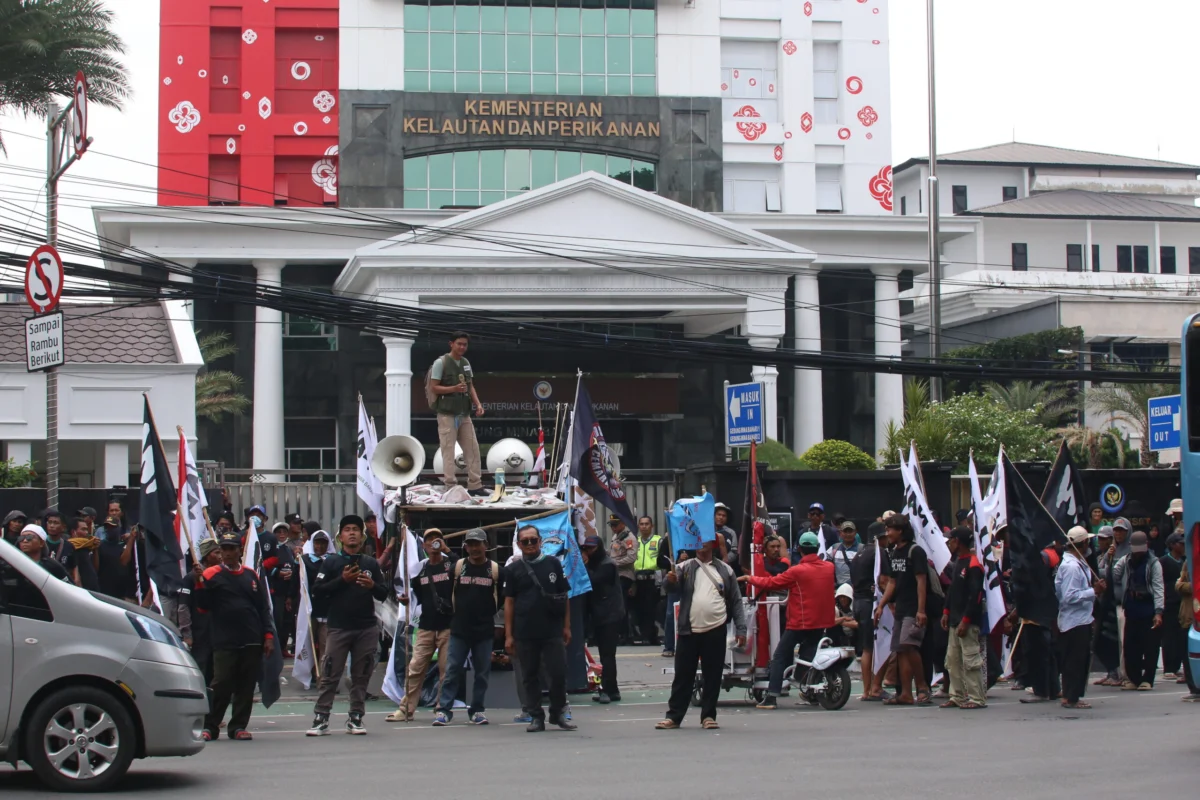
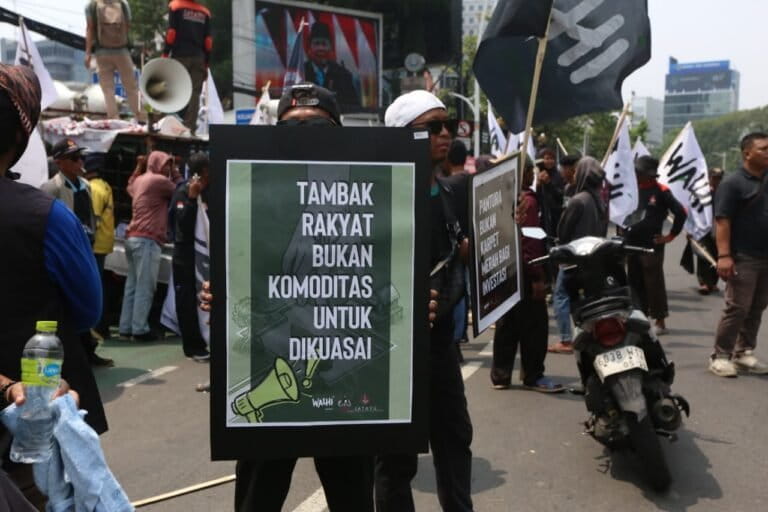
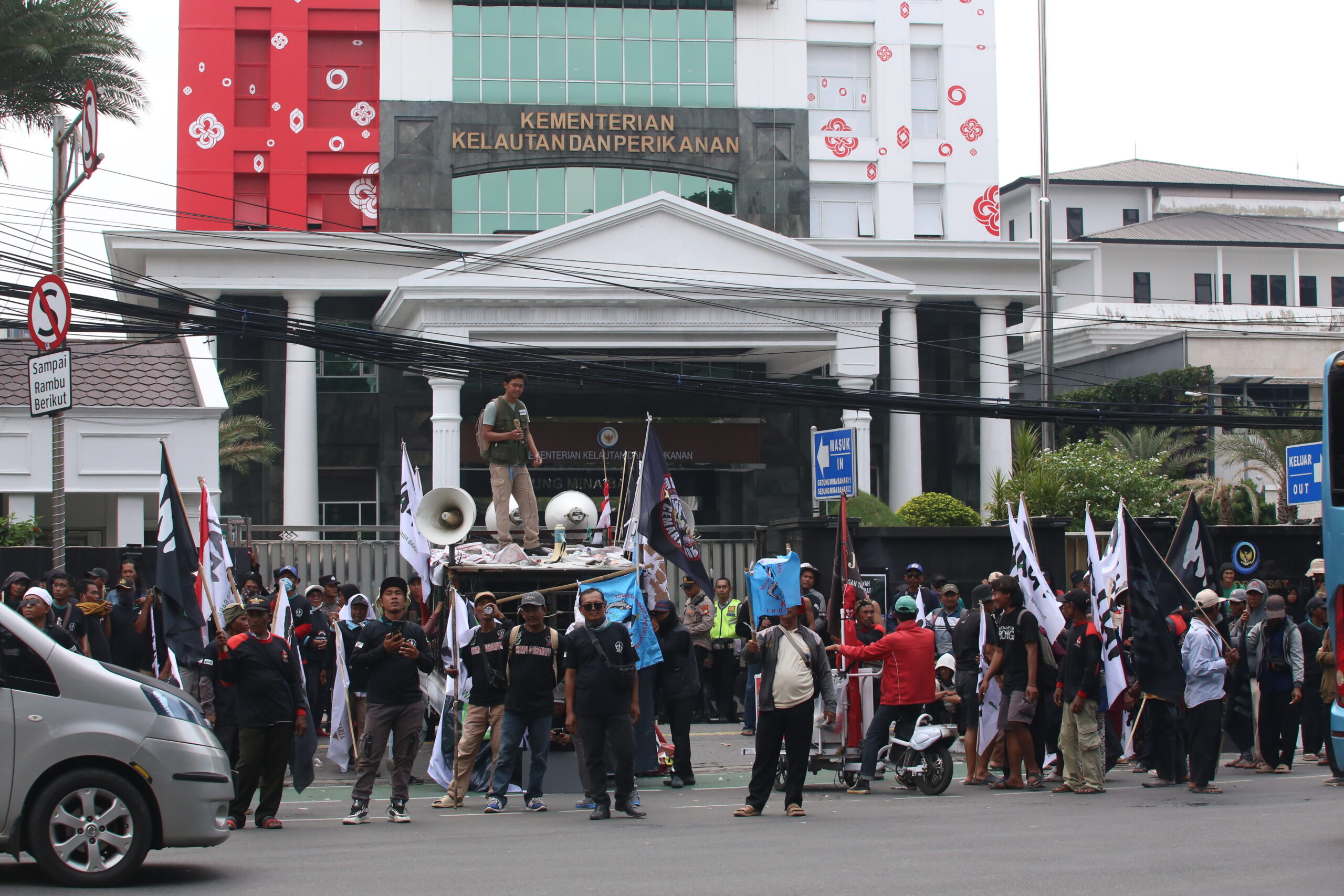
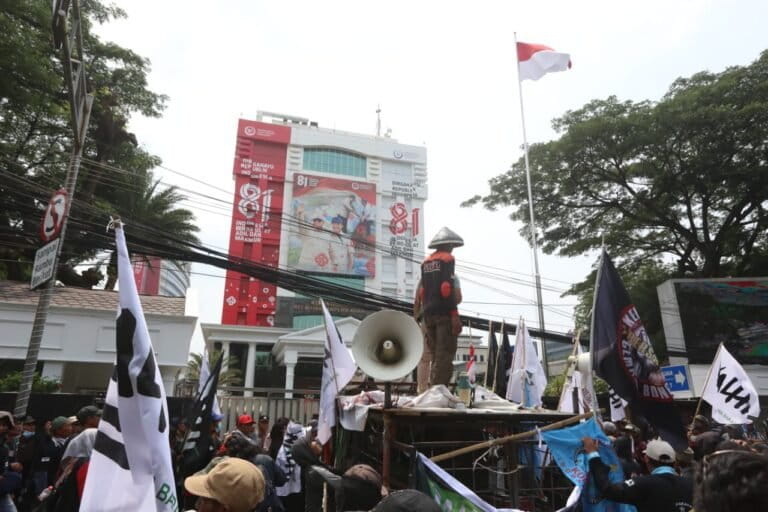
A massive wave of protest erupted outside the Ministry of Marine Affairs and Fisheries (KKP) headquarters in Jakarta on Thursday, September 24, 2026, as hundreds of fishermen from the Indramayu Coastal Community Coalition (Kompi), the Indramayu Coal-Free Network (Jatayu), and the Indonesian Forum for the Environment (Walhi) demanded the immediate cessation of the national strategic project (PSN) aimed at revitalizing fish farms along the northern coast of West Java. The demonstration, characterized by intense frustration, highlighted a deepening rift between the government’s industrial-scale aquaculture ambitions and the traditional, generations-old livelihoods of coastal inhabitants.
The project, part of a broader list of 77 National Strategic Projects (PSN) initiated under the administration of President Prabowo Subianto, intends to revitalize 20,000 hectares of aquaculture ponds across the regencies of Bekasi, Karawang, Subang, and Indramayu. While the KKP frames this initiative as a technological upgrade to boost national food security and regional productivity, local stakeholders argue that the project is a top-down intervention that ignores the rights, traditional knowledge, and ecological realities of the communities who have stewarded these lands for decades.
A History of Omission and Lack of Transparency
The protest was driven by a fundamental grievance: the total absence of meaningful public consultation. Rustam, a local fisherman and participant in the protest, stated that the planning phase for the project was conducted in complete isolation from the people it directly affects. "From the very beginning, this project did not involve the community. Forget about being employed; there wasn’t even a basic socialization process to inform us about what was happening to our ancestral lands," he noted.
This lack of transparency has created a climate of anxiety among the coastal population. Ratiman, a fisherman from Kampung Cantigi, Indramayu, described the emotional and financial burden of traveling to Jakarta to voice his opposition. Carrying the weight of his family’s four-hectare milkfish pond—an asset inherited through generations—Ratiman expressed that his livelihood is not a corporate venture but a subsistence necessity. For him, the six-month cycle required to harvest milkfish provides a modest income of roughly Rp 20 million, which sustains his family and manages the debt incurred during the long wait for harvest. The prospect of losing this, or having it subsumed by a government-backed project, represents an existential threat to his household stability.
The Ecological Stakes: A Region Under Pressure
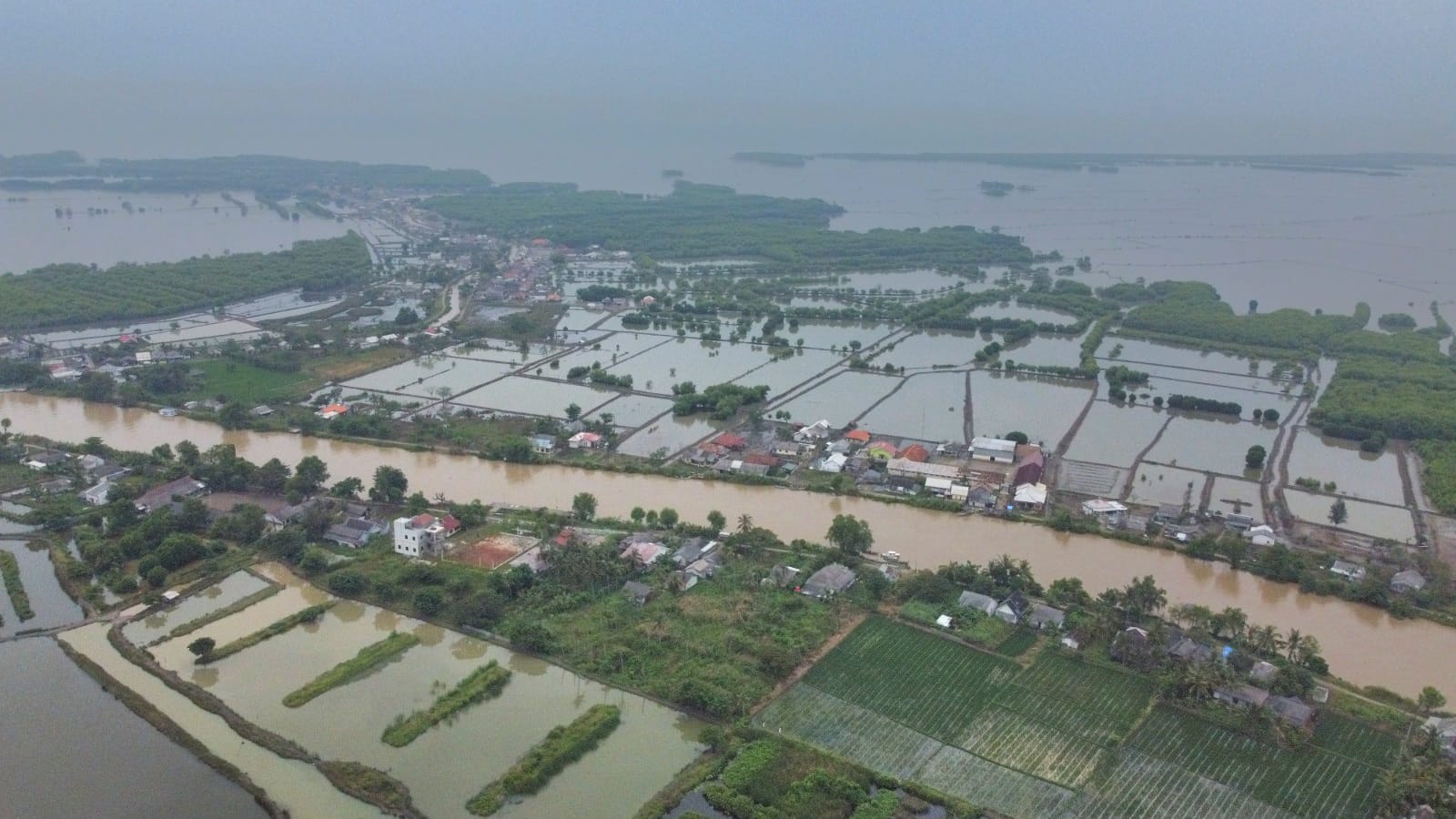
Wahyudin, Director of Walhi West Java, argued that the government’s plan significantly underestimates the environmental volatility of the northern coast. According to Walhi’s assessment, the region is already reeling from the cumulative impact of past industrial developments, including the construction and operation of the Indramayu Coal-Fired Power Plant (PLTU). Historical data suggests that the PLTU’s infrastructure has significantly altered local ocean currents, leading to severe coastal abrasion—estimated at 9,566 meters per year in areas such as Ujung Gebang Beach.
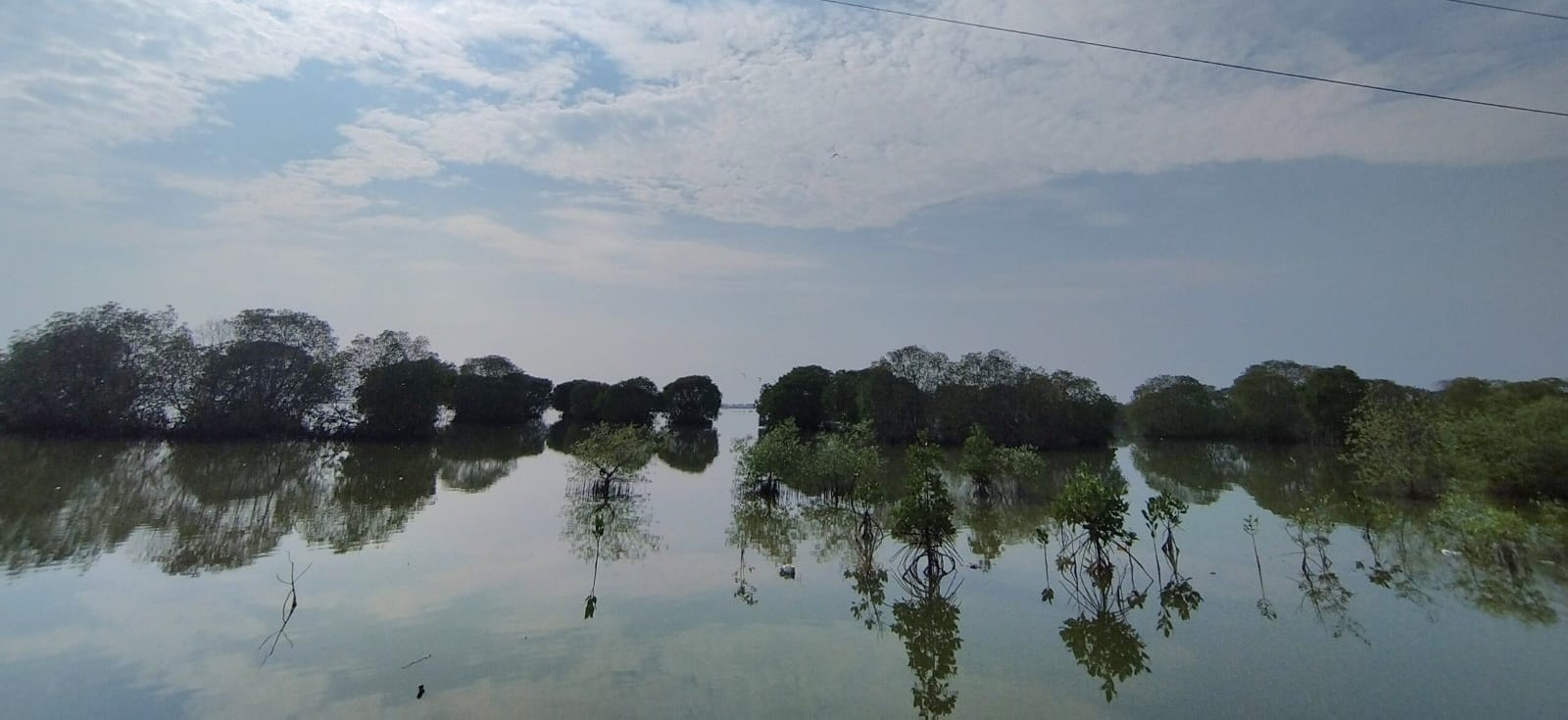
The concern is that the KKP’s revitalization project will act as a "final straw" for the fragile ecosystem. While the government claims that the project includes provisions for mangrove conservation, environmental activists argue that the reality on the ground contradicts these promises. "In various statements, the KKP claims they will protect mangrove areas through replanting. However, on the ground, we have seen that the KKP has already demarcated several mangrove zones as part of this project’s footprint," Wahyudin stated.
Furthermore, there is deep concern regarding water quality. Intensive aquaculture often requires high inputs of feed and chemicals, which, if not managed correctly, result in significant effluent discharge. Given the current state of the northern Javanese rivers and the limited transparency surrounding the project’s Environmental Impact Assessment (AMDAL), there is a high risk of systemic contamination that could decimate wild fish stocks and exacerbate the decline of artisanal fishing grounds.
The Regulatory and Legal Disconnect
The conflict is underscored by a major clash between the state’s vision for "Food Security Forests" (KHKP) and the legal rights of local communities. On December 2024, the KKP issued a directive (No. 2477/MEN-KP/XII/2024) requesting the Ministry of Forestry to designate these coastal areas as KHKP. This culminated in the Minister of Forestry’s Decree No. 274 of 2025, which officially designated over 20,413 hectares across the four regencies for this purpose.
Mida Saragih, Campaign Manager for Coastal and Marine issues at Walhi’s National Executive, pointed out that this action contradicts the spirit of Law No. 27/2007 (as amended by Law No. 1/2014) on the Management of Coastal Areas and Small Islands. This legislation mandates that the state provide legal certainty and recognition for local communities to manage their own livelihoods on traditional ponds.
"The KKP should be protecting the coastal community, as mandated by the law, rather than acting as a party that threatens their very survival," Mida asserted. She argued that the government’s justification—that the current aquaculture sector is unproductive—is a "structural problem" that they have failed to address. Instead of investing in the existing, locally-managed infrastructure, the government is choosing to impose a massive project that ignores the existing, sustainable, and long-term land-tenure systems established by the villagers.
Government Perspective: The Push for Productivity
In contrast to the protestors, the KKP has consistently maintained that the project is an essential step toward economic modernization. During his visit to Indramayu in March 2026, the Director General of Aquaculture at the KKP, Tb Haeru Rahayu, emphasized that the project was never intended to seize land from the people. Rather, the goal is to increase the Nilai Tukar Pembudidaya Ikan (NTPI), or the Fish Farmer Exchange Rate—a key indicator of economic welfare for those in the aquaculture sector.
The KKP argues that without state intervention and technological infusion, the traditional ponds will continue to languish with low yields, leaving farmers in a cycle of poverty. By "revitalizing" these ponds, the government aims to increase yield density and stabilize market prices. However, this technocratic approach has failed to account for the social capital and communal bonds that define the northern coast’s economy. Critics suggest that for the government, "efficiency" has become a shorthand for "centralization," often at the expense of the diverse, small-scale farming techniques that have survived for centuries.
The Failure of Participatory Governance
The timeline of the project’s approval reveals a disturbing pattern of exclusion. Despite formal objections raised by the Kompi and Walhi during the AMDAL public hearing on April 16, 2026, the KKP proceeded with the project. Just two months later, on June 18, 2026, the Environmental Feasibility Decision (SKKLH) was issued.
Teo Reffelsen, Manager of Legal and Advocacy at Walhi, noted that the rapid issuance of the SKKLH is a clear indicator of a "meaningless" public participation process. "The total disregard for the objections raised by the community proves that the government had no intention of listening. They were merely ticking boxes," he remarked.
Broader Implications and Future Outlook
The standoff in Jakarta signals a broader crisis in the management of Indonesia’s coastal resources. As the government aggressively pursues the PSN agenda to bolster food security, the tension between large-scale development and community-based resource management is reaching a boiling point. The fishermen of Indramayu are not asking for compensation or a seat at the table to negotiate the terms of their displacement; they are demanding the total cancellation of the project.
For the government, the challenge lies in reconciling its national food security targets with the constitutional mandate to protect the rights of its citizens. If the project continues in its current form, it risks triggering not only a long-term ecological disaster but also significant social unrest in the northern Javanese corridor.
As the protest concluded, the message from the coalitions was clear: the people of the coast are not "empty space" waiting to be developed. They are active managers of their own future. Without a fundamental shift toward bottom-up planning, legal recognition of traditional tenure, and a transparent evaluation of the true ecological cost, the KKP’s "revitalization" project faces a difficult and increasingly confrontational path forward. The fishermen’s demand remains steadfast: they seek the preservation of their space, the protection of their mangroves, and a government that views them as partners in development, not obstacles to it.









