
 Azin Asro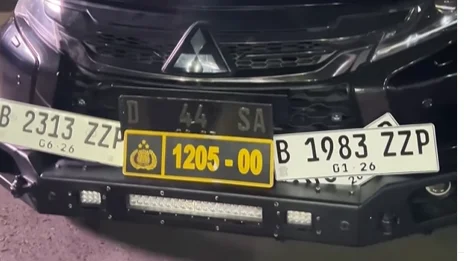
The Indonesian capital and its surrounding metropolitan areas are witnessing an alarming trend among motorists who resort to various illicit methods to disguise their vehicle identity. From removing official registration plates entirely and obscuring specific alphanumeric characters to utilizing sophisticated counterfeit license plates, drivers are increasingly finding ways to evade accountability on the nation’s roadways. This phenomenon has sparked widespread concern among transportation experts, law enforcement agencies, and the general public, prompting calls for stricter surveillance and severe legal repercussions against offenders who seek to bypass the law.
Transportation observers and safety advocates have pointed out that these deceptive practices undermine the integrity of modern traffic surveillance systems. The primary catalyst behind this surge in license plate tampering is the nationwide implementation of automated electronic law enforcement technologies designed to curb traffic violations without requiring direct police intervention. However, as the country moves deeper into the era of digital traffic management, a persistent faction of motorists continues to exploit regulatory loopholes, posing significant challenges to road safety and criminal investigations alike.
Understanding the Mechanics of License Plate Tampering
Vehicle owners employ a myriad of tactics to render their Tanda Nomor Kendaraan Bermotor (TNKB), or official vehicle registration plates, unreadable to automated cameras and human eyes. Common methods include deliberately altering one or two digits or letters using unauthorized fonts, completely detaching the rear registration plate, or installing tinted acrylic covers that distort light and prevent high-speed cameras from capturing precise details.
According to Djoko Setijowarno, an esteemed transportation observer and Advisory Board Member of the Indonesian Transportation Society (MTI), these actions are calculated attempts to neutralize technological surveillance. The deployment of Electronic Traffic Law Enforcement (ETLE) was fundamentally engineered to establish efficiency, accuracy, and absolute transparency in traffic law enforcement through technological integration. Yet, this modernization transition has inadvertently given rise to a unique and deeply concerning subculture of evasion.
When motorists manipulate their plates, they disrupt the foundational data flow required by modern transportation infrastructure. Traffic management centers rely heavily on pristine optical character recognition to log vehicle movements, enforce speed limits, monitor busway intrusions, and issue citations for running red lights. By obstructing this vision, defiant drivers effectively blind the automated system, leaving traffic authorities with limited recourse unless officers intercept the vehicles manually in the field.
Financial Evasion and Criminal Undertones
Beyond the immediate desire to evade traffic fines issued via ETLE, the motivations driving license plate manipulation often extend into darker territories, including financial fraud and serious criminal enterprises. A significant portion of motorists engaging in these illegal alterations consists of individuals struggling to meet financial obligations associated with their vehicles.
Motorists burdened by delinquent vehicle financing installments frequently resort to deploying counterfeit registration plates or completely obscuring their genuine TNKB. The objective is to outsmart repo men, commonly referred to locally as "mata elang" or field debt collectors, thereby preventing the legal repossession of automobiles or motorcycles whose loans have defaulted. By disguising the vehicle’s true identity, these debtors can navigate public thoroughfares without triggering the tracking mechanisms employed by financial institutions and leasing companies.
More alarming, however, is the intersection between counterfeit registration plates and violent crime. Law enforcement archives reveal that the use of obscured or fake license plates often serves as the preliminary logistical phase for perpetrators before executing major criminal acts. Investigators note that unauthorized plates are frequently utilized to mask identities during motorcycle thefts, fraud schemes, hit-and-run incidents, and high-stakes street crimes such as armed robbery and violent roadside muggings. Because the perpetrators intentionally falsify their vehicular identity, tracing the culprits becomes exponentially more difficult for detectives, delaying justice and leaving communities vulnerable to repeat offenders.
Chronology of Digital Traffic Enforcement and Evasion Tactics
The evolution of traffic law enforcement in Indonesia has undergone a monumental shift over the past decade, moving away from manual roadside stops by traffic police toward centralized digital monitoring. The transition began gaining serious momentum with the gradual rollout of the ETLE system across major urban centers, most notably Jakarta, Surabaya, Bandung, and other key metropolitan zones.
Initial phases of ETLE deployment focused primarily on capturing obvious infractions such as failure to use seatbelts, illegal mobile phone usage while driving, and signal violations at major intersections. As the technology proved successful in reducing conventional bribery and standardizing citation issuance, the National Police Corps (Korlantas Polri) expanded the network to encompass hundreds of high-definition cameras equipped with automatic number plate recognition software.
However, almost in lockstep with the expansion of digital surveillance, violators began adapting. Shortly after the nationwide rollout of static and mobile ETLE units, traffic authorities noted an uptick in anomalous readings where high-definition cameras flagged vehicles with unreadable plates. By late 2021 and throughout subsequent years, police reports highlighted an increasing number of drivers apprehended with modified acrylic covers, magnetic flaps designed to fold over plates upon command, and entirely fabricated registration numbers printed in unauthorized workshops. This technological arms race between traffic regulators and defiant motorists continues to shape the current landscape of Indonesian road administration.
Legal Framework and Severe Sanctions
The deliberate alteration, concealment, or counterfeiting of vehicle registration plates is not merely a minor administrative oversight; it constitutes a severe violation of Indonesian law with compounding legal consequences. Jurisprudence governing road transport and criminal acts provides multiple avenues for prosecuting offenders caught utilizing fraudulent plates.
From a traffic regulatory perspective, the primary legal instrument is Undang-Undang Nomor 22 Tahun 2009 tentang Lalu Lintas dan Angkutan Jalan (The Traffic and Road Transportation Law No. 22 of 2009). Specifically, Article 280 of this legislation dictates that any person operating a motorized vehicle on public roads that is not equipped with a valid TNKB officially stipulated by the Indonesian National Police shall be subjected to strict punitive measures. Violators face criminal confinement for a maximum duration of two months or administrative fines reaching up to Rp 500,000. While these traffic-tier penalties address basic non-compliance, they represent only the baseline of potential legal repercussions.
When the infraction escalates to deliberate forgery—such as manufacturing a completely new, fake registration plate not issued by Korlantas Polri with the intent to deceive law enforcement or the public—the legal gravity intensifies dramatically. Under the Indonesian Criminal Code (KUHP), specifically Article 263 concerning the falsification of documents, individuals involved in creating or utilizing counterfeit official documentation face the threat of imprisonment for up to six years. Legal experts emphasize that a vehicle registration plate issued by the state is legally classified as an official document, meaning its unauthorized replication falls squarely within the jurisdiction of criminal forgery statutes rather than minor traffic infractions.
Broader Impacts and Implications for Society
The widespread proliferation of manipulated and fake license plates carries profound systemic implications for public safety, urban mobility, and the rule of law. When a substantial segment of the driving population operates outside the parameters of accountable identification, the entire traffic ecosystem suffers.
First, public trust in automated enforcement mechanisms is severely tested. If motorists perceive that breaking traffic laws carries no consequence because identifying markers can be easily concealed with inexpensive accessories or fake plates, the deterrent value of digital infrastructure is compromised. This erosion of deterrence leads to higher rates of reckless driving, increased congestion, and a higher probability of traffic accidents that could otherwise be prevented through disciplined adherence to safety regulations.
Second, law enforcement agencies face heightened operational burdens. Traffic police and criminal investigators must dedicate additional resources to intercepting and inspecting vehicles with suspicious alterations, diverting manpower away from other critical policing duties. The difficulty in tracing vehicles involved in crimes due to fraudulent plates also translates to lower clearance rates for hit-and-run cases and vehicle thefts, leaving victims without adequate recourse or closure.
Industry observers and transportation analysts stress that combating this issue requires a multifaceted approach. Beyond the strict enforcement of existing legal statutes and heavier penalties meted out by courts, technological countermeasures must also evolve. This includes upgrading optical recognition software to detect subtle anomalies in plate fonts, deploying artificial intelligence to flag vehicles exhibiting evasive behavioral patterns, and conducting routine physical checkpoints targeting unauthorized vehicle accessories.
Ultimately, the integrity of Indonesia’s transportation network relies heavily on transparency and mutual accountability between motorists and regulatory authorities. As law enforcement agencies continue to crack down on the illegal modification and counterfeiting of vehicle registration plates, the message to the public remains unequivocal: the short-term convenience of evading a digital citation or hiding from financial obligations carries long-term consequences that can severely disrupt one’s life through steep financial penalties and severe criminal prosecution.









