Eko Sulistyo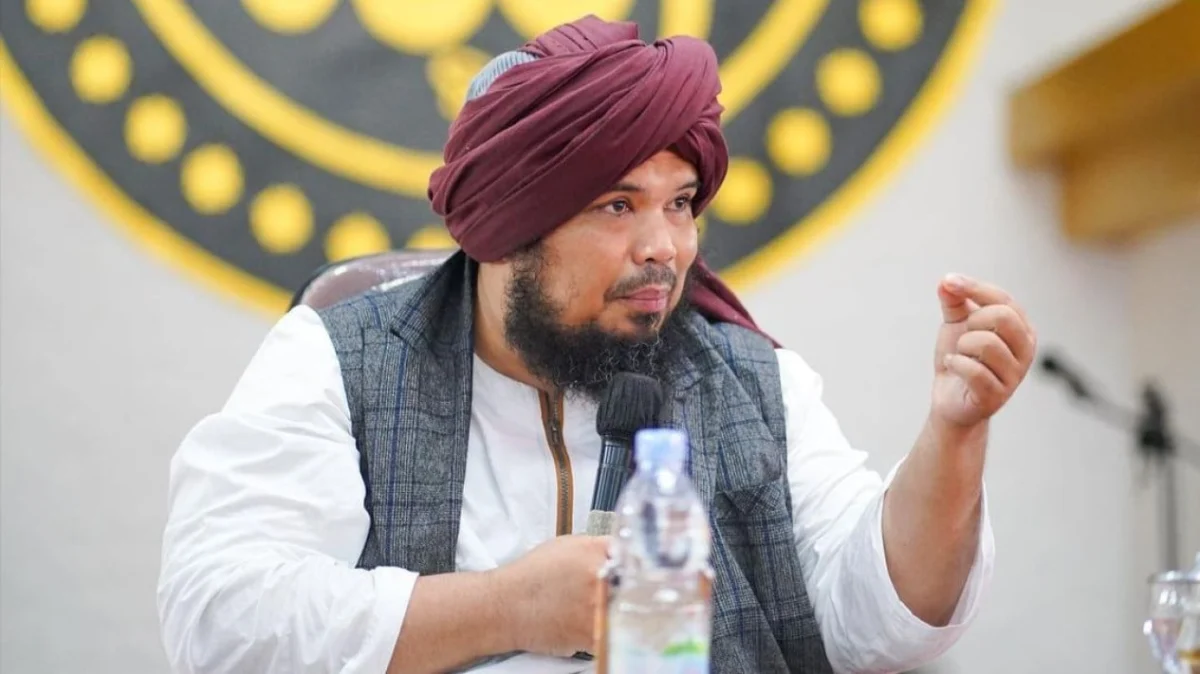
The recent controversy surrounding the revocation of the mualaf certificate belonging to prominent doctor and digital content creator Richard Lee has sparked significant public discourse across Indonesia. As the news of the revocation by the Mualaf Center Indonesia (MCI) began to circulate, questions arose regarding the validity of the physician’s religious status and the implications such an administrative move has on a person’s spiritual identity within the Islamic faith. Addressing these concerns, key figures within the religious community have stepped forward to provide clarity, distinguishing between the bureaucratic requirements of religious institutions and the personal, theological standing of an individual before God.
The Secretary-General of the Mualaf Center Indonesia, Hanny Kristianto, recently clarified that the decision to revoke the certificate was a matter of administrative protocol rather than a theological judgment. According to Kristianto, a mualaf certificate serves as a formal document provided by an organization to assist a new convert in navigating the legal and social landscapes of Indonesia. However, he emphasized that the presence or absence of such a document does not dictate whether a person is a Muslim. This distinction is crucial in understanding the current friction between Richard Lee and the organization that initially facilitated his formal entry into the faith.
The Role of Ustaz Derry Sulaiman in the Clarification Process
In the wake of the growing polemic, Ustaz Derry Sulaiman, a well-known preacher who acted as a mentor and witness during Richard Lee’s conversion process, has provided an essential perspective. Through a video statement shared on his social media platforms, Sulaiman addressed the rumors regarding the certificate revocation. While he admitted to not having full knowledge of the specific internal administrative decisions made by MCI regarding the physical document, he confirmed that he had engaged in "tabayyun"—an Islamic concept referring to the diligent verification of facts to prevent misunderstandings.
During his communication with the Mualaf Center Indonesia, Sulaiman was assured that the organization does not claim the authority to cancel a person’s Islam. "I have conducted tabayyun, and they stated, ‘It is not my right to cancel someone’s Islam.’ Indeed, no human being has the authority to say ‘You are not a Muslim’ if that person acknowledges Islam and has recited the Syahadat (the testimony of faith)," Sulaiman explained. This statement reinforces the core Islamic principle that faith is a private matter between the individual and the Creator, and as long as the testimony of faith remains, the individual is recognized as a member of the Ummah (the Muslim community).
Sulaiman’s involvement is particularly significant given his history with Richard Lee. As a spiritual guide, he has been a first-hand witness to the doctor’s journey. He reminded the public that a "mualaf"—a term derived from the Arabic root meaning "those whose hearts are to be reconciled"—is often in a state of transition. In Islamic jurisprudence, a mualaf is considered someone who may still be "weak" in their understanding of the faith, their practice of rituals, or their social integration into the Muslim community. Therefore, they require guidance and patience rather than public scrutiny or administrative hurdles.
Administrative Certificates vs. Theological Reality
To understand the weight of this controversy, it is necessary to look at the role of religious certification in the Indonesian context. While faith is inherently spiritual, Indonesia’s civil administration requires formal documentation for various legal processes. A mualaf certificate is often required for:
- Updating Civil Documents: Changing the religious status on a National Identity Card (KTP) and Family Card (KK).
- Marriage Licenses: Under Indonesian law, marriage is governed by religious regulations. A convert needs proof of their faith to register a marriage at the Office of Religious Affairs (KUA).
- Hajj and Umrah Pilgrimage: The Saudi Arabian government requires proof of Islam for those wishing to enter the holy cities of Mecca and Medina.
- Inheritance Laws: Formal documentation ensures that Islamic inheritance laws (Farai’d) are applied correctly to the individual’s estate.
However, from a purely theological standpoint, the "legal" entry into Islam occurs the moment an individual recites the Syahadat with sincerity and intention, usually in the presence of witnesses. There is no requirement in the Quran or Hadith for a printed certificate to validate one’s belief. The Mualaf Center Indonesia’s decision to revoke a certificate is often tied to the individual’s commitment to the organization’s specific mentoring programs or administrative compliance, rather than a declaration of apostasy.
Chronology of Richard Lee’s Religious Journey
Richard Lee, a figure primarily known for his viral content regarding skincare safety and his legal battles with various public figures, began his public journey toward Islam several years ago. His interest in the religion was documented through his interactions with various religious scholars and his participation in discussions about Islamic values.
The formal conversion took place under the guidance of Ustaz Derry Sulaiman, a transition that was met with both support and skepticism from the public, as is often the case with high-profile "celebrity" conversions in Indonesia. Following the conversion, Lee was granted a certificate from MCI to assist with his transition.
The current friction reportedly stems from a perceived lack of communication or a divergence in the expectations between Lee and the Mualaf Center. In many instances, organizations like MCI require mualaf to undergo a series of educational steps to ensure they are learning the basics of prayer (Salah) and Quranic recitation. When a high-profile individual fails to meet these organizational expectations, or when there are public actions that the organization deems inconsistent with their specific guidance, they may choose to distance themselves administratively. This appears to be the catalyst for the current revocation, though the specific internal reasons remain a matter of private organizational policy.
The Concept of Mualaf and Communal Responsibility
Ustaz Derry Sulaiman’s defense of Richard Lee highlights a broader Islamic ethical framework regarding new converts. He noted that the Muslim community has an obligation to "mu-liakan" or honor those who have recently embraced the faith. "Mualaf means weak; those who have just entered Islam are people who are still weak in their conviction, their creed (aqidah), and their deeds (amal)," Sulaiman stated.
He argued that the process of becoming a practicing Muslim is not instantaneous. It is a journey that requires a supportive environment, free from the threat of "cancellation" by human institutions. Sulaiman revealed that he had met with Richard Lee only a few weeks prior to the controversy and confirmed that the doctor still identifies as a Muslim and maintains his faith. "As long as someone has not stated that they have left Islam, we must not treat them as a non-Muslim," he concluded.
Social and Psychological Implications for New Converts
The public nature of this dispute brings to light the immense pressure placed on public figures who convert to Islam in Indonesia. Sociologists suggest that "celebrity mualaf" often face a "double burden." They are expected to become "perfect" Muslims overnight, often becoming targets of criticism if their lifestyle does not immediately align with traditionalist expectations.
When an organization like the Mualaf Center revokes a certificate, it can send a confusing signal to the public, potentially leading to social ostracization of the convert. This case serves as a reminder of the need for religious institutions to balance administrative discipline with the spiritual sensitivity required when dealing with new members of the faith. The "gatekeeping" of religious identity through paperwork is a modern phenomenon that often clashes with the more fluid and personal nature of spiritual growth.
Analysis of Potential Impacts
The implications of this event are threefold: legal, social, and institutional. Legally, Richard Lee may face hurdles if he needs to prove his religious status for civil purposes without the MCI certificate, although he can likely obtain a similar document from other recognized bodies such as the Istiqlal Mosque or the Ministry of Religious Affairs.
Socially, the controversy tests the "cancel culture" within religious circles. If the public perceives that a person’s faith can be "revoked" by an organization, it may discourage others from exploring the religion or seeking formal conversion for fear of future public embarrassment.
Institutionally, this event may prompt organizations like the Mualaf Center Indonesia to review their communication strategies. While they have the right to manage their internal administrative records, the public fallout of "revoking" a certificate suggests that clearer distinctions must be made between "membership in an organization" and "status within a religion."
As of early May 2026, Richard Lee has continued his professional activities, while Ustaz Derry Sulaiman continues to act as a bridge between the doctor and the wider religious community. The consensus among scholars remains that while certificates are a product of modern bureaucracy, the heart’s conviction remains outside the jurisdiction of human administrative offices. The discourse serves as a landmark case in how Indonesia navigates the intersection of private faith, public persona, and institutional authority in the digital age.