Azin Asro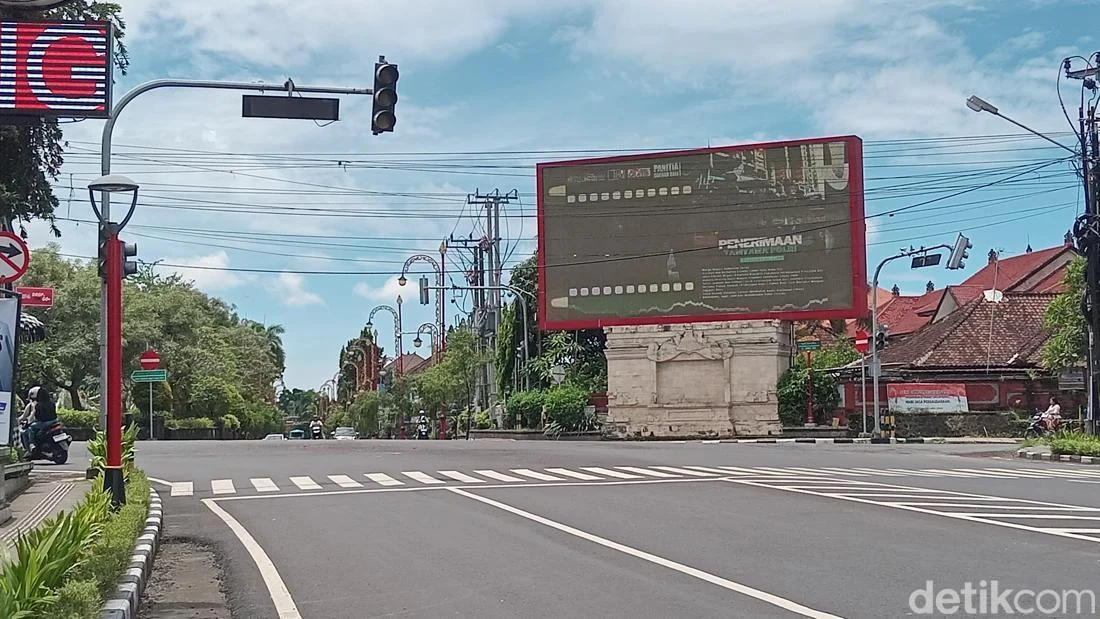
The integrity of road markings, specifically the solid white stop lines found at signalized intersections, has become a focal point of intensified traffic enforcement across Southeast Asia. In a recent move that has captured the attention of motorists across the region, the Malaysian Road Transport Department (Jabatan Pengangkutan Jalan, or JPJ) issued a stern reminder that encroaching upon these markings is not a minor oversight but a serious legal infraction. Motorists in Malaysia who fail to bring their vehicles to a complete stop behind the designated white line at red lights now face stringent penalties, including fines of up to 2,000 Ringgit (approximately IDR 8.7 million) and potential imprisonment for up to six months. This enforcement push underscores a broader regional trend toward utilizing heavy fiscal and legal deterrents to improve road safety and protect vulnerable road users, such as pedestrians and cyclists.
The Legal Framework and Enforcement in Malaysia
The recent announcement by the JPJ is rooted in established traffic regulations that seek to maintain order at high-traffic intersections. According to a public advisory released via the department’s official social media channels, the white line serves as a critical safety boundary. It is designed to ensure that vehicles remain at a safe distance from pedestrian crossings and the flow of cross-traffic. The JPJ emphasized that the habit of "creeping" forward past the line while waiting for a green light creates unnecessary hazards and obstructs the visibility of other road users.
Under the Malaysian Road Traffic Rules 1959, specifically Rule 38, drivers are required to stop before the line when the signal is red. Failure to comply is categorized as a serious offense. The penalties are significantly higher than many motorists anticipated, reflecting the government’s "zero tolerance" approach to intersection violations. The fine, which can reach 2,000 Ringgit, is a substantial sum that represents a significant portion of the average monthly income for many residents, serving as a powerful economic deterrent. Furthermore, the possibility of a six-month jail term for repeat offenders or particularly egregious violations highlights the criminal nature of these traffic infractions under the Road Transport Act 1987.
The chronology of this intensified enforcement dates back to mid-2023, when the Royal Malaysia Police (PDRM) launched a nationwide operation known as "Op Garis Putih" (Operation White Line). This operation targeted motorcyclists and car drivers alike who habitually ignored stop lines. During this period, law enforcement officials utilized both physical presence at intersections and surveillance technology to identify violators. The operation was prompted by rising statistics regarding accidents at signalized junctions, many of which were attributed to vehicles being positioned too far forward, thereby interfering with the turning radius of larger vehicles or blocking pedestrian paths.
Comparative Analysis: The Indonesian Regulatory Context
In Indonesia, the regulation of road markings is governed by a robust legislative framework, although the penalties differ in scale from those in Malaysia. The primary legal instrument is Law Number 22 of 2009 concerning Traffic and Road Transportation (UU No. 22 Tahun 2009). This law defines road markings as signs on the road surface that include longitudinal, transverse, and diagonal lines, as well as symbols intended to direct traffic flow and delineate traffic zones.
The specific "stop line" at red lights is categorized as a transverse marking. Its technical specifications and placement are further detailed in the Minister of Transportation Regulation Number 67 of 2018 (PM 67/2018). This regulation stipulates that stop lines must be placed at intersections equipped with Traffic Light Signal Equipment (APILL) to provide a clear boundary for stopping.
The penalties for violating these markings in Indonesia are outlined in Article 287 of Law No. 22 of 2009. The law states that any person driving a motorized vehicle on the road who violates the rules of traffic signs or road markings may be punished with a maximum of two months’ imprisonment or a maximum fine of Rp 500,000. However, for violations specifically related to the disruption of the function of traffic lights and markings as mentioned in Article 275, the penalty is a maximum of one month’s imprisonment or a fine of Rp 250,000.
While the Indonesian fine of Rp 250,000 is considerably lower than the Malaysian fine of Rp 8.7 million, Indonesian authorities have been increasing enforcement through the Electronic Traffic Law Enforcement (E-TLE) system. The E-TLE system uses high-resolution cameras to automatically capture images of vehicles that cross the stop line at red lights. This technological shift aims to remove human bias from enforcement and create a constant sense of surveillance, encouraging motorists to comply with road markings even in the absence of physical police presence.
The Role of Stop Lines in Pedestrian Safety
The primary objective of enforcing stop line discipline is the protection of pedestrians. When a vehicle stops on or over the white line, it often encroaches into the zebra crossing or pedestrian sanctuary zone. This forces pedestrians to walk around the vehicle, often putting them directly into the path of moving traffic from other lanes.
Data from road safety organizations suggests that a significant percentage of urban traffic accidents involve pedestrians at intersections. By strictly enforcing the stop line, authorities create a "buffer zone" that enhances the visibility of pedestrians for drivers and vice versa. In Malaysia, the JPJ has explicitly stated that the white line is a "safety limit" (batas keselamatan). The logic is simple: if a vehicle is behind the line, the pedestrian has a clear, unobstructed path, and the driver has a wider field of vision to react to any sudden movements.
Public Reaction and Social Implications
The announcement of the 2,000 Ringgit fine in Malaysia sparked a wide range of reactions from the public. On social media platforms, many citizens expressed shock at the severity of the penalty, arguing that such a high fine could be financially ruinous for lower-income families. Some critics suggested that the government should focus more on education and improving infrastructure rather than punitive measures.
Conversely, road safety advocates have lauded the move. They argue that the high cost of the fine is necessary to change deep-seated cultural habits of traffic negligence. "A fine is only a burden if you break the law," noted one road safety analyst in Kuala Lumpur. "The goal is not to collect revenue, but to ensure that everyone returns home safely. If a heavy fine is what it takes to stop people from endangering pedestrians, then it is a justified measure."
In Indonesia, the reaction to stop line enforcement is often tied to the broader issue of traffic congestion. In cities like Jakarta, where motorcycles dominate the roads, the space between the stop line and the intersection is often viewed by riders as a "staging area" to get a head start when the light turns green. Breaking this habit requires not just fines, but a shift in the urban driving culture. The Indonesian National Police (Polri) has frequently conducted socialization campaigns to educate the public on the functions of different road markings, emphasizing that the white line is not a suggestion but a legal requirement.
Technological Integration and Future Trends
Both Malaysia and Indonesia are increasingly turning to technology to manage traffic behavior. The use of Artificial Intelligence (AI) in traffic cameras is becoming more prevalent. These systems can now distinguish between a vehicle that has stopped slightly over the line and one that has completely ignored the signal.
In Malaysia, the integration of the JPJ’s database with the police’s "MyBayar PDRM" system allows for seamless tracking of offenders. In Indonesia, the expansion of E-TLE to provincial areas ensures that stop line enforcement is not limited to major metropolitan centers.
The future of traffic enforcement in the region likely involves even more sophisticated tracking. There are discussions among urban planners about "smart intersections" that can detect the presence of pedestrians and automatically extend red lights or trigger warnings to approaching vehicles. However, until such technology is universal, the humble white line remains the most critical tool for intersection management.
Statistical Context of Road Accidents
The urgency behind these regulations is supported by sobering statistics. According to the World Health Organization (WHO), Southeast Asia has some of the highest road traffic fatality rates globally. In Malaysia, road accidents remain a leading cause of death, with thousands of fatalities recorded annually. A significant portion of these accidents occurs at intersections.
In Indonesia, data from the National Police’s Traffic Corps (Korlantas Polri) indicates that human error—including the failure to obey traffic signs and markings—is the contributing factor in over 80% of road accidents. By targeting "minor" violations like crossing the stop line, authorities hope to reduce the frequency of "major" accidents. The "Broken Windows Theory" of policing suggests that maintaining order and addressing small infractions prevents the escalation into more serious lawlessness; this principle is clearly being applied to traffic management in Jakarta and Kuala Lumpur.
Conclusion: A Shared Responsibility for Road Safety
The contrast between the 2,000 Ringgit fine in Malaysia and the Rp 250,000 fine in Indonesia reflects different economic contexts and legislative approaches, but the underlying message is identical: road markings are essential components of public safety infrastructure.
The white line at a red light is a symbolic and legal boundary that separates order from chaos. For the motorist, it represents a moment of pause and a duty of care toward others. For the pedestrian, it represents a zone of protection. As both nations continue to modernize their transport networks, the strict enforcement of these boundaries serves as a reminder that the privilege of driving comes with the absolute responsibility to follow the rules of the road.
Whether through the threat of a heavy fine and jail time in Malaysia or the persistent gaze of E-TLE cameras in Indonesia, the message from authorities is clear: stay behind the line. The cost of crossing it is no longer just a matter of a few centimeters; it is now measured in significant financial penalties, legal consequences, and, most importantly, the safety of human lives. Motorists are urged to view the stop line not as an inconvenience, but as a vital safeguard in the complex ecosystem of urban mobility.