Nasution Nanang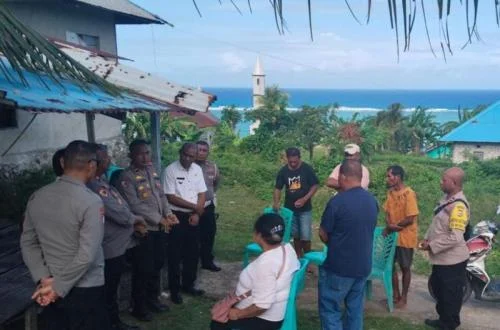
The Kepulauan Tanimbar Resort Police (Polres) and its subordinate sector police (Polsek) units have successfully de-escalated and mediated a volatile inter-village confrontation between residents of Meyano Das and Kilmasa villages in Kormomolin District, Kepulauan Tanimbar Regency, Maluku. The tensions, which rapidly escalated into a mass gathering with potential for widespread violence, were primarily triggered by acts of property destruction, specifically the damaging of crops and the burning of a garden house located in the contested border area between the two communities. This swift intervention, combining law enforcement action with community and religious leadership, prevented a major physical confrontation and has led to a formal peace agreement, underscoring the delicate balance required in managing communal disputes in remote Indonesian regions.
Chronology of Escalation and Intervention
The incident unfolded with a series of events that began with a report of property damage and quickly spiraled towards a larger conflict. According to official police accounts, the initial catalyst was the discovery by residents of Meyano Das of significant damage to agricultural plots and the complete destruction by fire of a garden house within an area claimed by both villages. Such acts of sabotage on agricultural land often serve as flashpoints in regions where livelihoods are intrinsically linked to farming and land ownership.
Upon receiving reports from its citizens, the Government of Meyano Das Village began investigating the matter. It was during this period of heightened local concern that the situation took a dangerous turn. A resident, identified by the initial SR, allegedly utilized a loudspeaker in the public square of Meyano Das Village. This act of public incitement, amplifying the news of the perceived transgression, served as a potent catalyst, rapidly mobilizing a large concentration of villagers. Eyewitness accounts and police reports indicate that many of those gathered were armed with various sharp weapons, signaling a clear intent for retaliatory action and a severe breakdown of inter-village trust. The use of a loudspeaker in such circumstances is particularly concerning as it bypasses formal channels and directly appeals to collective emotion, significantly raising the risk of mob rule and uncontrolled violence.
Understanding the immediate and severe threat posed by the armed mobilization, the Kepulauan Tanimbar Resort Police, through its Kormomolin Sector Police, initiated a rapid response. Wakapolres Kepulauan Tanimbar, Wilhelmus B Minanlarat, highlighted the critical importance of this swift action in preventing a full-scale physical clash. Police personnel were immediately dispatched to the border area, which had become the focal point of the escalating tension. The police presence was augmented by the crucial involvement of local religious leaders and community elders, whose moral authority and influence within their respective communities proved instrumental in de-escalation.
On the ground, a coordinated effort was evident. Erlin Lekatompessy, the Chairman of the GPM Kilmasa Congregation, a prominent local religious figure, played a pivotal role in calming the agitated mass from Kilmasa Village, working alongside Polsek Kormomolin personnel. Simultaneously, Kapolsek Kormomolin I GD Hendra B Arimbawa, leading his team, confronted and successfully managed to disperse the armed crowd from Meyano Das Village. The confluence of law enforcement presence and community leadership, particularly religious figures, is often a key success factor in resolving communal conflicts in Indonesia, where traditional and spiritual authority often carries significant weight. Their combined efforts managed to create a buffer zone and gradually reduce the immediate threat of violence, ultimately preventing any physical injuries or further property damage during the confrontation itself.
Following the successful de-escalation, security forces maintained a robust presence in the area to prevent any renewed outbreaks of violence. The focus then shifted from immediate crisis management to addressing the underlying issues and ensuring a lasting peace. This included documenting the material losses, such as the damaged crops and the burned garden house, for subsequent legal processing. The Polres Kepulauan Tanimbar subsequently reinforced its security deployment in the region, ensuring that the situation remained conducive to peace and allowing for mediation efforts to commence.
Background Context: Land Disputes and Communal Tensions in Tanimbar
The Kepulauan Tanimbar Regency, located in the Maluku province of eastern Indonesia, is an archipelago characterized by its unique geography, rich cultural heritage, and a largely agrarian and marine-based economy. The region’s population is diverse, comprising various ethnic groups with distinct customs and traditions, often governed by adat (customary) law alongside national legal frameworks. This duality in legal systems, particularly concerning land ownership and resource management, frequently gives rise to disputes, especially in border areas between villages.
Land in Tanimbar, as in many parts of Indonesia, is not merely an economic asset but also holds deep cultural and ancestral significance. Traditional land boundaries, often unmarked or based on oral history and communal memory, can become ambiguous over time, particularly with population growth, increased resource demands, and changes in land use patterns. Disputes over agricultural land, forest resources, or access to fishing grounds are not uncommon, and they can quickly escalate when combined with historical grievances, perceived injustices, or opportunistic provocations. The incident between Meyano Das and Kilmasa villages reflects a common pattern where seemingly minor acts of property damage can ignite deep-seated inter-village rivalries or unresolved boundary issues.
The Kormomolin District, like many rural areas in Tanimbar, relies heavily on agriculture. This dependency means that damage to crops or agricultural infrastructure directly impacts livelihoods and can be perceived as an existential threat, fueling intense emotional responses. The communal nature of land ownership and farming in these areas means that an attack on one individual’s property can be interpreted as an attack on the entire community, thus explaining the rapid mobilization of large groups for defense or retaliation.
Furthermore, the geographical remoteness of many Tanimbar communities can sometimes pose challenges for immediate law enforcement intervention, making the swift response in this case particularly commendable. However, it also highlights the critical role of local leaders, both traditional and religious, who are often the first responders and trusted arbiters within their communities. Their ability to communicate, mediate, and maintain social cohesion is paramount in preventing conflicts from spiraling out of control.
Official Responses and Legal Implications
Wakapolres Kepulauan Tanimbar, Wilhelmus B Minanlarat, emphasized the police’s firm commitment to thoroughly investigate the elements of legal violations associated with the incident. This includes not only the acts of property damage and arson but also the actions of individuals who may have incited the masses. The police’s stance underscores the importance of upholding the rule of law even amidst communal tensions, ensuring that justice is pursued through legal channels rather than through vigilantism or violence. The investigation will aim to identify those responsible for the destruction and the individual (SR) who used the loudspeaker to mobilize the crowd, potentially facing charges related to incitement, property damage, or arson under Indonesian law.
The swift action of the security forces and community leaders was widely praised by the police command. Wakapolres Minanlarat specifically highlighted his disappointment regarding the mobilization of masses using loudspeakers, stressing that such actions only serve to escalate an already tense situation and undermine efforts towards peaceful resolution. He reiterated the police’s role not just in enforcing laws but also in maintaining public order and facilitating dialogue.
In the aftermath of the immediate de-escalation, a crucial step towards long-term resolution was taken. The Kormomolin District Government, in conjunction with the Kepulauan Tanimbar Resort Police, convened an official mediation session. This formal dialogue process is a standard approach in Indonesia for resolving inter-communal conflicts, providing a structured platform for grievances to be aired and solutions to be negotiated. The mediation culminated in the signing of a peace agreement on Friday, May 15, at the Kormomolin District Head’s Office. This agreement signifies a commitment from both villages, mediated by local authorities, to cease hostilities and seek peaceful coexistence.
Statements from related parties, inferred from the context of such events, would likely include:
- Kormomolin District Head (Camat): Would have expressed relief at the peaceful resolution and emphasized the importance of community participation in upholding the peace agreement. The Camat would also likely call for a renewed focus on inter-village cooperation for regional development and stability.
- Village Heads of Meyano Das and Kilmasa: Would have publicly committed to honoring the peace agreement and working with their respective communities to prevent future conflicts. They would also likely appeal for justice regarding the property damage and for reconciliation between their communities.
- Religious Leaders (e.g., Erlin Lekatompessy): Would have reiterated the spiritual imperative for peace, forgiveness, and mutual respect, leveraging their moral authority to reinforce the terms of the peace agreement and foster long-term harmony.
Broader Impact and Implications
The successful resolution of the Meyano Das-Kilmasa conflict carries several important implications, both locally and for broader regional stability in Kepulauan Tanimbar.
Firstly, local security and stability are immediately enhanced. The increased police presence and the peace agreement help restore a sense of order and safety for residents. However, true stability will require continuous monitoring and follow-up on the commitments made during mediation. The incident serves as a stark reminder of how quickly peace can be disrupted and the constant need for vigilance and proactive conflict prevention mechanisms.
Secondly, the incident highlights the socio-economic fragility that can arise from such disputes. Agricultural activities are often disrupted, and inter-village trade or cooperation can suffer, impacting the livelihoods of many. Prolonged conflict can lead to economic stagnation and social fragmentation, hindering broader development efforts in the district. The assessment of material losses is not just for legal purposes but also for understanding the economic impact on the affected communities.
Thirdly, the legal process initiated by the police is crucial. By pursuing legal action against those responsible for property destruction and incitement, the authorities reinforce the principle that disputes must be resolved through lawful means, not through violence or vigilantism. This also sets a precedent that could deter future provocations. The legal outcome will be closely watched by both communities, and transparency in the process will be vital for maintaining trust.
Fourthly, the incident underscores the critical role of local governance and multi-stakeholder collaboration. The Kormomolin District Government’s involvement in mediation, alongside the police and religious leaders, exemplifies a comprehensive approach to conflict resolution. This multi-pronged strategy, involving formal law enforcement, traditional authority, and spiritual guidance, is often the most effective in Indonesia’s diverse cultural landscape. It also emphasizes the need for local governments to proactively address root causes of conflict, such as unclear land boundaries, through surveys, demarcation, and community dialogue.
Finally, the incident provides valuable lessons for community resilience and peacebuilding. The fact that leaders from both villages, along with religious figures, could come together for mediation and sign a peace agreement, even after a tense standoff, speaks to an underlying desire for peace. Long-term peacebuilding efforts should focus on strengthening inter-village dialogue platforms, promoting joint economic ventures, and establishing clear, mutually agreed-upon land boundaries to prevent future misunderstandings. Education on conflict resolution and the importance of adhering to legal processes can also play a vital role in fostering a culture of peace.
In conclusion, the swift and coordinated response by the Kepulauan Tanimbar Resort Police, supported by local government and religious leaders, successfully averted a potentially violent inter-village clash. While the immediate crisis has been managed through de-escalation and a signed peace agreement, the incident serves as a critical reminder of the persistent challenges posed by land disputes and communal tensions in remote regions like Kepulauan Tanimbar. Continued vigilance, thorough legal processes, and sustained peacebuilding efforts will be essential to ensure lasting harmony and development in the affected communities.