 Azin Asro
In a startling disclosure that highlights persistent vulnerabilities in luxury vehicle registration systems, a modest mechanic residing in a densely populated alleyway in Tangerang found himself legally designated as the owner of a high-performance McLaren sports car. The discovery came to light when local tax authorities attempted to collect a staggering IDR 137 million in delinquent motor vehicle taxes. This administrative anomaly not longer points merely to a clerical discrepancy, but rather unveils a broader, systemic issue involving tax evasion, identity misuse, and the circumvention of luxury asset reporting protocols within Indonesia’s automotive sector.
The revelation underscores the compliance challenges faced by regional revenue offices and raises critical questions regarding how high-value luxury commodities can be legally registered under the identities of unsuspecting citizens whose socioeconomic profiles are starkly misaligned with supercar ownership.
The Unexpected Visit from Tax Authorities
The sequence of events began during a routine field operation conducted by the Ciledug One-Stop Administration Office, commonly known as Samsat Ciledug, tasked with tracking down delinquent taxpayers who pose significant losses to regional revenues. Armed with vehicle registration databases, enforcement teams identified a late-model luxury sports car carrying a two-year tax arrears totaling IDR 137,441,000.
According to official vehicle documentation, the registered owner of the luxury automobile was Yudariansyah, widely known as Yuda, a local mechanic residing in Kampung Sawah Dalam, located in North Panunggangan, Pinang, Tangerang City. Acting on protocol, tax officials traced the registration address to deliver the delinquency notice, anticipating a residence commensurate with high-net-worth status.
Instead, inspectors arrived at a modest neighborhood characterized by narrow thoroughfares and densely packed houses. Upon confronting Yuda, tax officials and the vehicle owner alike were met with mutual astonishment. Yuda vehemently denied ownership of the vehicle, expressing immediate shock and confusion upon learning of the massive tax liability tied to his personal identity.
Recounting the encounter, Acting Head of Samsat Ciledug Idam Kholid described the palpable disbelief during the interaction. When approached and informed of the registration details, Yuda immediately questioned the validity of the notification, stating his utter disbelief given his financial reality and occupation as a daily-wage mechanic.
Geographical and Infrastructural Implausibility
Beyond the stark mismatch in demographic profiles, physical inspections of the registered address quickly established the practical impossibility of housing or operating a high-performance vehicle of this caliber within the locality. Kampung Sawah Dalam features narrow infrastructure incompatible with low-slung, ultra-wide sports cars.
The access roads leading to Yuda’s residence consist primarily of aged paving blocks and uneven surfaces, with widths barely accommodating a single standard passenger car. Furthermore, localized deterioration and structural limitations of the alleyways render it impossible for a sensitive, low-clearance luxury vehicle to navigate the area without sustaining severe mechanical damage or cosmetic destruction.
Idam Kholid emphasized the absurdity of the registered location, noting that even if an owner attempted to bring such a vehicle into the neighborhood, the risk of scraping the undercarriage, damaging the expensive carbon-fiber body panels, or ruining the custom wheels would deter any rational driver. Supercars require specialized handling, pristine road conditions, and secure, climate-controlled storage facilities—amenities entirely absent in the working-class alleyways of North Panunggangan.
Technical Profile and Market Valuation of the McLaren 570S Coupe
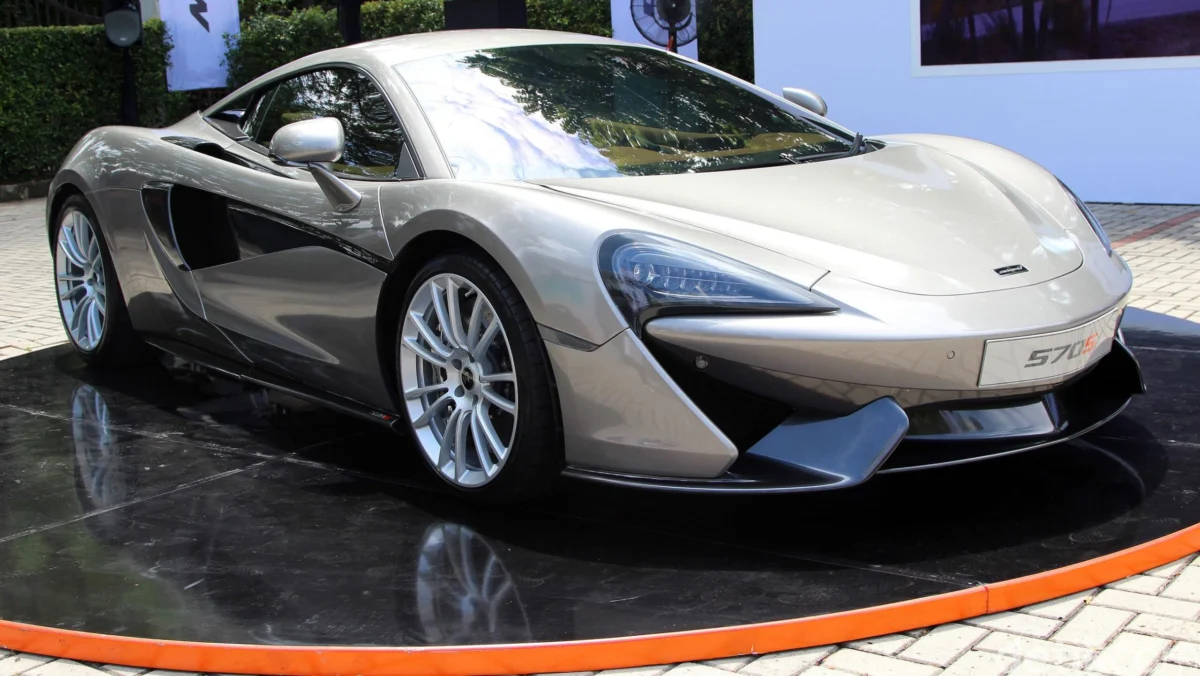
Official records indicate that the vehicle at the center of the dispute is a 2019 McLaren 570S Coupe, a British-engineered masterpiece of automotive engineering designed for high-speed track performance and luxury styling. The sheer market value of the asset starkly contrasts with the economic circumstances of its nominal owner.
Market data aggregated from various premium automotive platforms and pre-owned luxury dealerships in Indonesia reveal that a 2019 model McLaren 570S commands a formidable price tag in the secondary market. Depending on mileage, maintenance history, and vehicle condition, used units are consistently traded within the range of IDR 4.08 billion to IDR 4.18 billion.
Beneath its aerodynamic carbon-fiber chassis lies a formidable powertrain. The McLaren 570S is equipped with a 3,799 cc twin-turbocharged V8 engine. This mechanical configuration generates a maximum output of 562 horsepower at 7,500 revolutions per minute, accompanied by a peak torque of 600 Newton-meters delivered between 5,000 and 6,500 rpm.
Power is transmitted to the rear wheels via a seven-speed dual-clutch Seamless Shift Gearbox (SSG), enabling the supercar to accelerate from zero to 100 kilometers per hour in a mere 3.2 seconds. With a top speed reaching 328 kilometers per hour, the vehicle represents the pinnacle of modern automotive engineering, making its association with a suburban mechanic an administrative impossibility that demands thorough investigation.
Systemic Vulnerabilities in Vehicle Registration
The incident involving Yuda is not an isolated occurrence within the broader framework of luxury asset registration in Indonesia. Tax authorities and law enforcement agencies have frequently uncovered schemes wherein high-net-worth individuals utilize the identities of lower-income citizens—often referred to as nominee owners or "straw men"—to register luxury vehicles.
Motivations behind such practices typically include the evasion of progressive luxury vehicle taxes, avoidance of asset transparency during tax audits, obfuscation of ownership in legal or financial disputes, and the circumvention of stringent reporting requirements mandated by anti-money laundering regulations. Perpetrators often obtain copies of identity documents through informal employment channels, lost documentation, or fraudulent data harvesting schemes, using these stolen or borrowed credentials to complete purchase transactions at authorized dealerships or showrooms.
For ordinary citizens whose identities are exploited in this manner, the consequences can extend far beyond administrative confusion. Unpaid vehicle taxes accumulate substantial penalties, and the nominal owner’s taxpayer identification number can be flagged for compliance failures, potentially restricting their access to banking services, government subsidies, or credit facilities.
Response and Regulatory Implications
In the wake of the discovery, regional tax authorities have initiated internal reviews to determine how the registration was processed without adequate verification of the nominal owner’s financial capacity. While Samsat offices rely on presented legal documents such as Identity Cards (KTP) and Family Cards (KK) during initial registration, emerging cases underscore the urgent need for enhanced cross-referencing capabilities and stricter validation protocols.
Financial analysts and governance watchdogs argue that this incident exposes critical gaps in coordination between vehicle registration agencies, national population databases, and tax directorates. Implementing mandatory biometric verification, wealth-matching algorithms, and mandatory physical verification of garage facilities for luxury vehicle registrations could significantly mitigate the risk of fraudulent identities being utilized to shield high-value assets.
As Samsat Ciledug proceeds with administrative rectification to resolve the tax arrears and clear Yuda’s name from the vehicle’s registry, the case serves as a poignant reminder of the vulnerabilities plaguing asset administration systems. It highlights the urgent imperative for regulatory reform to protect vulnerable citizens from identity exploitation while ensuring that luxury vehicle owners fulfill their fiscal obligations to the state.