Nila Kartika Wati
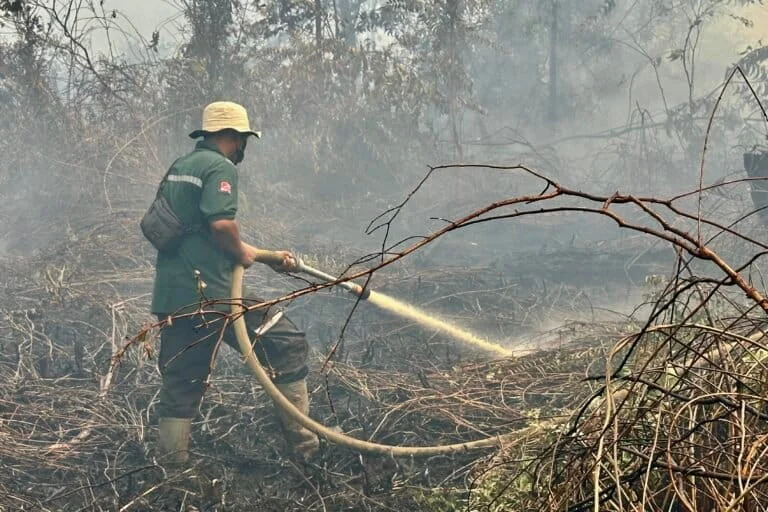
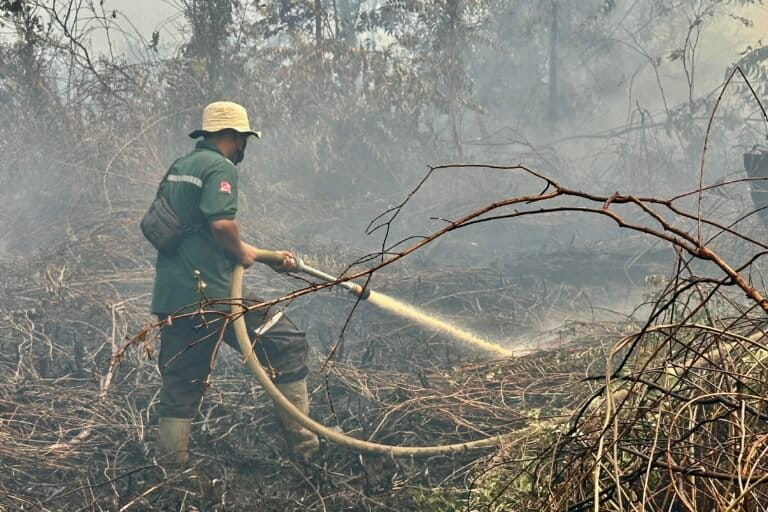
Amidst a mounting ecological crisis characterized by catastrophic forest and land fires (karhutla), President Prabowo Subianto has implemented a significant structural overhaul of his cabinet and key disaster management agencies. The move, formalized on October 15, 2026, signals a desperate attempt to regain control over a disaster that has blanketed the archipelago in toxic haze, affected millions of citizens, and drawn international scrutiny.
The most notable change is the revival of the Peatland and Mangrove Restoration Agency, now reconstituted as the National Peatland and Mangrove Management Agency (BPGMN). Satyawan Pudyatmoko, a distinguished academic and professor at the Faculty of Forestry, Universitas Gadjah Mada (UGM), has been appointed to lead this entity, supported by Major General Sriyanto as Deputy Head. This agency was previously dissolved early in President Prabowo’s term, a decision that critics now point to as a catalyst for the current uncontrolled spread of fires.
Simultaneously, the administration has replaced the leadership of the National Disaster Management Agency (BNPB). Lieutenant General Kristomei Sianturi, a military officer with extensive experience in territorial and operational command, has been appointed as the new head, replacing Lieutenant General (Ret.) Suharyanto. The transition comes as the BNPB grapples with a high-profile corruption scandal involving the misuse of disaster response funds, casting a shadow over the government’s ability to manage the crisis effectively.
A Chronology of Escalation
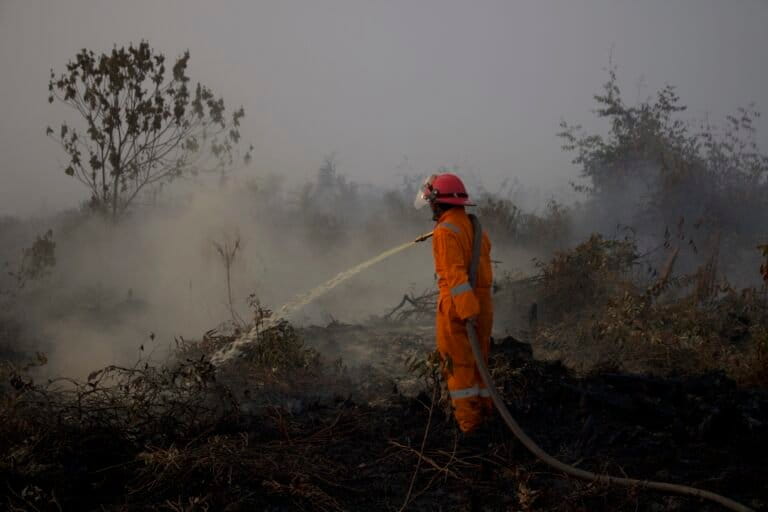
The current fire season is arguably the most severe in recent history. While official government data as of July 2025 indicated a relatively modest 202,000 hectares burned, independent satellite monitoring by Atlas Nusantara paints a far more dire picture. By September 2026, cumulative fire damage had reached 1.9 million hectares, with over 1.1 million hotspots detected.
The crisis intensified rapidly between August and September, with 91.2% of the year’s total hotspots occurring in this two-month window. The correlation between the drying of peatlands and the explosion of fire activity is absolute. As the water table in peat domes dropped below the critical threshold of 40 centimeters, the landscape transformed into a vast, volatile fuel source.
The Science of Peatland Destruction
The appointment of Professor Satyawan Pudyatmoko is a clear signal that the administration intends to pivot toward a science-based approach to restoration. Peatlands, which act as nature’s "water towers," have been systematically compromised by extensive canalization. According to data from Pantau Gambut, over 281,000 kilometers of drainage canals have been carved into the Indonesian landscape, primarily to facilitate large-scale palm oil and industrial timber plantations.
This drainage has rendered the peat ecosystem, which consists of fossilized plant material, highly combustible. Unlike surface fires, peat fires burn underground, often smoldering for months and releasing vast quantities of carbon monoxide and particulate matter. The BPGMN now faces the daunting task of mapping over 500 Hydrological Peat Units (KHG) to prioritize rehabilitation.
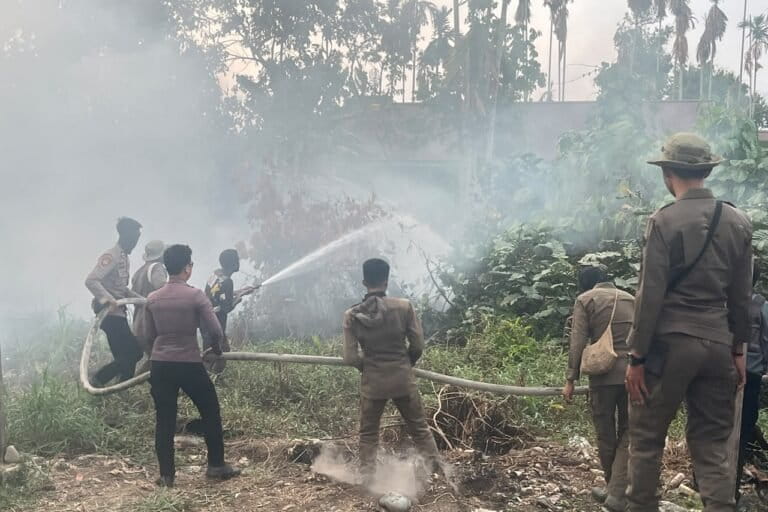
"The president’s directive is clear: there must be no more fires in our peatlands," Pudyatmoko stated during his induction. "We are moving toward a sophisticated modeling approach to predict fire risks based on real-time water table monitoring. If the water level drops below 40 centimeters in any given region, we must immediately deploy technical interventions like canal blocking."
Implications of the BNPB Leadership Change
The replacement of Suharyanto at the helm of BNPB is not merely a change of guard but a response to systemic failure. The Corruption Eradication Commission (KPK) recently conducted an operation resulting in the arrest of five individuals, including high-level agency staff, linked to the embezzlement of 148 billion rupiah in "Ready-to-Use Funds" (DSP).
These funds are designed to bypass bureaucratic red tape during emergency situations, a feature that, while essential for rapid response, has proven to be a dangerous loophole for graft. Seira Tamara, acting head of the advocacy division at Indonesia Corruption Watch (ICW), notes that the corruption is symptomatic of a deeper malaise. "The governance of disaster management in this country has never been truly repaired," Tamara noted. "The fact that this occurred during a period of national emergency suggests that procurement processes and financial oversight remain dangerously opaque."
Lieutenant General Kristomei Sianturi, the new BNPB Chief, has been tasked with restoring institutional credibility. His background, including roles as the Governor of the Military Academy and Head of the TNI Information Center, suggests a mandate for strict discipline and inter-agency coordination. Sianturi has emphasized a "rope analogy" strategy, where the military, police, local government, and civilian society must be tightly synchronized to prevent, detect, and suppress fires.
Regional and Health Impacts
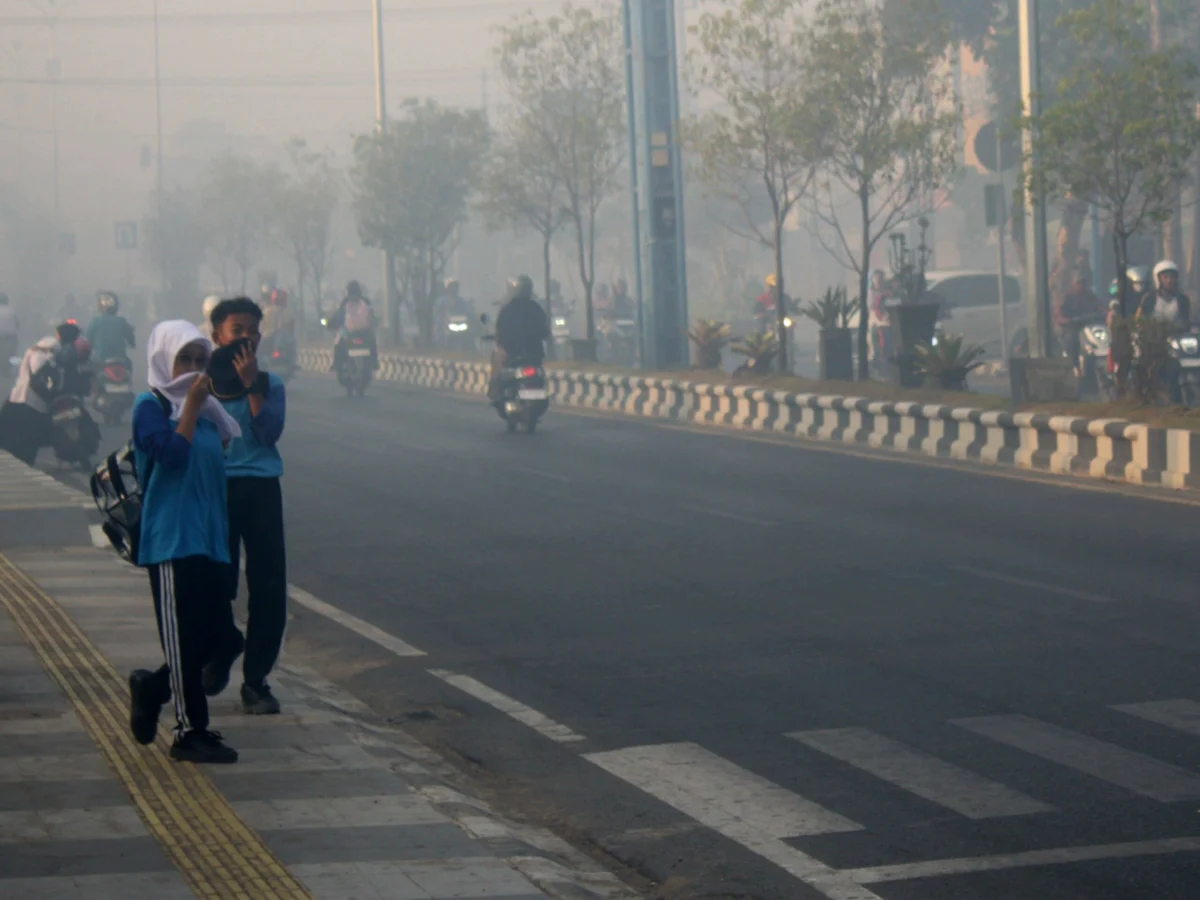
The consequences of the government’s initial delay in responding to the fire season are now being felt across Southeast Asia. The toxic smog has crossed borders, affecting Malaysia, Singapore, Brunei, and Timor Leste. Domestically, the Ministry of Health reported that over 12.5 million Indonesians have suffered from respiratory ailments, with several fatalities directly linked to smoke inhalation.
The concentration of carbon monoxide, as tracked by NASA satellites, has reached record levels in the atmosphere above the archipelago. BMKG, Indonesia’s weather agency, has confirmed that the haze has reached as far as Jakarta, effectively turning the capital into a zone of poor air quality despite its distance from the primary fire hubs in Kalimantan and Sumatra.
Challenges Ahead: Transparency and Enforcement
While the government promises a more robust approach, environmental activists remain skeptical. Putra Septian, a campaigner for Pantau Gambut, argues that structural changes alone are insufficient. "The BPGMN must place the integrity of the peat ecosystem above industrial interests," Septian said. "Restoration cannot be used as a greenwashing exercise to excuse continued plantation expansion in protected zones."
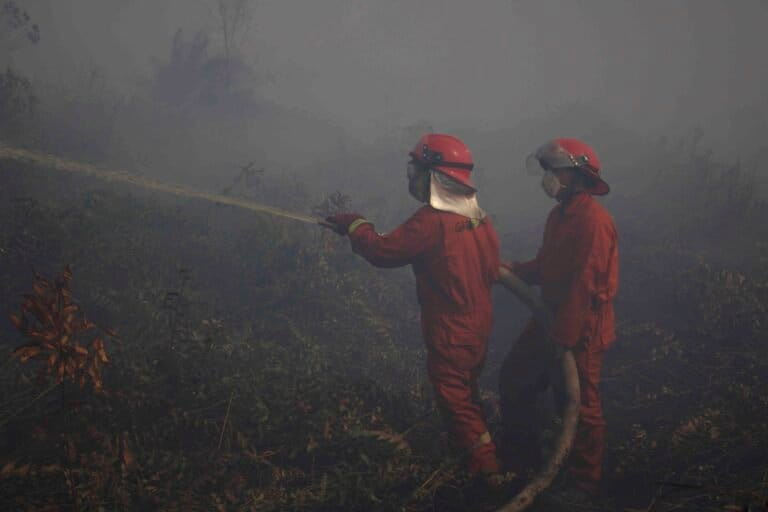
The government’s plan to increase the number of forest rangers (polhut) from 21,000 to 70,000 is a significant commitment, but the effectiveness of this force will depend entirely on their mandate. If their role remains limited to superficial patrols rather than enforcing accountability on major corporations, the impact will be negligible.
Public demand for transparency is also reaching a breaking point. Experts are calling for an independent, public-facing dashboard that tracks every rupiah of the DSP funds and every hectare of land restored. Without such transparency, the administration’s efforts risk being seen as administrative window dressing rather than a genuine shift in environmental policy.
Conclusion: A Testing Ground for the Prabowo Administration
The cabinet reshuffle reflects the extreme pressure President Prabowo faces to reconcile economic development with environmental sustainability. The dual focus on the BPGMN and a revitalized BNPB suggests an acknowledgment that the climate crisis is now a primary national security threat.
The success of these new appointments will be measured not by the rhetoric delivered at the Istana Negara, but by the water levels in the peatlands of Central Kalimantan, the air quality index in Riau, and the integrity of the procurement processes within the disaster management sector. As the dry season persists, the new leadership team has no grace period; they are stepping into the heart of a disaster that requires immediate, transparent, and science-led action to prevent the cycle of destruction from repeating in the years to come. The government’s ability to move beyond "firefighting" to "fire prevention" will determine whether Indonesia can escape the annual recurrence of what has become a self-inflicted national tragedy.